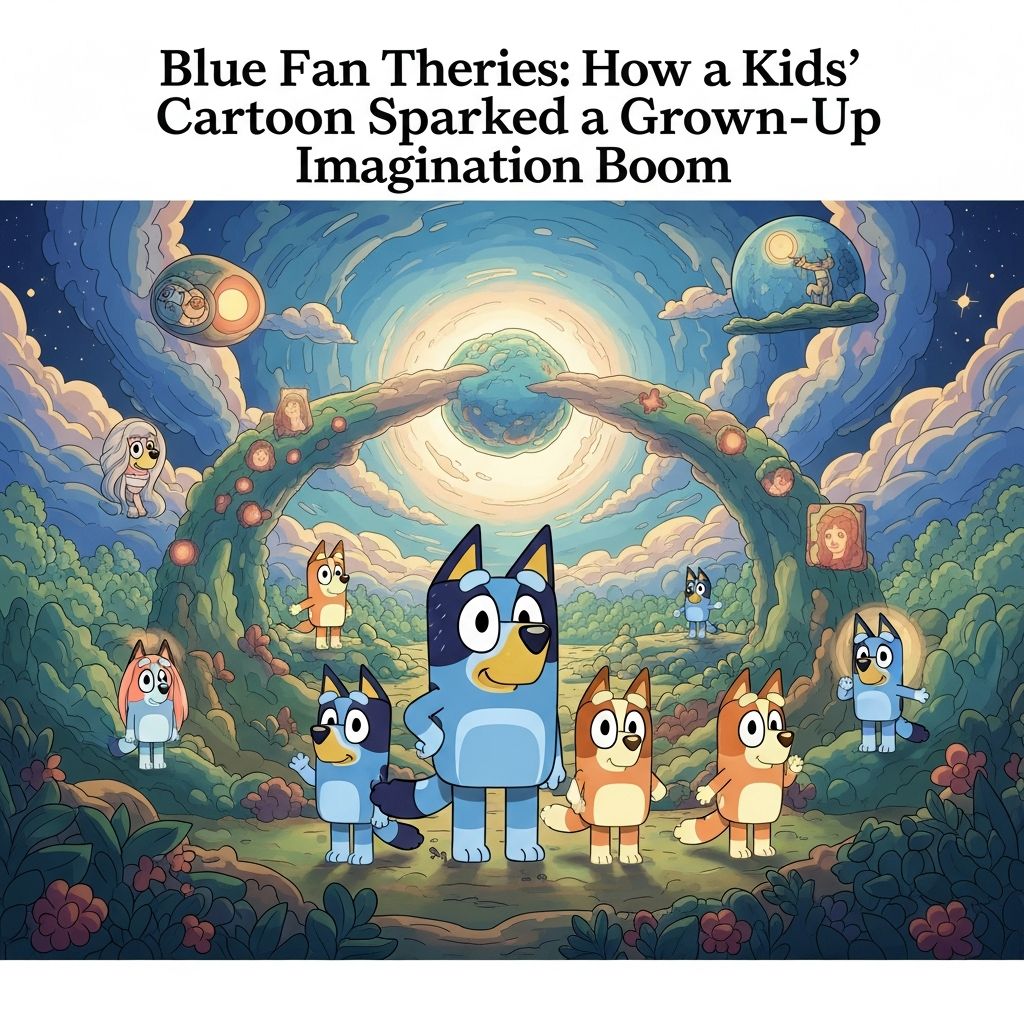
Bluey, the Australian animated series about a family of blue heelers, has quietly become one of the most analyzed kids’ shows on the internet. Parents binge it as obsessively as their children, then head online to debate hidden meanings, emotional backstories, and blink-and-you-miss-it details that might reveal something deeper about the Heeler family.
This article explores a range of popular Bluey fan theories, not to treat them as fact, but to show what they reveal about parenting, grief, mental health, and the way adults project their own experiences onto a colorful, seven-minute cartoon.
Why Bluey Invites So Many Theories
Unlike many preschool shows, Bluey layers its simple stories with emotional nuance, visual callbacks, and background gags that reward repeat viewing. The result is a series that feels light and silly for kids, but carries a second channel of meaning that adults quickly pick up on.
- The show frequently touches on topics like infertility, loss, and emotional regulation in ways that are subtle enough for children but unmistakable for grown-ups.
- Fans pause frames, connect scenes across episodes, and build elaborate theories to explain fragments of dialogue or set design that seem too deliberate to be random.
Emotional Backstory Theories
Some of the most discussed Bluey theories center on the idea that the Heelers’ family history is more complicated than the show ever plainly states. These interpretations often arise from small facial expressions, pauses, or symbolic imagery that adults interpret as emotional clues.
Bluey as a “Rainbow Baby”
One recurring theory suggests that Bluey is a “rainbow baby” — a child born after a miscarriage or stillbirth — based on a handful of emotionally charged episodes that hint at past pregnancy loss. Viewers point to scenes with pregnancy symbolism and a notably somber tone, where Bandit and Chilli’s reactions seem heavier than the surface story requires.
Whether or not the writers intended a specific backstory, this theory clearly resonates with many parents who have lived through loss and see their experiences gently reflected back at them.
Extended Family, Fertility, and Unspoken Pain
Another widely discussed idea is that an adult relative in the show struggles with infertility, inferred from their reluctance around children and tension in certain family gatherings. Fans connect emotional distance, awkward body language, and carefully framed dialogue as evidence of grief that never gets spelled out for younger viewers.
This kind of theory highlights how Bluey manages to introduce real-world adult pain without breaking the warmth of the series, giving caregivers an entry point for age-appropriate conversations if they choose.
Mental Health and Childhood Inner Worlds
Many theories go beyond family history and propose that specific characters embody particular mental health struggles or emotional patterns. These readings are rarely explicit in the text of the show, but they reflect how viewers use Bluey as a framework to talk about feelings that are often hard to name.
Mackenzie and the Metaphor of the “Black Hole”
Some fans interpret one child character’s tendency to zone out or disappear into his thoughts — especially in an episode that visually portrays a “black hole” — as a metaphor for depression or overwhelming anxiety. The imagery of getting lost in space, drifting away from friends, and slowly finding a way back can feel very familiar to people who have navigated mental health challenges.
While the show never labels these experiences clinically, framing them as imaginative play makes complex emotions safer and more approachable for both kids and adults.
Food, Bodies, and Health Conditions
Attentive viewers have also noticed that a particular child seems to avoid certain foods or consistently receives meals that differ from others, sparking theories about hidden health conditions like gluten intolerance. Fans read these details as a quiet nod to kids managing dietary restrictions or chronic issues without making it the center of the story.
Whether or not this is intentional, the willingness to portray diverse needs in the background encourages families with similar experiences to feel seen and normalized.
Neighborhood Relationships and Grown-Up Drama
Bluey often uses neighbors and school friends to flesh out a believable community, and adults have eagerly filled in the gaps of those background relationships. The result is a cluster of playful but spicy theories about divorce, affairs, and non-traditional relationships unfolding just off-screen.
Shared Custody and Subtle Signs of Divorce
One fan-favorite theory focuses on a child who seems to move between different homes, leading viewers to infer that their parents are separated or divorced. Evidence cited includes changing house settings, varied parental presence, and little visual cues that the child has two bedrooms or routines.
This reading aligns with Bluey’s broader pattern of including many family structures — single parents, blended families, older caregivers — without framing any of them as abnormal or tragic.
Whispers About Affairs and Polyamory
More sensational theories suggest that a market-stall parent might be having an affair or in a polyamorous relationship, extrapolating from cozy body language with another adult and repeated appearances together in the background. Viewers also point to suggestive decor and running gags that some associate with swinging culture, spinning whole storylines out of fleeting visual jokes.
Even if these readings stretch beyond what the show intended, they underscore how closely adults scrutinize a series that children mostly experience as gentle fun and games.
Fame, Fourth Walls, and Reality TV
Beyond backstories, some theories zoom out and question the very nature of the Bluey universe. Why does this one family seem to be at the center of everything, and why do they sometimes appear oddly aware of the audience?
Are the Heelers Secret Celebrities?
A widely shared idea suggests that the Heelers function like reality TV stars in their world, comparable to a canine version of a famous influencer family. Evidence includes in-universe media featuring the family, a tendency to be at the center of town events, and occasional moments where characters appear to acknowledge being watched.
Seeing Bluey as a “series within a series” adds a meta layer that helps explain why so much of the town’s life seems to orbit one household without breaking the show’s internal logic.
Grannies, Time Loops, and Nostalgia
Another imaginative theory proposes that the recurring “grannies” personas are actually future versions of Bluey and Bingo, reminiscing about their childhood through elaborate make-believe. Under this interpretation, the entire show becomes a nostalgic reconstruction — grown-up siblings replaying their happiest memories and exaggerating them into playful adventures.
This idea taps into the show’s bittersweet undercurrent: every silly game is also a fleeting moment parents and children will someday look back on with aching fondness.
Appearance, Performance, and Show-Dog Culture
Because Bluey uses dog breeds as characters, it naturally invites readings connected to real-world dog culture, including shows, breeding, and grooming. One eye-catching thread explores why one particular family looks so different from most other characters.
The “Show Dog” Family Theory
Some fans argue that a brightly colored, carefully styled family is coded as a clan of “show dogs,” the canine equivalent of pageant contestants. Their unusual coloring, polished appearance, and sometimes image-conscious behavior are interpreted as signs of a lifestyle built around performance and presentation.
Reading this way, their minor insecurities and competitiveness become commentary on perfectionism and the pressures that parents can inadvertently place on their children.
Selected Theories at a Glance
| Theory | Main Focus | Key Clues Cited by Fans | Emotional Theme |
|---|---|---|---|
| Bluey as a rainbow baby | Heeler parents and pregnancy history | Pregnancy symbolism, somber reactions in certain episodes | Grief, healing, gratitude after loss |
| Mackenzie’s “black hole” as depression | Child’s internal world and zoning out | Disappearing into space, emotional flashbacks, isolated imagery | Mental health, feeling lost, finding support |
| Shared custody for a neighbor child | Neighborhood family structure | Switching homes, changing domestic settings, double routines | Divorce, stability, multiple homes as normal |
| Affair or polyamory at the market | Adult relationships in the background | Cozy body language, recurring pairings, suggestive decor | Complex adult dynamics children don’t notice |
| Heelers as reality TV–style celebrities | Heeler family’s prominence | In-universe media, fourth-wall-leaning moments, constant spotlight | Public image, being watched, family as spectacle |
| “Show dog” family | Appearance-focused neighbors | Bright coloring, polished presentation, pageant-like energy | Perfectionism, performance, image pressure |
What These Theories Reveal About Viewers
When adults spin elaborate stories from tiny background details, they are often expressing their own hopes, worries, and lived experiences more than uncovering hidden canon. Bluey provides an emotionally intelligent canvas that invites this kind of projection without ever needing to confirm or deny specific interpretations.
- The popularity of grief and infertility theories shows how many parents seek gentle representation of painful chapters in their lives.
- The focus on mental health and unconventional families reflects a cultural shift toward naming emotions and normalizing diverse home situations for kids.
How to Enjoy Fan Theories in a Healthy Way
For some viewers, theories are a fun intellectual puzzle; for others, they can become so intense that they overshadow the simple joy of the show. Striking a balance helps keep Bluey both meaningful and playful.
- Treat theories as conversation starters, not official explanations; they are tools for reflection, not tests of who “understands” the show best.
- If a particular theory feels too dark for your child’s age, keep it in the adult discussion space and let your kid simply enjoy the games and giggles on screen.
Frequently Asked Questions About Bluey Fan Theories
Are any of these fan theories officially confirmed?
The creators have generally kept specific fan theories at arm’s length, allowing viewers to interpret emotional moments in their own way without issuing definitive confirmations or denials. This ambiguity lets families project their experiences onto the show in ways that feel personal and meaningful.
Is Bluey intended more for parents than for kids?
Bluey is clearly designed for preschoolers, with short episodes built around imaginative games, physical comedy, and simple emotional arcs. At the same time, its layered writing, subtle adult themes, and realistic parenting dynamics make it unusually compelling for grown-ups as well.
Should parents explain these deeper theories to young children?
Most experts suggest following a child’s lead and answering questions that naturally arise from an episode rather than introducing complex backstories they have not asked about. If a moment in the show mirrors your family’s real experience, it can be a gentle springboard for age-appropriate conversations, but the series works perfectly well without unpacking adult-level theories.
Do darker theories undermine the positive tone of the show?
For many viewers, darker readings actually deepen the show’s warmth, because they suggest that joy and silliness can coexist with hard realities like loss, divorce, or illness. As long as these interpretations remain optional and stay grounded in respect for the characters, they can enhance rather than diminish the emotional richness of Bluey.
How can families use Bluey as a tool for emotional learning without overanalyzing it?
A simple approach is to watch together, ask open-ended questions like “How do you think that character felt?” and let children guide how deep the discussion goes. Fan theories can inform how adults see an episode, but the most important lessons often come from listening to how kids interpret what they have just watched.