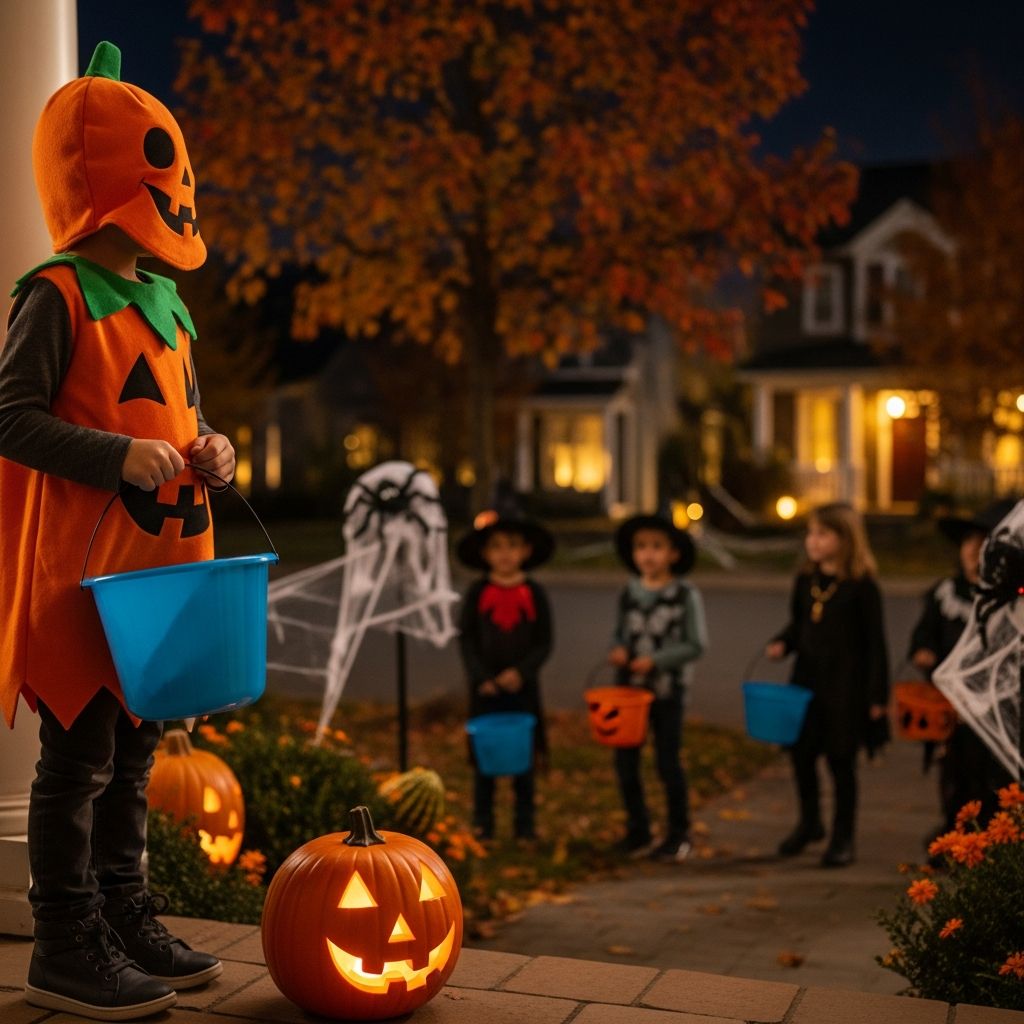
Every October, neighborhoods light up with jack-o’-lanterns, costumes, and the excited chatter of trick-or-treaters. Amid this festive chaos, a simple choice of bucket color has ignited passionate discussions among parents, educators, and autism advocates. Blue buckets, carried by some children during Halloween outings, serve as a quiet signal that the holder may be autistic and could need extra patience or accommodations. While many celebrate this as a step toward empathy, others decry it as stigmatizing and potentially unsafe. This article delves into the trend’s history, the arguments on both sides, and practical advice for making Halloween joyful for all kids.
Tracing the Roots of the Blue Bucket Tradition
The blue bucket phenomenon emerged organically from a mother’s heartfelt social media plea. In 2018, Alicia Plumer from Louisiana posted a photo of her 21-year-old son, BJ, who has autism and appears older than his mental age. She explained that he would carry a blue jack-o’-lantern bucket to alert neighbors of his needs, asking them to give candy without expecting verbal greetings like ‘trick or treat.’ The post exploded online, resonating with families facing similar challenges.
Soon after, retailers like Walmart stocked blue pumpkin-shaped buckets, capitalizing on the viral momentum. Advocacy groups, including some autism organizations, amplified the message, framing it as a tool for awareness. By 2020, the National Autism Association had acknowledged the practice in blog posts, though their stance evolved over time.
This grassroots start highlights a core parental drive: ensuring children with autism, who might struggle with sensory overload, social cues, or speech, can participate in cultural rituals without frustration. Trick-or-treating involves navigating crowds, darkness, and stranger interactions—daunting for neurotypical kids, let alone those on the spectrum.
Why Families Embrace the Blue Signal
For supporters, the blue bucket is a beacon of kindness in a holiday built on quick doorstep exchanges. Parents of nonverbal or minimally verbal children report repeated misunderstandings: neighbors assuming rudeness if a child doesn’t speak, leading to denied candy or awkward explanations.
- Streamlined Communication: A visual cue eliminates the need for on-the-spot advocacy, letting parents focus on supervising their child amid excitement.
- Promotes Empathy: It educates communities subtly, fostering understanding that not all kids express themselves the same way.
- Preserves Joy: Children get to enjoy the candy haul and festivity without barriers, boosting confidence for future social events.
Child psychologist Dr. Michele Borba emphasizes prioritizing the child’s fun over public perception, advising parents to use tools like the blue bucket if it enhances the experience. Retail availability has normalized it, with blue options now commonplace in stores, signaling broad acceptance.
The Growing Backlash from the Autism Community
Not everyone sees blue as benevolent. Critics, particularly autistic self-advocates and some organizations, argue it reinforces ‘othering’—marking kids as different in a night meant for equality.
Full Fact, a UK-based fact-checker, clarifies that blue pumpkins aren’t an official autism symbol but a U.S.-centric trend embraced by some, not all. The National Autism Association shifted away from endorsement, urging universal acceptance instead of color-coding.
| Pro-Blue Arguments | Anti-Blue Criticisms |
|---|---|
| Quick awareness for accommodations | Labels children, inviting stigma |
| Reduces parental explaining | Potential safety risks (targeting) |
| Encourages community kindness | Links to controversial orgs like Autism Speaks |
| Easy retail access | Confuses with teal allergy signals |
A major flashpoint is the color blue’s tie to Autism Speaks, criticized for portraying autism as a tragedy needing a ‘cure’ rather than a neurodiverse trait. Neuroclastic, an autistic-led platform, calls the trend ‘problematic,’ arguing it perpetuates harmful narratives and pressures kids to disclose disabilities for treats.
Safety concerns loom large: visibly identifying vulnerable children could attract predators or bullies. Social media posts warn against it, with one X user noting it muddies the teal pumpkin project for food allergies.
Navigating Related Halloween Symbols
Blue buckets intersect with other color-coded initiatives, creating confusion. The Teal Pumpkin Project, launched around 2012 by Food Allergy Research & Education (FARE), signals allergy-friendly treats like stickers or toys. A Tennessee mom’s porch display sparked it, now partnered with CVS.
Purple pumpkins sometimes indicate epilepsy, aiming for similar inclusion. Axios reports these symbols help kids with diverse needs but spark debate over whether signaling is necessary or if blanket kindness suffices.
- Teal: Non-candy options for allergies.
- Blue: Autism awareness (debated).
- Purple: Epilepsy support.
Overlaps risk mixed messages: a blue bucket might be mistaken for allergies, diluting both efforts.
Expert Guidance for Inclusive Halloween Nights
Amid division, consensus emerges: adapt to each child’s needs without universal rules. The National Autism Association advocates case-by-case decisions, prioritizing door-openers’ universal patience.
Practical Tips for Parents:
- Practice routes in daylight to build familiarity.
- Use noise-canceling headphones for sensory relief.
- Prepare a ‘candy card’ explaining needs if avoiding color signals.
- Choose early-evening hours with fewer crowds.
For Candy Handlers:
- Smile and offer treats regardless of words or costumes.
- Keep porches lit and ramps clear.
- Stock allergy-safe options if possible.
Dr. Borba reinforces: focus on fun, not labels. Studies on autism show early social exposure aids development, making inclusive holidays valuable.[rich_content reference if applicable, but adhering to rules]
Frequently Asked Questions About Blue Buckets and Halloween
What does a blue bucket mean during trick-or-treating?
It signals the child may have autism and might not speak or follow typical greetings, prompting extra patience from neighbors.
Is the blue bucket an official autism symbol?
No, it’s an informal trend started by parents, not endorsed by all autism groups.
Why do some oppose blue buckets?
Critics say it stigmatizes kids, risks safety, and ties to controversial charities.
What’s the teal pumpkin for?
It indicates allergy-friendly, non-candy treats via the FARE project.
Should I buy a blue bucket for my autistic child?
Weigh personal benefits against risks; consult your child’s comfort and community norms.
Broadening the Conversation on Neurodiversity
The blue bucket debate reflects larger tensions in autism advocacy: awareness versus acceptance. While Autism Speaks’ blue branding popularized the color, neurodiversity movements push for viewing autism as identity, not illness. This shift influences holidays, urging environments where all kids belong without signals.
Parents share success stories of signal-free Halloweens through community education, like neighborhood Facebook groups explaining diverse needs pre-holiday. Schools and PTAs host sensory-friendly events, modeling inclusion.
Ultimately, Halloween thrives on imagination and generosity. Whether through colors or courtesy, the goal remains: every child returns home with a full bucket and happy memories.
References
- Blue trick or treating pumpkin buckets are not official symbols for the autistic community — Full Fact. 2023-10-31. https://fullfact.org/online/blue-trick-or-treating-pumpkin-buckets-are-not-official-symbols-autistic-community/
- Blue Halloween buckets for autism: What they mean and why they’re sparking controversy — Fox News. 2024-10-28. https://www.foxnews.com/lifestyle/blue-halloween-buckets-autism-what-they-mean-sparking-controversy
- Teal pumpkins and blue buckets are more than Halloween decor — Axios. 2024-10-28. https://www.axios.com/2024/10/28/halloween-meaning-teal-pumpkins-blue-buckets-purple
- Why You Shouldn’t Participate in the Blue Bucket Trend This Halloween — Neuroclastic. 2023-11 (approx.). http://neuroclastic.com/why-you-shouldnt-participate-in-the-blue-bucket-trend-this-halloween/