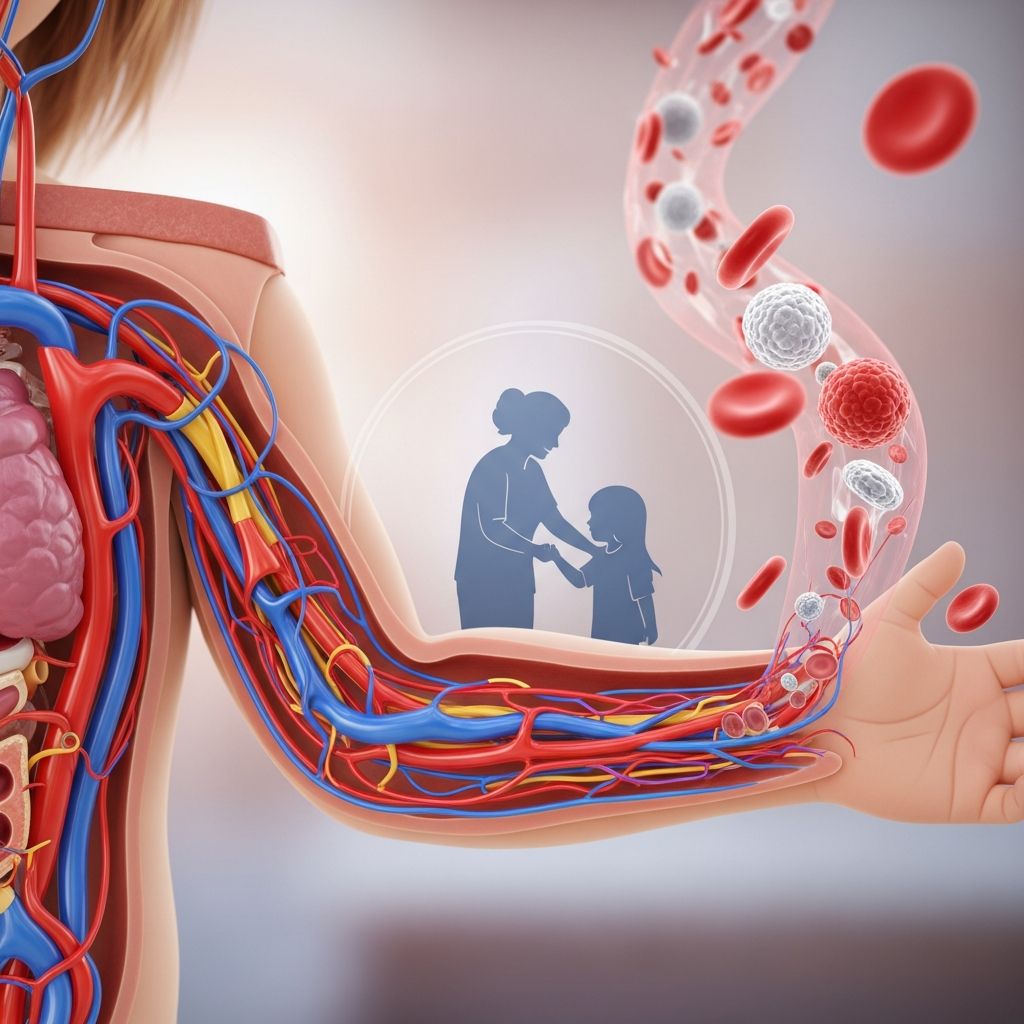
Blood might look simple from the outside, but inside your child’s body it is an active, busy “transport system” that keeps every organ alive. It delivers oxygen and nutrients, carries away waste, fights infection, and helps stop bleeding when your child gets hurt.
This guide explains what blood is, what it does, and how to understand basic blood-related tests and problems in a friendly, practical way for parents.
What Exactly Is Blood?
Blood is a specialized fluid that flows through blood vessels as part of the circulatory system. It is sometimes called a fluid connective tissue because it connects all the organs by transporting substances between them.
In children and adults, blood is made of:
- Plasma – the liquid portion
- Red blood cells – cells that move oxygen and carbon dioxide
- White blood cells – immune cells that fight germs
- Platelets – tiny fragments that help blood clot
The Main Jobs of Blood in a Child’s Body
Even in a small child, blood performs dozens of tasks every second. These can be grouped into three big categories.
- Transport
- Carries oxygen from the lungs to all tissues
- Delivers nutrients like sugar, amino acids, and fats from the digestive system
- Moves hormones from glands to target organs
- Brings waste like carbon dioxide and urea to the lungs and kidneys for removal
- Protection
- White blood cells and antibodies fight viruses, bacteria, and other invaders
- Platelets and clotting proteins seal damaged blood vessels and form clots to stop bleeding
- Regulation
- Helps balance body temperature by redistributing heat through circulation
- Supports stable pH and fluid balance in tissues
Breaking Down the Components of Blood
Although blood looks like one red liquid, it contains several different parts with distinct jobs.
Plasma: The Liquid Highway
Plasma is the pale yellow liquid that makes up about half of blood by volume.
Plasma is mostly water, but it also carries:
- Proteins, including clotting factors and antibodies
- Hormones from glands
- Mineral salts and electrolytes (like sodium and potassium)
- Glucose and other nutrients
- Waste products on their way to the kidneys or liver
Plasma helps:
- Maintain normal blood pressure and circulation by filling blood vessels
- Regulate body temperature by moving heat from warmer to cooler tissues
- Serve as a water and protein reservoir the body can draw from when needed
Red Blood Cells: Oxygen Carriers
Red blood cells (RBCs) are the most numerous cells in blood. They give blood its red color.
Each red blood cell is packed with a protein called hemoglobin, which binds oxygen in the lungs and releases it in tissues that need it.
- Pick up oxygen in the lungs and carry it to muscles, the brain, and organs
- Collect carbon dioxide (a waste gas) from tissues and return it to the lungs to be exhaled
Your child’s body constantly makes new red blood cells in the bone marrow. In growing children, healthy red blood cell production is essential to support growth, activity, and learning.
White Blood Cells: The Immune Defenders
White blood cells (WBCs) are fewer in number than red blood cells, but they are crucial for fighting infection.
There are several types of white blood cells, including:
- Neutrophils – often the first responders to bacterial infections
- Lymphocytes – important for making antibodies and long-term immunity
- Monocytes – help “clean up” damaged tissue and pathogens
- Eosinophils and basophils – involved in allergy and parasite responses
Together, these cells:
- Recognize and attack germs
- Produce antibodies and other immune substances
- Help remember previous infections so the immune system can respond faster next time
Platelets: The Clot Makers
Platelets are tiny cell fragments that circulate in the blood and gather quickly at sites of injury.
When a child gets a cut or scrape:
- Platelets stick to the damaged blood vessel wall
- They clump together to form a temporary “plug”
- They help activate clotting proteins that form a stable clot and scab
This process, called coagulation, prevents too much blood loss and helps protect the wound from infection.
How Blood Circulates Through a Growing Body
Blood does its work by constantly moving through blood vessels, driven by the heart.
- Arteries carry blood away from the heart, usually rich in oxygen.
- Veins return blood to the heart, usually low in oxygen and high in carbon dioxide.
- Capillaries are tiny vessels where oxygen, nutrients, and wastes are exchanged with tissues.
This circulation allows blood to repeatedly visit key organs:
- Lungs – to take up oxygen and release carbon dioxide
- Kidneys – to filter waste and maintain fluid and electrolyte balance
- Liver – to process nutrients and detoxify substances
- Endocrine glands – to pick up hormones for delivery to target tissues
Blood Types and Why They Matter
Every person, including children, has a blood type based on specific markers (antigens) on red blood cells.
The major systems are:
- ABO group – A, B, AB, or O
- Rh factor – positive (+) or negative (−)
Blood type is important when:
- A child needs a blood transfusion
- A pregnant person’s blood type is checked to avoid Rh incompatibility issues
Hospitals always match blood types carefully before transfusions to reduce the risk of reactions.
Common Blood Tests in Children
Doctors often order blood tests to check how well a child’s body is working. Below is a simplified overview.
| Blood Test | What It Looks At | Why It’s Commonly Done in Kids |
|---|---|---|
| Complete blood count (CBC) | Red cells, white cells, platelets, and hemoglobin | Check for anemia, infection, or some clotting and immune issues |
| Iron studies | Iron levels and related markers | Assess for iron-deficiency anemia, common in growing children |
| Coagulation tests (PT, aPTT) | Clotting factors and timing of clot formation | Investigate easy bruising, frequent nosebleeds, or surgery readiness |
| Basic metabolic panel | Electrolytes, glucose, kidney function markers | Evaluate hydration, kidney function, and blood sugar |
Blood-Related Concerns Parents Often Hear About
Most children have healthy blood, but parents may encounter these common terms during checkups.
Anemia
Anemia means there are not enough healthy red blood cells or enough hemoglobin to carry oxygen efficiently.
In children it can be caused by:
- Low iron intake or poor absorption
- Chronic illness or inflammation
- Inherited blood disorders (such as some hemoglobin diseases)
Signs may include tiredness, pale skin, rapid heartbeat, or reduced activity. Treatment depends on the cause and may involve dietary changes, supplements, or other therapies as guided by a doctor.
Bleeding and Clotting Problems
Some children have conditions that affect platelets or clotting proteins.
- Low platelets (thrombocytopenia) can lead to easy bruising or prolonged bleeding.
- Clotting factor disorders (such as hemophilia) can cause joint or muscle bleeding after minor injuries.
- Some children may have the opposite problem: a tendency to form clots too easily, which can be serious.
Pediatric hematologists specialize in diagnosing and managing these conditions.
Infections That Affect the Blood
Serious infections can spread into the blood (sepsis) or temporarily change white blood cell counts. Doctors use blood tests to see how a child’s immune system is responding and to guide treatment.
Supporting Healthy Blood in Children
Parents cannot control every aspect of blood health, but some everyday habits do help.
- Balanced nutrition
- Offer foods rich in iron (lean meats, beans, fortified cereals)
- Include vitamin C–rich foods (fruits, vegetables) to help iron absorption
- Provide a variety of protein sources to support cell and antibody production
- Hydration
- Encourage regular water intake so plasma volume stays healthy
- Vaccinations and hygiene
- Help prevent infections that can stress the immune system and blood
- Regular checkups
- Allow early detection of anemia, clotting problems, or other issues
Frequently Asked Questions (FAQs)
How much blood does a child have?
A child’s blood volume depends on age and size, but as a general idea, total blood volume is roughly 70–80 milliliters per kilogram of body weight in children, slightly higher per kilogram than in adults because children have higher metabolic needs.
Is it normal for my child to be scared of blood tests?
Yes. Many children are anxious about needles or the sight of blood. You can help by explaining in simple terms why the test is needed, practicing deep breathing, and asking about numbing creams or child-friendly distraction techniques at the clinic.
How often should children have blood work?
There is no single schedule for all children. Doctors usually order blood tests when they have specific questions, such as checking for anemia, monitoring chronic conditions, or evaluating symptoms like fatigue or frequent infections. Routine screening decisions are based on age, risk factors, and clinical guidelines.
Can diet alone fix anemia in kids?
Mild iron-deficiency anemia may improve with iron-rich foods and sometimes iron supplements, but the approach depends on the cause and severity. A healthcare professional should guide testing and treatment to avoid under- or over-treating.
When should I worry about bruises or nosebleeds?
Occasional bruises or nosebleeds are common in active children. However, you should speak with a doctor if your child has very frequent or large bruises, bleeding that is hard to stop, blood in urine or stool, or a family history of bleeding or clotting disorders.
References
- Blood: Components, functions, groups, and disorders — Medical News Today. 2020-07-20. https://www.medicalnewstoday.com/articles/196001
- Blood Basics — American Society of Hematology (hematology.org). 2024-01-01 (updated). https://www.hematology.org/education/patients/blood-basics
- Blood — Encyclopaedia Britannica. 2023-05-01 (updated). https://www.britannica.com/science/blood-biochemistry
- Components of Blood — Merck Manual Consumer Version. 2023-06-01 (updated). https://www.merckmanuals.com/home/blood-disorders/biology-of-blood/components-of-blood
- Blood and the Cells It Contains — U.S. National Library of Medicine, NCBI Bookshelf. 2003-01-01. https://www.ncbi.nlm.nih.gov/books/NBK2263/
- Overview of Blood and Blood Components — University of Rochester Medical Center. 2022-01-01 (reviewed). https://www.urmc.rochester.edu/encyclopedia/content?ContentTypeID=90&ContentID=P02316
- Blood Cells — BYJU’S (educational resource). 2022-01-01. https://byjus.com/biology/blood/