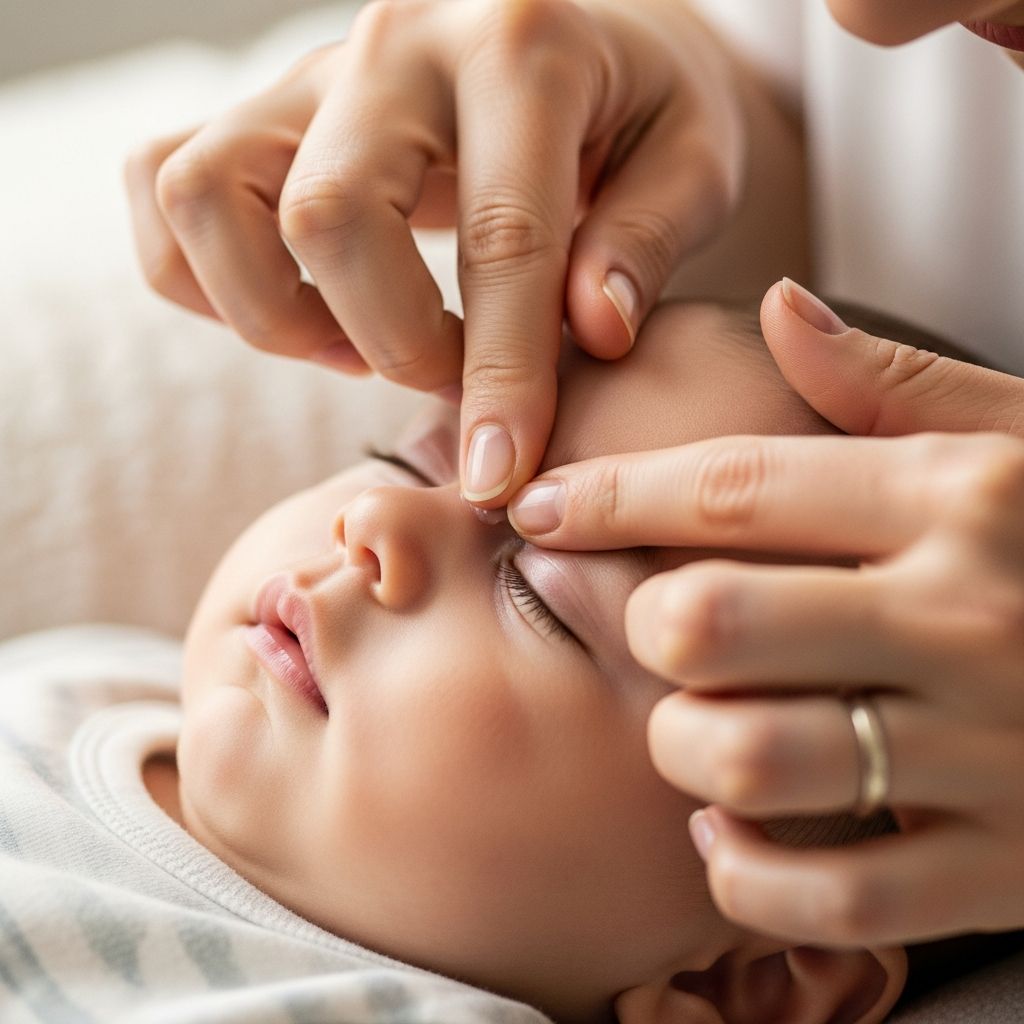
A blocked tear duct is a common reason for constant tearing and eye discharge in babies, and in many cases, a simple massage at home can help the eye drain normally again. This guide explains what is happening in your baby’s eye, how tear duct massage works, and how to do it safely alongside guidance from your child’s doctor.
Understanding Your Baby’s Tear Ducts
Tears are produced in small glands above each eye and spread across the surface of the eye every time your baby blinks, helping keep the eyes moist and free of dust. After washing the eye, tears normally drain through tiny openings in the inner corner of the eyelids into a narrow tube called the tear duct, which carries the fluid down into the nose.
In many newborns, a thin tissue membrane at the end of this tube has not yet fully opened, so tears have trouble draining and instead spill over the eyelids or collect as discharge. This is often called a congenital blocked tear duct or nasolacrimal duct obstruction, and in most babies it improves during the first year of life as the duct matures.
Common Signs of a Blocked Tear Duct
Parents usually notice symptoms in the first weeks or months of life, often in just one eye, though both eyes can sometimes be affected. Because other eye conditions can look similar, it is important that a health professional examine your baby to confirm that the problem is a simple blockage rather than an infection or another eye disease.
- Constant or frequent tearing in one or both eyes, even when the baby is not crying.
- Clear or yellowish discharge that may form a crust on the eyelashes, especially after sleep.
- Tears pooling along the lower eyelid or spilling down the cheek without obvious irritation.
- Normal-looking white part of the eye, or only mild redness around the inner corner, rather than a bright-red, painful eye.
Why Doctors Recommend Tear Duct Massage
For many babies, gentle pressure over the tear sac area can help open the membrane blocking the duct and encourage tears to drain properly into the nose. This method, sometimes called a Crigler massage, aims to create a brief increase in pressure in the tear drainage system so that the membrane at the lower end of the duct pops open.
Large clinical series have shown that most infants treated with conservative measures, including tear duct massage and prescribed eye medications when needed, improve without surgery during the first 6–12 months of life. Because massage is low-risk when done correctly and may prevent later procedures, many pediatricians and eye specialists teach parents how to perform it at home.
Preparing to Massage Your Baby’s Tear Duct
Before touching the area around your baby’s eye, preparation helps keep the process safe and more comfortable for both of you. Choosing a calm moment and having supplies ready reduces stress and makes it easier to use the correct technique consistently.
- Wash your hands thoroughly with soap and water, then dry them on a clean towel before starting.
- Trim your nails short and smooth any rough edges so you do not accidentally scratch the delicate skin near the eye.
- Gather supplies such as clean cotton pads or soft cloths to gently wipe away discharge if your doctor has said this is appropriate.
- Position your baby lying on a flat surface or cradled in your lap with the head supported so you can easily reach the inner corner of the eye.
Step-by-Step Tear Duct Massage Technique
Your child’s doctor or eye specialist should demonstrate the exact technique, but the basic approach usually follows a few simple, repeatable steps. The goal is to apply firm but gentle downward strokes over the tear sac area at the inner corner of the eye, next to the nose.
- Locate the massage area. Using the pad of your clean index finger, find the small soft area between the inner corner of your baby’s eye and the side of the nose; this is where the tear sac sits beneath the skin.
- Apply gentle pressure. Place your fingertip on this area and press in toward the nose and slightly backward, using enough pressure to feel the bone but not enough to leave a mark or make your baby cry from pain.
- Move in short downward strokes. While maintaining contact with the skin, slide your finger down along the side of the nose in short, firm strokes three to five times in a row.
- Repeat as directed. Many clinicians advise repeating this sequence a few times a day, such as morning and evening, but the exact frequency should follow your doctor’s instructions.
- Clean any discharge. If discharge appears at the inner corner of the eye, gently wipe it away with a clean, damp cotton pad, using a fresh pad for each wipe so that material is not spread back toward the eye.
How Often and How Long to Continue
The number of massage sessions per day and the length of time to continue the routine can vary depending on your baby’s age, the severity of symptoms, and your doctor’s preferences. Some specialists recommend several short sessions each day for a number of months, with periodic check-ups to monitor whether the duct has opened adequately.
In many cases, symptoms gradually improve over time as the duct matures and as repeated massage helps clear the blockage, though every child is different. Parents are typically asked to continue the technique until the tearing resolves or until the child reaches the age at which the provider would consider a minor procedure if the duct remains blocked.
Safety Tips and When to Stop
Tear duct massage is generally considered safe when performed gently on the correct area, but it should always be done under the guidance of a healthcare provider. If your baby becomes unusually fussy, seems to be in pain, or the skin becomes very red or irritated, pause the massage and discuss these changes with the doctor before continuing.
- Do not press directly on the eyeball; keep your finger on the side of the nose near the inner corner.
- Avoid massaging if the eyelids are very swollen, hot, or tender, or if there is a sudden increase in redness or pus, until a doctor has evaluated the eye.
- Follow all instructions about using any prescribed eye drops or ointments along with massage, and use only medications recommended specifically for your baby.
Blocked Tear Duct vs. Eye Infection
Because tearing and discharge can also appear with eye infections, such as conjunctivitis, it helps to understand some typical differences, while remembering that only a clinician can make an accurate diagnosis. In pure tear duct blockage, the surface of the eye often looks relatively clear, whereas infections usually cause more pronounced redness and discomfort.
| Feature | Blocked Tear Duct | Eye Infection (e.g., conjunctivitis) |
|---|---|---|
| Amount of tearing | Frequent or constant watering, often in one eye. | May water, but usually with more obvious redness and irritation. |
| Eye color | White part of the eye often looks relatively normal. | White part often appears red or pink. |
| Discharge | Clear or mildly yellow discharge, crusting on lashes, often worse after sleep. | Thicker yellow or green discharge, redness, and frequent wiping needed. |
| Baby’s comfort | Baby usually acts comfortable; rubbing eye less common. | Baby may rub eyes, seem bothered by light, or act fussy. |
When Tear Duct Massage May Not Be Enough
Although many infants experience improvement with time and regular massage, a small number continue to have significant tearing and discharge beyond the first year of life. In such cases, an eye specialist may discuss minor procedures to open the duct, such as probing or related techniques performed under anesthesia.
These procedures involve passing a very thin instrument through the tear duct to clear the blockage and generally have high success rates when used for persistent nasolacrimal duct obstruction. Your child’s doctor will balance the likelihood of spontaneous improvement with the benefits and timing of any intervention if the blockage does not resolve on its own.
Practical Tips for Daily Care
In addition to performing massage as directed, a few simple habits can help you care for your baby’s eyes day to day. Keeping the area clean and watching for any changes in symptoms allows you and your baby’s doctor to respond quickly if an infection develops.
- Use a clean, damp cotton pad to gently wipe from the inner corner outward, using a new pad each time so germs are not spread between eyes.
- Avoid sharing washcloths or towels between family members to reduce the risk of spreading any eye germs.
- Note whether tearing or discharge is improving, staying the same, or getting worse, and share these observations at follow-up visits.
Frequently Asked Questions
Is tear duct massage painful for my baby?
When done correctly, tear duct massage should feel like firm but gentle pressure rather than pain, and many babies tolerate it well, especially if they are calm and supported. If your baby appears to be in significant discomfort, cries more than usual, or the skin looks irritated, stop and check with your doctor before continuing.
How long does it usually take to see improvement?
Some parents notice a gradual decrease in tearing and discharge over weeks to months as the duct matures and the membrane opens, although each child’s timeline is different. Many reports indicate that a large proportion of obstructed tear ducts resolve by 8–12 months of age with conservative care, including massage and prescribed medications where needed.
Can I do tear duct massage without seeing a doctor?
It is important that a healthcare provider first confirm that your baby truly has a blocked tear duct and not an eye infection or another condition that requires different treatment. Once the diagnosis is clear, your doctor can demonstrate the correct technique and frequency so you can safely continue at home.
What are warning signs that need urgent medical care?
Seek urgent care if your baby’s eyelids become very red, swollen, or tender, if a fever develops, or if the eye itself looks very red or your baby seems unusually fussy or unwell, as these can be signs of infection in or around the tear sac. An infected tear sac, called dacryocystitis, needs prompt evaluation and treatment by a medical professional.
Will my child definitely need surgery if massage does not work quickly?
Not necessarily; many children improve gradually over time, and decisions about procedures are based on persistent symptoms, age, and examination findings rather than a strict deadline. If tearing and discharge continue beyond the age your provider considers typical for natural improvement, an eye specialist can explain available options, risks, and expected results.
Key Takeaways for Parents
A blocked tear duct in infancy is common and often resolves with time, especially when combined with simple at-home measures like tear duct massage taught by your child’s doctor. By learning a careful technique, watching for signs of infection, and attending scheduled follow-ups, you can play an active role in protecting your baby’s eye health while the tear drainage system matures.