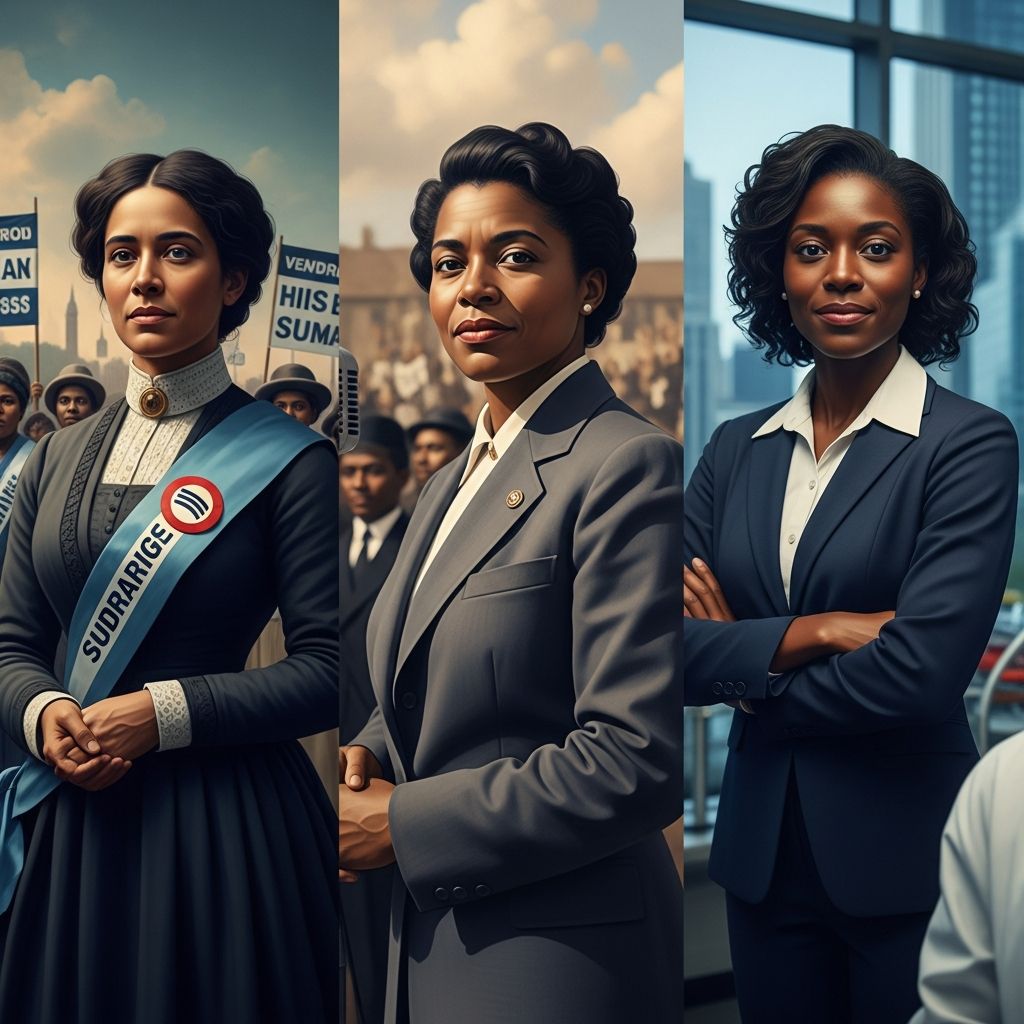
Trailblazers Who Shaped the Course of History
Throughout American history, Black women have demonstrated exceptional courage, intelligence, and determination in the face of systemic oppression. These women refused to accept the limitations society imposed upon them and instead created pathways for future generations. Their contributions span multiple domains—from education and business to civil rights activism and the arts—yet many of their stories remain underrepresented in mainstream historical narratives. Understanding these remarkable legacies helps young people recognize the power of perseverance and the importance of standing up for what is right, regardless of the obstacles encountered.
Journalists and Advocates Who Exposed Injustice
One of the most powerful weapons against oppression has always been the truth. Black women journalists and activists recognized this and used their voices to illuminate the darker aspects of American society that many preferred to ignore. These women worked tirelessly to document injustices and mobilize communities toward meaningful change.
Ida B. Wells-Barnett stands as a towering figure in investigative journalism and civil rights advocacy. Teaching to support her family after losing her parents at just 14 years old, Wells-Barnett eventually transitioned into journalism, where she began exposing the brutal reality of lynching in the American South during the late 19th and early 20th centuries. Her fearless reporting documented specific cases of racial violence and challenged the false narratives used to justify these murders. When her work made her a target, she was forced to flee the South, but she continued her advocacy from Chicago, where she expanded her efforts to include women’s suffrage and civil rights. Her dedication to truth-telling and her founding role in the NAACP demonstrated that Black women could be architects of systemic change.
Mary Ann Shadd Cary pioneered multiple firsts in the struggle for Black freedom and women’s equality. As an ardent abolitionist, she not only worked as part of the Underground Railroad but also became the first African-American woman to edit a weekly newspaper, speak at a Negro Convention, and graduate from law school. Her multifaceted approach to activism showed that Black women could excel in areas traditionally reserved for others, breaking barriers through sheer competence and determination.
Educators Building Foundations for the Future
Education has long been recognized as a pathway to freedom and opportunity. Black women understood this fundamental truth and dedicated themselves to ensuring that children—particularly Black children—had access to quality schooling and the knowledge needed to navigate and transform their world.
Mary McLeod Bethune transformed the landscape of Black education in America. Born to formerly enslaved parents, Bethune graduated from Scotia Seminary for Girls in 1893 and went on to establish what would become Bethune-Cookman University in Florida. Her vision extended beyond classroom instruction; she worked to advance opportunities for Black women through her leadership of the Florida chapter of the National Association of Colored Women. Recognizing the intersectionality of racism and sexism, Bethune also became a member of President Franklin D. Roosevelt’s “Black Cabinet,” ensuring that the voices and concerns of Black Americans reached the highest levels of government. Her commitment to education as a tool for liberation inspired countless students and established an institution that continues to serve communities today.
Harriet Tubman represents another form of education—teaching enslaved people the path to freedom itself. An escaped slave who became a conductor on the Underground Railroad, Tubman earned the nickname “Moses” for leading an estimated 300 people to freedom across 19 dangerous journeys. After the Civil War, she continued her educational mission by establishing freedmen’s schools and creating institutions to care for elderly and disabled Black Americans, recognizing that freedom required ongoing support and community care.
Entrepreneurs Who Built Economic Power
Economic independence has always been crucial to freedom and self-determination. Black women entrepreneurs understood that building businesses was not merely about personal wealth but about creating employment opportunities and economic leverage for their communities.
Madam C.J. Walker remains an iconic figure in American entrepreneurship and Black economic achievement. Rising from poverty, Walker launched her hair care business in 1904 with minimal capital, creating “Madam Walker’s Wonderful Hair Grower” to address the specific needs of Black women’s hair. What began as a personal solution evolved into the largest African-American business of its era, employing thousands of Black women and generating substantial wealth. Crucially, Walker recognized that business success came with social responsibility. She used her platform and resources to advocate for Black rights, support the fight against lynching, and advance civic and educational institutions. Upon her death, she ensured that two-thirds of her future net profits would benefit charitable causes, demonstrating that wealth accumulated through serving one’s community should return to uplift that community.
Mary Ellen Pleasant took a different entrepreneurial path, yet achieved similar results in terms of wealth accumulation and community impact. After arriving in San Francisco in 1852 to escape punishment for her abolitionist work, Pleasant strategically positioned herself as a housekeeper for the city’s prominent merchants. Through careful observation and the business knowledge she gleaned from overheard conversations, she began investing in real estate and mining stock. Her accumulated wealth became a tool for combating racism in her community, allowing her to support causes and individuals working toward racial justice.
Civil Rights Warriors Who Demanded Change
The Civil Rights Movement of the 20th century required visionary leadership, strategic thinking, and unwavering commitment to justice. Black women stood at the forefront of this movement, often developing the strategies and taking the personal risks necessary to transform society.
Rosa Parks became known as the “Mother of the Civil Rights Movement” through a single act of dignity and resistance. Her refusal to give up her seat on a Montgomery, Alabama bus in 1955 sparked the Montgomery Bus Boycott, which lasted over a year and ultimately led the Supreme Court to rule segregation on public transportation unconstitutional. Parks’ action was not impulsive; it was rooted in her long-standing commitment to equality and her understanding of the power of civil disobedience.
Constance Baker Motley fought segregation through the legal system, demonstrating that Black women could excel in law and judicial leadership. While attending Columbia Law School, Motley joined the NAACP’s legal staff, launching a career that would fundamentally reshape American law. As a litigator, she successfully argued nine out of ten Supreme Court cases, directly contributing to the desegregation of Southern schools, buses, and lunch counters. In 1966, she became the first Black woman to serve as a federal judge, breaking yet another barrier while continuing to protect constitutional rights for minorities throughout her judicial career.
Amelia Boynton Robinson brought the Civil Rights Movement to Alabama and paid a personal price for her commitment. In 1964, she became the first Black woman to run for office in the Alabama legislature and the first female Democratic candidate for that position. During the Selma to Montgomery marches, Robinson was brutally beaten by state troopers on what became known as Bloody Sunday, yet she continued her work for racial equality. Her resilience and determination were recognized in 1990 when she received the Martin Luther King Jr. Medal of Freedom.
Mary Church Terrell channeled personal tragedy into activism and organizational leadership. When her friend Thomas Moss was murdered because of his race, Terrell committed herself to fighting racial injustice through education and advocacy. She served as president of the National Association of Colored Women for five years and helped found the NAACP in 1909, institutions that would become central to the ongoing struggle for Black rights.
Reformers and Organizers Building Community Infrastructure
Beyond individual achievement, many Black women focused on building organizations and institutions that would serve their communities and advance collective liberation. This work often involved less public recognition but proved essential to sustaining movements and creating lasting change.
Fannie Barrier Williams exemplified this organizational and reform-oriented approach. After graduating from college, Williams became an activist for both African American and women’s rights, but her most enduring contributions came through institution-building. She co-founded the National League of Colored Women and played a crucial role in organizing Provident Hospital and its training school for nurses in 1893. By creating institutions that provided healthcare and professional opportunities, Williams addressed immediate community needs while simultaneously challenging the racist assumption that Black people lacked the capability to manage such organizations. Her regular writing for major publications extended her reach, allowing her to influence public opinion and advance education opportunities for Black women.
Josephine St. Pierre Ruffin built and maintained clubs for African-American women in New England, creating spaces where Black women could organize, support one another, and work collectively toward social change. As both a suffragist and an opponent of slavery, Ruffin exemplified how Black women connected multiple struggles for justice, understanding that their liberation required addressing racism, sexism, and economic inequality simultaneously.
Artists and Performers Breaking Cultural Barriers
Cultural achievement and artistic excellence represent forms of resistance and leadership. Black women who excelled in music, performance, and the arts demonstrated their intellectual and creative capabilities while inspiring millions and sometimes using their platforms for social good.
Ella Fitzgerald rose from an amateur contest at the Apollo Theater to become one of the greatest jazz singers of all time. Winning 13 Grammy Awards and selling over 40 million albums, Fitzgerald achieved extraordinary commercial and critical success as the “First Lady of Song.” Her artistry transcended entertainment; her success proved that Black women could achieve the highest levels of recognition in fields where they were not expected to excel. Beyond her music career, Fitzgerald received the NAACP Image Award for Lifetime Achievement, recognizing her contributions to the broader struggle for Black equality.
Athletes Competing at the Highest Levels
Alice Coachman became a trailblazer in international athletics when she won a gold medal in the high jump at the 1948 Summer Olympics, becoming the first Black woman from any country to achieve this honor. Her record-breaking leap of 5 feet 6 and 1/8 inches demonstrated that Black women could compete with and defeat athletes from around the world. Recognizing her platform and responsibility, Coachman later founded the Alice Coachman Track and Field Foundation to support young athletes and retired Olympic veterans, extending her legacy beyond her own achievements.
Key Characteristics of These Transformative Figures
Examining the lives of these pioneering Black women reveals common threads that help explain their exceptional impact:
- Intersectional Awareness: Many recognized that their struggles encompassed both racism and sexism, and worked to address multiple forms of oppression simultaneously.
- Strategic Thinking: Rather than simply reacting to injustice, these women developed long-term strategies and built institutions to create lasting change.
- Courage Under Pressure: Facing threats, violence, and social ostracism, they persisted in their work despite considerable personal risk.
- Community Orientation: Their achievements were not purely individual; most used their success to benefit broader communities and advance collective liberation.
- Intellectual Excellence: Whether through formal education, self-teaching, or strategic observation, these women demonstrated exceptional intelligence and mastery of their fields.
- Moral Conviction: A deep commitment to justice and equality, rather than personal gain, motivated their most significant contributions.
Why These Stories Matter for Today’s Generation
Learning about Black women pioneers serves multiple purposes for young people today. First, these stories provide role models who demonstrate that individuals can create meaningful change despite systemic barriers. Second, understanding this history helps explain contemporary inequalities and movements, revealing that current struggles for justice have deep historical roots. Third, these narratives challenge oversimplified historical accounts and reveal the complexity, agency, and power of those often marginalized in traditional histories. Finally, these examples inspire young people to consider how they might contribute to justice and community wellbeing in their own contexts.
Common Questions About Black Women in History
Why are many of these women’s stories less well-known than those of Black male leaders?
Historical narratives have traditionally centered male leadership while minimizing women’s contributions. Additionally, sexism within civil rights organizations sometimes resulted in women’s work being undervalued or attributed to male colleagues. Intentional effort to research and elevate women’s histories is necessary to correct these distortions.
How did Black women navigate the challenge of facing both racism and sexism?
Black women developed strategies to address intersecting oppressions, including building separate women’s organizations, emphasizing their competence and education, creating economic independence through entrepreneurship, and consciously articulating the connections between racial and gender justice.
What can young people today learn from these historical figures?
Young people can learn that individual and collective action matter, that persistence in the face of obstacles can create real change, that building institutions and organizations amplifies impact, and that one’s talents and success can be directed toward community benefit and social justice.
How have these women’s contributions shaped modern America?
These women’s work directly led to civil rights legislation, educational access, voting rights, economic opportunities, and cultural transformation. Their institutions remain active, their legal victories remain precedent, and their philosophical frameworks continue guiding social justice movements.
References
- 20 Black Women Who Made History — Studies Weekly. 2024. https://www.studiesweekly.com/black-women-history/
- 10 Black Women Who Weren’t in Your History Books — IGNITE National. 2024. https://ignitenational.org/blog/10-black-women-who-werent-in-your-history-books
- African-American Women Change The World — National Women’s Hall of Fame, Google Arts & Culture. 2024. https://artsandculture.google.com/story/african-american-women-change-the-world-national-women-s-hall-of-fame/zAVhKkr4Mjm-IQ
- Black Women and the Struggle for Equality — National Park Service, U.S. Department of Interior. 2024. https://www.nps.gov/subjects/womenshistory/black-women-and-the-struggle-for-equality.htm