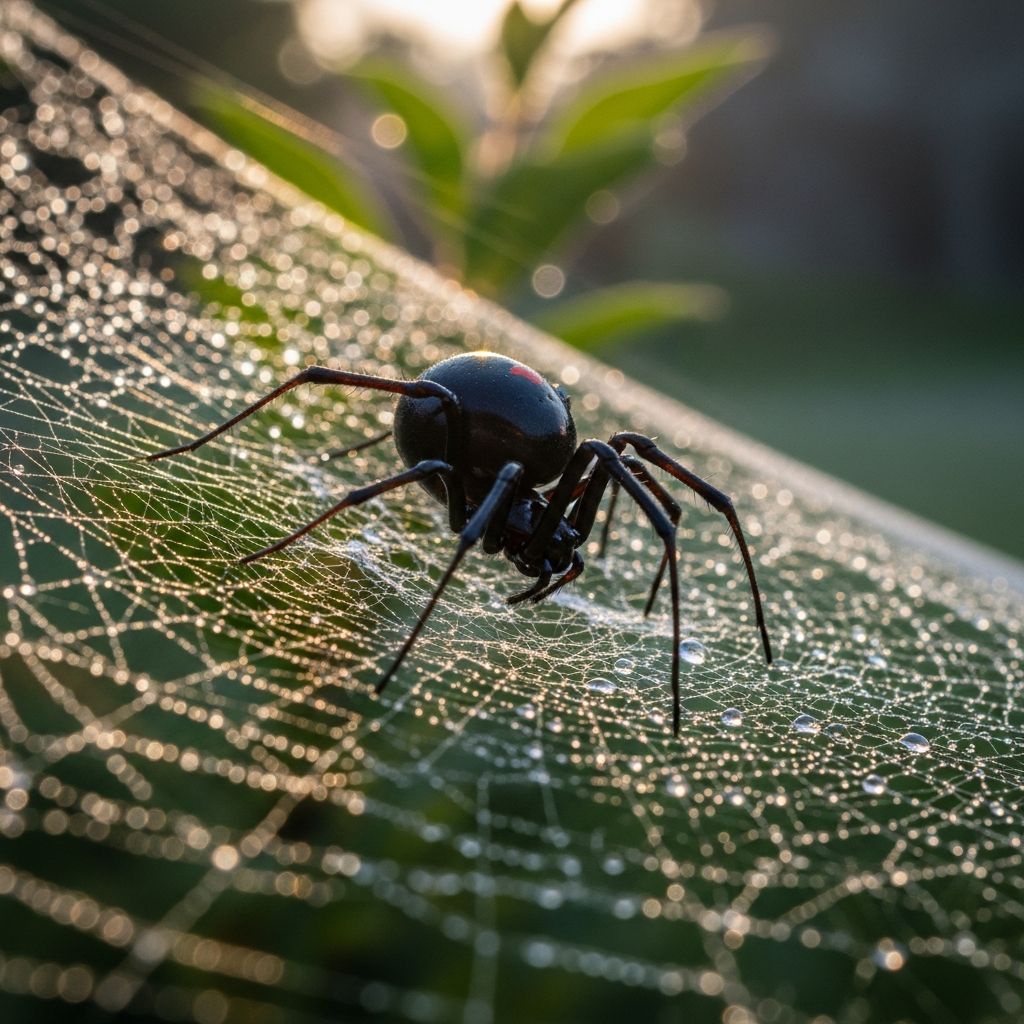
Black widow spiders may look scary, but learning about them can actually make you safer and less afraid. This guide explains what they are, how to recognize them, what a bite feels like, and what kids and families can do to stay safe.
What Is a Black Widow Spider?
A black widow is a type of spider known for its powerful venom and shiny, dark body. The female black widow is the one most people talk about, because she has stronger venom and a more recognizable appearance.
Even though black widows are venomous, they do not go looking for people to bite. They usually hide and mind their own business unless they feel trapped or threatened.
How to Recognize a Black Widow
Not every small black spider is a black widow, but black widows have some clues that set them apart. Learning these clues helps kids know when to be extra careful.
Key Features to Look For
- A shiny, smooth, black or very dark brown body on the adult female.
- A round or slightly bulb-shaped abdomen (the back part of the body).
- A red or orange marking on the underside of the abdomen, often shaped like an hourglass.
- Long, thin legs compared with the size of the body.
Male black widows are usually smaller, lighter in color, and may have lighter markings instead of the bright red hourglass. Because they are smaller and bite less strongly, they are usually less dangerous to people.
Quick Look Table: Female vs. Male
| Feature | Female Black Widow | Male Black Widow |
|---|---|---|
| Body size | Larger, rounder abdomen | Smaller and slimmer |
| Color | Shiny black most of the time | Brownish or lighter, often with patterns |
| Red marking | Clear red or orange hourglass underneath | Smaller, lighter, or less obvious marks |
| Danger to people | Venom can cause strong symptoms | Rarely causes serious problems |
Where Black Widows Like to Hide
Black widows prefer quiet, dark places where they will not be disturbed. They often stay close to the ground so they can build their messy, strong webs to catch bugs.
Common Hiding Spots
- Woodpiles and stacks of firewood.
- Old boxes, toys, or gardening tools left outside.
- Undisturbed corners in garages, sheds, and barns.
- Under outdoor furniture that is rarely moved.
- Cracks and gaps around steps, stone walls, or fences.
Because they like hidden places, kids are most likely to get close to a black widow when reaching into dark spaces or picking up something that has been sitting outside for a long time.
The Black Widow’s Web and Diet
Black widows spin webs that look uneven and tangled instead of neat and circular. These webs are usually low to the ground and very strong for their size.
The spider waits in or near the web for insects to get stuck, then quickly wraps and bites them. Black widows help control insect populations by eating many kinds of bugs.
What They Eat
- Flies and mosquitoes.
- Beetles and grasshoppers.
- Moths and other small insects.
Because they eat many insects, black widows are part of keeping nature in balance. They are helpful in gardens, as long as people do not accidentally get too close.
How Poisonous Are Black Widows?
Black widow venom is strong, but that does not mean every bite is deadly. In many cases, people recover fully with proper medical care.
The venom affects the nervous system, which is the part of the body that controls muscles and sends signals between the brain and the rest of the body.
Who Is Most at Risk?
- Young children and babies.
- Older adults.
- People with serious health problems or small body size.
Healthy older kids and adults can still feel very sick from a bite, but with quick medical care, deaths from black widow bites are now rare in many places.
What a Black Widow Bite Feels Like
Sometimes people do not even notice the bite right away. The bite may feel like a sharp pinprick or a small sting at first, and the area may look like two tiny red dots.
Possible Symptoms After a Bite
- Redness and mild swelling around the bite.
- Increasing pain that can spread to nearby areas, such as the chest, back, or belly.
- Muscle cramps or tight, painful muscles.
- Headache, sweating, or feeling shaky.
- Feeling sick to the stomach or wanting to throw up.
- Trouble breathing or chest tightness in severe cases.
Symptoms can begin within minutes to a few hours. Any suspected black widow bite should be treated as serious until a doctor has checked it.
What to Do If You Think a Black Widow Bit You
If a child might have been bitten by a black widow, staying calm and acting quickly is very important. Panicking can make breathing and pain feel worse, so adults should reassure the child while seeking help.
Step-by-Step First Aid Guide
- Move away from the spider. Do not try to catch it with your hands. If it is safe, an adult can carefully take a photo from a distance or gently trap it in a container for identification.
- Wash the bite area. Use mild soap and water to clean the skin to reduce germs.
- Apply something cool. A cool, damp cloth or wrapped ice pack can help with pain and swelling. Do not place ice directly on bare skin.
- Keep the bitten area still. Limiting movement may help slow the spread of venom.
- Call for medical help. Contact a doctor, urgent care, emergency services, or a poison control center right away for advice.
Only a doctor can decide if special medicine, such as antivenom or pain medication, is needed. Do not try home cures or old “remedies” without talking to a medical professional.
How Doctors Treat Black Widow Bites
Health professionals will ask when the bite happened, what the spider looked like, and how the person is feeling. They will also check vital signs such as heart rate, breathing, and temperature.
Possible Treatments
- Pain medicine to reduce strong muscle pain and cramps.
- Medicines that relax tight muscles.
- Fluids through a vein (IV) in more serious cases.
- Special antivenom for some patients with very severe symptoms, especially those who are very young, older, or have other health problems.
Most kids who receive care early recover well, though they may feel tired and sore for a few days after the bite.
How Kids and Families Can Stay Safe
Many black widow bites can be prevented with simple habits. Teaching children to respect all spiders and not to handle them is one of the best protections.
Safety Tips for Kids
- Do not stick hands into dark holes, woodpiles, or under rocks where you cannot see clearly.
- Wear gloves when helping with yard work, gardening, or carrying firewood.
- Shake out shoes, boots, and sports gear that have been left in a garage or shed before putting them on.
- Do not play with or tease spiders or insects, even if they look dead.
- Tell an adult right away if you see a spider that looks like a black widow in or near the house.
Safety Tips for Parents and Caregivers
- Keep yards and storage areas tidy by clearing away piles of wood, leaves, and junk where spiders like to hide.
- Seal cracks and gaps in walls, windows, and doors to reduce spider hiding spots.
- Use sealed storage bins instead of open cardboard boxes in garages and sheds.
- Teach children how to recognize the general look of a black widow and to avoid touching any spiders.
- Work with pest control professionals if you believe there is a large number of venomous spiders around your home.
Black Widows in Nature: Not All Bad
Although they can be dangerous, black widows are not “evil” creatures. Like other spiders, they are part of the food web and help keep insect numbers under control.
Many animals such as birds, wasps, and larger insects eat spiders, including black widows, so these spiders also provide food for other species.
Common Myths Kids Hear About Black Widows
Stories and movies sometimes make black widows seem much more frightening than they really are. Clearing up myths helps children understand the real level of risk.
Myth vs. Fact
| Myth | What Actually Happens |
|---|---|
| “Black widows chase people.” | They prefer to hide and usually bite only when they feel trapped or pressed against skin. |
| “Every bite is deadly.” | Bites can be serious, but with quick medical care, most people recover. |
| “All black spiders are black widows.” | There are many harmless black spiders. Only some have the red hourglass mark and strong venom. |
| “Female black widows always eat the male.” | This can happen, but it is not guaranteed and does not occur in every mating. |
Talking to Kids About Venomous Animals
Black widows are a good way to teach children that some animals can be dangerous but still deserve respect. The goal is to build caution, not fear.
Using calm language, clear rules, and real examples (such as pictures from trusted books or science websites) can help kids remember what to do without becoming overly worried.
FAQs About Black Widow Spiders
Are black widow spiders always deadly?
No. Their venom is strong, but many people fully recover with the right medical care. The bite is an emergency, but it is not always fatal.
Can kids live in areas where black widows are common?
Yes. Millions of people live in places with black widows. Good safety habits, regular cleaning, and knowing when to get help make living in those areas much safer.
What should a child do if they see a spider that might be a black widow?
The safest choice is to step back, leave it alone, and tell a nearby adult. The adult can decide whether to move it, take a picture for identification, or call pest control.
Can pets be hurt by black widow bites?
Yes, dogs and cats can also be affected. If a pet suddenly shows pain, weakness, or odd behavior after being near spiders or woodpiles, a veterinarian should be contacted quickly.
Is it okay to keep a black widow as a pet?
Keeping venomous animals is not safe for most families, especially with children in the home. It is better to observe spiders outdoors or learn about them from books, videos, and museums.
Key Takeaways for Kids and Parents
- Black widow spiders are venomous, but they usually bite only when they feel threatened.
- Learning how to recognize their general appearance helps everyone stay alert in the right situations.
- Simple habits—like wearing gloves, shaking out shoes, and avoiding dark hiding spots—greatly reduce the risk of bites.
- Any suspected black widow bite deserves quick attention from a doctor or other medical professional.
- With knowledge and respect, kids can stay safe around spiders while still appreciating their role in nature.