Building Cultural Awareness Through Hands-On Learning
Teaching children about Black history extends far beyond classroom textbooks and memorization exercises. When families and educators incorporate interactive, creative experiences into their approach to cultural education, young learners develop a deeper understanding and lasting appreciation for the contributions and experiences of Black Americans. By offering engaging activities tailored to different developmental stages, children can explore history in ways that feel meaningful, fun, and personally relevant to their lives.
The most effective learning experiences combine multiple approaches—combining storytelling with creative expression, movement with intellectual exploration, and individual reflection with group discussion. This multifaceted approach helps children retain information while developing critical thinking skills and emotional connections to the historical narratives they encounter.
Foundational Experiences for Toddlers and Young Learners
The earliest years of childhood provide an ideal foundation for introducing cultural diversity and historical awareness. Young children learn best through sensory experiences, visual storytelling, and the comfort of familiar routines like shared reading time.
Incorporating Literature Into Daily Routines
Building a diverse home library is one of the most straightforward yet powerful ways to expose young children to Black history and culture. Rather than limiting literary selections to formal history books, consider incorporating stories that feature everyday experiences of Black families and communities. Picture books with vibrant illustrations and engaging narratives help toddlers connect with characters and stories while normalizing diverse representations in their reading environment.
Many libraries and cultural institutions offer video readings of children’s books, making literature accessible in multiple formats. These digital storytelling resources allow families to explore stories together through screens while maintaining the interactive, discussion-oriented benefits of shared reading time.
Museum Exploration and Virtual Learning Spaces
Young learners benefit from visual exploration of historical contexts and cultural artifacts. The National Museum of African American History and Culture provides virtual exhibits and interactive learning kits designed specifically for children and families. These digital experiences allow toddlers and younger children to encounter history through images, videos, and simplified educational content without requiring travel to physical locations.
Creative Expression for Elementary-Age Children
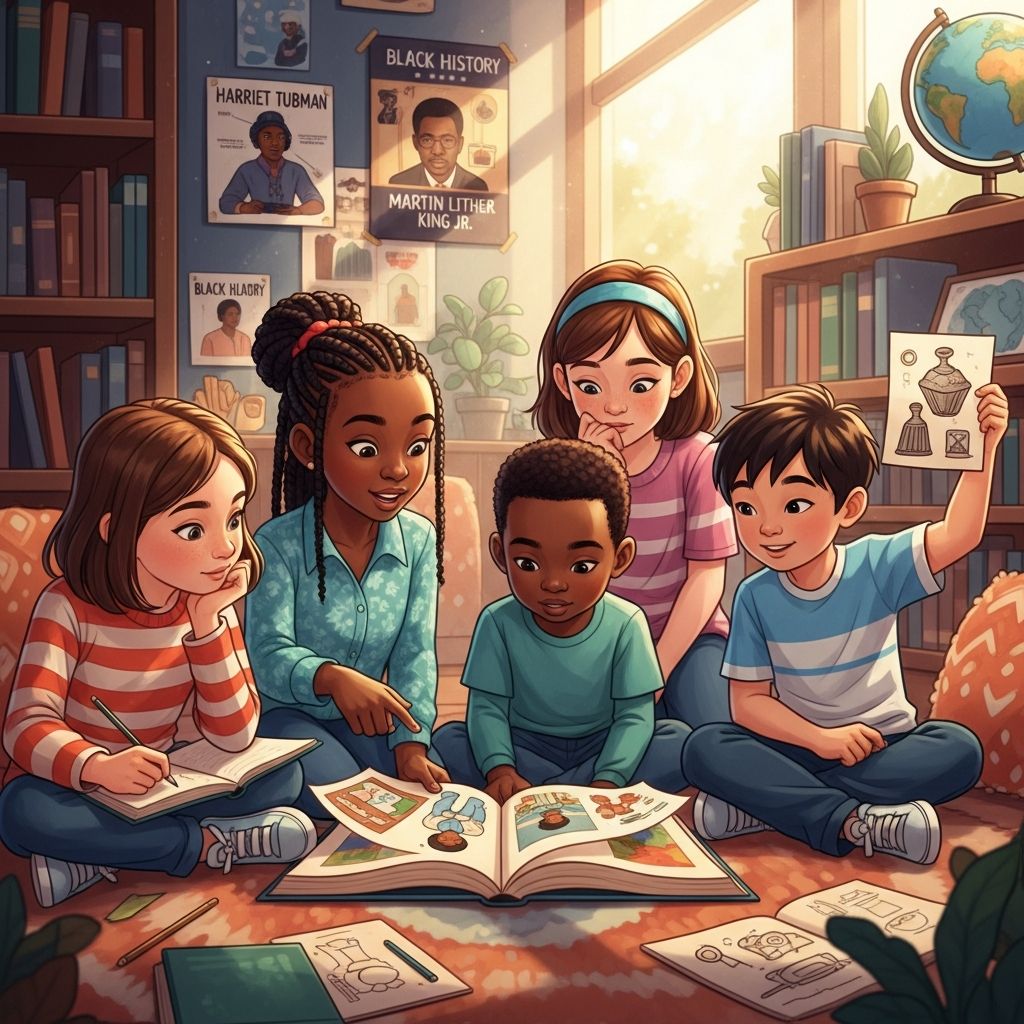
As children progress through elementary school, their capacity for understanding more complex historical concepts increases alongside their ability to engage in detailed creative projects. This age group thrives when learning combines artistic expression with factual information.
Art Projects Connecting History and Creativity
Creating visual representations helps children process and retain historical information while developing artistic skills. Activities might include:
- Designing colorful mosaics inspired by artist Alma Thomas, exploring how geometric shapes and vibrant colors can convey emotion and cultural significance
- Creating paper crafts celebrating specific historical figures, such as paper airplanes honoring pioneers in aviation or costume pieces representing cultural contributions
- Making pop art inspired by influential leaders, blending contemporary art techniques with portraits of historical figures
- Designing posters highlighting African American inventors and their groundbreaking innovations
- Crafting decorative elements like freedom quilts with individual squares that children design, creating collaborative artworks that celebrate collective heritage
Interactive Research and Display Projects
Elementary students develop research skills while exploring history through interactive bulletin board projects. A “Who Am I?” bulletin board featuring photos of historic Black Americans with flip-up or pull-back sections revealing biographical information engages students in active discovery. Children can research assigned figures, write informative captions, and present findings to classmates, developing presentation skills alongside historical knowledge.
Thematic Learning Stations
Creating designated learning stations around different figures or themes allows children to rotate through various activities at their own pace. One station might focus on a specific inventor with hands-on experiments, while another features biographical reading materials and discussion prompts. This approach accommodates different learning styles and allows children to spend more time on topics that particularly capture their interest.
Physical Activity and Cultural Traditions
Learning doesn’t require sitting still. Movement-based activities help kinesthetic learners engage with cultural history while promoting physical health and coordination.
Dance and Step Traditions
Step dancing and stepping originated from African dance traditions and offers elementary and older students an energetic way to connect with cultural heritage. Many online platforms provide beginner-friendly tutorials that teach basic stepping movements. This activity combines physical exercise with cultural education, allowing students to embody traditions while learning their historical significance.
Music and Performance Exploration
Organizing listening parties featuring music from different eras of Black American cultural production—from jazz and blues to hip-hop and contemporary genres—provides context for understanding cultural evolution. Following listening sessions with age-appropriate discussions helps children analyze how music reflects the times in which it was created and how it communicates cultural values and experiences. Extending these activities to include performance, whether through singing, dancing, or instrument playing, deepens the learning experience.
Advanced Learning for Middle and High School Students
Older students can engage with more complex historical narratives, analytical thinking, and nuanced discussions about cultural impact and social change.
Literature Circles and Peer-Based Learning
Organizing literature circles where small groups read different books about significant Black historical figures promotes collaborative learning and discussion skills. For middle schoolers, age-appropriate biographies offer engaging entry points into historical study. High school students can explore more complex works like Malcolm X: A Life of Reinvention or engage with memoirs and essays that examine historical events and their ongoing impacts.
Film Analysis and Contemporary Connections
Films like Hidden Figures introduce students to historical narratives while sparking post-viewing discussions about persistence, discrimination, and achievement. High school students might also explore “Afrofuturism” through science fiction films like Black Panther or literary works by authors such as Octavia E. Butler, examining how Black artists imagine cultural futures and draw upon historical experiences to create speculative narratives.
Reinterpreting Historical Voices for Modern Audiences
Encourage high school students to select historic speeches, poems, or songs by influential Black figures and adapt them for contemporary contexts. This assignment develops critical thinking about how historical messages remain relevant to modern challenges while allowing students to engage creatively with significant cultural texts.
Subject-Specific Learning Opportunities
Integrating Black history across different subject areas helps students see how Black Americans contributed across every field of human endeavor.
Scientific Contributions and STEM Learning
Exploring the achievements of Black inventors and scientists provides concrete examples of innovation and problem-solving. Students can conduct chemistry experiments inspired by Percy Julian’s work with synthetic compounds, create batteries using copper and other materials, or design engineering projects inspired by Granville T. Woods’ work on railway systems. These hands-on STEM activities demonstrate that scientific advancement builds upon accumulated knowledge and human creativity across cultures.
Literary and Artistic Traditions
Poetry writing exercises where students emulate Maya Angelou’s style, study the visual art techniques of renowned Black painters, or learn about the Harlem Renaissance through virtual tours help students understand Black cultural contributions to literature and visual arts. The Harlem Renaissance period provides particularly rich material for exploration, introducing students to musicians like Duke Ellington and Billie Holiday, alongside visual artists whose innovations shaped American culture.
Historical and Social Studies Exploration
Students developing research and public speaking skills through interactive Black history exhibitions learn both subject content and presentation abilities. These exhibitions might feature curated collections of artifacts, biographical information, and student-created interpretive materials that communicate historical knowledge to various audiences.
Creating Inclusive Classroom and Family Environments
Beyond specific activities, the broader environment in which learning occurs significantly impacts how children internalize historical information and develop their cultural awareness.
Diverse Representation in Everyday Materials
Intentionally selecting classroom and home materials—including posters, decorations, and display items—that showcase Black achievement year-round normalizes diverse representation and sends messages about whose stories matter. Creating bulletin boards celebrating Black historical figures or hosting door-decorating contests during Black History Month extends learning beyond traditional lessons into the physical spaces where children spend their time.
Open Dialogue and Discussion Practices
Creating safe spaces for children to ask questions, share perspectives, and engage in respectful discussions about history and culture helps them process complex information and develop nuanced understanding. Educational settings that acknowledge both inspiring achievements and historical trauma create space for honest learning about the past while celebrating resilience and ongoing contributions.
Assessment and Extension Ideas
| Age Group | Primary Learning Method | Assessment Approach | Extension Opportunity |
|---|---|---|---|
| Toddlers/Preschool | Picture books, visual exploration | Observation of engagement and discussion | Family field trips to museums and cultural centers |
| Elementary | Arts and crafts, research projects | Creative portfolios and presentations | Collaborative community quilts or murals |
| Middle School | Literature circles, thematic stations | Written reflections and peer discussions | Student-curated exhibitions and performances |
| High School | Film analysis, literary adaptation | Essays and presentations | Community service projects connected to historical themes |
Frequently Asked Questions
How can I make Black history learning feel relevant to children’s daily lives?
Connect historical figures and events to contemporary issues children encounter. Discuss how historical innovations solved problems, how leaders advocated for change, and how cultural traditions continue evolving today. Help children see themselves as part of ongoing historical narratives.
What should I do if my child asks difficult questions about slavery or discrimination?
Respond honestly using age-appropriate language. Acknowledge that these painful parts of history happened while emphasizing resilience, resistance, and ongoing efforts toward justice. Frame history as something humans create through choices and actions.
How can teachers and parents work together on Black history learning?
Share recommended resources, discuss activities children are engaged with at school, extend learning through family projects, and create opportunities for children to share what they’re learning with family members.
Are these activities limited to February?
While February provides a designated focus, integrating Black history throughout the academic year provides more substantial and meaningful learning. Consider ongoing literature selections, monthly spotlights, and year-round representation in classroom and home environments.
How do I find diverse, high-quality books for young children?
Consult librarians who specialize in children’s literature, explore curated lists from education organizations, and review books featuring everyday experiences of Black families alongside historical narratives. Balance educational intent with engaging storytelling.
Building Lasting Understanding
When children engage with Black history through multiple modalities—reading, creating, moving, discussing, and reflecting—they develop richer understanding and stronger retention than through passive learning alone. These varied approaches also allow different learners to find entry points matching their strengths and interests, making history feel accessible and personally meaningful rather than distant or irrelevant.
The goal of teaching Black history extends beyond accumulating facts about dates and names. Instead, effective learning helps children understand how ordinary people made extraordinary contributions, how communities persisted through challenges, and how cultural traditions continue shaping contemporary life. By creating opportunities for meaningful engagement with this history, families and educators equip children with knowledge, appreciation, and inspiration that influences how they understand themselves and their society.
References
- Black History Month Activities for Kids of All Ages — Boys & Girls Clubs of America. 2024-11. https://www.bgca.org/news-stories/2024/November/black-history-month-activities-for-kids-of-all-ages/
- Celebrating Black History Month Resources with Young Minds — Juliette’s House. 2024. https://www.julietteshouse.org/blog/celebrating-black-history-month-resources-with-young-minds
- 13 Meaningful Black History Month Activities for Kids to Add to Your Classroom — Teach Starter. 2024. https://www.teachstarter.com/us/blog/black-history-month-activities-for-kids-free-resources-included/
- 40 Black History Month Activities for February and Beyond — We Are Teachers. 2024. https://www.weareteachers.com/7-fresh-ideas-for-black-history-month/
- 12 Black History Month Activities for Kids — Kids Activities Blog. 2024. https://kidsactivitiesblog.com/132853/12-black-history-month-activities-for-kids/