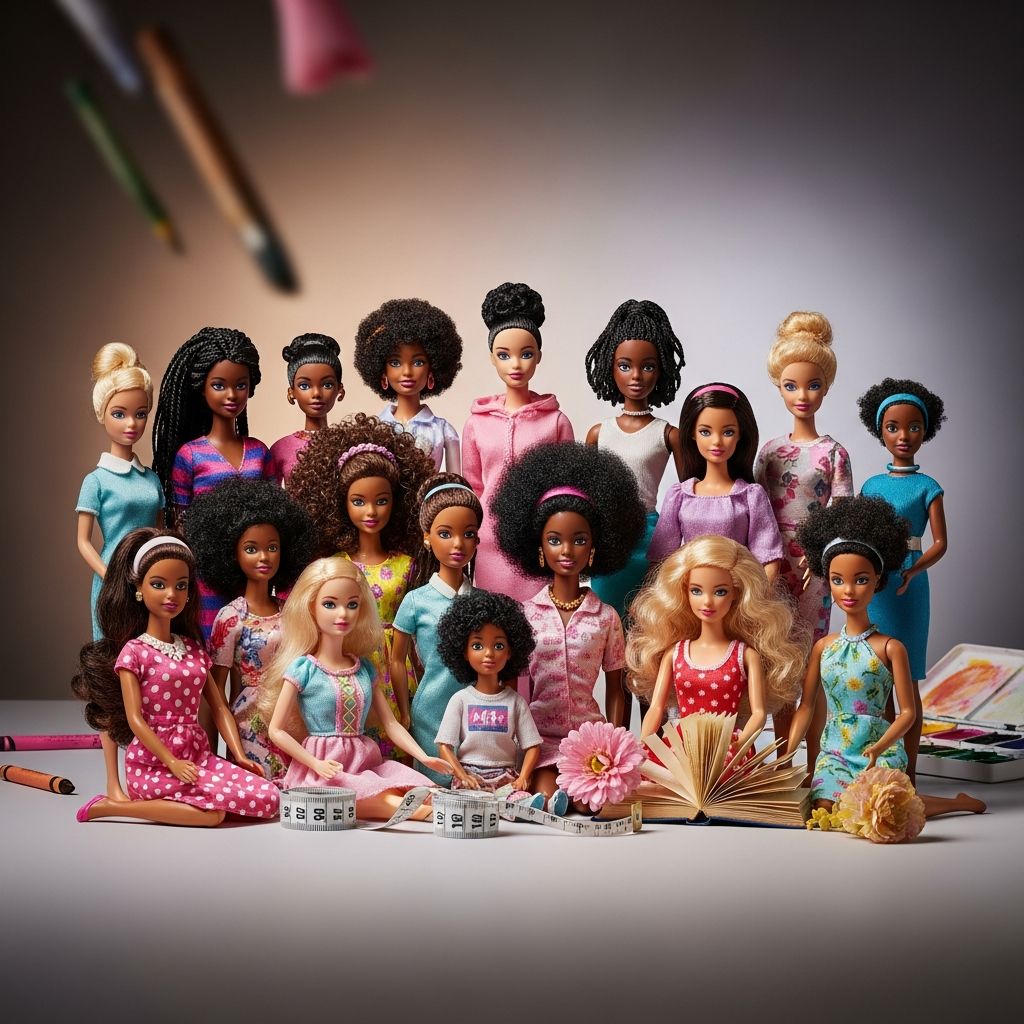
Barbie dolls have captivated generations of children, serving as canvases for imagination and mirrors reflecting societal ideals. For Black girls, however, this iconic toy carries layers of complexity, intertwining joy with subtle messages about beauty, race, and worth. While Mattel has expanded its lineup to include diverse skin tones and hairstyles, research reveals persistent challenges in how these dolls influence young minds.
The Historical Roots of Doll Preferences
Doll play has long been a lens into children’s racial attitudes. In the 1940s, psychologists Kenneth and Mamie Clark conducted seminal experiments presenting Black children aged three to seven with dolls varying in skin complexion. Most identified with the darker doll but overwhelmingly preferred the lighter one, associating it with positive traits like beauty and desirability. These findings underscored how segregation and prejudice fostered feelings of inferiority among Black youth.
Decades later, echoes of these preferences persist. Even as toy diversity grows, studies show African American children are less likely to select dolls resembling themselves compared to their white peers. This pattern highlights a deeper issue: the cultural defaulting of Eurocentric features as the pinnacle of attractiveness.
Modern Research on Black Barbies and Self-Perception
Recent academic work from Cal State Fullerton provides fresh insights into Black Barbie’s role. Undergraduate researcher Amirah Kambe, guided by faculty expert Dr. Amirah Saafir, analyzed focus groups with Black girls aged 5-10. Participants interacted with various Barbies, discussing race, body types, and hair textures. Despite parental encouragement of natural hair pride, many deemed the blonde, straight-haired Malibu Barbie the “real” or prettiest doll.
“Whiteness was perceived as the default for Barbie, and straight, blonde hair was a physical indicator for perfection,” Kambe observed. This perception extends beyond the dolls themselves to retail displays, where Black Barbies often occupy secondary positions or ‘special edition’ shelves, subtly reinforcing hierarchies.
The study, featured in contexts like the Netflix documentary Black Barbie, emphasizes that mere availability isn’t enough. Marketing, packaging, and store placement shape how children value these toys. Kambe’s public health lens links these early exposures to long-term mental health outcomes, including confidence and identity formation.
Hair Texture: A Key Battleground for Identity
Hair emerges as a focal point in these discussions. Black girls in the CSUF study expressed affection for their natural textures but still idealized straight hair on dolls. This duality reflects broader societal pressures, where media and toys often prioritize sleek, European-style locks.
Dr. Saafir, a veteran Barbie scholar, stresses the need for intentional representation. Her decade-plus of research, including contributions to Black Barbie, reveals how ‘alternative’ positioning of diverse dolls undermines their normalizing power. For parents, this means curating play environments that celebrate variety without caveat.
- Observed Play Patterns: Girls gravitated toward ‘classic’ Barbies despite diverse options.
- Retail Insights: Black dolls less prominently displayed, impacting accessibility.
- Health Implications: Linked to self-worth and emotional well-being.
Broader Psychological Impacts of Toy Representation
Beyond Barbie, dolls serve as proxies for self-concept. Clinical psychologist Dr. April Harris-Britt notes that children’s racial identification influences esteem development. Positive minority images in toys counteract narratives deeming whiteness superior.
Organizations like Black Dolls United engage girls directly, complimenting features like skin and hair to affirm outer and inner beauty. “Dolls are more than toys; they are a reflection of who we are,” their facilitators assert. This hands-on approach builds resilience against media biases.
Conversely, limited representation can perpetuate myths of undesirability. As Kambe puts it, inadequate positive mirroring contributes to internalized biases lasting into adulthood.
Evolution of Barbie: Progress and Pitfalls
Mattel has introduced curvaceous bodies, varied skin tones, and textured hair since 2016. Yet, critiques linger. Black Barbies sometimes feature straightened hair or athletic builds over everyday representations, missing nuanced diversity.
The 2023 Barbie film spotlighted these tensions, with characters grappling with real-world body standards. Research contrasts this: while some exposure to Barbie images lowers girls’ self-esteem via objectification, diverse iterations may counter that.
| Era | Key Developments | Impact on Black Girls |
|---|---|---|
| 1940s-1980s | Predominantly white, slim Barbies | Reinforced inferiority per Clark doll tests |
| 1980s-2010s | Introduction of Black Barbie (1959 debut, expanded lines) | Mixed; often secondary marketing |
| 2016-Present | Diverse bodies, hair; Netflix doc | Improved but defaults persist |
Empowering Parents: Practical Strategies
Parents play a pivotal role in reframing doll play. Start by discussing dolls openly: “What makes this doll special? How is she like you?” This prompts critical thinking.
Seek inclusive brands beyond Mattel, prioritizing natural features. Rotate toys to avoid hierarchy. Pair play with stories of diverse icons like Serena Williams or Misty Copeland, who inspire Barbie-inspired careers.
- Curate Collections: Balance with multi-ethnic dolls.
- Engage Actively: Narrate empowering stories during play.
- Monitor Media: Complement with positive representations.
- Advocate: Share feedback with manufacturers.
Personal anecdotes abound. One former player recalled Barbie fueling creativity, later critiquing its materialism through a feminist lens. For Black girls, this evolution can transform potential pitfalls into empowerment tools.
The Path Forward: Calls for Industry Change
Researchers urge Mattel to normalize diversity in core lines, not variants. Equitable retail placement and campaigns featuring Black Barbies as protagonists are essential. Conferences like the Southern California Undergraduate Research event amplify these voices, bridging toys to public health.
As Saafir notes, centering children’s perspectives reveals representation’s stakes: belonging, confidence, and health. With intentional shifts, Barbie can evolve from complicated icon to true ally.
Frequently Asked Questions (FAQs)
What do studies say about Black girls’ doll preferences?
Recent CSUF research shows many prefer ‘classic’ white Barbies despite diverse options, viewing straight hair as ideal.
How does toy placement affect children’s choices?
Secondary shelf positions for Black dolls reinforce them as ‘other,’ per retail analysis.
Can parents mitigate negative impacts?
Yes, through guided discussions, diverse collections, and affirming play narratives.
What role did the Clark doll tests play?
They linked racial preferences to segregation-induced inferiority in Black children.
Is Barbie’s diversity progress sufficient?
Improvements exist, but marketing and defaults need deeper reform.
References
- CSUF Student Researcher Explores Black Barbie’s Effect on Childrens Self-Image — The Edu Ledger. 2025. https://www.theeduledger.com/demographics/african-american/article/15741065/csuf-student-researcher-explores-black-barbies-effect-on-childrens-selfimage
- Undergraduate Researcher Explores Black Barbie’s Influence on Childrens Self-Image — Cal State Fullerton News. 2025-03. https://news.fullerton.edu/2025/03/undergraduate-researcher-explores-black-barbies-influence-on-childrens-self-image/
- Dolls And Black Girl’s Self-Esteem — Essence Magazine. N/A. https://www.essence.com/news/black-dolls-and-black-childrens-self-est/
- Perspective: Barbie: Food for the Soul or Fanciful Nostalgia? — PMC (PubMed Central). 2024. https://pmc.ncbi.nlm.nih.gov/articles/PMC10904233/