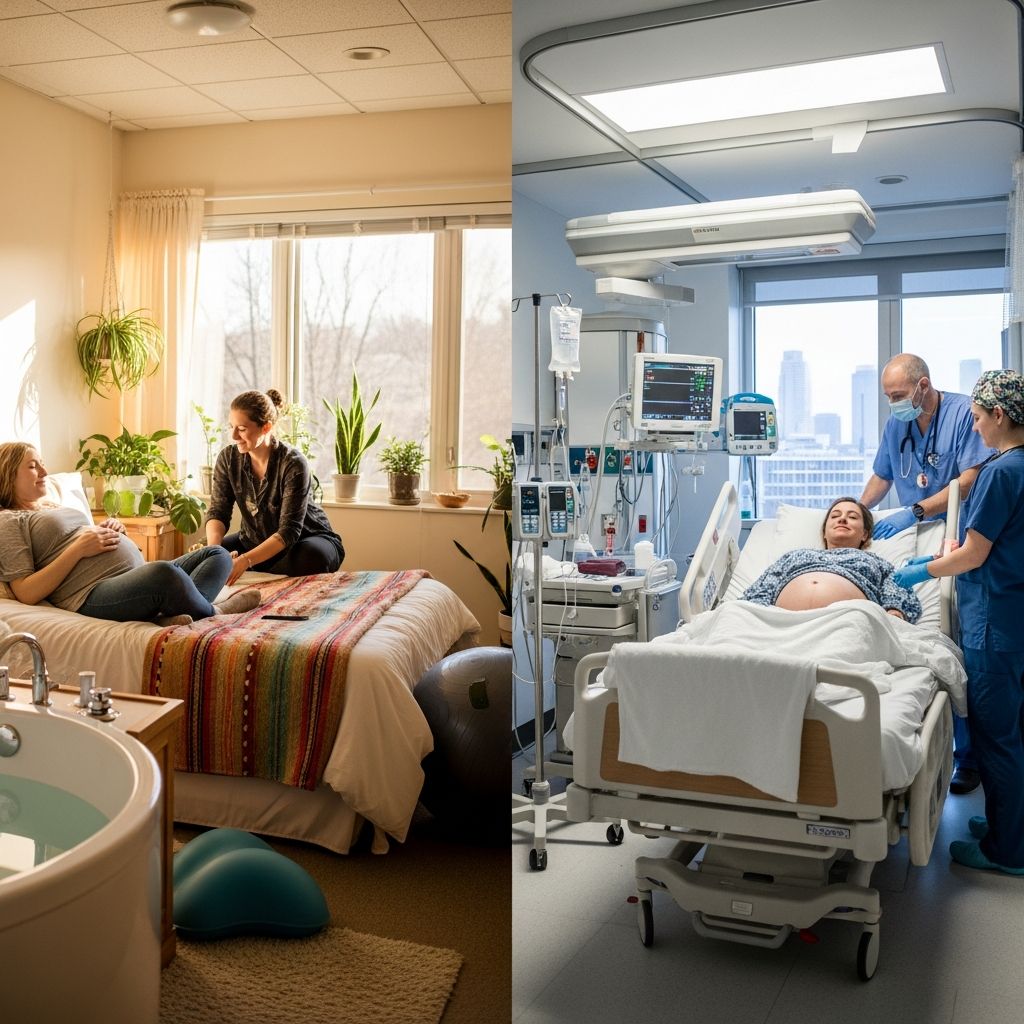
Where you give birth shapes nearly every part of your labor and delivery experience. Some families prefer the home-like, low-intervention feel of a birth center. Others feel more comfortable in a hospital with operating rooms, anesthesiologists, and advanced technology on hand. Both settings can be safe for the right person and pregnancy, and both have limitations that are important to understand.
This guide explains how birth centers and hospitals differ, who is usually a good candidate for each, and practical questions to ask as you plan for your baby’s arrival.
Understanding Your Main Birth Setting Options
In many communities, people planning a vaginal birth choose between two primary settings:
- Freestanding birth centers that are separate from hospitals and designed for low-risk pregnancies.
- Hospitals that care for both low- and high-risk pregnancies and can provide emergency care.
Some hospitals also have in-house birth centers or midwifery-led units, which blend aspects of both settings. Regardless of the label, it helps to look closely at what services and safeguards are actually available at the facility you are considering.
What Is a Birth Center?
A birth center is a health care facility that focuses on pregnancy and birth for people who are expected to have uncomplicated, low-risk deliveries. Most are staffed and led by certified nurse-midwives or other licensed midwives, with physician consultation or backup arrangements if complications arise.
Birth centers generally emphasize:
- Physiologic (natural) labor with few routine medical interventions.
- Family-centered care, often allowing multiple support people and siblings to be present.
- A home-like environment with private rooms, soft lighting, and flexibility in how you move and give birth.
Because these facilities are not designed for very complex or emergency care, they are usually recommended only for people whose pregnancies are considered low risk according to clinical guidelines.
What Is a Hospital Birth?
Hospitals provide comprehensive medical and surgical services for pregnancy, labor, birth, and the postpartum period. Care is often led by obstetrician-gynecologists, with anesthesiologists, neonatologists, and other specialists available on site.
Hospital labor and delivery units typically offer:
- Access to surgery, including emergency cesarean sections.
- Advanced fetal and maternal monitoring and blood transfusion capabilities.
- Neonatal intensive care units (NICUs) or special care nurseries for babies who need extra support.
- Full-range pain relief options, such as epidural anesthesia, IV pain medications, and regional blocks.
Because hospitals can respond to a wide range of complications, they are appropriate for both low- and high-risk pregnancies.
Side-by-Side Comparison: Birth Center vs. Hospital
| Feature | Birth Center | Hospital |
|---|---|---|
| Typical risk level of patients | Low-risk pregnancies only | Low- to high-risk pregnancies, including complex conditions |
| Lead type of provider | Usually certified nurse-midwives or other licensed midwives | Usually obstetrician-gynecologists, often with midwives as part of the team |
| Approach to interventions | Minimize routine interventions; focus on spontaneous labor and vaginal birth | Wide use of medical interventions when indicated; higher rates of induction and cesarean for some groups |
| Pain relief options | Nonpharmacologic methods (movement, water, massage) and limited medications; no epidurals on site | Full spectrum of pharmacologic and nonpharmacologic options, including epidurals and general anesthesia |
| Emergency response | Stabilize and transfer to hospital for major emergencies; transfer arrangements are essential | Operating rooms, blood bank, and emergency teams available within the same facility |
| Environment | Home-like, quieter, more flexible about eating, drinking, and movement | More clinical, with monitoring equipment and hospital policies that may limit eating or movement during parts of labor |
| Cesarean birth rates (low-risk group) | Lower cesarean rates compared with similar low-risk patients in hospitals | Higher cesarean rates overall; rates vary by hospital and population |
Safety and Outcomes: What Does the Evidence Say?
Large studies and reviews have examined outcomes in freestanding birth centers compared with hospitals for people who meet criteria for low-risk pregnancy.
- For carefully selected low-risk individuals, birth center care is associated with lower rates of interventions such as induction of labor, epidural anesthesia, and cesarean section, while maintaining similar or better outcomes for babies.
- Benefits observed in some research include lower preterm birth rates and low birthweight rates, and improved breastfeeding initiation among those receiving birth center care.
- Professional organizations emphasize that no birth setting is completely risk-free. Safety depends on timely access to higher-level care, strong systems for transfer, appropriate screening of candidates, and high-quality clinical practice.
For people with medical conditions or high-risk pregnancies, hospitals remain the recommended setting because they can rapidly provide intensive interventions when needed.
Who May Be a Good Candidate for a Birth Center?
Exact eligibility varies by facility and local regulations, but many birth centers accept people who meet criteria such as:
- Healthy, single-fetus pregnancy with the baby head-down near term.
- No major chronic diseases (for example, significant heart disease or uncontrolled diabetes).
- No signs of serious complications such as severe preeclampsia, heavy bleeding, or fetal growth restriction.
- Spontaneous onset of labor between about 37 and 41–42 weeks (policies differ).
People with certain factors are more likely to be advised to give birth in a hospital, including:
- Pregnancy with twins or higher-order multiples.
- Previous cesarean section, depending on local protocols and support for vaginal birth after cesarean (VBAC).
- Complex medical conditions, such as significant hypertension, serious heart or lung disease, or insulin-dependent diabetes.
- Babies known or suspected to have conditions that may require immediate intensive care after birth.
Your prenatal care provider will review your history, current pregnancy, and local options to help determine whether a birth center is considered safe for you.
Pros and Cons of Birth Centers
Potential Advantages
- Lower intervention rates: For low-risk clients, research shows fewer inductions, epidurals, and cesarean births compared with hospital care.
- Personalized, continuous support: Care is often midwifery-led, with longer prenatal visits and more continuity of provider.
- Comfortable environment: Many people value features like private suites, water immersion in labor, and freedom to move.
- Focus on physiologic birth: Policies tend to support spontaneous labor, upright positions, immediate skin-to-skin contact, and early breastfeeding.
Possible Drawbacks
- Limited emergency capability: Birth centers do not perform cesarean sections or manage life-threatening complications on-site, so transfers to hospitals are needed in emergencies.
- No epidurals on site: People wanting or needing epidural anesthesia will need transfer to a hospital.
- Not suitable for high-risk pregnancies: Many medical or obstetric conditions make birth center care unsafe.
- Insurance and cost issues: Coverage for freestanding birth centers can be more variable than for hospital births, depending on region and plan.
Pros and Cons of Hospital Births
Potential Advantages
- Immediate access to emergency care: Operating rooms, blood products, and intensive care services are in the same facility, which is critical when complications arise.
- Full pain relief options: Hospitals can offer epidurals, spinal or general anesthesia for cesarean births, and a range of medications.
- Appropriate for high-risk pregnancies: People with complex medical conditions or pregnancy complications generally benefit from the resources available in hospitals.
- Neonatal specialty care: Many hospitals have NICUs or special care nurseries with neonatologists for babies needing advanced support at birth.
Possible Drawbacks
- Higher rates of interventions: Hospital care is associated with more frequent use of induction, continuous electronic fetal monitoring, and cesarean birth for some low-risk groups, compared with birth centers.
- Less home-like environment: Some people feel less comfortable in a clinical setting with more policies, alarms, and staff coming in and out.
- Policies that may limit flexibility: For example, some units restrict eating during active labor or require laboring in bed while on continuous monitoring, although practices vary by hospital.
Questions to Ask When Choosing Your Birth Setting
No matter which option you are leaning toward, asking detailed questions helps you understand how a specific facility operates.
Questions for a Birth Center
- What criteria do you use to decide who is eligible for care here?
- How do you handle transfers to the hospital during labor or after birth, and how far away is your partner hospital?
- What pain relief options are available on site?
- Who will be present at my birth, and what are their credentials?
- How do you support breastfeeding and postpartum recovery?
Questions for a Hospital
- What is your cesarean birth rate for low-risk patients, and how does it compare with regional or national averages?
- Can I move freely in labor, use a birthing ball, or labor in water if my pregnancy is low risk?
- What are your policies on continuous fetal monitoring, eating during labor, and induction of labor?
- Are midwives part of the maternity team, and can I request midwifery care if available?
- How do you involve partners, support people, and newborns immediately after birth (for example, skin-to-skin contact and rooming-in)?
Working With Your Care Team to Make a Plan
The best setting for birth balances three factors:
- Your medical needs, based on your health history and current pregnancy.
- Your preferences and values, such as desire for a low-intervention birth or for immediate access to epidural anesthesia.
- Local resources and integration, including the quality of nearby facilities and how smoothly they work together.
Talking openly with your prenatal provider can help you understand your risk level, what is realistically available in your area, and how to create a flexible plan that keeps you and your baby safe while honoring what matters most to you.
Frequently Asked Questions
Is a birth center as safe as a hospital for low-risk pregnancies?
For people who meet strict low-risk criteria and receive care from licensed professionals in accredited centers with good transfer systems, research shows similar or better maternal outcomes and comparable neonatal outcomes compared with hospital birth, along with fewer interventions. However, safety depends heavily on appropriate screening, quality of staff, and timely access to hospital care if complications arise.
Can I have a natural birth in a hospital?
Yes. Many hospitals support unmedicated or low-intervention births, especially when you discuss your preferences in advance. You can often use tools like movement, position changes, breathing techniques, and intermittent monitoring, depending on your condition and hospital policies. Asking specifically about these options ahead of time helps you find a unit that aligns with your goals.
What happens if I start at a birth center and need a hospital?
Birth centers have protocols to transfer people to partner hospitals if labor does not progress as expected, if pain relief needs change, or if maternal or fetal concerns arise. Some transfers are non-emergent (for example, for an epidural), while others are urgent. When choosing a birth center, ask how often transfers occur, how far away the hospital is, and who coordinates the process.
How should I factor in a previous cesarean birth?
Many people with a prior cesarean are encouraged to give birth in hospitals that can rapidly perform surgical deliveries if needed. Eligibility for vaginal birth after cesarean (VBAC) and for out-of-hospital birth depends on your specific history, local regulations, and the policies of individual facilities. Discuss your options in detail with your provider.
How can I compare quality between different hospitals or birth centers?
You can ask facilities about their cesarean rates, induction rates, breastfeeding support, accreditation status, and how they handle emergencies. Some regions publish quality data for maternity units. Touring facilities, talking with staff, and speaking with your prenatal provider can also give insight into communication, respect, and responsiveness to patient preferences.
References
- The Difference Between Giving Birth in a Birthing Center vs. a Hospital — WebMD. 2022-04-20. https://www.webmd.com/difference-giving-birth-hospital-birthing-center
- Birth center vs. hospital: How to choose? — HealthPartners. 2023-06-01. https://www.healthpartners.com/blog/birth-center-vs-hospital/
- Freestanding Birth Centers: An Evidence-Based Option for Birth — Stapleton et al., Journal of Midwifery & Women’s Health (via PMC). 2022-02-21. https://pmc.ncbi.nlm.nih.gov/articles/PMC8827343/
- No Hospital, Birth Center, or Home Birth Is Risk-Free — But Better Access to Care, Quality of Care, and Care System Integration Can Improve Safety for Women and Infants During Birth, Says Report — National Academies of Sciences, Engineering, and Medicine. 2020-03-18. https://www.nationalacademies.org/news/no-hospital-birth-center-or-home-birth-is-risk-free-but-better-access-to-care-quality-of-care-and-care-system-integration-can-improve-safety-for-women-and-infants-during-birth-says-report
- Birthing Center vs Hospital: What Are the Differences? — NursingCECentral. 2021-07-15. https://nursingcecentral.com/birthing-center-vs-hospital-what-are-the-differences/