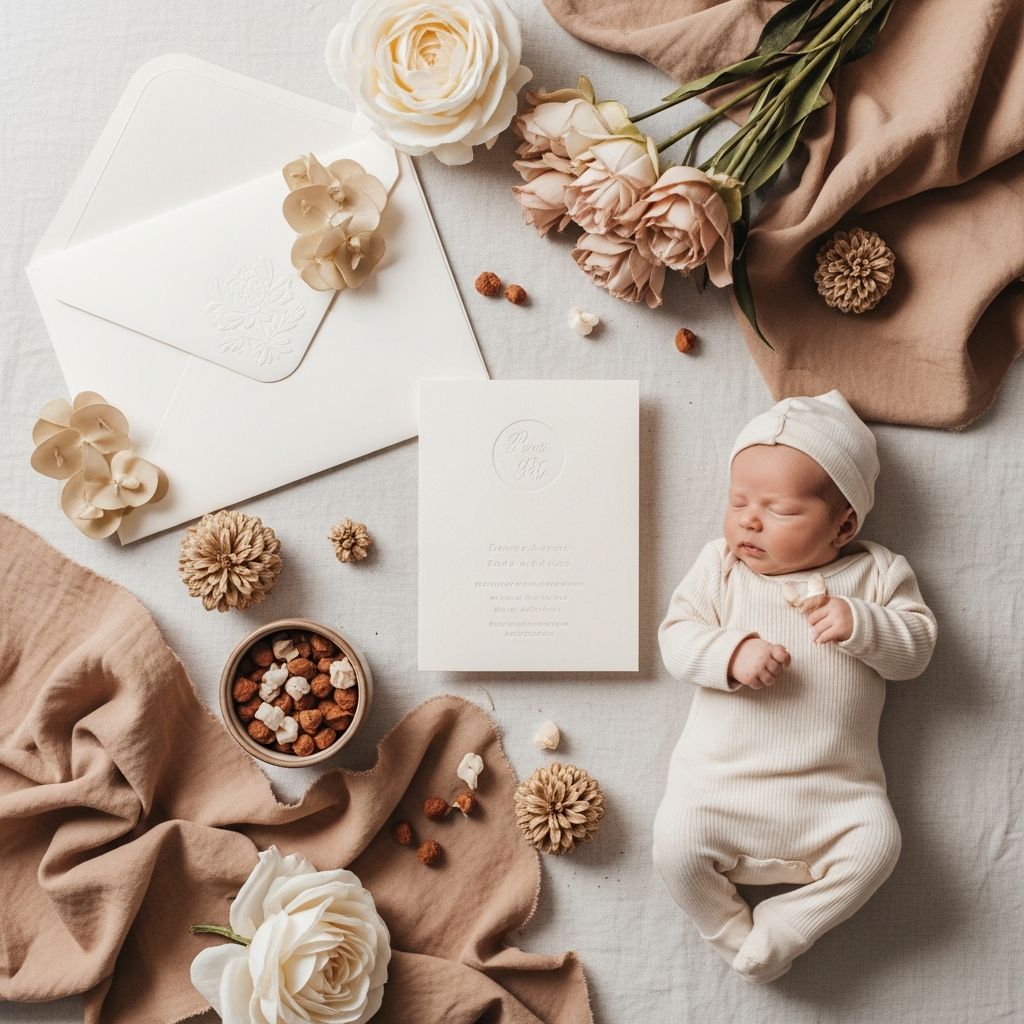
Welcoming a baby is one of life’s biggest milestones, and many parents want to share that joy in a way that feels both heartfelt and respectful. Thoughtful birth announcement etiquette helps you celebrate openly while still honoring privacy, timing, and the feelings of others.
Why Birth Announcements Still Matter
Even in a world of instant messages and social media posts, a birth announcement is more than just an update—it is a keepsake and a formal welcome for your child. It creates a record of your baby’s arrival, preserves details that may be forgotten later, and offers friends and family a meaningful way to join in your happiness. At the same time, etiquette provides gentle guardrails so that your celebration doesn’t unintentionally cause confusion or hurt feelings.
Timing: When to Share the News
There is no single “correct” date to send a birth announcement; the right time is the one that works for your family’s emotional and physical reality. Many parents aim to send something within the first few months after baby’s arrival, but taking longer is perfectly acceptable, especially after a difficult birth, health challenges, or when adjusting to life with multiple children.
- In the first 4–6 weeks: Ideal for parents who feel ready and want to share classic newborn photos.
- Between 2–4 months: Common for families who prefer to settle into a routine before reaching out more widely.
- Later in the first year: Still appropriate; it may feel more like a “meet our baby” update than a traditional announcement, which is completely fine.
If you never send a formal announcement at all, you have not broken any real rule. Your well-being and your baby’s health always come first.
Who to Tell First (and Why Order Matters)
Before designing cards or posting online, think about the order in which people hear the news. Those closest to you generally appreciate hearing directly from you before they encounter a photo and caption on a public platform.
- Your partner and any older children: They are part of the core story and should hear information—and see photos—before anyone else.
- Immediate family: Parents, siblings, and grandparents usually come next, often by call, video chat, or private message.
- Close friends and support people: Friends who have walked with you through pregnancy or fertility treatment often value a more personal heads-up.
- Broader circle: Extended relatives, coworkers, neighbors, and social media contacts can hear via announcement cards, group emails, or posts once your inner circle has been updated.
This order is not about ranking people’s importance; it is about minimizing awkward surprises and making sure those most invested in your journey feel included.
Choosing Your Format: Cards, Digital, or Both?
Birth announcements now come in many formats, from traditional printed cards to text messages and online galleries. Choosing a format is less about etiquette and more about matching your style, budget, and energy level. Any option can be appropriate if it is clear, kind, and genuine.
Printed Announcements
- Feel more formal and tangible; they often become keepsakes for grandparents and close relatives.
- Allow for thoughtful design, high-quality photos, and space to list details like full name, birth date, and weight.
- Work well if you prefer a quieter, more private way to share news instead of posting publicly.
Digital Announcements
- Include emails, private group messages, or text announcements to a curated list of recipients.
- Are cost-effective, quick to send, and easy to update if you want to share additional photos or milestones.
- Offer more privacy than a public social media post while still reaching many people at once.
Social Media Posts
- Can reach a broad audience instantly and make it easier to share ongoing updates.
- Raise questions about privacy, photo sharing, and your child’s digital footprint.
- Work best after immediate family and close friends have already heard directly.
What to Include: The Essential Details
A birth announcement can be elegantly simple or creatively detailed. There are no strict rules, but several pieces of information appear on most announcements and help answer the questions people naturally have.
| Element | Why It Matters | Optional or Common? |
|---|---|---|
| Baby’s full name | Introduces your child formally and clarifies spelling and pronunciation. | Standard on nearly all announcements. |
| Date of birth | Helps others remember the birthday and gives context for future milestones. | Very common but can be omitted for privacy. |
| Time, weight, and length | Traditional details that some recipients love while others skim over. | Optional; include only if you like them. |
| Parents’ names | Clarifies family relationships, especially for distant relatives or work contacts. | Common, particularly on printed cards. |
| Sibling and pet names | Helps everyone see how the new baby fits into the household story. | Optional but charming for many families. |
| Short message or greeting | Adds warmth, expresses gratitude, or notes special circumstances. | Optional; keep wording brief and sincere. |
Wording with Sensitivity and Style
Your wording does not have to be poetic. Clear, warm language is always appropriate, whether you write one sentence or a short paragraph. A simple structure is often easiest: introduce your baby, share basic details, then add a line of thanks or joy.
- Avoid language that might sound like comparing your baby to others, especially around size or development.
- Consider your audience: what feels light and fun to friends might feel too informal for colleagues or older relatives.
- If you experienced a long fertility journey, loss, or other challenges, include that context only if it feels right to you; you owe no one a full medical history.
Privacy Considerations in a Digital Age
One major modern etiquette question is how much of your baby’s identity to share online and where. Before posting publicly, parents may want to discuss their boundaries and comfort levels together, especially if they differ.
- Think about future searchability of your child’s full name and images.
- Review privacy settings in any apps or platforms you use to share photos.
- Consider using initials, nicknames, or partial details online while reserving full information for printed or private announcements.
Also keep in mind that once a photo is shared widely, it is difficult to control where it goes. When in doubt, share less publicly and more in closed, trusted circles.
Handling Special and Sensitive Situations
No two families share identical circumstances, and some births come with complexities that make traditional announcements feel too simple. Etiquette can flex to accommodate these realities; there is no requirement to share every detail with every person.
Premature Birth or NICU Stay
- You may choose to delay a formal announcement until your baby is stable and you feel emotionally ready.
- If you do share early, a short note about your baby receiving special care can guide others to respond with support rather than questions.
- You are free to request no visitors or specify ways people can help, such as sending messages instead of dropping by.
Birth After Loss or Fertility Challenges
- You may feel intense joy mixed with grief or anxiety, and your announcement can reflect that complexity in as much or as little detail as you choose.
- Some parents prefer to send more private, personalized messages to friends who have also faced loss or infertility, recognizing their potential mixed emotions.
- There is no obligation to explain your history publicly; a simple announcement is always acceptable.
Adoption, Surrogacy, or Nontraditional Paths
- Focus on introducing your child and honoring the story in a way that feels authentic to your family.
- Share legal or medical details only with those who truly need to know.
- If you mention birth parents or surrogate parents, use respectful, grateful language and respect any privacy agreements.
Gifts, Gratitude, and Thank-You Notes
Birth announcements sometimes arrive before gifts, sometimes after, and sometimes instead of a baby shower. Good etiquette is flexible here: there is no rule that an announcement must be followed by a gift or that a gift must be preceded by a formal announcement.
- Always send individual thank-you messages for gifts, ideally within a few months, even if later is unavoidable.
- The thank-you does not need to be long—just specific enough to show that you noticed the gift and appreciate the thought.
- If you are overwhelmed, consider simple preprinted cards where you add a brief handwritten line; sincerity matters more than length.
Balancing Joy and Sensitivity
One of the subtler aspects of announcement etiquette is recognizing that not everyone who sees your news is in the same emotional place. Some people may be dealing with infertility, pregnancy loss, family conflict, or other struggles that color how they receive baby-related updates.
- For friends you know are struggling, consider a private, direct message rather than a surprise group announcement.
- Acknowledge, if you wish, that you understand the news may be bittersweet for them and that you care about their feelings.
- Do not assume that lack of enthusiasm means lack of love; people process emotions differently and may need time.
Being sensitive does not mean muting your joy; it simply means sharing it with extra thoughtfulness.
Common Etiquette Myths—Debunked
Many new parents worry about doing something “wrong” with their announcements, but some of the strict rules people quote are more myth than reality. Understanding what is flexible can take pressure off during an already demanding season.
- Myth: You must send announcements within six weeks. Reality: Later is fine, and not sending them at all is acceptable if you choose other ways to share.
- Myth: Every birth requires printed cards. Reality: Digital formats are widely accepted and often more practical.
- Myth: You have to include weight and length. Reality: These details are optional; you may omit anything that feels too personal.
- Myth: Announcing online is always rude. Reality: It can be thoughtful when paired with private updates to your closest people first.
Practical Tips for Stress-Free Announcements
With a newborn at home, even small tasks can feel overwhelming. A bit of planning before birth, or very simple systems afterward, can make announcements easier to manage.
- Gather mailing addresses or email lists during pregnancy if you plan to send many announcements.
- Choose a design template in advance, so you only need to add photos and details later.
- Divide tasks with your partner or a helpful friend—one person can handle addresses while another writes short notes.
- Remember that “good enough” is better than perfect; people care more about your news than your fonts.
SEO-Friendly FAQ on Birth Announcements
How late is too late to send a birth announcement?
There is no universal cutoff date for sending birth announcements. Many families send them in the first several months, but sending them later in the first year is still considered perfectly polite. If more time has passed, you can frame your message as a combined introduction and update, rather than a strictly time-sensitive announcement.
Do I have to send a birth announcement to everyone I know?
No, you do not need to send announcements to every contact in your life. Most parents prioritize close family, friends, and anyone who has shown particular interest in the pregnancy or offered support. Others can learn through word of mouth, social media, or everyday conversation, which is entirely acceptable.
Is a social media post enough for a baby announcement?
For many families, a social media post functions as their main birth announcement, and that is now widely accepted. Just be sure that immediate family members and close friends hear from you directly first, so they do not feel blindsided by a public reveal. You may also want to think carefully about privacy and what details you want visible online for the long term.
What if someone is hurt that they didn’t receive an announcement?
Misunderstandings can happen, especially during a time when you are exhausted and juggling many responsibilities. If someone expresses hurt, a sincere explanation and a kind, direct apology typically repair the situation. You can let them know that the omission was not a reflection of how much you value them, and, if appropriate, share a photo or small update just for them.
Are birth announcements required if I already had a baby shower?
Birth announcements are optional and do not depend on whether you had a shower or received gifts. A shower celebrates the upcoming arrival, while an announcement formally introduces your child after birth. Some families do both, some choose only one, and others prefer neither—any of those choices can be good manners when they are made thoughtfully.
Bringing It All Together
Ultimately, modern birth announcement etiquette is about balancing excitement, privacy, and empathy in a way that fits your family’s values. You are free to be creative or simple, public or private, early or later—there is ample room for your unique story. If you treat your child’s introduction as both a celebration and a moment of connection with the people in your life, your announcement will naturally feel gracious and memorable.