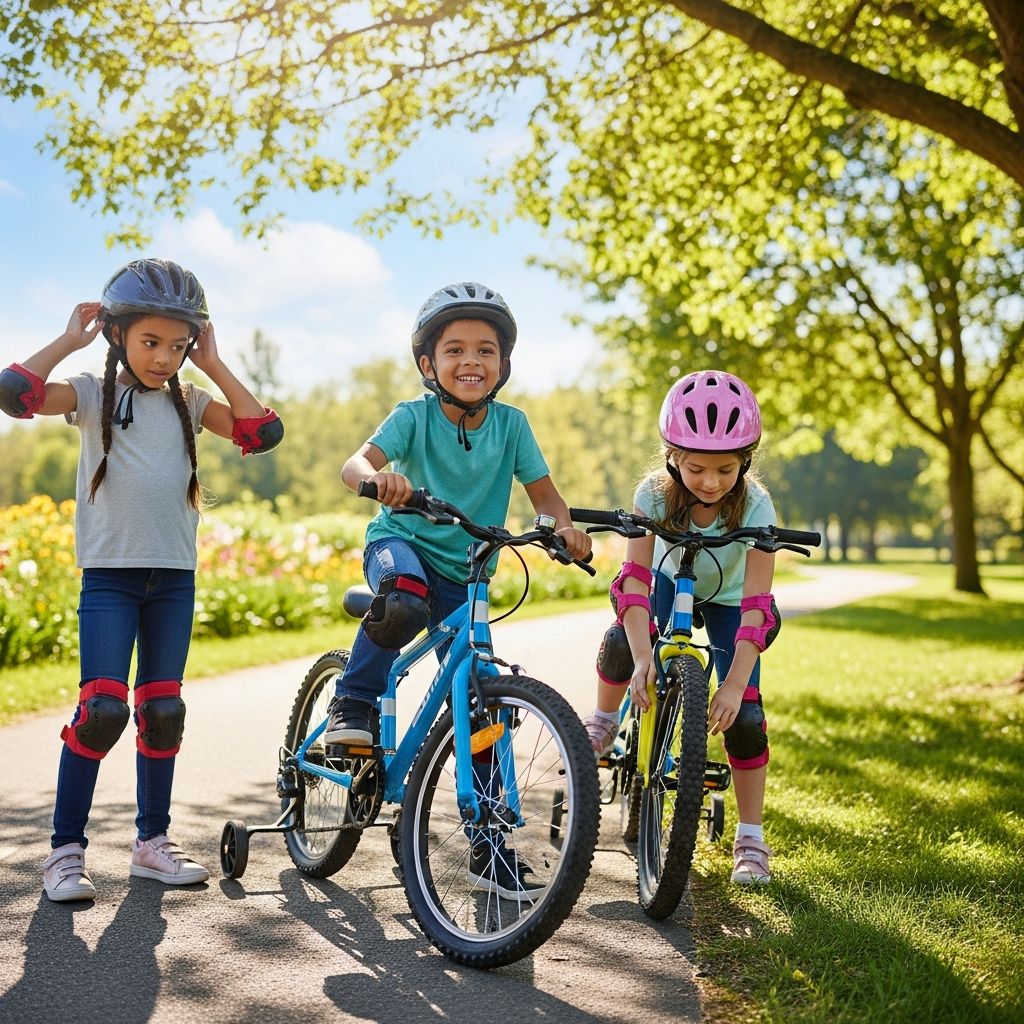
Riding a bike is a fun way for kids to get exercise, explore the neighborhood, and spend time with friends. But a bicycle is also a vehicle, which means kids need clear safety rules, the right equipment, and good habits every time they ride. According to safety organizations, wearing a helmet and following traffic rules can greatly reduce the risk of serious injury for young riders.
This guide explains bike safety in kid-friendly language while giving parents and caregivers practical steps to teach and reinforce safe riding.
Why Bike Safety Matters
Bike crashes can happen quickly, even on short rides or in familiar areas. Children are especially at risk because they are still learning to judge distance, speed, and complex traffic situations. A few reasons to make bike safety a priority:
- Head injuries are the most serious bike-related injuries, but many can be prevented with a properly fitted helmet.
- Most child bike crashes happen close to home, often in driveways, on sidewalks, or at intersections where kids may not expect cars.
- Simple habits like riding on the right side of the road, stopping at driveways, and checking equipment can prevent many common accidents.
The goal of bike safety is not to scare kids away from riding, but to give them the skills and confidence to ride more safely.
Getting Ready: Choosing and Checking a Bike
A safe ride starts before anyone climbs onto the bicycle. The bike itself needs to be the right size and in good condition.
Picking a Bike That Fits
Bikes that are too big or too small are harder to control. Safety experts recommend choosing a bike that fits your child right now, not one they will “grow into.”
- When your child sits on the seat, they should be able to touch the ground with the balls of both feet.
- Your child should be able to reach the handlebars comfortably without stretching too far or hunching.
- They should be able to squeeze the brakes easily with their hands.
Quick Pre-Ride Safety Check
Before every ride, do a quick inspection. Many programs summarize this as an ABC check: Air, Brakes, and Chain/Crank.
| Check | What to Look For | Why It Matters |
|---|---|---|
| Air (tires) | Press the tires; they should feel firm, not squishy. Look for cuts or bulges. | Properly inflated tires make the bike easier to control and less likely to slip. |
| Brakes | Squeeze both brake levers. The brakes should grab firmly without sticking. | Strong, working brakes help kids stop quickly to avoid obstacles. |
| Chain & crank | Make sure the chain is on the gears, moves smoothly, and is not rusty. | A clean, attached chain keeps the bike moving without slipping or jamming. |
| Seat & handlebars | Check that they are straight and tightly fastened. | Loose parts can twist suddenly and cause a fall. |
Helmet Basics: Protecting Your Brain
Wearing a helmet is the single most important safety step for every bike ride. In many places, helmets are required by law for children. Even where it is not the law, health and safety agencies strongly recommend helmets for all ages.
How a Helmet Helps
- A helmet absorbs impact if a rider hits their head in a fall or crash.
- It reduces the risk of serious head and brain injuries.
- It can prevent cuts and bumps that might otherwise require emergency care.
Choosing a Safe Helmet
Look for these features when buying a helmet:
- A label showing it meets a recognized safety standard (such as U.S. Consumer Product Safety Commission standards).
- A hard outer shell with a thick foam liner inside.
- Adjustable straps and a sizing dial or pads so it can fit snugly.
How to Wear a Helmet the Right Way
A poorly fitted helmet does not protect as well. Use the “eyes, ears, mouth” rule to help kids remember how it should sit:
- Eyes: The front edge of the helmet should sit about two finger widths above the eyebrows so it protects the forehead.
- Ears: The straps should form a V-shape under each ear, not leaning too far forward or backward.
- Mouth: When the chin strap is buckled, there should be room for one or two fingers between the strap and the chin. It should be snug, not dangling.
Replace a helmet after a serious crash, if it cracks, or if your child outgrows it.
Dress for a Safe Ride
What kids wear on their bikes affects how well they can ride and how easily others can see them. Safety groups emphasize making young riders visible and avoiding loose items that can get caught in the bike.
Clothing and Shoes
- Choose closed-toe shoes with good grip, such as sneakers. Avoid flip-flops, sandals, cleats, or riding barefoot.
- Wear bright or light-colored clothing so drivers and other riders can see your child more easily.
- Avoid long, loose pants or skirts that could get caught in the chain or wheels; tuck in long pant legs if needed.
- Secure shoelaces so they do not hang near the chain or pedals.
Be Seen by Others
- Use reflectors on the front, back, and wheels of the bike; many bikes come with them installed.
- For older kids who ride near dusk, add a front white light and rear red light or flashing lights as recommended by safety agencies.
- Whenever possible, encourage kids to ride in daylight. Many experts advise that children avoid riding at night.
Where Kids Should Ride
Young children do not yet have the skills to safely handle busy streets. Many safety organizations suggest specific places for different ages.
Sidewalks, Paths, and Parks
- Children under about 10 years old usually do best on sidewalks, park paths, or quiet bike trails, where allowed by local rules.
- Even on sidewalks, kids must watch for cars backing out of driveways and for people walking.
- In parks or on shared paths, teach kids to keep to the right, pass others on the left, and use a bell or call out when passing.
Riding in the Street
Older children who have strong bike-handling skills and understand traffic rules may ride on the road, depending on local laws and traffic conditions.
- Always ride with traffic, on the right-hand side of the road, never against oncoming cars.
- Use bike lanes where they are available and safe.
- Parents should ride with children and help them choose quiet streets with slower speeds and fewer intersections.
Basic Traffic Rules for Young Riders
Even kids on sidewalks need to know simple traffic rules. Treating a bicycle like any other vehicle helps children understand what drivers expect them to do.
Rules Every Kid Should Know
- Stop at the edge of driveways, alleys, and curbs. Look left, right, and left again before crossing.
- Cross at corners or crosswalks, not between parked cars where drivers cannot see you.
- Obey stop signs and traffic lights just like a car would. No riding through red lights or stop signs.
- Ride in a straight line; avoid weaving between parked cars or in and out of traffic.
- Ride single file when biking with friends in the street, leaving space between bikes.
Using Hand Signals
Hand signals tell drivers and other riders what you are going to do next. They are a basic part of bike road safety.
- Left turn: Left arm straight out to the left.
- Right turn: Left arm bent up at the elbow, or right arm straight out to the right (where allowed).
- Stop or slow: Left arm bent down at the elbow with the hand pointed toward the ground.
Practice hand signals together in a safe area off the road until your child can signal without wobbling.
Staying Alert and Avoiding Distractions
Kids need to focus fully on riding and on what is happening around them. Distracted riding can lead to crashes, especially near driveways or intersections.
Smart Focus Habits
- Two hands on the handlebars at all times, except briefly when signaling a turn.
- No texting, gaming, or browsing on a phone while riding; pull over and stop in a safe place first.
- Avoid using headphones or earbuds so kids can hear cars, horns, bells, and people around them.
- Look ahead for obstacles such as potholes, toys, pets, or parked cars opening their doors.
Practicing Skills in Safe Places
Just like any other sport, kids need practice to become confident and safe bike riders. Parents and caregivers can help children build skills step by step.
Good Practice Activities
- Start in a flat, open area such as an empty parking lot or quiet cul-de-sac.
- Practice starting and stopping smoothly using both brakes.
- Set up simple turning drills by placing small objects to ride around.
- Have kids practice looking over their shoulder while keeping the bike straight, as they would to check for cars behind them.
- Role-play crossing a street: stop, look left-right-left, and walk the bike across if it is a busy intersection.
Parents’ Role in Bike Safety
Children learn a lot by watching the adults around them. When parents model safe habits and set clear rules, kids are more likely to follow them.
Ways Parents Can Help
- Always wear a helmet when you ride with your child, even for short trips.
- Check your child’s bike and helmet together, turning it into a quick pre-ride routine.
- Supervise younger children closely and decide when they are ready to ride without an adult.
- Pick safe routes that avoid heavy traffic and complicated intersections.
- Talk about making eye contact with drivers before crossing in front of a car, so kids know the driver has seen them.
Frequently Asked Questions (FAQs)
At what age can kids start riding in the street?
There is no single age that fits every child. Many safety organizations note that it can be hard for kids to judge the speed and distance of cars until around age 10. Parents should look at the child’s skills, understanding of rules, and local traffic conditions, and ride with them on the road before allowing them to ride alone.
Does my child really need a helmet on short, slow rides?
Yes. Most falls and crashes happen close to home, often while kids are riding at low speeds. A properly fitted helmet helps protect your child’s head in any fall, whether the ride is long or short.
How often should we replace a bike helmet?
Replace a helmet after any crash where the head hits the ground, if the shell or foam is cracked, or if the helmet no longer fits your child. Even without a crash, many experts advise replacing helmets every few years as materials age and safety standards improve.
Is it safer for kids to ride against traffic so they can see cars coming?
No. Safety agencies and traffic laws in many areas require bicycles to ride with traffic, on the right-hand side of the road, not facing cars. Riding against traffic makes crashes more likely and can surprise drivers who do not expect bikes to come from that direction.
What should kids do at very busy intersections?
At busy intersections, the safest choice for most children is to get off the bike and walk it across using the crosswalk and traffic signals. This lets them focus on traffic and signals without balancing the bike at the same time.
References
- Bicycle Safety — National Highway Traffic Safety Administration (NHTSA). 2023-04-01. https://www.nhtsa.gov/road-safety/bicycle-safety
- Bike Safety Tips — Safe Kids Worldwide. 2022-06-01. https://www.safekids.org/tip/bike-safety-tips
- Kids and Bikes: Smart Moves for a Safe Ride — Children’s Hospital Los Angeles. 2021-05-10. https://www.chla.org/blog/advice-experts/kids-and-bikes-smart-moves-safe-ride
- Bike and Wheeled Sports Safety — Phoenix Children’s Hospital. 2022-03-15. https://phoenixchildrens.org/specialties-conditions/injury-prevention-program/programs-services/road-safety-programs/bike-and-wheeled-sports-safety
- Bicycle Safety — Children’s of Alabama. 2021-08-20. https://www.childrensal.org/services/childrens-health-education-and-safety-center/safety-information/bicycle-safety
- Bicycle Safety — Automotive Safety Program, Indiana University School of Medicine. 2022-02-01. https://preventinjury.medicine.iu.edu/safe-kids-indiana/bicycle-safety
- Bike Safety — Safe Kids Connecticut. 2021-07-01. https://ctsafekids.org/safety-information/bike-safety/