The Architect of Authentic Childhood Stories
Beverly Cleary fundamentally transformed how we think about, write for, and raise children. Her literary contributions extended far beyond entertainment; they created a philosophical shift in recognizing children as complete human beings with genuine emotions, real struggles, and authentic voices. Her passage from librarianship to authorship was not accidental but driven by genuine frustration with the limitations of existing literature available to young readers during the mid-twentieth century.
When Cleary began her writing career in 1950, the landscape of children’s literature operated under different assumptions about what stories should accomplish. Moralistic tales dominated shelves, prioritizing lessons over authentic experience. Characters rarely resembled the actual children walking into libraries. This gap between reality and representation bothered Cleary deeply, particularly as someone trained to connect readers with materials they loved.
Breaking the Mold: Why Cleary’s Approach Revolutionized Publishing
What distinguished Cleary’s work was her radical insistence that children did not need to be improved or civilized through literature. Instead, she argued that stories should reflect genuine childhood experiences—complete with frustration, disappointment, jealousy, and the mundane challenges of growing up. This perspective challenged the prevailing wisdom that children’s books should serve an instructional function, teaching young readers how to behave correctly.
Cleary’s characters lived in ordinary circumstances. They wanted things their families could not afford. They made mistakes. They felt deep emotions about seemingly trivial matters. In Ramona and Her Mother, the protagonist longed for red galoshes while watching classmates wear them—a desire born not from misbehavior but from childhood vulnerability and social awareness. This honest portrayal gave young readers permission to acknowledge their own complex emotional lives without shame.
The impact of this approach cannot be overstated. Contemporary authors who followed Cleary recognized that she had opened a door, making it possible to write about real children with flaws, contradictions, and authentic struggles. Her success demonstrated that authenticity resonated with readers in ways moralizing stories never could.
Creating Characters That Transcend Generations
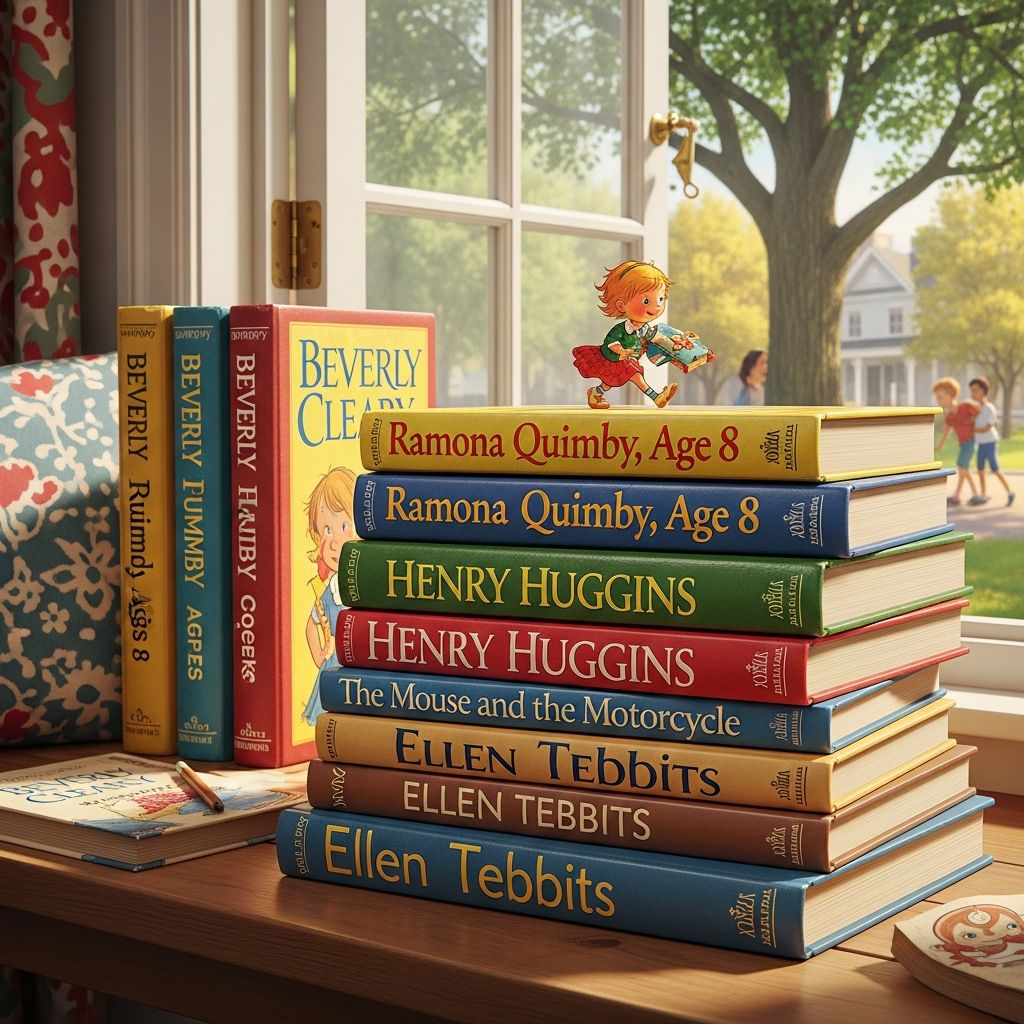
Cleary’s most enduring creations—Ramona Quimby, Henry Huggins, and Ralph S. Mouse—became more than fictional characters; they became cultural touchstones. These figures possessed distinctive personalities that felt genuinely childlike rather than caricatured. Ramona was impulsive, creative, and sometimes reckless. Henry demonstrated resourcefulness and imagination. Ralph embodied adventure and determination. What united them was their fundamental humanity.
Parents and educators have consistently reported that Cleary’s characters helped them understand childhood from a child’s perspective. Rather than seeing misbehavior as defiance, mothers and teachers recognized it as Ramona attempting to navigate a world that did not always accommodate her needs or personality. This shift in perception had profound implications for how adults approached discipline, communication, and emotional support.
The accessibility of these characters across socioeconomic backgrounds contributed significantly to their universal appeal. Unlike literature centered on privileged experiences, Cleary’s stories featured working-class and lower-middle-class families navigating everyday realities. Children from various circumstances could see themselves reflected in these narratives.
The Professional Journey: From Library to Literary Icon
Cleary’s pathway to becoming a beloved author was rooted in her professional training and personal observations. After earning her degree from the University of Washington School of Librarianship in 1939, she worked in various settings, including libraries in Yakima, Washington, and at an Army hospital in Oakland, California. These positions exposed her to diverse populations of children and their reading preferences—or more accurately, the scarcity of books that genuinely spoke to their experiences.
Her frustration with the available collection sparked the impulse to create something different. Cleary did not simply complain about the gap in children’s literature; she systematically addressed it through writing. Her decision to set her first book, Henry Huggins, in northeast Portland reflected her commitment to grounding stories in specific, recognizable places rather than abstract settings.
This methodical approach to storytelling—rooted in observation, informed by professional experience, and driven by conviction—established Cleary as a serious literary figure rather than a casual contributor to children’s publishing.
Measuring Literary Impact Through Numbers and Recognition
The scale of Cleary’s influence becomes evident when examining both sales figures and institutional recognition. Her books have sold more than 85-90 million copies globally, published across more than fourteen languages. These numbers represent not merely commercial success but cultural penetration—evidence of how thoroughly her stories embedded themselves in readers’ lives across continents and decades.
Professional accolades reinforced her significance within literary circles. Cleary received the National Book Award for Ramona and Her Mother. She won a Newbery Medal for Dear Mr. Henshaw in 1984. The Library of Congress designated her a Living Legend in 2000, and she received the National Medal of Arts from President George W. Bush in 2003. These honors acknowledged not just popular success but critical recognition of literary merit and cultural importance.
Universities themselves embraced Cleary’s legacy. UC Berkeley named a residence hall in her honor, creating permanent institutional recognition of her contributions. This placement within academic spaces signified that her work merited serious scholarly consideration alongside canonical literature.
Why Parents and Educators Champion Her Legacy
Mothers particularly resonate with Cleary’s work because it provides validation for the emotional complexity of childhood. Many adults report that reading Cleary’s stories as children—and later as parents—helped them understand their own experiences and those of their children. The emotional intensity that Cleary captured in “small” childhood moments gave permission for parents to take their children’s feelings seriously.
Teachers have found Cleary’s books invaluable for classroom use because they generate authentic discussions about character motivation, emotional responses, and moral complexity without requiring predetermined correct answers. Students naturally engage with questions like: Was Ramona wrong to do what she did? Could Henry have handled this differently? These conversations develop critical thinking while validating students’ own experiences.
The contemporary relevance of Cleary’s work written between the 1950s and 1990s remains striking. Despite decades separating publication from present day, the emotional truths embedded in her stories remain universally recognizable. Children still experience jealousy over material possessions they cannot afford. They still struggle with social acceptance and fitting in. They still navigate relationships with siblings, teachers, and parents with complicated feelings and imperfect understanding.
Comparative Analysis: Before and After Cleary
| Aspect | Pre-Cleary Children’s Literature | Cleary’s Approach | Contemporary Impact |
|---|---|---|---|
| Character Development | Characters existed to demonstrate moral lessons | Characters possessed complex, authentic emotions | Modern authors write flawed, realistic characters |
| Settings | Often abstract or idealized environments | Specific, recognizable communities | Stories rooted in particular places and cultures |
| Economic Representation | Focused primarily on privileged families | Featured working-class experiences | Diverse socioeconomic backgrounds normalized |
| Emotional Authenticity | Surface-level emotional responses | Deep exploration of genuine childhood feelings | Children’s emotional lives treated with respect |
| Literary Technique | Simple, didactic prose | Sophisticated language and satire | Children’s literature recognized as literary art |
The Philosophical Shift: Children as People, Not Projects
Perhaps Cleary’s most profound contribution involved fundamentally reframing how adults conceptualized childhood itself. Rather than viewing children as incomplete humans requiring molding and improvement, she presented them as people currently experiencing childhood—valid in their own right, deserving respect, and entitled to genuine emotional recognition.
This philosophical shift had cascading effects across education, parenting practices, and child psychology. When parents internalized that their child’s devastation over missing a birthday party deserved serious consideration, not dismissal, they began responding differently. When teachers understood that classroom disruption might stem from genuine emotional distress rather than simple defiance, intervention strategies shifted.
Cleary herself articulated this perspective when she stated: “In my books I write for the child within myself.” This approach meant she did not write down to children or manufacture false enthusiasm for their concerns. Instead, she accessed authentic childhood perspective and communicated it with artistic sophistication and genuine emotional investment.
The Enduring Power of Specific Details
One reason Cleary’s stories continue resonating involves her meticulous attention to specific, sensory details that define childhood memory. Whether describing the texture of disappointment when affordable boots differ from desired ones or capturing the social dynamics of schoolyard interactions, Cleary rendered these moments with such particularity that readers across generations recognize their own experiences.
This specificity created what literary critics have compared to adult literature’s examination of the human condition. Some scholars have analyzed Cleary’s use of satire, her grasp of character psychology, and her sophisticated narrative techniques alongside acclaimed adult authors. This recognition elevated children’s literature as an artistic form worthy of serious literary analysis.
Cultural Recognition and Legacy
When the U.S. Senate passed a resolution honoring Cleary following her death in March 2021, it acknowledged not merely an author’s commercial success but her role in shaping American culture. Senators recognized that she had “brightened the lives of children” while simultaneously transforming broader cultural conversations about childhood, literacy, and what children’s literature could accomplish.
Her death at 104 years old marked the passing of a figure whose career had spanned seven decades of American literary and cultural history. Yet rather than viewing her death as closure, readers and educators have continued celebrating her influence through educational initiatives, book clubs dedicated to her work, and renewed interest in her complete catalog.
Frequently Asked Questions
Q: What makes Beverly Cleary’s writing style unique compared to other children’s authors?
A: Cleary distinguished herself through sophisticated literary techniques including satire, complex character psychology, and emotionally authentic dialogue, while maintaining accessibility for young readers. Her commitment to representing working-class experiences and genuine childhood emotions rather than idealized versions set her apart from contemporaries.
Q: How have Cleary’s books remained relevant across multiple generations?
A: The emotional truths embedded in Cleary’s stories—feelings of social exclusion, desire for material possessions, conflicts with authority figures, and sibling relationships—transcend specific historical periods. Children continue experiencing these fundamental aspects of childhood regardless of technological or cultural changes.
Q: Which of Beverly Cleary’s works is considered most influential?
A: The Ramona series, particularly Ramona and Her Mother (which won the National Book Award), represents her most celebrated work. However, Henry Huggins, Dear Mr. Henshaw (Newbery Medal winner), and The Mouse and the Motorcycle also demonstrate her range and literary significance.
Q: How did Cleary’s background as a librarian influence her writing?
A: Her librarian experience exposed her to children’s reading preferences and the gaps in available literature. This professional perspective informed her commitment to creating stories that would genuinely engage young readers rather than fulfill adult-determined educational objectives.
Q: What role did Cleary play in changing children’s literature?
A: Cleary demonstrated that children’s literature could be artistically sophisticated while remaining emotionally authentic. She opened pathways for subsequent authors to write about realistic childhood experiences, diverse socioeconomic backgrounds, and flawed characters without requiring overt moral instruction.
References
- Beverly Cleary always had ‘a child’s eye view’ of the world — University of Washington Magazine. 2008. https://magazine.washington.edu/feature/beverly-cleary-always-had-a-childs-eye-view-of-the-world/
- The Literary Impact of Beverly Cleary — Book Riot. 2021. https://bookriot.com/the-literary-impact-of-beverly-cleary/
- How Beverly Cleary Changed Children’s Literature — WBUR Cognoscenti. 2021-04-02. https://www.wbur.org/cognoscenti/2021/04/02/beverly-cleary-dead-at-104-childrens-books-pat-lowery-collins
- Celebrating Children’s Literature Legend, Beverly Cleary — UC Berkeley California Magazine. 2021-06. https://alumni.berkeley.edu/california-magazine/summer-2021/celebrating-author-beverly-cleary/
- Why Beverly Cleary is my favourite Children’s Author — Canadian Book Review Library. 2021. https://cbrl.ca/why-beverly-cleary-is-my-favourite-childrens-author/