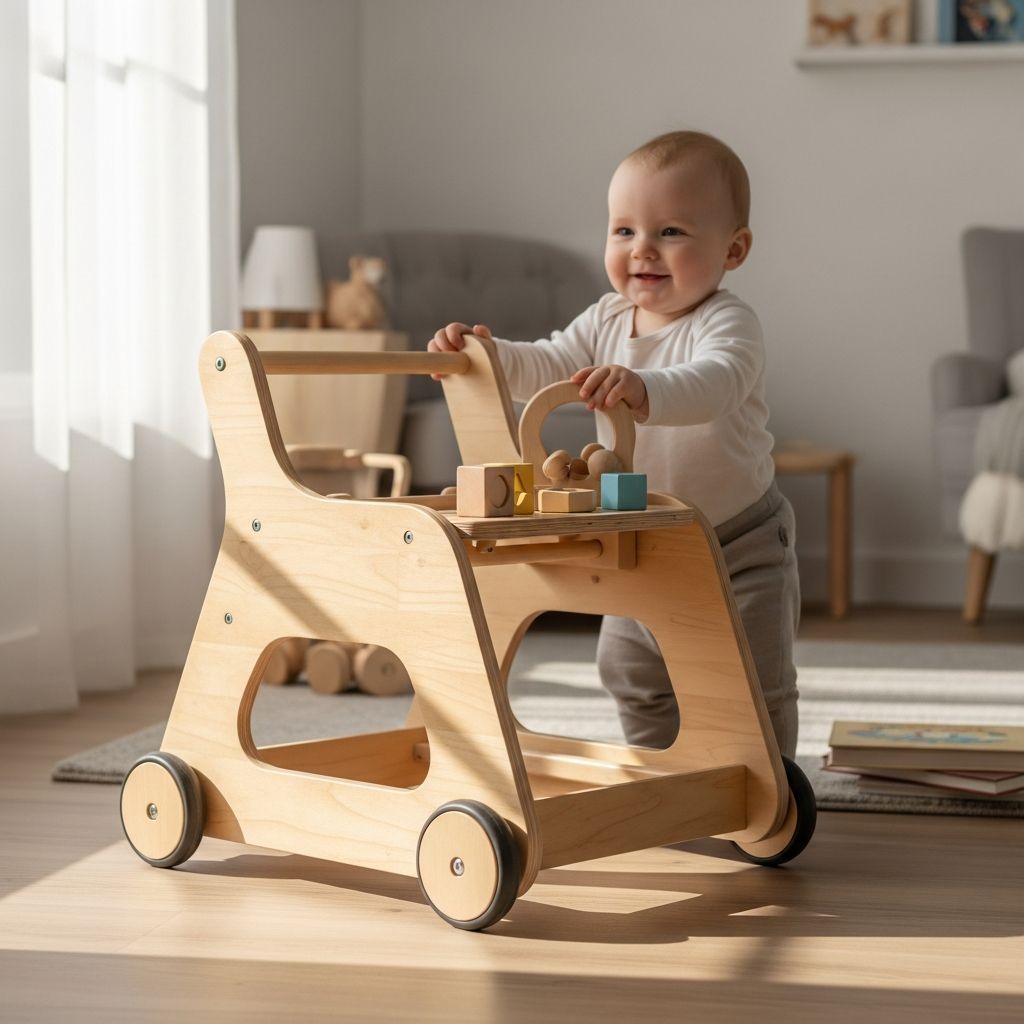
Wooden baby walkers have become a favorite choice for parents who want a sturdy, attractive, and developmentally supportive way to help their little ones practice early steps. Unlike plastic gadgets full of spinning lights and batteries, a wooden walker prioritizes stability, natural materials, and purposeful play. This guide walks you through what makes a great wooden baby walker, what to avoid, and how to use one safely and effectively.
Wooden Walkers vs. Traditional Baby Walkers
Before comparing wooden walkers, it helps to understand the difference between a push-style wooden walker and the older, sit-in wheeled walkers many adults remember from childhood. They are often grouped together, but they function very differently and have different safety profiles.
- Sit-in baby walkers place the baby inside a wheeled frame, allowing movement while seated and often raising safety concerns.
- Push wooden walkers require babies to stand behind the walker and push it forward, engaging their muscles and balance in a more natural way.
When you read about experts warning against “baby walkers,” they typically mean the sit-in style, which can move too quickly and put babies in risky situations. Push-style wooden walkers are generally considered a safer alternative when used with care, supervision, and on safe surfaces.
Key Benefits of a Wooden Baby Walker
Parents are drawn to wooden walkers for both practical and aesthetic reasons. Beyond looking charming in your living room, a good wooden walker can support multiple areas of your child’s development.
Physical Development
- Builds strength: As your baby pushes the walker, they work leg, core, and shoulder muscles in a functional way.
- Improves balance: Managing the weight of the walker while staying upright fosters better stability over time.
- Supports coordination: Coordinating hand placement, foot movement, and steering helps refine gross motor skills.
Cognitive and Fine Motor Skills
Many wooden walkers include built-in activities that keep little hands and minds active when they are not moving.
- Shape sorters, gears, or bead mazes encourage problem-solving and hand–eye coordination.
- Simple musical elements, like a mini xylophone or pounding bench, build cause-and-effect understanding.
- Blocks or removable pieces encourage stacking, counting, and early STEM-style exploration.
Emotional and Social Gains
- Confidence boost: Being able to move independently across the room is a big deal for a new walker.
- Sense of independence: Babies enjoy choosing where to go, what to explore, and which toys to carry in the walker.
- Shared play: Older siblings can load blocks or toys into the cart, supporting cooperative play and bonding.
How to Use a Wooden Walker Safely
A wooden baby walker is not a substitute for supervision. It is a tool that can be very helpful as long as safety basics are respected. Your child’s readiness and the environment matter as much as the product you choose.
Readiness Signs
Age ranges on packaging are general guidelines. Focus more on what your baby can do physically than on the number on the box.
- Your baby can pull up to stand while holding onto furniture or your hands.
- Your baby can stand while holding on with at least one hand for several seconds.
- Your baby shows interest in cruising along couches or pushing chairs.
If your baby is not yet pulling up or bearing weight comfortably on both legs, a walker may be premature. At this stage, floor play and supported standing at sturdy surfaces provide a safer foundation.
Safe Setup Checklist
Creating a safe environment is just as important as choosing a safe product. Use this checklist each time your child uses the walker:
- Use only on flat, even surfaces (no steps, slopes, or uneven thresholds).
- Block access to stairs with secure baby gates at both top and bottom.
- Clear small objects, cords, and fragile decor that could become hazards.
- Avoid use near hot surfaces, sharp corners, or unstable furniture.
- Ensure your child is wearing grippy socks or barefoot to prevent slipping.
Always supervise your baby when the walker is in use. Even with a very stable wooden frame, an enthusiastic toddler can build momentum quickly, so a watchful adult is essential.
Essential Features to Look For
Once you understand the benefits and how to use a walker safely, the next step is choosing the right one. There is a wide range of designs, from minimalist carts to activity-packed centers. Focus on quality and thoughtful design over flashiness.
Stability and Weight
One of the biggest advantages of wood is its natural weight. A slightly heavier walker is less likely to fly out from under a new walker’s grasp. At the same time, it should not be so heavy that your baby cannot move it at all.
- Look for a low center of gravity, with weight closer to the base than the top.
- Check that the handle is firmly attached and does not wobble.
- Choose wide, well-spaced wheels to resist tipping sideways.
Wheel Design
Wheels can make or break your experience. Good wheel design helps regulate speed, protect floors, and maintain stability.
- Rubber or silicone treads reduce sliding, protect hard floors, and quiet the ride.
- Some walkers have adjustable friction or brakes that make them easier for early walkers to control.
- Wheels should rotate smoothly without wobbling or catching.
Handlebar Height and Grip
The handle should be high enough to allow an upright posture but low enough for your baby to engage comfortably without reaching too high. Many walkers use a fixed handle, so it’s important to check measurements before purchase.
- For most toddlers, handlebar height around mid-chest level works well.
- Rounded, smooth grips are more comfortable for small hands.
- Some handles offer a slight angle that mimics a natural pushing position.
Materials and Finish
Babies explore with their mouths and hands, so material quality matters. Look for solid, responsibly sourced wood and non-toxic finishes.
- Check for smooth edges and rounded corners with no splinters or rough spots.
- Look for finishes advertised as water-based or non-toxic, appropriate for children’s toys.
- Consider sustainably sourced or certified wood if eco-friendliness is a priority for your family.
Useful Extras and Play Features
While the main job of a walker is to support walking, many parents appreciate additional features that extend play value. These extras are not essential, but they can make a walker more versatile and engaging for a longer time.
- Activity panels: Gears, sliders, mazes, and mirrors add seated play opportunities before walking begins.
- Shape sorters: Great for learning shapes, problem-solving, and early math skills.
- Blocks or bricks: Turn the walker into a mini wagon that promotes building and imaginative play.
- Storage basket or tray: Lets children transport favorite toys, dolls, or stuffed animals around the house.
When choosing among walkers with many activities, favor those with simple, durable components over overly complex mechanisms that may break easily or overwhelm your child.
Comparing Wooden Walkers to Other First-Steps Toys
Parents often weigh wooden walkers against other early-mobility toys like ride-on cars, plastic push toys, or stationary play centers. Each serves a slightly different purpose. A brief comparison helps clarify what role a wooden walker can play in your home.
| Type | Main Function | Pros | Considerations |
|---|---|---|---|
| Wooden push walker | Support standing and walking practice | Stable, durable, often eco-friendly, encourages active movement | Needs supervision, works best once baby can stand independently |
| Ride-on toy | Seated movement by scooting feet | Fun for older toddlers, builds leg strength and coordination | Less helpful for early standing balance, may require more space |
| Plastic push toy | Similar to wooden walker but lighter | Often less expensive, may include lights and sounds | Lighter frames can tip or roll faster, more plastic waste |
| Stationary activity center | Seated or standing play in one spot | Engaging toys in a contained space, can give caregivers short breaks | Less encouragement to move across space, may be bulky |
Tips for Everyday Use and Encouraging Progress
Once your wooden walker arrives, the way you introduce and use it shapes your baby’s experience. It can quickly become a favorite item when you weave it into everyday routines.
- Place the walker near a couch or sturdy chair so your baby can pull to stand and grasp the handle easily.
- Start with very short, slow walks. You can even gently hold the walker back at first so it does not roll too quickly.
- Keep walks on short, straight paths at first, like across a rug or from one wall to the other.
- Celebrate every effort, not just perfect steps, to keep the experience positive.
As your baby becomes more confident, you can encourage turning, navigating around obstacles, and pushing the walker to a specific destination, such as a toy basket or a loved one waiting with open arms.
Cleaning and Maintenance
Wooden toys can last for years when properly cared for. A little maintenance goes a long way in keeping the walker safe, clean, and looking great for siblings or future hand-me-downs.
- Wipe down surfaces with a damp cloth and mild soap; avoid soaking the wood.
- Dry thoroughly after cleaning to prevent warping or swelling.
- Check screws, bolts, and wheel attachments periodically and tighten if needed.
- Inspect for chips or cracks in the wood and smooth any small rough patches with fine sandpaper if needed.
Proper storage also matters. Try to keep the walker in a dry, temperate area away from direct heat sources that could dry out the wood excessively.
Environment and Style Considerations
Many parents now consider environmental impact and home aesthetics when choosing baby gear. Wooden walkers tend to fit naturally into both priorities.
- Neutral or pastel color palettes blend well with most home decor.
- Minimal plastic components make wooden walkers appealing to families trying to reduce synthetic materials.
- When made from responsibly sourced wood, walkers support more sustainable consumption choices.
Because wooden walkers often look timeless, they can become keepsakes, passed down within families or shared with friends once your own child has outgrown them.
Frequently Asked Questions (FAQs)
What age is best for a wooden baby walker?
Most children are ready for a push-style wooden walker sometime between 9 and 15 months, but development varies widely. The best indicator is not age, but whether your baby can pull to stand and maintain that position while holding on. Once your child shows interest in cruising along furniture, they are likely ready to explore a walker with close supervision.
Are wooden walkers safer than plastic sit-in walkers?
Push-style wooden walkers and sit-in wheeled walkers function very differently. Sit-in walkers allow seated babies to move quickly, sometimes before they are developmentally ready, and can raise safety concerns near stairs, edges, and hazards. Push wooden walkers expect your child to stand and use their own strength to move, which typically means slower, more controlled mobility. Neither product removes the need for supervision, but many families and experts view push walkers as a safer, more developmentally aligned option when used properly.
Can a wooden walker delay my baby’s walking?
Used in moderation and alongside plenty of floor time, a wooden push walker is unlikely to delay walking. It actually encourages standing, stepping, and balancing practice. Problems can arise when any device—walker, activity center, or otherwise—replaces free movement for long stretches of the day. Aim for balance: allow your child to explore the walker while also giving them ample time to crawl, pull up, and cruise along furniture.
Will a walker work on carpet and hard floors?
Most wooden walkers perform well on both surfaces, but the feel is different. Carpeting usually slows the walker down, which can be helpful for beginners. On smooth hardwood or tile, rubber-tread wheels and any built-in speed control make a big difference in preventing the walker from rolling too fast. If your home has very slick floors, look specifically for walkers with grippy wheels and a solid, stable frame.
Do I need an activity-filled walker, or is a simple cart enough?
This depends on your child and your preferences. Activity panels, shape sorters, and blocks extend the lifespan of the toy and offer more ways to play before and after the walking stage. A simple cart or minimalist walker can still be valuable, especially for families who prefer uncluttered designs and open-ended play. Consider how your child likes to play now, the amount of space you have, and whether you want the walker to double as a toy storage or building station.
How long will my child use a wooden walker?
Most babies actively use walkers for walking practice for a few months as they transition from cruising to confident walking. However, a well-designed wooden walker can remain useful as a push cart, block wagon, or pretend-play stroller for several years. Many toddlers enjoy loading it with toys, dolls, or even laundry and pushing it around well into their second and third years.
Final Thoughts on Choosing the Right Wooden Baby Walker
A wooden baby walker can be a beautiful, functional addition to your home that supports your child’s first steps and early play. Focus on solid construction, stability, thoughtful wheel and handle design, and materials you feel good about. Combine these with a safe environment, supervision, and plenty of free movement, and your baby’s walker will be more than just a toy—it will be a trusted partner in those memorable first adventures on two feet.