Finding TV shows that feel fun for your tween and tolerable (or even enjoyable) for you can be surprisingly hard. The good news: with a little strategy, TV can become a tool for connection, values, and even media literacy, not just background noise.
This guide offers a parent-focused look at how to choose series to watch with tweens, what kinds of shows tend to work best, and how to turn screen time into meaningful family time.
Why Watching TV With Tweens Matters
Many parents think of TV as either a reward or a distraction, but for tweens it can also be a powerful mirror for their lives. When you watch together, you get a shared reference point for topics that may otherwise feel awkward or abstract.
- Co-viewing encourages conversation: Research on media and children suggests that when adults watch and talk about media with kids, children better understand what they see and are more likely to internalize family values rather than only peer norms.
- Shared shows can ease tricky talks: Storylines about friendship drama, crushes, bullying, or identity often feel safer to discuss when they are happening to fictional characters instead of directly to your child.
- TV can support social-emotional skills: Studies indicate that high-quality children’s programming can model empathy, problem-solving, and perspective-taking when paired with adult guidance.
In short, what you watch and how you talk about it may matter more than how many episodes you get through in a week.
How to Choose Shows for Tweens: A Quick Checklist
Before you commit to a new series, run it through a simple filter. You do not need perfection; you just want a reasonable match for your child and your family values.
| Question | What to Look For |
|---|---|
| Is the content age-appropriate? | Look at ratings, and check a trusted review site that breaks down language, violence, and mature themes. |
| Are conflicts resolved in a healthy way? | Ideally, characters apologize, repair, or grow after mistakes instead of glorifying cruelty or risk-taking. |
| Do you see diversity and inclusion? | Varied families, cultures, and abilities on screen help normalize difference and broaden your tween’s world. |
| Is it interesting for adults? | Layered humor, clever writing, or strong characters make it easier for you to stay engaged. |
| Does it align with your family values? | Consider how the show handles honesty, relationships, technology, and responsibility. |
When you are unsure, try a one-episode test run on your own. If you feel more stressed than entertained, keep scrolling.
Types of Shows Tweens and Parents Often Enjoy Together
Every child is different, but some categories tend to hit the sweet spot between kid appeal and adult sanity.
1. Lighthearted Family Comedies
Family or school-based comedies are often an easy entry point. They mirror your tween’s daily life but add humor and emotional distance.
- Relatable settings: Homes, classrooms, and extracurriculars make it easy for tweens to connect the story to their own experiences.
- Manageable stakes: Problems usually involve grades, friendships, or misunderstandings rather than graphic violence.
- Built-in talk starters: Episodes often end with a small lesson about honesty, loyalty, or resilience.
To deepen the value, you can pause occasionally to ask, “What would you have done here?” or “Do you think that apology was enough?”
2. Adventure and Sci-Fi for Curious Minds
Many tweens are drawn to mystery, fantasy, and science fiction. When balanced with their sensitivity level, these genres can nurture imagination and critical thinking.
- Big themes via safe distance: Shows set in space, alternate worlds, or magical realms can explore fairness, courage, and power without feeling too on-the-nose.
- Teamwork and problem-solving: Group quests and mysteries repeatedly show characters negotiating, planning, and adapting.
- STEM sparks: Some series weave in technology, coding, or science concepts, which can encourage real-world curiosity about these fields.
If your tween is sensitive to suspense, preview key scenes so you can warn them about jump scares, intense music, or emotional moments.
3. Heartfelt Coming-of-Age Stories
Coming-of-age shows follow preteens or young teens as they navigate new schools, shifting friendships, crushes, or changing family roles.
- Emotional vocabulary: Characters put words to feelings like jealousy, embarrassment, and anxiety, which can help your tween identify their own emotions.
- Modeling boundaries: Healthy series show characters learning to say no, set limits, and respect others’ boundaries.
- Family dynamics: Parents and caregivers in these shows may be flawed but caring, modeling repair after conflict.
These series can be especially useful if your child is entering middle school or experiencing rapid social changes.
4. Reality, Competition, and DIY Shows
Not every show needs a fictional storyline. Light competition or skill-based series can be a fun alternative, especially on nights when nobody has the energy for emotional plotlines.
- Creative inspiration: Cooking, building, or crafting shows often spark real-life projects you can attempt together.
- Resilience on display: Many contestants talk openly about failing, trying again, and handling criticism.
- Media literacy teaching moments: Reality TV is often heavily edited; co-viewing lets you talk about what might be staged or exaggerated.
Keep an eye on tone: some competition formats are playful and kind, while others lean into humiliation or harsh judging that can feel mean-spirited.
5. Educational and Docu-Style Series
Tweens are old enough to enjoy documentaries and educational shows when they are paced and framed well.
- Natural world and science: Nature and science programming can nurture environmental awareness and curiosity.
- History and culture: Well-made docu-series introduce your tween to different countries, historical events, or cultures in digestible segments.
- Real role models: Documentaries about athletes, activists, or scientists provide real-life examples of persistence and purpose.
Briefly preview topics, especially if episodes touch on war, disasters, or graphic animal content, and be ready to pause and check in.
Balancing Entertainment and Screen Time
Even the best show becomes less helpful if screens take over sleep, homework, or offline play. Major pediatric organizations recommend consistent limits and screen-free routines rather than rigid one-size-fits-all rules.
- Co-create a media plan: Many health experts suggest families write down agreed-upon rules about where, when, and how long devices and TV can be used.
- Protect sleep: Avoid shows close to bedtime that are intense or scary, and keep TVs and streaming devices out of bedrooms to support quality rest.
- Rotate activities: Pair TV nights with no-screen nights dedicated to board games, reading aloud, or going outside.
If screen time creeps upward, revisit the plan together instead of framing it as a punishment. Asking, “What balance feels good to your body and brain?” invites your tween into the decision.
Using TV to Build Media Literacy
Your tween is growing into a full digital citizen. TV is a low-stakes place to practice skills they will need across social media, games, and online communities.
Spotting Stereotypes and Tropes
When you notice patterns, ask your child what they think about them.
- Who usually gets to be the “hero” in this show? Who is there mostly for jokes?
- How are girls, boys, and non-binary characters shown? Do they always look or act the same way?
- Are certain cultures or neighborhoods only shown when there is a problem?
These questions help tweens see that every show is created by someone with a perspective, not handed down as neutral truth.
Understanding Advertising and Product Placement
Even on ad-free platforms, brands and sponsorships often appear inside the story.
- Point out when characters always use the same brand or app, and ask if your tween thinks that is by design.
- Compare how a product looks on screen versus in real life or in online reviews.
- Talk openly about how marketing tries to shape what we think is “cool.”
Media literacy tools like this are associated with more critical attitudes toward advertising and less materialistic thinking in teens.
Conversation Starters for After an Episode
If your tween shuts down at any hint of a “serious talk,” short, open-ended questions can work better than long lectures. Try sprinkling these into casual moments: while loading the dishwasher, folding laundry, or walking the dog.
- Character choices: “Was there a decision in that episode you agreed or disagreed with?”
- Friendship dynamics: “Who was a good friend today? Who wasn’t? What would you have done?”
- Family rules: “If that happened in our house, what do you think we would do?”
- Feelings check-in: “Was there any part that made you uncomfortable or confused?”
- Identity and values: “Is there anyone in this show you feel similar to? What makes you different?”
Respond to their answers with curiosity rather than correction first. You can always circle back later to clarify your perspective.
Practical Tips for Smoother Family TV Time
Even great intentions can get derailed by siblings arguing over the remote or someone sneaking ahead in the season. A little planning can preserve harmony.
- Make a shared watchlist: Keep a running list of approved series that interest both you and your tween so you are not deciding under pressure.
- Use a rotation system: If you have multiple kids, alternate who chooses the show within your pre-vetted list.
- Set “no spoilers” rules: Agree that nobody watches the family show without the others, or set a separate solo-watch list.
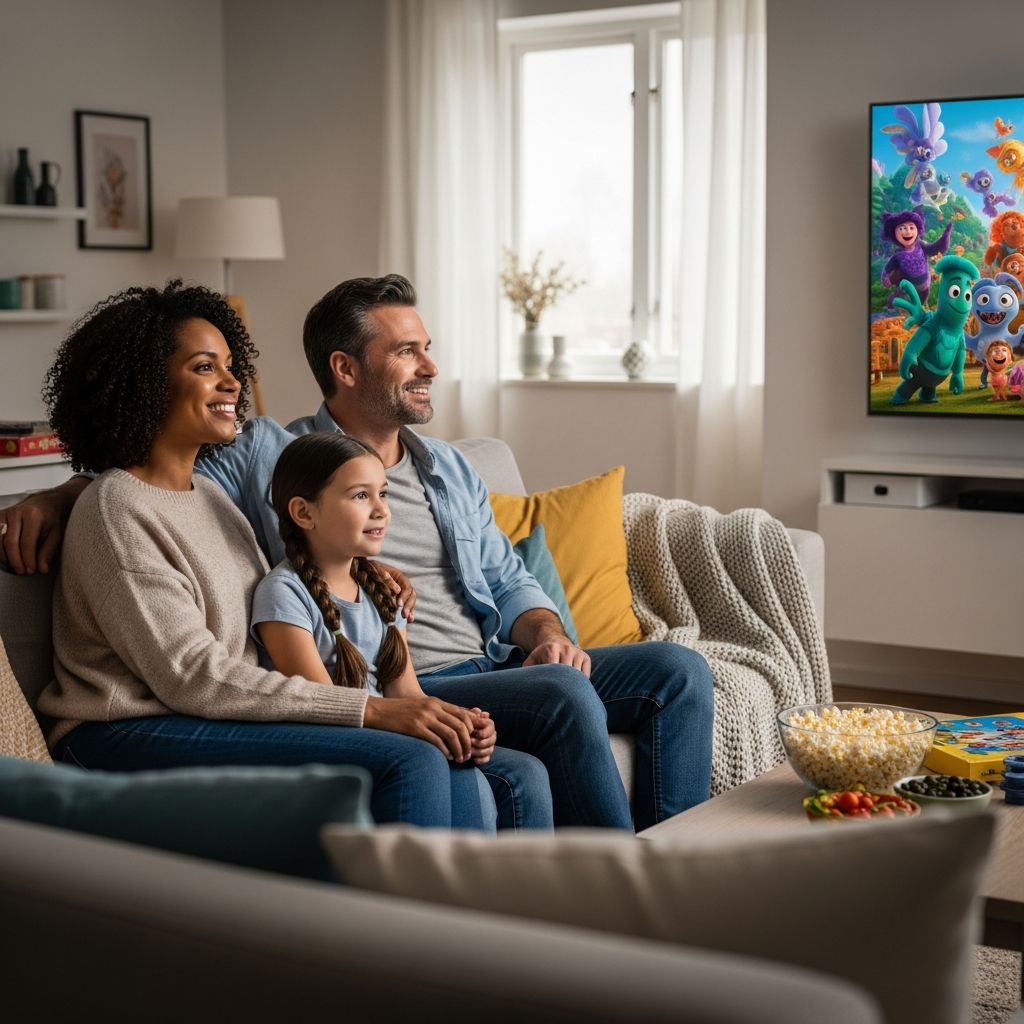
- Pair TV with connection: Make popcorn, share a blanket, or pause for five minutes of check-in before starting the episode.
- Know when to stop: If a show starts leaning heavily into themes or images that go against your values, it is fine to say, “This no longer feels like a good fit for us.”
Frequently Asked Questions (FAQs)
How much TV is reasonable for a tween on school nights?
Health organizations generally recommend prioritizing sleep, exercise, and homework first, then fitting in limited, high-quality screen time around those needs. For many families, that looks like one or two episodes a few nights a week rather than nightly marathons.
My tween wants to watch shows that seem too mature. How do I respond?
Start by asking what they like about the show—friends, humor, special effects—and see if you can find something with similar appeal but fewer intense themes. Explain your concerns clearly (“The violence is very realistic,” or “The way relationships are shown doesn’t match our values”), and review episodes together if you decide to give it a cautious try.
What if we have very different tastes in TV?
It is normal not to love the same shows. Look for overlap—maybe you enjoy mysteries while they like school dramas, so you compromise on a light, mystery-tinged series. You can also trade: one night is your pick, another is theirs, as long as both choices pass your content filter.
Are cartoons still appropriate for older tweens?
Absolutely. Many animated series are designed with layered storytelling that appeals to older kids and adults. The format matters less than the themes, tone, and how your child responds emotionally.
How can I tell if a show is upsetting my tween?
Watch for signs like trouble falling asleep, new fears, playing out intense scenes repeatedly, or suddenly refusing to watch a show they previously enjoyed. If you notice these, gently ask what parts feel scary or stressful, and consider switching to lighter content for a while.
References
- Media and Young Minds — American Academy of Pediatrics. 2016-11-21. https://publications.aap.org/pediatrics/article/138/5/e20162591/60630/Media-and-Young-Minds
- Children, Adolescents, and the Media — American Academy of Pediatrics. 2013-11-01. https://publications.aap.org/pediatrics/article/132/5/958/31694/Children-Adolescents-and-the-Media
- The Effects of Prosocial Television on Children — Mares & Woodard, Child Development. 2005-01-01. https://srcd.onlinelibrary.wiley.com/doi/10.1111/j.1467-8624.2005.00844.x
- Children and Electronic Media — The Future of Children (Princeton/Brookings). 2008-04-01. https://www.princeton.edu/~foc/
- Family Media Plan — American Academy of Pediatrics. 2020-01-01. https://www.healthychildren.org/English/media/Pages/default.aspx