Tummy time can feel like a daily battle for many families, but it is one of the simplest and most powerful ways to support your baby’s early development. With the right toys, setup, and expectations, those minutes on the floor can shift from tears and protests to curious play, social connection, and steady progress toward big milestones like rolling and crawling.
This guide explains why tummy time matters, what kinds of toys actually help, and how to create easy play routines that work for your baby’s age and temperament. The goal is not to copy anyone else’s routine, but to help you build your own way of making tummy time enjoyable, safe, and effective.
Why Tummy Time Matters So Much
When a baby spends time lying on their stomach while awake and supervised, they are doing more than just “hanging out” on the floor. They are strengthening muscles in the neck, shoulders, arms, back, and core that eventually support rolling, sitting, crawling, and even walking. Tummy time also gives babies a new visual perspective, which can stimulate their senses and encourage curiosity about the world around them.
Another key benefit is that tummy time reduces the amount of continuous pressure on the back of a baby’s head. This can help minimize the risk of flat spots on the skull and creates more opportunities for the baby to move, turn, and explore a range of head positions. Even short, frequent sessions throughout the day can add up to meaningful developmental gains.
What Makes a Great Tummy Time Toy?
Almost any safe object can become a tummy time toy, but some features make certain items especially helpful. As you choose toys, think less about brand names and more about how the toy invites your baby to move, look, reach, and interact.
- Easy to see: High contrast colors (like black and white or bold primary colors) help very young babies focus and track with their eyes.
- Interesting to touch: Different textures encourage your baby to explore with hands and mouth, which supports both sensory and motor development.
- Good for reaching and pushing: Objects that roll, wobble, or move slightly when touched invite continued attempts and practice.
- Safe to mouth: Babies explore with their mouths, so toys should be free from small detachable parts, sharp edges, or toxic materials.
- Age-appropriate challenge: An ideal toy is just engaging enough to make baby try a little harder to lift the head, shift weight, or extend the arms.
Types of Tummy Time Toys and How to Use Them
There is no single “perfect” toy. Instead, think of building a small collection of different types so you can rotate items and keep tummy time fresh. Below are common categories with specific ways to use them.
Soft Play Mats and Simple Props
The surface your baby lies on matters as much as the toys. A firm but padded play mat gives enough support for muscle work while still being comfortable. Small props, such as rolled towels, can help make early tummy time more tolerable for babies who dislike being flat on their bellies.
- Place a rolled towel or small, firm pillow under the chest (never under the face) for very young babies to slightly elevate the upper body.
- Choose mats with subtle patterns or simple images so toys remain the main focus rather than busy background designs.
- Use a mat that is easy to clean so you feel comfortable placing baby down many times a day.
High-Contrast Cards and Books
In the first months, vision is still developing, and bold images are often easier to see than soft pastels. Flat objects like cards and small books are especially good because you can position them at different distances and angles to encourage head turning.
- Prop a high-contrast card or book upright in front of your baby at eye level to encourage lifting and looking.
- Move the image slowly from side to side to promote head and eye tracking.
- Place a card near one side to tempt a baby who tends to look only in one direction to turn the head the other way.
Mirrors for Visual Engagement
Many babies are captivated by faces, including their own reflection. A non-breakable, baby-safe mirror placed at floor level can turn tummy time into a social activity as your baby studies facial expressions and movements.
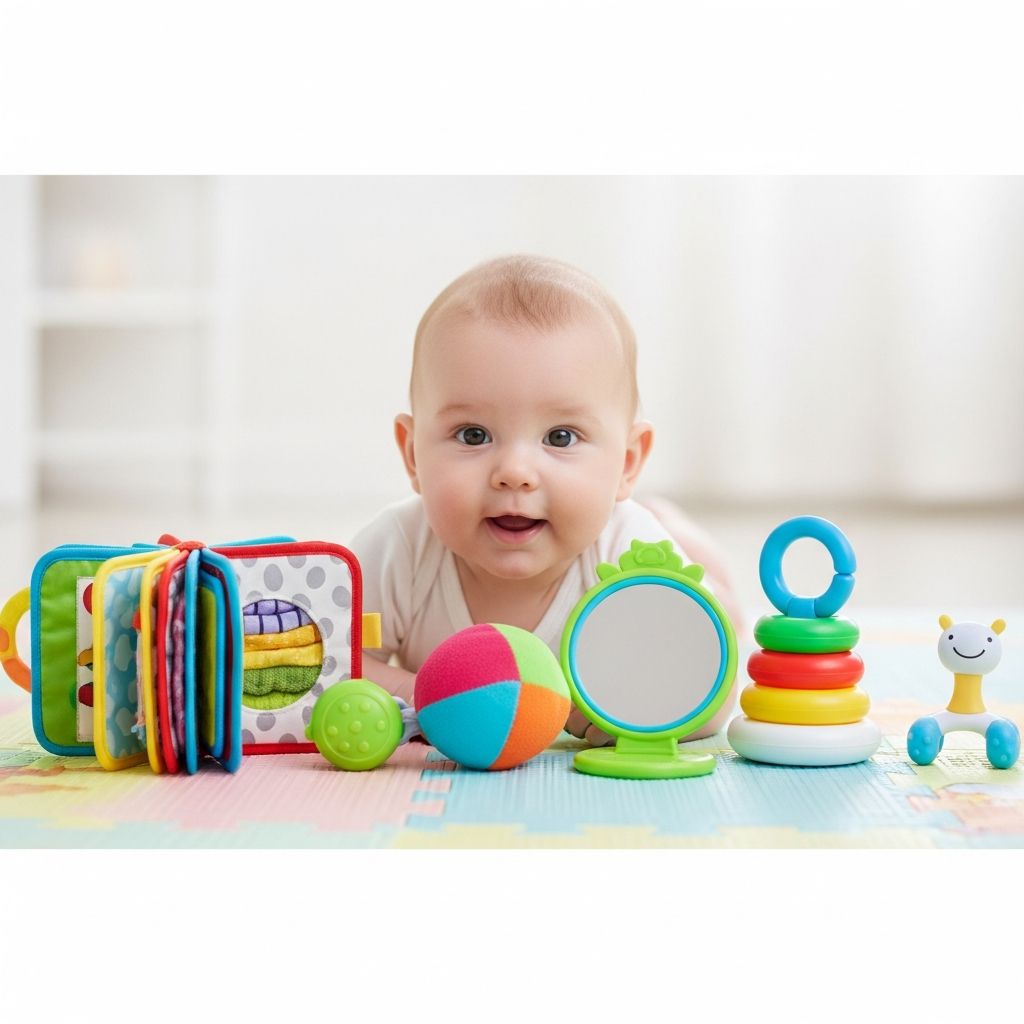
- Place a mirror directly in front of your baby so they can see their reflection when they lift their head.
- Position yourself beside the mirror so your baby sees both you and their reflection, adding extra interest.
- For older infants, move the mirror slightly off-center to encourage head turning and weight shifting.
Rattles, Balls, and Rolling Toys
Objects that make gentle sounds or roll short distances are fantastic motivators for reaching and pushing. These toys support hand-eye coordination and can later be used for seated or crawling games, making them versatile additions to your collection.
- Place a rattle just beyond your baby’s fingertips to encourage extending the arms and pushing with the shoulders.
- Roll a soft ball slowly back and forth within reach to invite swatting, grabbing, and tracking.
- Use quiet, pleasant sounds rather than loud or startling noise-makers so that the toy feels inviting, not overwhelming.
Activity Gyms and Multi-Sensory Centers
Activity gyms with overhead and side toys can be used for both back time and tummy time. The key is to adjust the hanging toys or side panels so that they are reachable or viewable when your baby is on the tummy, not just when lying on the back.
- Rotate the gym or reposition toys so that interesting objects are low and in front when baby is on the belly.
- Mix textures, such as crinkly panels, smooth rings, and soft plush pieces, to provide varied sensory experiences.
- Watch for signs of frustration; if baby cannot reach anything, lower or move the toys closer.
Household Items That Work as Toys
You do not need a large budget to create effective tummy time play. Many common household items can be repurposed as engaging props as long as they are clean, safe, and too large to swallow.
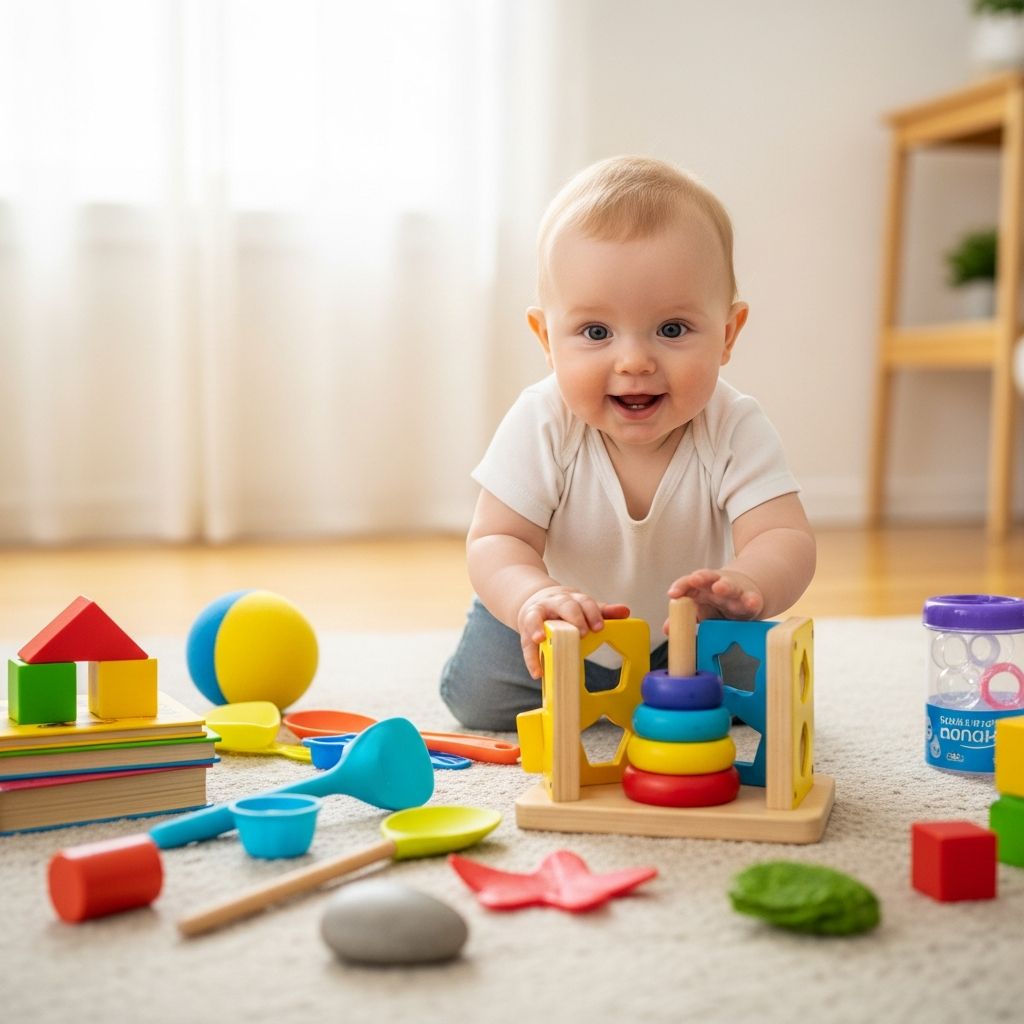
- Colorful kitchen spatulas, wooden spoons, or plastic measuring cups can be lined up in front of baby for visual and tactile exploration.
- A clear plastic container filled with tightly sealed, colorful objects (such as large beads or pompoms) becomes a simple DIY discovery bottle.
- Fabric scraps with different textures (silk, cotton, fleece) can be taped securely to the mat for supervised touch-and-feel play.
Sample Tummy Time Toy Ideas by Age
Every baby develops at a unique pace, but the table below offers general guidance on how to match toy types with typical developmental stages. Always adapt to your child’s cues and comfort.
| Approximate Age | Main Goals | Helpful Toy Types | How to Use Them |
|---|---|---|---|
| 0–3 months | Comfort with tummy position, brief head lifting | Soft mat, rolled towel, high-contrast cards, small mirror | Begin with very short sessions on your chest or over a towel, then move to the floor with a simple visual target. |
| 3–6 months | Longer head lifting, forearm support, early reaching | Mirrors, rattles, soft balls, activity gym with low toys | Place toys within reach at chest level to encourage pushing up and swatting. |
| 6–9 months | Weight shifting, beginning to pivot or push backward, early crawling | Rolling toys, textured balls, small soft blocks | Position toys slightly out of reach to inspire scooting, pivoting, and reaching across the midline. |
| 9–12 months | Crawling, transitioning in and out of tummy position | Tunnels, low obstacles, push toys | Create simple obstacle paths that encourage crawling over, under, and around items. |
Creating a Tummy Time Routine That Works
Consistency matters more than long, stressful sessions. Instead of aiming for a single long block each day, scatter brief tummy time moments throughout your routine: after diaper changes, before a nap, or when you are relaxing on the floor together.
- Start with just a minute or two at a time for newborns, gradually adding time as your baby gets stronger and more comfortable.
- Pair tummy time with something your baby already enjoys, such as a favorite song, gentle back rub, or silly faces.
- Place a small number of toys within a clear zone so your baby is not overwhelmed by clutter.
Safety Guidelines for Tummy Time Toys
Safety should always come first, especially when choosing toys for young infants. Good safety habits allow you to relax and truly enjoy this playtime with your baby.
- Always supervise tummy time; never leave your baby unattended on their belly.
- Avoid toys with small parts that can detach, long strings, or sharp edges.
- Check toys regularly for cracks, loose components, or wear, and replace them when they show damage.
- Use tummy time only while your baby is awake; for sleep, always follow safe sleep recommendations and place baby on the back.
Making Tummy Time More Enjoyable
Even with great toys, some babies strongly dislike tummy time at first. That resistance is common and does not mean anything is wrong. The key is to blend comfort, connection, and gentle challenge without forcing long periods of distress.
- Begin on your chest: Lie back and place baby on your chest so they can look at your face while working against gravity in a more comforting position.
- Get down on the floor: Make eye contact, narrate what you see, and mimic your baby’s sounds to keep tummy time social and engaging.
- Use music and movement: Soft background music, gentle swaying of toys, or rhythmic tapping on the mat can add extra interest.
- End on a positive note: Stop the session when your baby is starting to fuss rather than already very upset, so the experience feels manageable.
Sample Daily Tummy Time Play Plan
The following is an example of how you might sprinkle tummy time into an ordinary day with a young infant. Adjust the times, activities, and toys to match your baby’s age and mood.
- Morning: After the first diaper change, place baby on the mat for 2–3 minutes with a high-contrast card or mirror in front.
- Late morning: While you chat or sing, let baby lie on your chest for a short session, encouraging head lifting as they look at you.
- Afternoon: Set up rattles or soft balls at chest level, encouraging reaching and pushing for a few minutes.
- Evening: End the day with a calm, short tummy time session near a favorite toy or family photo before bedtime routine begins.
Frequently Asked Questions About Tummy Time Toys
How early can I start using toys during tummy time?
You can start offering simple visual targets, like a bold card or your own face, from the very first days at home. In the early weeks, your baby may only tolerate a few seconds on the belly, often on your chest or across your lap, and that is perfectly fine. Over time, you can introduce more varied toys and move tummy time to the floor as your baby gains strength.
My baby cries during tummy time. Should I stop?
Brief fussing is common, but extended crying is a sign that your baby needs a break or a different setup. Try reducing the duration, raising the chest slightly with a rolled towel, changing the toy, or moving tummy time to your chest where your baby may feel safer. Frequent short attempts tend to be more successful than rarely attempting long sessions.
Do I need special or expensive toys?
Specialized toys can be fun, but they are not required. What matters most is that the items are safe, interesting, and easy for your baby to see or touch. A handful of thoughtfully chosen toys or repurposed household items is usually more effective than an overflowing playroom.
How many tummy time toys should I put out at once?
For young babies, fewer is usually better. One or two well-placed toys allow your baby to focus and work toward a clear goal without distraction. As your baby grows older and more mobile, you can introduce a slightly larger selection and create small “stations” around the mat for them to explore.
When can I stop focusing on tummy time?
Once your baby is confidently rolling, sitting, and crawling, they will naturally spend time in prone and other challenging positions during play. At that point, you can worry less about counting minutes and more about offering a variety of movement opportunities. Still, many older babies and toddlers enjoy crawling tunnels, floor play, and obstacle courses that continue the spirit of tummy time.
Key Takeaways for Parents and Caregivers
Tummy time does not need to be perfect, and it will not look the same for every baby. Instead of striving for an ideal schedule, focus on creating frequent, brief, and positive opportunities to explore the world from the tummy-down position with a small set of thoughtfully chosen toys.
- Choose toys that are easy to see, safe to mouth, and inviting to reach for.
- Adapt the setup and toy types as your baby’s strength and preferences change.
- Keep sessions supervised, playful, and responsive to your baby’s cues.
With patience, creativity, and the right tools, tummy time can become one of the most enjoyable and rewarding parts of your daily routine, helping your baby build the strength and confidence needed for future milestones.