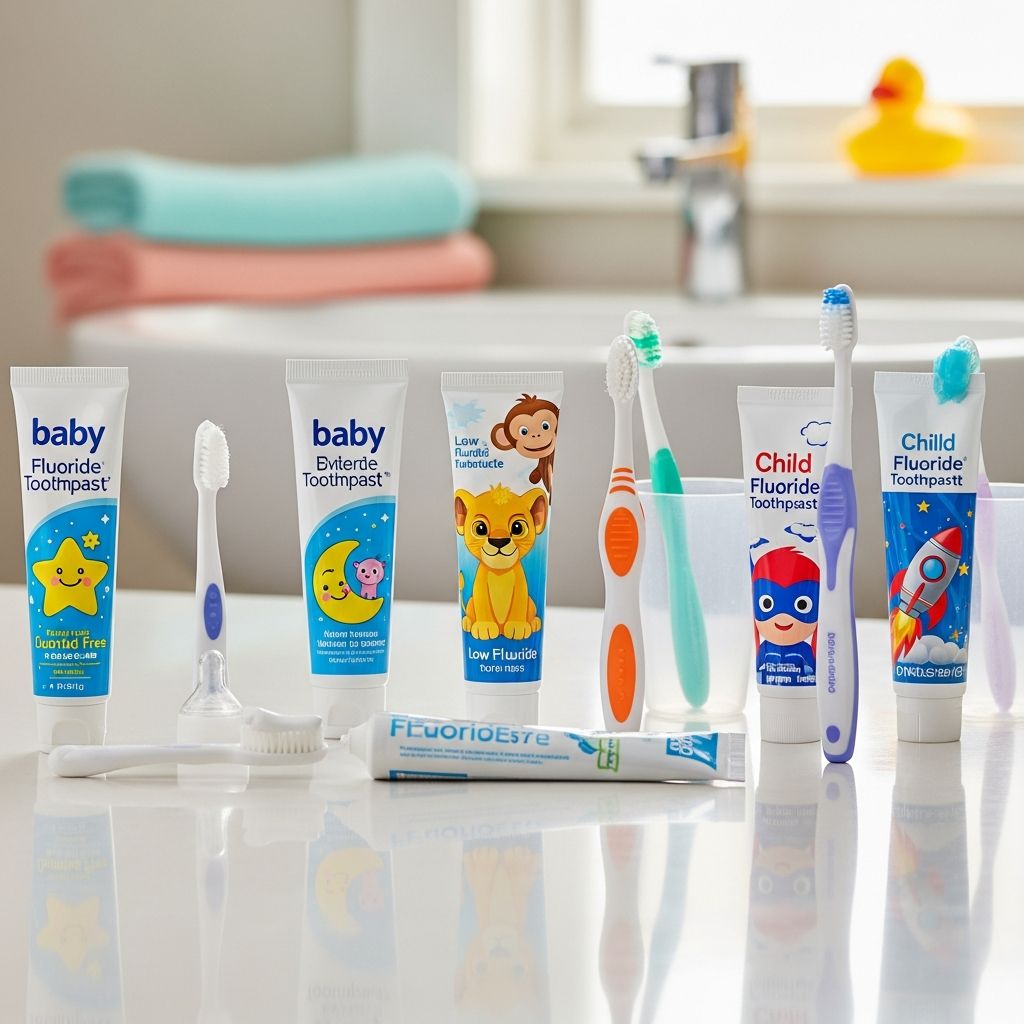
That first tiny tooth is exciting, but it also raises a big question for many parents: what toothpaste is safe, and when should it be used? Getting toothpaste right early on helps protect your child’s teeth, build healthy habits, and prevent cavities without unnecessary worry.
This guide walks through what to look for in baby, toddler, and kids’ toothpaste, how much to use, which ingredients matter, and how to match a product to your child’s age and temperament, all in clear parent-friendly language.
Why Toothpaste Matters More Than You Think
Toothpaste does more than make your child’s mouth feel fresh. It plays a central role in protecting enamel, preventing cavities, and making brushing something children actually want to do. For kids, the right toothpaste can mean:
- Stronger enamel that is more resistant to acids from food and bacteria.
- Earlier and more consistent brushing routines because the taste and texture are pleasant.
- Lower risk of early childhood cavities, which can affect speech, nutrition, and comfort.
Because young children are still learning to spit and may swallow some toothpaste, the ingredients and amount you choose are especially important.
Key Ingredients to Understand in Kids’ Toothpaste
Reading a toothpaste label can feel like decoding a science experiment. Focus on a few key elements rather than every chemical-sounding name. The most important ingredient decisions involve fluoride, foaming agents, sweeteners, and added extras.
Fluoride: Friend, Not Foe (When Used Correctly)
Fluoride helps rebuild weakened enamel and makes teeth more resistant to decay. For most children, brushing twice a day with a small amount of fluoride toothpaste is one of the most effective ways to prevent cavities. Professional organizations and pediatric dentists widely support the use of fluoride toothpaste from the appearance of the first tooth, provided only a tiny smear is used for babies and toddlers who may swallow.
Concerns about fluoride usually involve overexposure, which can cause white or brown specks on developing teeth. This is almost always tied to using too much toothpaste or swallowing large amounts, not the tiny smear or pea-sized quantity recommended for daily brushing.
Fluoride-Free Toothpaste: When It May Make Sense
Some parents prefer to start with fluoride-free toothpaste, especially for babies and young toddlers who still swallow most of what goes in their mouths. These formulas often focus on gentle cleaning and habit-building rather than cavity prevention. They may use natural flavorings and mild cleansers to remove food and plaque.
Fluoride-free options can be useful as “training toothpaste” when your main goal is to get your child comfortable with a toothbrush and routine. As your child learns to spit reliably, many families transition to a fluoride-containing paste for stronger cavity protection.
Foaming Agents and Detergents
Many adult toothpastes contain sodium lauryl sulfate (SLS), a foaming agent that can sometimes irritate sensitive mouths. Children’s formulas often avoid or minimize SLS to reduce the risk of mouth irritation, especially in kids who are prone to canker sores or dislike strong foam.
If your child complains that toothpaste stings, burns, or “bubbles too much,” switching to a low-foam or SLS-free kid-specific formula may solve the problem without sacrificing cleanliness.
Sweeteners, Flavors, and Colors
Toothpaste for kids is usually sweet and flavored so brushing feels like a treat instead of a chore. High-quality children’s toothpastes typically use non-sugar sweeteners that do not feed cavity-causing bacteria, such as xylitol or other tooth-friendly alternatives.
If you prefer a more natural approach, look for products that skip artificial dyes and include flavorings derived from fruit or mild mint rather than strong synthetic flavors or colors.
How Much Toothpaste to Use by Age
Even the best toothpaste is only safe and effective if used in the right amount. Think of toothpaste for children as a targeted medicine: a little does the job, and more is not better. The following table gives simple, visual guidelines.
| Age | Amount of Toothpaste | Fluoride Recommendation | Brushing Notes |
|---|---|---|---|
| 0–2 years (first tooth to 24 months) | Smear or grain-of-rice size | Optional fluoride-free or very small smear of fluoride toothpaste under adult control | Caregiver brushes; focus on gentle cleaning and desensitizing baby to mouth care. |
| 2–6 years | Pea-sized amount | Fluoride toothpaste is typically recommended if the child can spit with supervision. | Adult applies toothpaste and supervises brushing and spitting. |
| 6–12 years | Pea-sized or slightly more if recommended by dentist | Standard children’s fluoride toothpaste | Child brushes actively; caregiver still checks for thoroughness, especially at night. |
When in doubt, err on the side of using less toothpaste and brushing more carefully rather than loading the brush. The brushing action itself is what removes most plaque; toothpaste is there to boost cleaning and protect enamel.
Stage-by-Stage Guide: From Baby to Big Kid
Babies: First Tooth Through Age Two
Once that first tooth appears, it is time for a soft-bristled baby toothbrush and a tiny smear of toothpaste. At this age, you are in full control of the process. Your goal is to gently clean teeth and gums while helping your baby get used to having a toothbrush in the mouth.
- Use a soft, small-headed brush designed for infants.
- Apply only a rice-sized smear of toothpaste.
- Gently brush the front and back of every tooth twice a day.
- Do not rinse with water afterward; simply wipe away excess foam with a clean cloth if needed.
Some families choose a fluoride-free paste at this stage to avoid concerns about swallowing, while others opt for a tiny smear of fluoride toothpaste for maximum cavity prevention. A pediatric dentist can help tailor this decision to your child’s risk factors and your local water fluoride levels.
Toddlers: Ages Two to Four
Toddlers love to assert independence, and toothbrushing is no exception. This is the phase when battles over flavor, foam, and control are common. The right toothpaste can make cooperation much easier.
Look for toddler toothpastes that:
- Have mild, kid-friendly flavors like berry, gentle fruit, or soft mint.
- Are labeled for ages two and up or specifically for toddlers.
- Contain fluoride if your child is at typical cavity risk and can spit with guidance.
- Come in packaging your child finds fun (characters, bright colors, or animals) to build excitement.
Let your toddler “help” by holding the brush or applying a pretend dab of paste after you have already put on the correct pea-sized amount. You remain in charge of the actual cleaning, but they feel included.
Early Childhood: Ages Five to Eight
By the early school years, most kids can brush more effectively but still need oversight. Permanent teeth begin to appear, and cavity risk can increase with changing diets and busy schedules. A consistent routine with a fluoride toothpaste becomes especially important.
For this age group:
- Choose a children’s toothpaste with fluoride and a flavor your child likes enough to use daily.
- Encourage brushing for the full two minutes, twice a day.
- Check that your child spits out rather than swallows the foam.
- Occasionally “spot check” by brushing their teeth yourself after they are done, to see what they may be missing.
Preteens: Ages Nine to Twelve
By the tween years, kids are usually ready for either older children’s or mild adult toothpastes, depending on their comfort with flavors. Peer appearance and braces can be strong motivators to take oral care seriously at this age.
Consider:
- Transitioning to a mild mint or low-foam formula if your child is ready.
- Using a toothpaste labeled for enamel strengthening or cavity defense if your dentist recommends it.
- Pairing toothpaste with a timer, app, or electric toothbrush to maintain motivation.
What to Look For on the Toothpaste Label
Standing in the oral-care aisle can be overwhelming. Simplify your search with a short checklist. When choosing toothpaste for children, scan the package for:
- Age suitability: The box or tube should clearly state the intended age range.
- Fluoride content: For most kids over age two, a standard fluoride level in a children’s formula is appropriate unless your dentist advises otherwise.
- Safety claims: Phrases like “safe if swallowed” or “training toothpaste” are common for baby and toddler products.
- Ingredient style: Decide whether you prefer conventional, natural, or organic formulas based on your family’s values.
- Dental endorsements: Seals or endorsements from reputable dental organizations can indicate that the product meets certain safety and effectiveness criteria.
Trust your child’s reaction as well. If a toothpaste consistently causes complaints, gagging, or refusal to brush, it is worth trying a different flavor or texture.
Common Mistakes Parents Make With Kids’ Toothpaste
Even well-intentioned parents can fall into a few common traps when it comes to toothpaste. Avoiding these issues will make your efforts more effective and less stressful.
- Using too much toothpaste: A full brush of foam may look “right” from adult commercials, but children need far less to get the job done.
- Letting kids brush entirely unsupervised too early: Many children lack the fine motor skills and patience to clean thoroughly until around age 7–8.
- Switching brands constantly: Constant changes in flavor or texture can make some kids wary. Once you find a paste they like, consistency helps.
- Assuming mint equals “grown-up” and too strong: Some children prefer a mild mint over artificial fruit flavors. It is worth experimenting.
Making Toothpaste Part of a Happy Brushing Routine
Toothpaste is only one piece of the oral-care puzzle. A positive routine matters just as much as the product itself. When brushing becomes a daily habit tied to fun or comfort, fights tend to fade.
Try these strategies:
- Brush together as a family so your child sees you modeling the behavior.
- Turn on a two-minute song or timer and brush until the end.
- Let your child choose the flavor or tube design within your approved options.
- Use a simple reward chart for younger kids who struggle with consistency.
FAQs About Toothpaste for Babies and Kids
1. When should I start using toothpaste with my baby?
Start using a tiny smear of toothpaste as soon as the first tooth appears. Before that, you can gently wipe your baby’s gums with a clean, damp cloth after feedings. The earlier you introduce the sensation of mouth cleaning, the smoother the transition to a toothbrush and toothpaste will be.
2. What if my child swallows toothpaste?
Most young children swallow at least some toothpaste while learning to spit. This is why the recommended amounts are so small. If you are using the correct smear or pea-sized portion, occasional swallowing is usually not a concern. Teach your child to spit gently, and supervise closely until the habit is reliable.
3. Is fluoride safe for kids?
Fluoride is considered safe for children when used as directed in small amounts. It is one of the most studied tools for cavity prevention worldwide. Problems typically arise only when children get far more fluoride than recommended—such as swallowing large quantities of toothpaste or taking fluoride supplements unnecessarily. Follow your pediatric dentist’s advice, use age-appropriate amounts, and store toothpaste out of reach like any medication.
4. Should I choose natural or conventional kids’ toothpaste?
Both natural and conventional toothpastes can be effective, as long as they provide appropriate fluoride (if you choose to use it) and gentle cleaning ingredients. Natural formulas may avoid certain synthetic dyes, flavors, or detergents, which some families prefer. The best choice is the one that fits your values, is well tolerated by your child, and is used consistently twice a day.
5. How do I know if a toothpaste is “too strong” for my child?
Signs that a toothpaste is too strong include complaints of burning, stinging, strong tingling, or refusal to open the mouth after the first taste. You may also see watering eyes or gagging. In that case, switch to a milder flavor marketed specifically for children, such as gentle fruit or low-intensity mint, and consider a low-foam formula if the bubbles seem overwhelming.
6. Can my child use adult toothpaste?
Older children and preteens can often use adult toothpaste, especially if they like minty flavors and can comfortably handle stronger foaming. However, many adult formulas are too intense for younger kids. A good guideline is to wait until your child asks to try adult toothpaste or consistently finds kids’ flavors “too babyish,” then introduce a mild adult version and monitor for any discomfort.
7. What if my child refuses every toothpaste I try?
Some children are extremely sensitive to tastes and textures. In these cases, experiment with different flavors (berry, bubblegum, vanilla, mild mint) and textures (gel versus paste). You can also focus first on brushing with plain water to establish the habit, then gradually add a very small amount of toothpaste, increasing slowly as your child adapts. Involving your child in choosing the tube on the store shelf can give them a sense of control that reduces resistance.
Final Thoughts: Keep It Simple and Consistent
Selecting toothpaste for babies, toddlers, and kids does not have to be complicated. Think in terms of three pillars: a safe amount of fluoride appropriate for age and risk, ingredients your child tolerates well, and a flavor they are willing to use twice a day. From there, consistency matters far more than chasing the “perfect” brand.
With a tiny dab of the right toothpaste, a soft brush, and a predictable routine, you give your child a strong foundation for healthy teeth, confident smiles, and fewer dental dramas in the years ahead.