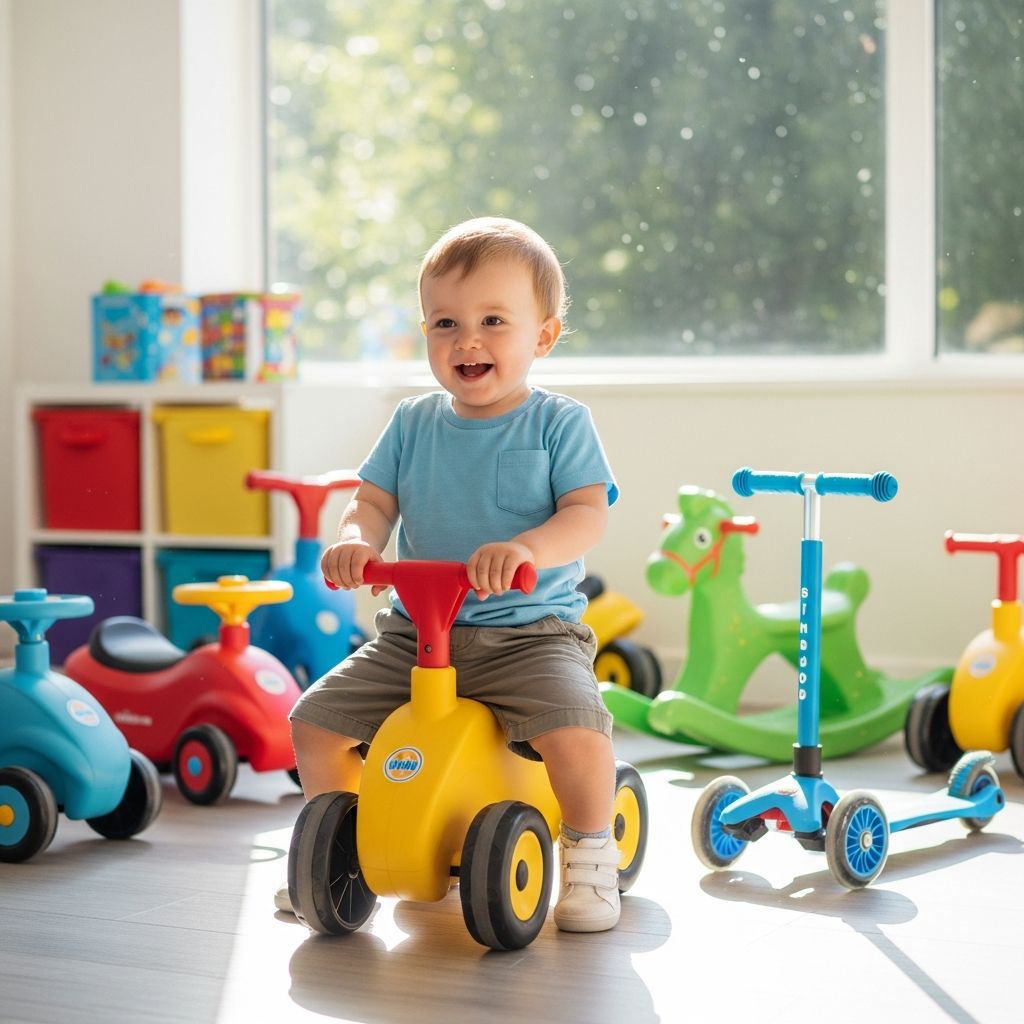
Early ride-on toys and beginner balance bikes are more than just cute gear. The right design can gently introduce your toddler to balance, coordination, and independent movement in a way that feels like pure play. This guide explains what these toys do, which features matter, and how designs like minimalist balance riders and compact twister-style ride-ons fit into your home and your child’s development.
Why Ride-On Toys Matter in the Toddler Years
Between ages 1 and 3, children rapidly improve their balance, posture, and coordination, building the foundation for walking, running, and later cycling. A well-designed ride-on gives them a safe way to practice these skills while having fun.
- Balance and postural control: Straddling and pushing a ride-on helps toddlers learn how to keep their center of mass over a moving base of support, a key step toward riding a balance bike.
- Gross motor skills: Pushing with both feet, steering, and turning build strength and coordination in the legs, hips, and core.
- Spatial awareness: Navigating around furniture or through hallways helps kids judge distance, speed, and direction.
- Confidence and autonomy: Moving independently, even at slow speeds, gives toddlers a sense of control that supports emotional development and persistence.
Because of these benefits, many pediatric experts encourage unstructured active play, including pushing and riding toys, in the toddler years.
Key Types of Early Ride-On and Balance Toys
Not all toddler ride-ons are the same. Understanding the main categories helps you choose a design that matches your child’s age, temperament, and environment.
1. Floor-Hugging Balance Riders
These minimalist toys sit very low to the ground, usually with a small seat and rounded base or compact wheels under the body. A well-known example is a spherical-style balance toy designed to wobble while still feeling stable for new riders.
- Best for: Cautious toddlers, early walkers, and kids still learning to trust their balance.
- Typical features: Low center of gravity, enclosed or partially covered wheels, gentle rocking or rolling motion.
- Main benefit: Feels safer and less intimidating because falls are short and speeds are modest.
2. Multi-Directional Twister Ride-Ons
Compact ride-ons like the Baghera Twister are designed so the front wheels pivot freely, allowing kids to roll in any direction—forward, backward, sideways, and around in circles. This gives toddlers an almost hovercraft-like feeling of maneuverability.
- Best for: Confident toddlers who enjoy spinning, turning, and quick changes of direction.
- Typical features: Four small wheels, a simple handle or front grip, durable plastic body, and quiet rolling for indoor play.
- Main benefit: Rapid improvement in steering and body control as kids experiment with different ways of pushing and turning.
3. Classic First Balance Bikes
Some early riders look like miniature bikes without pedals. Toddlers straddle the frame, walk the bike forward, and gradually learn to glide with both feet off the ground.
- Best for: Older toddlers (often 2–3 years) ready for an introduction to biking.
- Typical features: Two wheels, small frame, low seat, sometimes wooden or metal construction.
- Main benefit: Direct preparation for a pedal bike, often skipping training wheels altogether.
Developmental Benefits: What the Science Says
While specific products vary, ride-on and balance toys share a set of developmental advantages that are supported by research in child motor development.
- Improved locomotor skills: Studies show that active play with ride-on toys can support skills like walking, running, and navigating obstacles by strengthening lower-body muscles and neuromuscular control.
- Motor planning and problem-solving: Steering around furniture, backing out of corners, and avoiding walls require kids to anticipate outcomes and adjust their movements in real time.
- Core strength and posture: To stay upright on a moving toy, toddlers must engage their trunk muscles, which contributes to better sitting and standing stability.
- Activity and health: Guidelines from groups such as the World Health Organization emphasize that children under 5 should spend several hours a day in active play rather than being sedentary. Ride-on toys provide an easy indoor option.
What to Look For in a First Ride-On Toy
Once you know which general style you like—spherical balance rider, twister, or first balance bike—it is time to look more closely at design details. Small differences matter when you are matching a toy to a one- or two-year-old.
Age and Fit
- Recommended age range: Many twister-style ride-ons and low balance toys are marketed from about 1 to 3 years.
- Seat height: Your child’s feet should rest flat on the floor with a slight bend in the knees so they can push easily.
- Weight limit: Check the manufacturer’s weight range to ensure the toy will last more than a single growth spurt.
Stability and Safety Features
- Low center of gravity: Toys that sit close to the ground reduce the risk and height of falls.
- Wide footprint: A broad base or wheel spacing helps prevent tipping when kids lean or push off at angles.
- Smooth edges and enclosed parts: Rounded corners and covered bolts minimize bumps and pinches.
- Non-toxic materials: Look for compliance with toy safety standards in your region (for example, ASTM or EN standards) to reduce exposure to harmful chemicals.
Maneuverability vs. Control
Different ride-ons strike different balances between freedom of movement and predictability.
- Multi-directional wheels: The Baghera Twister’s small, swiveling wheels make it highly maneuverable but also more responsive to sudden shifts in weight, which some kids love and others find overwhelming.
- Limited steering: Some minimalist balance riders restrict how far they can turn or roll, offering gentler, more predictable motion for new riders.
Noise and Floor Friendliness
- Wheel material: Soft, rubberized wheels tend to be quieter on hard floors and less likely to leave marks.
- Indoor vs. outdoor: Compact plastic ride-ons are often designed primarily for indoor use; check if the manufacturer specifies outdoor suitability to avoid premature wear.
Design and Aesthetics
Parents increasingly look for ride-ons that fit their home style as well as their child’s personality.
- Minimalist shapes: Spherical and rounded riders often have a modern, sculptural look that blends into living spaces.
- Retro styling: Brands like Baghera are known for vintage-inspired metal cars and sleek ride-ons designed in France, appealing to parents who appreciate classic aesthetics.
- Color choices: Neutral colors can be calming and less visually overwhelming, while bright colors may excite and attract more attention from young children.
Comparing Two Popular Approaches: Spherical vs. Twister-Style
To see how design affects experience, it helps to compare a spherical-style balance rider with a multi-directional twister ride-on such as the Baghera Twister.
| Feature | Spherical / Minimalist Balance Rider | Multi-Directional Twister Ride-On |
|---|---|---|
| Typical Age Range | Early walkers, roughly 1–2.5 years | Confident walkers, roughly 1–3 years |
| Motion Style | Gentle rocking and rolling, often more linear | Can move in any direction, spin, and pivot on the spot |
| Stability Feel | Very stable and low to the ground; often wider base | Still stable but more responsive to steering and body shifts |
| Learning Focus | Basic balance, sitting posture, and controlled pushing | Quick turning, steering, and spatial navigation |
| Home Use | Great in tight spaces; tends to stay slower | Excellent for open areas and long hallways |
Practical Tips for Using Ride-Ons at Home
Buying a good ride-on toy is only half the story. How you introduce and manage it in your home can make a big difference in your child’s experience.
Set Up a Safe Riding Zone
- Clear the floor of loose rugs, cables, and small objects that could catch under wheels.
- Avoid steep slopes, stairs, and drop-offs; use gates where needed.
- Explain early that ride-ons stay on the floor, not on couches or steps.
Start Slow, Then Step Back
- First rides: Hold the toy steady while your toddler climbs on, then gently encourage them to push with their feet.
- Encourage experimentation: Give them space to try turning, backing up, and changing speed at their own pace.
- Supervision: Especially with younger toddlers, stay close enough to intervene quickly but avoid over-directing.
Integrate Into Playtime
- Create “routes” around furniture or through doorways to turn practice into a game.
- Use soft objects like stuffed animals as obstacles to navigate around.
- Combine with pretend play (delivery driver, racing driver, mail carrier) to keep interest high.
Care, Durability, and When to Size Up
With frequent indoor use, a quality ride-on should last through several years and possibly multiple children if you care for it properly.
- Regular checks: Inspect wheels, fasteners, and handles every few weeks, tightening or cleaning as needed.
- Cleaning: Wipe down with mild soap and water; avoid harsh solvents that might damage plastics or finishes.
- Storage: Keep indoors and away from prolonged sunlight to reduce fading or brittle plastic.
- Time to upgrade: When your child’s knees bend sharply or they seem cramped, it may be time for a larger ride-on or a higher balance bike.
Frequently Asked Questions (FAQs)
At what age can my child start using a ride-on toy?
Most manufacturers recommend around 12 months or when your child can walk independently and stand with good balance. Always follow the specific age and weight guidelines on the product you choose.
Is a multi-directional twister ride-on safe for a very young toddler?
A multi-directional ride-on such as the Baghera Twister can be appropriate from around age 1 if your child is a confident walker and you supervise closely. Because it turns and spins easily, it may be better suited to kids who enjoy motion and are not easily startled by quick changes in direction.
How is a balance rider different from a traditional ride-on car?
Many traditional ride-ons emphasize pushing with the feet in a straight line, while balance riders and twister-style toys place more focus on managing side-to-side shifts, steering, and dynamic balance. This makes them particularly useful as a bridge to balance bikes and later cycling.
Do I need a helmet for indoor ride-on use?
For slow, supervised indoor use on flat floors, helmets are not always required, but you may choose to use one if your child tends to ride aggressively or near hard furniture. For outdoor use or higher speeds, a properly fitted helmet is strongly recommended in many safety guidelines.
Should I choose wood, metal, or plastic?
All three materials can be safe if the toy meets relevant safety standards and is well constructed. Plastic is often lighter and easier to move indoors, metal can feel more solid and durable, and wood offers a warm, natural look. Focus on stability, wheel quality, and safety certification more than material alone.
References
- Motor Development in Early Childhood — Gabbard, C. In: Lifespan Motor Development, 7th ed., Wolters Kluwer. 2017. https://journals.lww.com
- Guidelines on Physical Activity, Sedentary Behaviour and Sleep for Children Under 5 Years of Age — World Health Organization. 2019-04-24. https://www.who.int/publications/i/item/9789241550536
- Balance Bicycle Training: Effects on Children’s Gross Motor Development — Laukkanen, A. et al., Early Child Development and Care. 2019-06-14. https://doi.org/10.1080/03004430.2019.1633378
- ASTM F963-23 Standard Consumer Safety Specification for Toy Safety — ASTM International. 2023. https://www.astm.org/f0963-23.html
- Ride-On Twister Product Description — FAO Schwarz. 2023. https://faoschwarz.com/products/ride-on-twister-black
- Baghera Ride-On Twister Product Details — Tikes Bikes. 2023. https://www.tikesbikes.com/products/baghera-twister-ride-on
- Ride-On TWISTER Black — Maisonette / Baghera. 2023. https://www.maisonette.com/product/ride-on-twister-black