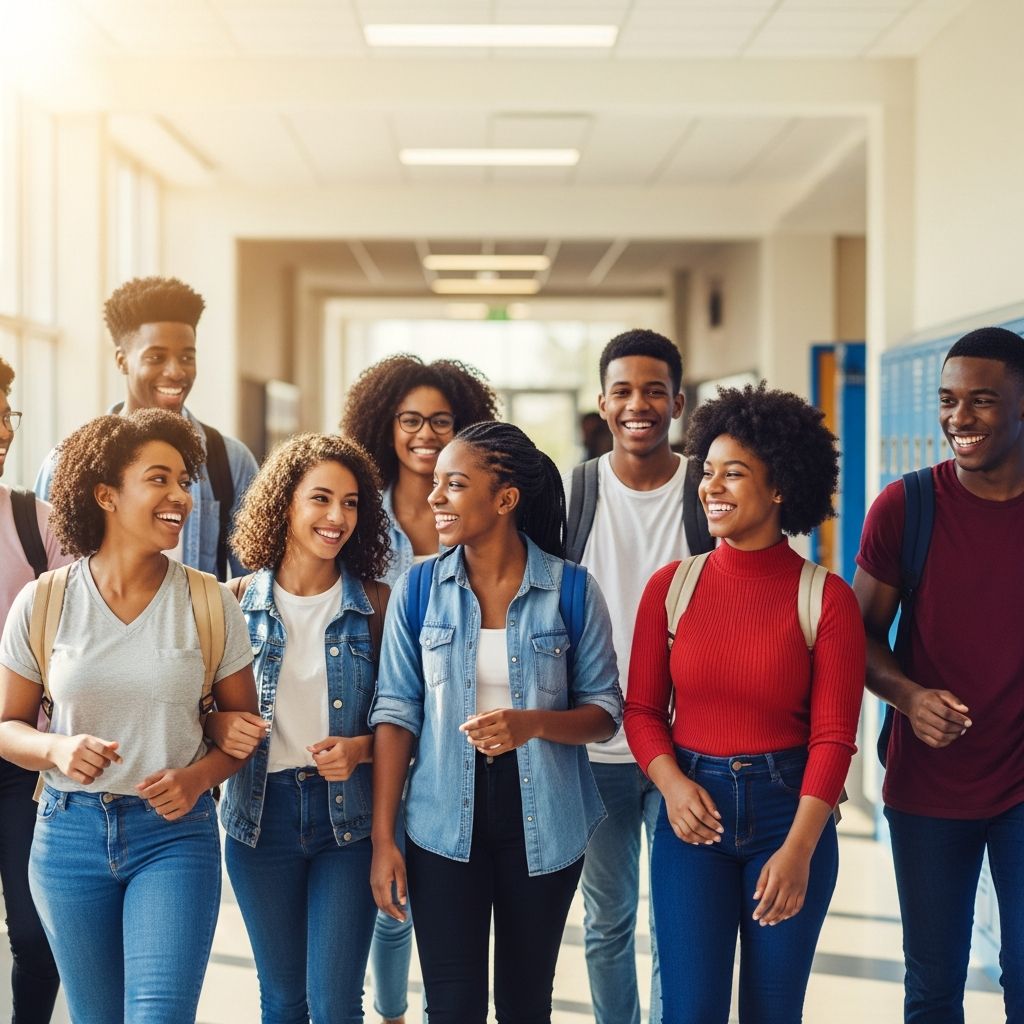
Black teenagers navigating predominantly diverse or white school settings often face unique challenges that can impact their emotional well-being and academic performance. Research highlights that forming friendships with peers of the same racial background provides essential support, fostering a sense of belonging and cultural validation that buffers against stress and isolation. These connections are not about exclusion but about creating safe spaces for identity exploration amid broader diversity.
Building Emotional Resilience Through Peer Connections
Same-race friendships serve as a cornerstone for emotional health among Black youth. When Black adolescents feel connected to their school environment, particularly through peers who share their experiences, they exhibit fewer depressive symptoms and reduced aggressive behaviors years later. A Rutgers University study tracked Black children from age 9, finding that those who reported strong school ties—feeling part of the community, close to others, happy, and safe—showed significant mental health improvements by adolescence. This connectedness was especially protective for girls, persisting even after accounting for family, neighborhood, and socioeconomic factors.
These bonds counteract the subtle pressures of racial isolation. In schools where Black students are minorities, lacking same-race friends can lead to heightened anxiety and a diminished sense of self. Conversely, peer groups that mirror one’s background offer validation, reducing the emotional toll of microaggressions or cultural misunderstandings. Parents observe that children in such environments report higher confidence and lower stress levels, as these friendships provide a network for sharing triumphs and challenges unique to their lived realities.
- Stronger emotional buffers against daily stressors.
- Lower rates of depression and behavioral issues over time.
- Increased feelings of safety and happiness at school.
Fostering Racial and Cultural Identity Development
For Black teens, same-race friendships are vital for developing a positive ethnic-racial identity (ERI). These relationships allow youth to explore heritage, discuss shared histories, and affirm self-worth in ways that cross-racial interactions might not fully capture. Studies on online spaces created by Black and Latinx youth reveal that engaging with same-race peers leads to adaptive outcomes, enhancing coping skills against negative online content and promoting long-term ERI growth.
In school settings, this translates to offline benefits: Black students with same-race friends report clearer understandings of their identity, linked to better academic and mental health results. At historically Black colleges and universities (HBCUs), 83% of Black students feel a strong sense of belonging, compared to 72% at predominantly white institutions (PWIs), underscoring the power of racial affinity groups. Even in integrated K-12 schools, these friendships prevent the erosion of cultural pride that can occur in racially isolated environments.
Parents play a key role by encouraging participation in affinity groups or extracurriculars where such bonds form naturally. This isn’t segregation but intentional support for identity formation, preparing teens for a diverse world with a solid foundation.
Navigating Diversity: Balancing Same-Race and Cross-Racial Ties
While same-race friendships are crucial, they complement rather than replace diverse interactions. Integrated schools offer cognitive benefits like improved critical thinking and reduced biases, with students in racially mixed environments showing higher test scores and creativity. Cross-racial friendships can lower anxiety and build comfort with differences, as a UC Berkeley study found, where such bonds positively affected academic and social adjustment.
However, for Black males especially, classroom support often falls short, highlighting inequities in how connectedness is fostered. The ideal is a school culture where Black teens can maintain same-race support networks while engaging broadly. This dual approach reduces stereotypes, encourages leadership, and promotes lifelong integration—students from diverse high schools are more likely to choose mixed neighborhoods post-graduation.
| Aspect | Same-Race Friendships | Cross-Racial Friendships |
|---|---|---|
| Mental Health | Buffers isolation, boosts belonging | Reduces anxiety, builds empathy |
| Academic Outcomes | Enhances confidence via identity | Improves test scores, critical thinking |
| Social Skills | Cultural validation, peer support | Cross-cultural dialogue, bias reduction |
Academic Success and Long-Term Advantages
School connectedness through same-race peers directly ties to better grades and future opportunities. Black youth with strong peer ties at school demonstrate persistent academic gains, as positive relationships foster motivation and resilience. Community resources like positive peer support further amplify this, with research emphasizing their role in protective factors for Black families.
In diverse classrooms, Black students thrive when they have both affinity groups and inclusive curricula. This setup narrows achievement gaps, as segregation exacerbates disparities while integration with support systems closes them. Teens with balanced networks report higher intellectual self-confidence, leadership skills, and satisfaction, setting them up for college and career success.
Practical Strategies for Parents and Educators
Parents can advocate for school policies that nurture these dynamics. Encourage enrollment in schools with affinity clubs, cultural events, or mentoring programs tailored to Black students. Discuss the value of diverse friend groups while prioritizing spaces for same-race bonding. Educators should train in culturally responsive teaching, reduce class sizes for better relationships, and fund programs that build school ties.
Communities benefit from partnerships with organizations providing peer mentorship. Online platforms, when curated safely, extend these benefits, allowing Black youth to connect with like-minded peers. Monitoring for balanced exposure ensures teens gain the best of both worlds.
Frequently Asked Questions
Why do Black teens specifically need same-race friends at school?
They provide cultural affirmation and combat isolation, leading to better mental health and identity development, as shown in longitudinal studies.
Does this mean avoiding diverse friendships?
No—same-race bonds complement diversity, enhancing overall benefits like reduced bias and academic gains.
How can parents support these friendships?
Seek schools with affinity groups, encourage extracurriculars, and discuss racial experiences openly at home.
What role do schools play?
Invest in smaller classes, culturally affirming climates, and equitable support to foster connectedness.
Are there mental health benefits backed by research?
Yes, early school ties predict fewer depressive symptoms and aggression in Black adolescents.
Overcoming Challenges in Predominantly White Schools
In PWIs, Black teens may feel racially isolated, impacting well-being despite class privileges. Same-race friends offer counterbalance, mirroring HBCU benefits in K-12. Strategies include virtual peer networks and community events to supplement school ties. Research on protective community resources stresses peer support’s role in resilience.
Addressing unequal support for Black males requires targeted interventions, ensuring all students access relational benefits. Schools must prioritize inclusive yet affirming environments.
Broader Societal Implications
Promoting same-race friendships in schools advances equity, preparing Black youth for society while valuing their unique needs. Diverse yet supportive settings yield cognitively sharper, socially adept graduates who reject stereotypes. Policymakers should heed evidence: funding relational improvements yields lifelong gains.
Ultimately, these bonds empower Black teens to flourish, contributing richly to multicultural fabrics.
References
- For Black Adolescents, Feeling Connected to School Has Long-Lasting Mental Health Benefits — Rutgers University. 2023-approx. https://research.rutgers.edu/news/black-adolescents-feeling-connected-school-has-long-lasting-mental-health-benefits
- The Benefits of Socioeconomically and Racially Integrated Schools and Classrooms — The Century Foundation. 2019-approx. https://tcf.org/content/facts/the-benefits-of-socioeconomically-and-racially-integrated-schools-and-classrooms/
- New study finds that Black and Latinx youth online engagement can foster positive sense of self — USC Rossier School of Education. 2024-04. https://rossier.usc.edu/news-insights/news/2024/april/new-study-finds-black-and-latinx-youth-online-engagement-can-foster-positive-sense-self
- Berkeley study shows health benefits of diverse friend groups — Tufts Daily. 2008-11-21. https://tuftsdaily.com/news/2008/11/21/berkeley-study-shows-health-benefits-of-diverse-friend-groups/
- What Black Youth Need to Feel Safe — The Nation. Recent. https://www.thenation.com/article/society/cincinnati-black-youth-mental-health/