Teething is one of those baby milestones that sounds adorable until it arrives with drool, crying, and sleepless nights. The right teething toys can make this phase much easier by safely giving your baby something soothing to chew on, while protecting developing teeth and tender gums.
This guide walks through how teething works, what to look for in a safe toy, the main types of teethers available, how to clean and use them, and smart safety rules every caregiver should know.
Understanding Teething: What’s Really Going On
Teething usually begins sometime between 4 and 7 months, though some babies start earlier or later. As teeth move toward the surface, they put pressure on the gums, causing discomfort and a strong urge to chew. Teething toys channel that urge into something safe instead of crib rails, clothing, or a caregiver’s fingers.
Common teething signs include:
- Increased drooling and chewing on hands or toys
- Red or swollen gums and mild irritability
- Disrupted sleep or feeding patterns
Teething discomfort tends to come and go in waves. Having a few well-chosen teething toys on hand helps you respond quickly when those fussy periods hit.
Key Features of a Safe Teething Toy
Not every baby toy is designed to be chewed, and not every teether deserves a spot in your nursery. When evaluating options, focus on safety first, then comfort and convenience.
1. Safe, baby-friendly materials
Choose teethers made specifically for infants from materials known to be non-toxic and durable. Look for labels that clearly state they are free from common concerning chemicals.
- Prefer food-grade silicone, natural rubber, or unfinished, smooth hardwood.
- Avoid products containing BPA, phthalates, PVC, lead, or strong artificial fragrances.
- Skip painted or heavily coated teethers unless the brand confirms baby-safe, non-chipping finishes.
2. One-piece or securely constructed design
Teething toys should not come apart easily. Small pieces, beads, or loose attachments can pose a choking risk, especially as babies gnaw with determination.
- Favor one-piece designs with no detachable parts.
- If multiple components are used, seams should be strong and firmly bonded.
- Avoid toys with thin cords, strings, or beads meant for chewing.
3. Size and shape that reduce choking risk
A safe teether should be large enough that it cannot be swallowed or pushed fully into the mouth. Openings and protruding shapes should be designed with infant safety standards in mind.
- Look for toys that cannot fit entirely behind the baby’s back molar area.
- Avoid long, narrow shapes that could trigger gagging.
- Ensure any loops or holes are large enough not to trap little fingers.
4. Easy-to-hold design for tiny hands
Teethers work best when your baby can grip them without frustration. Ergonomic shapes encourage independent chewing and help build motor skills.
- Choose toys with handles, rings, or textured sections that won’t slip from drooly hands.
- Opt for lightweight options so younger babies can lift them comfortably.
- Consider multiple grip points so the toy can be used from different angles as baby grows.
Main Types of Baby Teething Toys
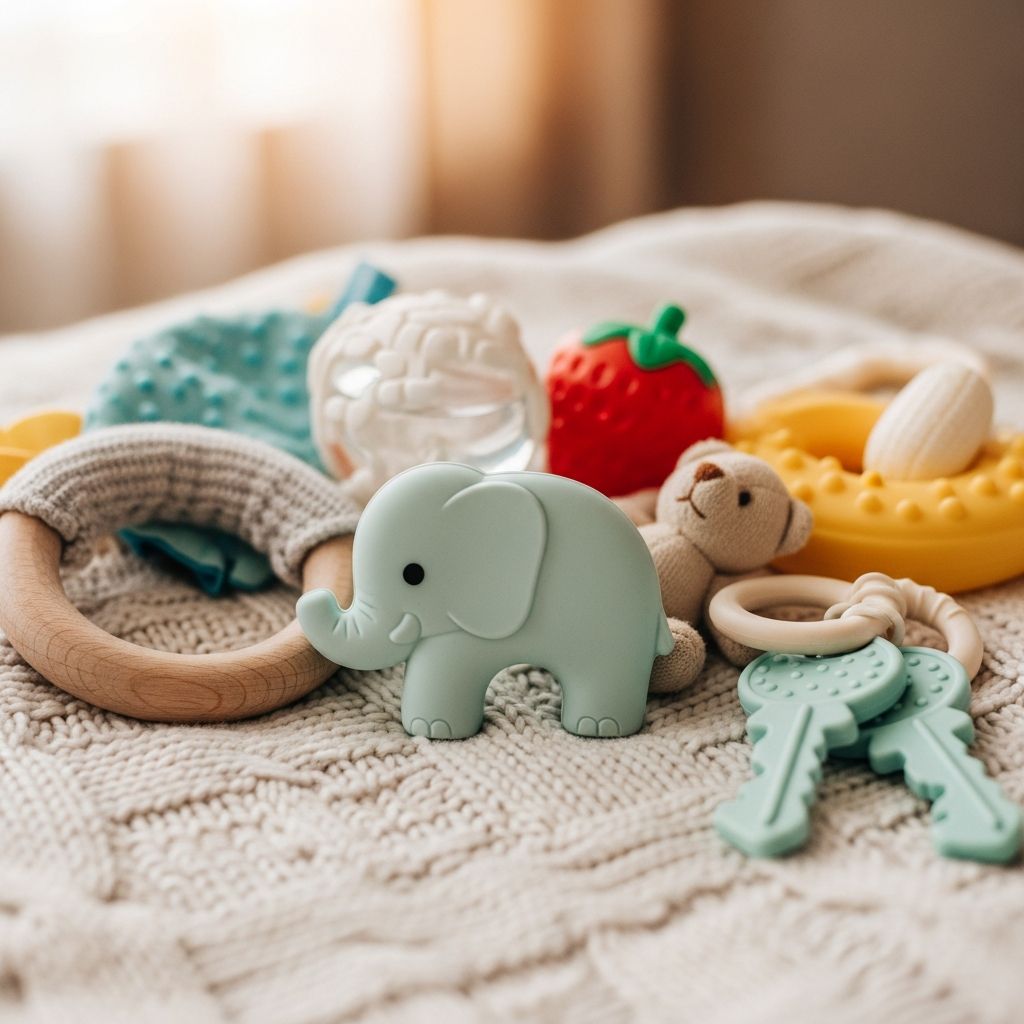
Each type of teether offers slightly different benefits. Many families find it helpful to build a small “teething toolkit” with a mix of textures and temperatures.
| Type | Main Benefits | Best For |
|---|---|---|
| Silicone rings & shapes | Soft, flexible, easy to grip; often chillable. | Everyday chewing and early-stage teething. |
| Natural rubber toys | Gentle, bouncy texture; often one-piece designs. | Babies who like squishy, bendable toys. |
| Wooden teethers | Firm pressure; eco-conscious choice. | Stronger chewers or later-stage teething. |
| Fabric and tag toys | Soft to cuddle; multiple textures to explore. | Young infants and sensory exploration. |
| Teething mittens | Stay on the hand; ideal for babies who drop toys. | Very young babies who chew on their fists. |
| Teether-toothbrush hybrids | Massage gums while introducing brushing. | Older babies getting ready for oral care routines. |
Silicone teethers and rings
Food-grade silicone is one of the most popular modern teether materials because it combines softness with durability. Silicone rings, beads molded into a single shape, and animal or fruit designs give babies a satisfying surface to gnaw on without being too hard.
Many silicone toys can be chilled in the refrigerator for extra relief. Use the fridge only, not the freezer, so the toy stays flexible and gentle on gums.
Natural rubber chew toys
Natural rubber teethers are often made as one continuous piece, reducing the chance of breakage. Their slightly springy feel appeals to babies who enjoy a bit of resistance while chewing.
Because rubber can have a natural scent, choose reputable brands that specify baby-safe, non-toxic compositions and avoid strong artificial fragrances.
Wooden and mixed-material teethers
Wooden teethers offer a firm surface that can be satisfying when teeth are close to breaking through. Many parents appreciate their simple, natural look and minimal processing.
When choosing wood, look for smooth finishes, rounded edges, and either untreated wood or finishes that are explicitly labeled as baby-safe and non-toxic. Mixed-material toys pair wood with silicone or fabric to offer multiple textures in a single toy.
Soft fabric and tag-style toys
Some babies chew more gently and are comforted by soft materials. Fabric teethers and blanket-style toys with attached knots or tags let little ones snuggle and chew at the same time.
Because fabric absorbs drool easily, these toys must be washed frequently. Check labels for machine-washable care instructions and inspect regularly for loose threads.
Teething mittens and wearable options
Teething mittens attach to baby’s hand with Velcro or elastic and feature a textured, chewable section on top. They are especially helpful for younger infants who haven’t mastered grasping and always chew on their fists.
Unlike necklaces or bracelets designed for baby to wear around the neck, mittens are secured to the hand and supervised during use, reducing certain risks while still giving constant access to a chewable surface.
Toothbrush-style and developmental teethers
Toothbrush-style teethers combine soft bristles or ridges with a handle, easing babies into the idea of daily oral hygiene. They massage the gums while introducing the texture of a toothbrush.
Other developmental teethers include shapes that encourage tongue movement, side chewing, and jaw strengthening. These can support speech and feeding skills alongside teething relief when used under guidance from your pediatrician or pediatric therapist.
How to Use Teething Toys Safely and Effectively
Even the best-designed teether needs to be used correctly. A few simple habits can greatly reduce risks and improve your baby’s comfort.
Keep a rotation of clean toys
Because teething toys spend so much time in your baby’s mouth, cleanliness matters. Establish a simple routine to prevent the buildup of drool, milk residue, and germs.
- Wash solid silicone, rubber, and many plastic teethers in warm soapy water and rinse thoroughly.
- Use the top rack of the dishwasher for toys labeled as dishwasher-safe.
- For fabric teethers, follow the care tag and dry completely before offering them again.
Use chilled, not frozen, relief
Cool temperatures can help reduce gum inflammation and provide soothing relief. However, extremely hard, frozen teethers can be too harsh on sensitive mouths.
- Chill teethers in the refrigerator for 15–30 minutes for a gentle cooling effect.
- Avoid putting gel-filled toys or any teether directly into the freezer until solid.
- Consider a clean, damp washcloth that has been chilled as a simple, low-cost option.
Supervise teething sessions
Babies should not be left alone with teething toys, especially when they are very young or using new items for the first time. Supervision allows you to spot any issues quickly.
- Stay within arm’s reach while baby chews.
- Check that the toy remains intact and does not enter the throat area.
- Remove the teether if your baby falls asleep with it in the mouth.
Products and Practices to Avoid
Some teething products on the market look clever or trendy but carry real risks. When in doubt, talk with your pediatrician before trying anything unconventional.
1. Wearable teething jewelry
Necklaces, bracelets, or anklets intended for babies to chew while wearing can pose choking and strangulation hazards. Beads can break loose, clasps can fail, and cords can become entangled around a baby’s neck or limbs.
Even when marketed as natural or therapeutic, these items are not worth the risk. If you want a wearable option, limit it to parent-worn chewable jewelry and supervise closely while nursing or holding your baby.
2. Gel- or liquid-filled rings
Teething rings filled with liquid or gel can leak if punctured, exposing your baby to unknown substances or bacteria. They can also become very hard when frozen, which may bruise delicate gums.
Solid designs made from safe silicone or rubber offer similar cooling benefits with fewer potential complications.
3. Tiny parts, batteries, or hard edges
Light-up or musical toys sometimes include small internal components, button batteries, or detachable pieces that should never be chewed. If a toy is not clearly labeled as a teether, assume it is not meant for extended chewing.
Skip toys with sharp edges, poorly finished seams, or decorative elements that might break off under pressure from the jaw.
4. Topical numbing gels and homemade remedies
Over-the-counter numbing gels may contain ingredients that are not recommended for infants and can pose serious health concerns if swallowed. Always check with your healthcare provider before using any medication for teething.
Homemade remedies such as alcohol-soaked cloths or very hard food items are also unsafe. Stick to age-appropriate foods approved by your pediatrician and purpose-made teething products.
Building a Simple Teething Toolkit
You do not need a drawer overflowing with teethers. A small, intentional collection can cover most situations and stages of teething.
- Two to three solid silicone rings or shapes that can be chilled.
- One soft, cuddly fabric or tag toy for comfort and gentle chewing.
- One firmer option, such as a wooden or rubber teether, for later stages.
- An introductory toothbrush-style teether for gum massage and early oral care.
Rotate toys to keep your baby interested, and observe which textures and shapes your child prefers. Every baby is different: some love the resistance of wood, while others stick to softer silicone or cloth.
Frequently Asked Questions About Teething Toys
When should I introduce a teething toy?
You can usually offer a teething toy once your baby shows early interest in chewing, often around 3–4 months. Ensure your baby can hold the toy or that it is designed for very young infants, such as a teething mitten or lightweight ring. Always follow the age guidelines provided by the manufacturer.
How many teething toys do we really need?
A handful of thoughtfully chosen options is often enough. Aim for variety rather than quantity: a mix of textures, temperatures, and shapes will cover more needs than several very similar toys. Having backups is helpful in case one gets lost or needs to be washed.
How do I know if a teether is worn out?
Inspect teethers regularly for cracks, tears, bite marks, or loose pieces. If any part is damaged or looks questionable, retire the toy immediately. It is better to replace a favorite teether than risk a choking hazard or sharp edge.
Can my baby sleep with a teething toy?
It is safest to remove teething toys from the crib once your baby falls asleep. Soft, cuddly toys and firm teethers can both shift positions during sleep and may not meet safe sleep guidelines. Use teethers before naps and bedtime, then transition to a bare sleep space.
Do I need organic or specialty teethers?
What matters most is safety, clear labeling, and your baby’s comfort. Some families prefer organic or eco-conscious materials, and there are many excellent options available. However, a well-made, non-toxic silicone or rubber teether from a reputable brand can be just as safe and effective as more expensive specialty products.
With a basic understanding of teething and a few smart choices, you can create a soothing, safe environment for your baby as those first teeth make their appearance. Thoughtfully selected teething toys not only ease discomfort but also support sensory exploration, motor skills, and positive early experiences with oral care.