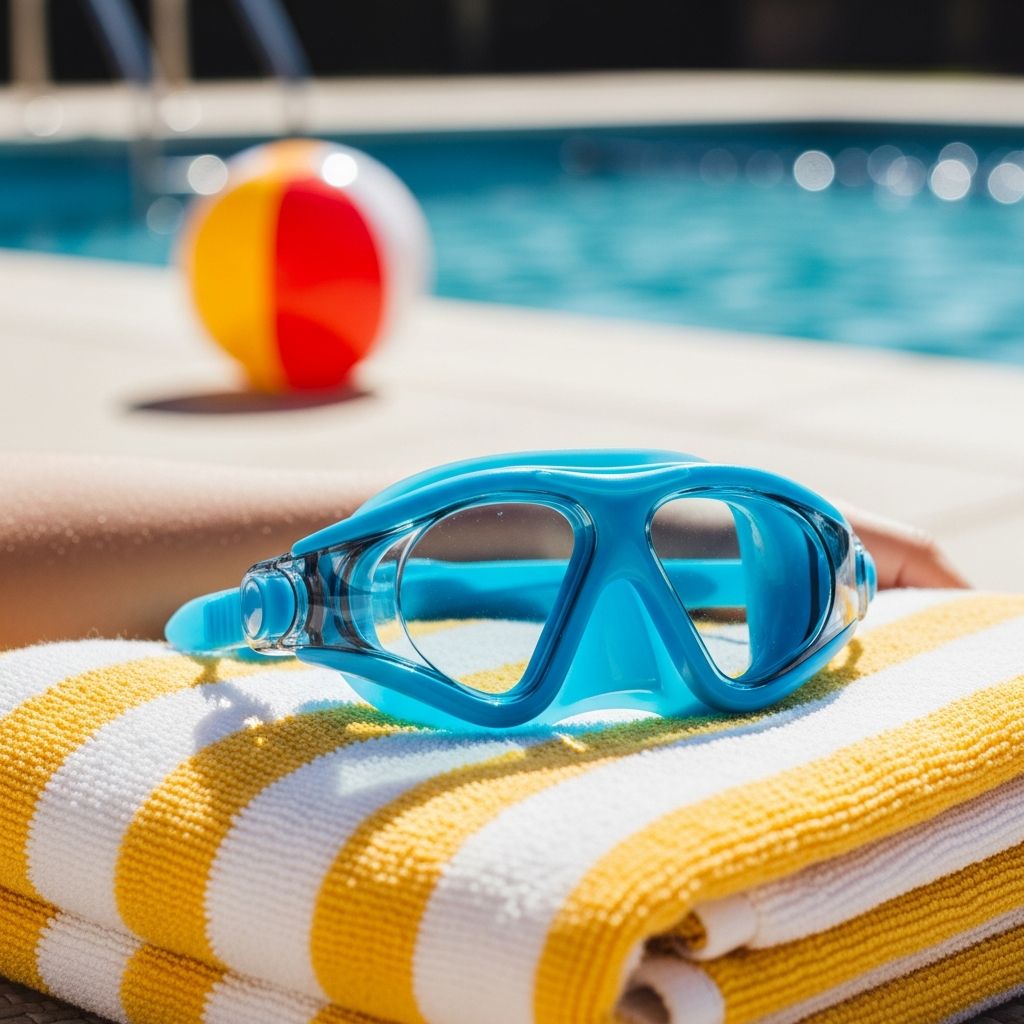
Finding the right swim goggles for kids can turn water from a source of stinging eyes and frustration into a place of confidence and fun. Parents quickly discover that not all goggles are created equal, and that a cheap, leaky pair can ruin an otherwise great day at the pool.
This guide breaks down what really matters when buying swim goggles for children: comfort, fit, safety features, durability, and ease of use. By the end, you will know how to spot a good pair, when to upgrade, and how to help your child actually keep them on.
Why Swim Goggles Matter for Kids
Water play looks effortless, but pool chemicals and salt water can be tough on sensitive young eyes. Goggles create a barrier that lets kids see clearly underwater while protecting against irritation, redness, and unnecessary rubbing.
For children learning to swim, being able to see underwater without discomfort can also reduce anxiety. When kids are not worried about burning eyes, they are more willing to dunk their heads, practice breathing, and work on proper body position.
Key Features to Look For
Rather than focusing on brand names, it helps to evaluate goggles by their features. Below are the major elements that influence how well a pair will work for your child.
1. Fit and Seal
The fit of the goggles determines whether they leak, pinch, or stay comfortably in place. A properly fitting pair should create a light suction around the eye sockets without needing to be painfully tight.
- The eye cups should sit flat against the skin, with no gaps along the top or near the nose.
- Your child should be able to gently press them on and feel a soft “stick” even before the strap goes on.
- Look for flexible gaskets (the soft ring that touches the skin) made of silicone or similarly soft material.
2. Comfort of Straps and Nose Bridge
Many kids reject goggles not because of the lenses, but because the strap pulls their hair or the nose bridge digs in. Small design details matter here.
- Split straps or wide straps distribute pressure more evenly and are less likely to slide.
- Adjustable nose bridges help if your child complains about pinching across the nose.
- Soft, fabric-covered or neoprene-style straps can be more comfortable and easier to manage for kids with long hair.
3. Lens Type and Visibility
Clear vision underwater helps children feel safe and oriented. Lens style affects how bright or dark everything appears and whether your child can comfortably swim indoors or outdoors.
- Clear lenses: Best for indoor pools or low-light conditions.
- Tinted lenses: Useful for bright outdoor pools, lakes, and beaches.
- Curved lenses: Some kids find that curved or larger lenses feel less claustrophobic because they provide a wider field of view.
4. UV Protection and Safety
Children often spend long stretches in bright sun, and the delicate skin and tissue around their eyes need protection just as much as the rest of their body. Many modern goggles offer UV-blocking lenses that act like sunglasses for the pool.
- Seek lenses that state they block UVA and UVB rays for outdoor swimming.
- Shatter-resistant or impact-resistant lenses add an extra layer of safety during active play.
5. Anti-Fog and Anti-Scratch Coatings
Foggy lenses quickly turn excitement into complaints. Anti-fog coatings slow down the buildup of condensation inside the goggles, helping kids see clearly for longer.
- Teach your child not to rub the inside of the lenses, which can damage the anti-fog layer.
- Occasional rinsing in clean water and letting goggles air-dry can help maintain clarity.
6. Ease of Adjustment
Parents quickly appreciate goggles that are easy to adjust mid-swim without needing two hands and infinite patience. Young swimmers, especially, benefit from mechanisms they can manage themselves over time.
- Side release buttons or buckles make strap changes quicker and more precise.
- Simple sliding adjusters are fine if they stay put and don’t loosen on their own.
- Look for clear size ranges (such as recommended ages or head circumference) from the manufacturer.
Types of Swim Goggles for Kids
Not every child needs the same style of goggles. Some prefer a small, low-profile design, while others like a mask-like shape that covers more of the face. Understanding the different types can narrow your choices before you even visit a store.
Traditional Two-Eye Goggles
These are the classic goggles with two separate eye cups connected by a nose bridge. They are popular with both recreational swimmers and budding competitors.
- Better suited to older kids who are comfortable with pressure around the eye sockets.
- Often more adjustable and streamlined, which can appeal to kids taking swim lessons.
Mask-Style Goggles
Mask-style goggles resemble a small snorkel mask, covering a larger area around the eyes and sometimes across the upper cheeks and nose. This can feel more natural to kids who dislike the smaller suction of traditional goggles.
- Provide a wider viewing area and often feel less “tight” on the eye sockets.
- Can be easier to seal on younger faces that are still filling out.
Soft-Band and Fabric-Strap Goggles
These goggles replace the standard silicone strap with a wide, often stretchy band covered in soft fabric. They are designed to prevent hair pulling and to be more comfortable to wear for extended periods.
- Helpful for kids who complain about straps yanking their hair or sliding up.
- Many parents find these easier for children to put on and take off independently.
Age-Based Buying Tips
While every child is unique, considering age can help guide your decision. Face size, tolerance for pressure, and willingness to cooperate with adjustments all change as kids grow.
Toddlers and Preschoolers (Ages 2–5)
Very young swimmers are still getting used to water on their faces and may be wary of any equipment pressed around their eyes. Comfort and ease of use should come before sleek or sporty designs.
- Start with soft, mask-style or gently sealing goggles designed specifically for small faces.
- Look for wide straps or fabric bands that stay in place during splashing and play.
- Choose bright colors or fun designs to make wearing goggles feel like part of the game.
Early Elementary (Ages 5–8)
Children in this age range are often taking swim lessons, diving for toys, and eager to explore underwater. They typically tolerate a more secure seal and a slightly snugger fit.
- Consider traditional two-eye goggles with adjustable nose bridges or side buckles.
- Pay attention to UV protection if they swim outdoors frequently.
- Encourage them to practice putting goggles on and off themselves, building confidence and independence.
Tweens and Pre-Teens (Ages 9–12)
Older kids may be training more seriously, joining swim teams, or becoming very opinionated about style. At this stage, performance and personal preference both matter.
- Look at low-profile options that stay put during dives and flip turns.
- Mirrored or tinted lenses can help outdoors and may appeal to kids who like a “pro” look.
- Involve them directly in choosing the pair so they are more likely to wear them without arguments.
Quick Comparison Guide
The table below summarizes how different goggle styles typically perform on the factors parents care about most. Use it as a starting point when deciding which category fits your child best.
| Goggle Style | Best For | Comfort | Ease of Adjustment | Typical Age Range |
|---|---|---|---|---|
| Traditional two-eye goggles | Lessons, early competition, confident swimmers | Moderate to high, depending on gasket softness | Good, often with sliders or side buckles | 5 years and up |
| Mask-style goggles | New swimmers, kids who dislike pressure on eye sockets | High, due to wider seal and less localized pressure | Good to very good, especially with large side clips | 3 years and up |
| Soft-band / fabric-strap goggles | Kids with long hair, sensory-sensitive swimmers | High, strap is gentle and less likely to pull hair | Very good once size is set; band usually slips on easily | 2 years and up (model-dependent) |
How to Test Goggles Before Buying
Whenever possible, test the fit before you commit. This does not always mean getting in the water; a few quick checks in a store or at home can reveal whether a pair is a likely winner.
- Check the suction: Gently press the goggles against your child’s eyes without the strap. If they stay in place for a moment, the seal is promising.
- Look for gaps: Examine the area around the nose and eyebrows. Even small gaps can lead to leaks once your child starts moving.
- Ask about comfort: Have your child blink a few times and look around. If they complain immediately about pinching or pressure, try another style.
- Adjust the strap: Tighten gradually until the goggles feel secure but not painful. There should be no deep marks on the skin after brief wear.
Helping Your Child Wear Goggles Happily
Even the best goggles will not help if your child refuses to wear them. Making goggles part of a fun, predictable routine can reduce pushback and meltdowns.
- Introduce goggles during calm bath time or backyard water play before swim lessons begin.
- Let your child choose the color or pattern so they feel a sense of ownership.
- Use short, positive practice sessions where the goal is simply to get used to the feeling, not to swim laps.
- Model wearing goggles yourself so kids see them as normal rather than scary or strange.
Care and Maintenance Tips
Taking basic care of your child’s goggles extends their life and keeps them comfortable to wear. It also reduces the chance of cloudy lenses, stretched straps, or broken buckles right before a big swim day.
- Rinse goggles in clean, cool water after each use to remove chlorine or salt.
- Allow them to air-dry completely before storing them in a case or bag.
- Avoid leaving goggles in hot cars or direct sun for long periods, which can warp plastic and weaken straps.
- Teach kids not to scratch or wipe the inside of the lenses with towels, which can damage anti-fog coatings.
Budget Considerations: When to Spend More
Parents often wonder if there is a meaningful difference between bargain-bin goggles and more expensive options. While price alone does not guarantee quality, some upgrades can be worth the investment if your child swims frequently.
- More expensive goggles often offer better lens clarity, stronger UV protection, and more durable straps and buckles.
- If your child only swims a few times each summer, a midrange pair may be perfectly sufficient.
- For kids on swim teams or in year-round lessons, prioritize durability, comfort, and clear vision over novelty features.
SEO-Friendly FAQs About Kids’ Swim Goggles
How should kids’ swim goggles fit?
Kids’ swim goggles should create a gentle seal around the eye area without leaving deep marks or causing pain. The strap should sit flat around the back of the head, slightly above the ears, tight enough to prevent slipping but loose enough that your child can comfortably wear the goggles for an entire lesson or play session.
Are tinted lenses better for children?
Tinted lenses can be very helpful for kids who swim outdoors because they reduce glare and bright reflections off the water. For indoor pools, clear or lightly tinted lenses are often more comfortable, as heavily tinted or mirrored lenses may make the environment feel too dim.
How can I stop kids’ goggles from fogging up?
Choosing goggles with a built-in anti-fog coating is a good start, but habits matter too. Encourage your child to avoid touching or wiping the inside of the lenses, rinse the goggles in clean water after each use, and let them dry fully; if fogging persists, some families use anti-fog drops specifically designed for swim goggles.
How often should children’s swim goggles be replaced?
There is no fixed schedule, but goggles should be replaced when the strap loses elasticity, the lenses become too scratched to see through, or the seal starts leaking despite careful adjustment. For kids who swim regularly, this may mean replacing goggles every season or once a year, while occasional swimmers may get many seasons out of a well-cared-for pair.
Can one pair of goggles work for both pool and beach?
Yes, many children happily use a single pair of goggles for both pool and beach as long as they fit well and provide UV protection. For very bright beach conditions, consider a tinted lens, and take extra care to rinse off sand and salt after each outing to prevent scratches and wear.
What if my child complains that goggles hurt?
If your child says the goggles hurt, first check whether the strap is simply too tight and loosen it slightly. If discomfort continues, try a different style—such as a mask-style design or a softer strap—and involve your child in the choice so that they feel more in control and can describe what feels better on their face.