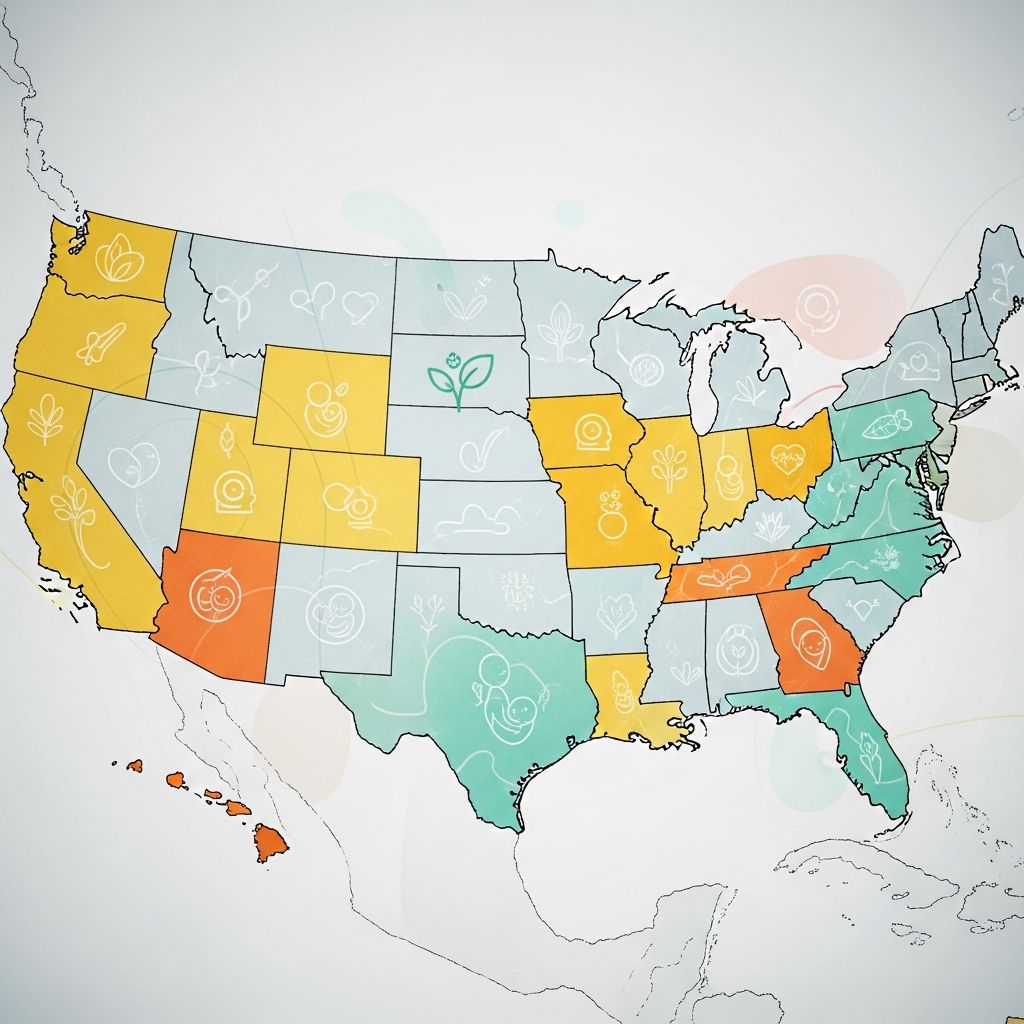
Choosing where to give birth involves weighing factors like healthcare quality, affordability, infant safety, and family support. Recent analyses highlight states excelling in these areas, particularly for maternal and newborn health.
Key Metrics Shaping Childbirth Rankings
Evaluations of states for childbirth rely on multiple indicators. These include infant mortality rates, maternal care access, healthcare costs, fertility rates, and overall family-friendliness. Low infant mortality signals strong neonatal care, while affordable maternity services ease financial burdens on new parents.
- Infant Mortality Rate: Measures deaths per 1,000 live births; lower rates indicate better prenatal and postnatal care.
- Maternity Care Costs: Average expenses for delivery and hospital stays, including insurance coverage variations.
- Fertility Rates: Births per 1,000 women, reflecting supportive environments for family growth.
- Healthcare Access: Availability of obstetricians, hospitals with NICU units, and insurance for children.
- Family Support: Affordability of childcare, education quality, and economic stability post-birth.
These metrics combine to rank states, prioritizing those with robust systems for safe deliveries and healthy starts.
Leading States for Giving Birth
Northern and Midwestern states dominate top rankings due to superior healthcare infrastructure and low costs. North Dakota, Utah, and South Dakota lead, offering top-tier medical facilities and economic advantages.
| Rank | State | Key Strengths | Infant Mortality (per 1,000) |
|---|---|---|---|
| 1 | North Dakota | Low costs, high birth rates, strong healthcare | Low |
| 2 | Utah | Affordable care, family support, high fertility | Low |
| 3 | South Dakota | High birth rates, excellent affordability | Low |
| 4 | Massachusetts | Best schools, low infant mortality, high insurance coverage | 3rd lowest |
| 5 | Minnesota | High family income, low poverty, strong hospitals | Low |
North Dakota exemplifies balance with low infant mortality and high fertility (60 per 1,000 births). Utah follows with 60 births per 1,000, supported by community-focused health initiatives. South Dakota matches with 63 births per 1,000, emphasizing cost-effective care.
Challenges in Lower-Ranked States
Southern states like Mississippi, South Carolina, and Tennessee lag due to higher infant mortality and limited resources. Mississippi tops worst lists with elevated rates, signaling needs in prenatal care and poverty reduction.
- Mississippi: Highest infant mortality, 56 births per 1,000.
- South Carolina: 55 births per 1,000, affordability issues.
- Tennessee: 53 births per 1,000, healthcare access gaps.
- Alabama and Arkansas: High mortality rates persist.
These states face systemic hurdles, including rural hospital closures and insurance disparities, impacting maternal outcomes.
Birth Rates Across the Nation
Fertility varies widely, with rural states showing higher rates. South Dakota (63), North Dakota (60), and Utah (60) lead, while coastal states like Oregon (43) and Vermont (39) trail. High rates correlate with family-oriented policies and lower living costs.
| Top 5 Highest Birth Rates (2023) | Rate per 1,000 | Births |
|---|---|---|
| Wyoming | 66 | 8,487 |
| Hawaii/South Dakota | 63 | 19,310/12,659 |
| North Dakota/Utah | 60 | 10,805/52,625 |
This data underscores regional differences, with Mountain and Plains states fostering higher family growth.
Family-Raising Advantages in Top States
Beyond birth, states like Massachusetts and Minnesota excel in long-term family support. Massachusetts boasts the top public school system, highest child insurance rates, and low crime. Minnesota offers median family incomes over $109,000 and low poverty.
- Massachusetts: #1 for families, high life expectancy.
- Minnesota: #2, best hospitals.
- North Dakota: #3, low cost of living.
- Wisconsin: #4, improved rankings.
- Nebraska: Strong economy, education.
These factors ensure sustained wellbeing for newborns and parents.
Healthcare and Cost Breakdown
Average childbirth costs range from $10,000-$30,000, varying by state insurance and hospital quality. Top states minimize out-of-pocket expenses through Medicaid expansion and competitive providers. For instance, North Dakota’s systems keep fees low while maintaining NICU availability.
Access to midwives and doulas also differs; progressive states integrate these for holistic care, reducing interventions.
Factors Influencing Maternal Health Outcomes
Socioeconomic status, rural access, and policy play key roles. States investing in telehealth and rural clinics improve equity. High-fertility areas like Alaska (high young women births) benefit from community networks.
Policymakers focus on reducing disparities; top states model expansions in prenatal programs.
Practical Tips for Expecting Parents
Relocating? Prioritize states with:
- Proximity to Level III/IV NICUs.
- High midwife-to-birth ratios.
- Generous parental leave policies.
- Low c-section rates for natural births.
Consult local health departments for personalized data.
Frequently Asked Questions
What makes North Dakota ideal for childbirth?
North Dakota ranks #1 for low costs, excellent healthcare, and low infant mortality, with a birth rate of 60 per 1,000.
Which states have the highest infant mortality?
Alabama, Arkansas, and Mississippi report the highest rates per 1,000 births.
How do birth rates impact state rankings?
Higher rates in states like South Dakota (63) indicate supportive environments, correlating with better family outcomes.
Is Massachusetts good only for families or also births?
It excels in both, with the 3rd-lowest infant mortality and top child insurance coverage.
What about fertility rates for young women?
Alaska and Wyoming lead at 122 and 118 births per 1,000 women aged 20-34.
This guide empowers informed choices amid evolving 2026 data. States continue refining systems for healthier births nationwide.
References
- Ranking the Best & Worst States to Have a Baby in the U.S. in 2025 — Birth Injury Lawyer. 2025. https://birthinjurylawyer.com/research/ranking-the-best-worst-states-to-have-a-baby-in-the-us-in-2025/
- Birth Rate by State 2026 — World Population Review. 2026. https://worldpopulationreview.com/state-rankings/birth-rate-by-state
- These Are the Best and Worst States to Raise a Family in 2026 — The Bump. 2026. https://www.thebump.com/news/best-worst-states-raise-a-family
- States that will benefit most from Trump accounts based on birth … — Tucson.com. 2024. https://tucson.com/news/nation-world/business/personal-finance/article_5883e108-175e-56ef-9168-55e74bee6eec.html