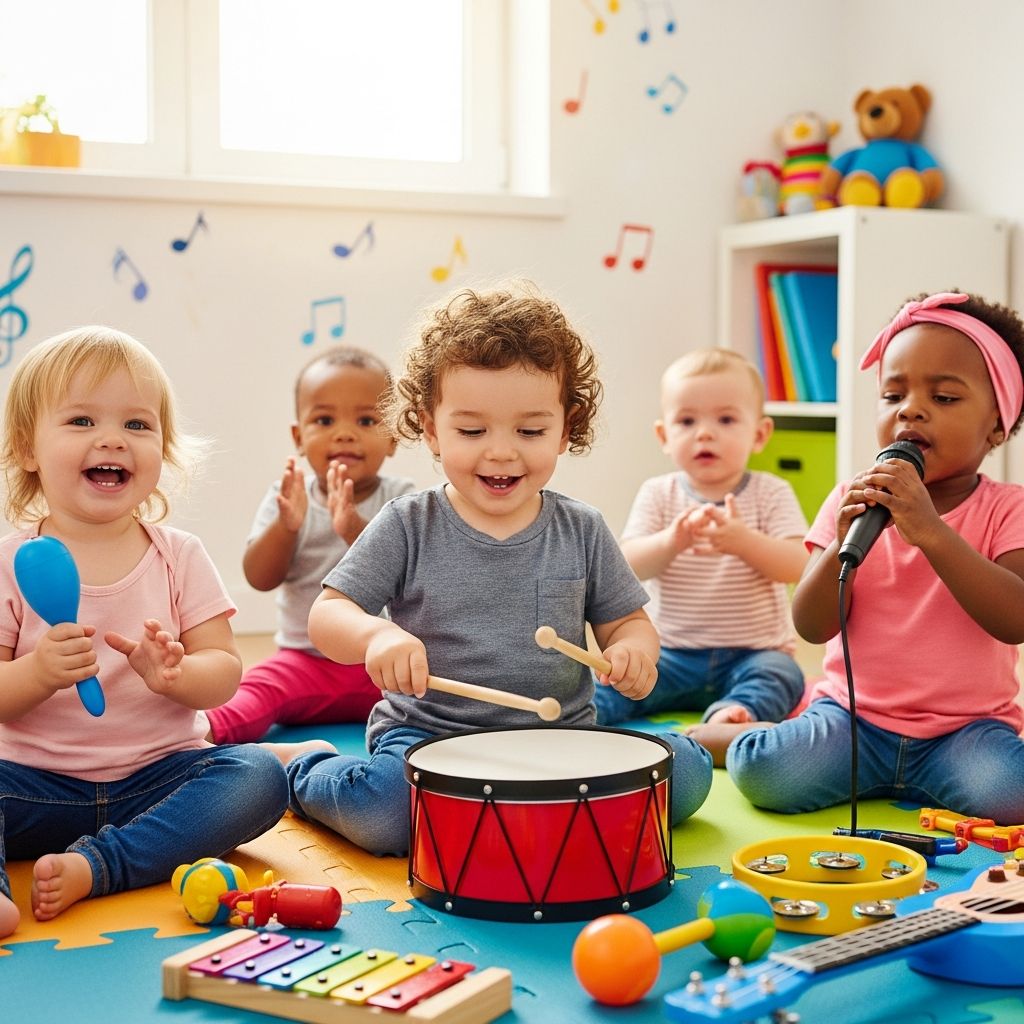
Music serves as a powerful tool in early childhood development, helping young children process new experiences and build foundational skills. For toddlers encountering life’s initial challenges—like learning to share or managing big feelings—catchy tunes make these moments approachable and memorable. Drawing from popular children’s programming and educational music, this guide highlights songs that address key toddler milestones, fostering emotional growth, social awareness, and independence.
Why Music Matters for Toddler Development
Research from early education programs emphasizes music’s role in cognitive and emotional growth. Songs enhance language acquisition, memory, and self-regulation by combining rhythm, repetition, and relatable lyrics. According to the U.S. Department of Health and Human Services’ Head Start program, musical activities help children express ideas, build vocabulary, and navigate social interactions. When paired with daily routines, these songs turn abstract concepts into tangible lessons.
Parents often report that singing together strengthens bonds and reduces tantrums. For instance, repetitive choruses reinforce routines like cleanup or handwashing, while upbeat melodies encourage movement and positivity. This approach aligns with studies showing music boosts neural connections in young brains, preparing kids for school readiness.
Navigating Daily Routines Through Rhythm
Toddlers thrive on predictability, and songs provide structure for everyday tasks. Here are selections that transform mundane activities into joyful rituals:
- Clean-Up Time Boogie: This energetic track turns tidying toys into a dance party, teaching responsibility and organization. Lyrics prompt kids to pick up items while moving, making the chore fun and habitual.
- Handwashing Heroes: A bubbly song about scrubbing for 20 seconds, complete with counting verses. It instills hygiene habits crucial during cold seasons or toilet training transitions.
- Bedtime Wind-Down Melody: Soft rhythms guide brushing teeth and pajamas, easing resistance to sleep schedules. Repetition helps toddlers anticipate and embrace nighttime routines.
Incorporate these during transitions to minimize meltdowns. Sing as a family to model participation, gradually letting children lead.
Building Social Skills with Friendly Tunes
Sharing and turn-taking are pivotal for preschool friendships. Music simplifies these lessons:
- Wait Your Turn, It’s Fun: Featuring animal characters, this song celebrates patience during playtime. It uses simple phrases like ‘wait a bit, then it’s your turn’ to normalize delays.
- Be a Friend Song: Encourages kindness through actions like smiling and helping, promoting empathy in group settings.
- Count on Me: Highlights friendship qualities—trust and support—via Bruno Mars-inspired lyrics, ideal for sibling dynamics.
Play these during playdates. Pause to discuss: ‘How does waiting make friends happy?’ This reinforces concepts beyond the song.
Emotional Intelligence via Melodic Expression
Big emotions overwhelm toddlers, but songs offer safe outlets. Key tracks include:
- Use Your Words, Little Star: Teaches naming feelings—happy, sad, mad—with starry visuals, empowering verbal expression over meltdowns.
- If You’re Happy and You Know It: Classic actions (clap, stomp) help identify and release joy or frustration, building body-emotion awareness.
- True Colors: A gentle reminder to embrace uniqueness, reducing self-doubt in diverse playgroups.
These foster resilience. Pair with emotion charts: Sing, then point to faces matching the lyrics.
Potty Training and Body Awareness Songs
Independence starts with bodily control. Uplifting songs ease this milestone:
- Potty Dance Party: Celebrates successful trips with dances, demystifying the process.
- My Body is Special: Covers consent and personal space, vital for safety education.
- Healthy Habits Medley: Links washing hands post-potty to feeling strong, from Super Simple Songs.
| Song | Skill Focus | Activity Tip |
|---|---|---|
| Potty Dance Party | Success reinforcement | Dance after each try |
| My Body is Special | Boundaries | Use dolls to role-play |
| Healthy Habits | Hygiene routine | Act out verses in bathroom |
Consistency is key—sing at every potty sit, rewarding effort over perfection.
Growth Mindset and Perseverance Anthems
Facing failures builds grit. Empowering songs include:
- Try Everything: Shakira’s hit from Zootopia urges persistence: ‘Try and try until you succeed’.
- Brave: Sara Bareilles encourages voicing fears and pushing forward.
- The Power of Yet: Teaches ‘not yet’ as progress, shifting fixed mindsets.
These combat ‘I can’t’ attitudes during puzzles or bike learning. Discuss lyrics post-song: ‘What did the singer keep doing?’
Family Bonds and Self-Esteem Boosters
Diverse families need representation. Songs like:
- My Family: Celebrates all structures—’In my heart, you’re family’.
- I Am: Hilary Duff’s track promotes self-ownership via ‘I statements’.
- Proud of Me: Sesame Street affirms efforts, boosting esteem.
Sing during family time to nurture belonging.
Science and Life Cycles in Song
Understanding change prepares kids for growth:
- Life Cycle Song: Traces plant stages, mirroring personal development.
- Growing Up: Fun track on baby-to-adult stages.
Visual aids like drawings enhance retention.
Frequently Asked Questions (FAQs)
Q: How often should I sing these songs with my toddler?
A: Daily during routines—2-3 times builds habits without overwhelming. Vary to keep engagement high.
Q: Can songs replace direct teaching?
A: No, they complement. Follow singing with talks or play to deepen understanding.
Q: What if my child doesn’t like a song?
A: Customize—change words or actions. Exposure grows fondness over time.
Q: Are these suitable for 1-3 year olds?
A: Yes, simple lyrics and melodies match developmental stages per early ed guidelines.
Q: Where to find these songs?
A: YouTube Kids, streaming apps, or children’s albums like CoComelon-inspired playlists.
Creating Your Playlist and Tips for Success
Curate a 30-minute playlist mixing categories. Tips:
- Model enthusiasm—dance and emote.
- Record family versions for on-the-go.
- Track progress: Note skills improving weekly.
- Combine with books for multi-sensory learning.
Music’s magic lies in repetition and joy. As Head Start notes, creative expression like singing lays groundwork for lifelong learning. Parents using these report calmer homes and prouder kids.
Expand with classics like ‘Five Little Ducks’ for counting or ‘Shake It Off’ for resilience. Tailor to your child’s needs for maximum impact.
References
- 10 Songs That Teach Important Life Skills for Kids — A Music Therapy. N/A. https://www.amusictherapy.com/post/10-songs-that-teach-important-life-skills-for-kids
- 30 Best Preschool Songs — Brightwheel. N/A. https://mybrightwheel.com/blog/preschool-songs
- Life Skills Songs for Kids | 5 Fun Learning Songs in 1 Video — YouTube (Sing With Oma). 2025-07-18. https://www.youtube.com/watch?v=4rH1RqdrNMc
- 80 Songs that Inspire a Growth Mindset in Children — Big Life Journal. N/A. https://biglifejournal.com/blogs/blog/motivational-songs-growth-mindset-kids
- The Life Cycle Song | Science Songs | Scratch Garden — YouTube (Scratch Garden). N/A. https://www.youtube.com/watch?v=PqzF4-w7bG8
- Healthy Habits! Kids Songs — YouTube (Super Simple Songs). N/A. https://www.youtube.com/watch?v=_ify35SJcrI
- Music in Child Development — HeadStart.gov (U.S. Department of Health and Human Services). N/A. https://headstart.gov/curriculum/article/music-child-development
- Growing Up! Fun Song About How Babies Become Adults — YouTube. N/A. https://www.youtube.com/watch?v=yX7rg8bdpa8