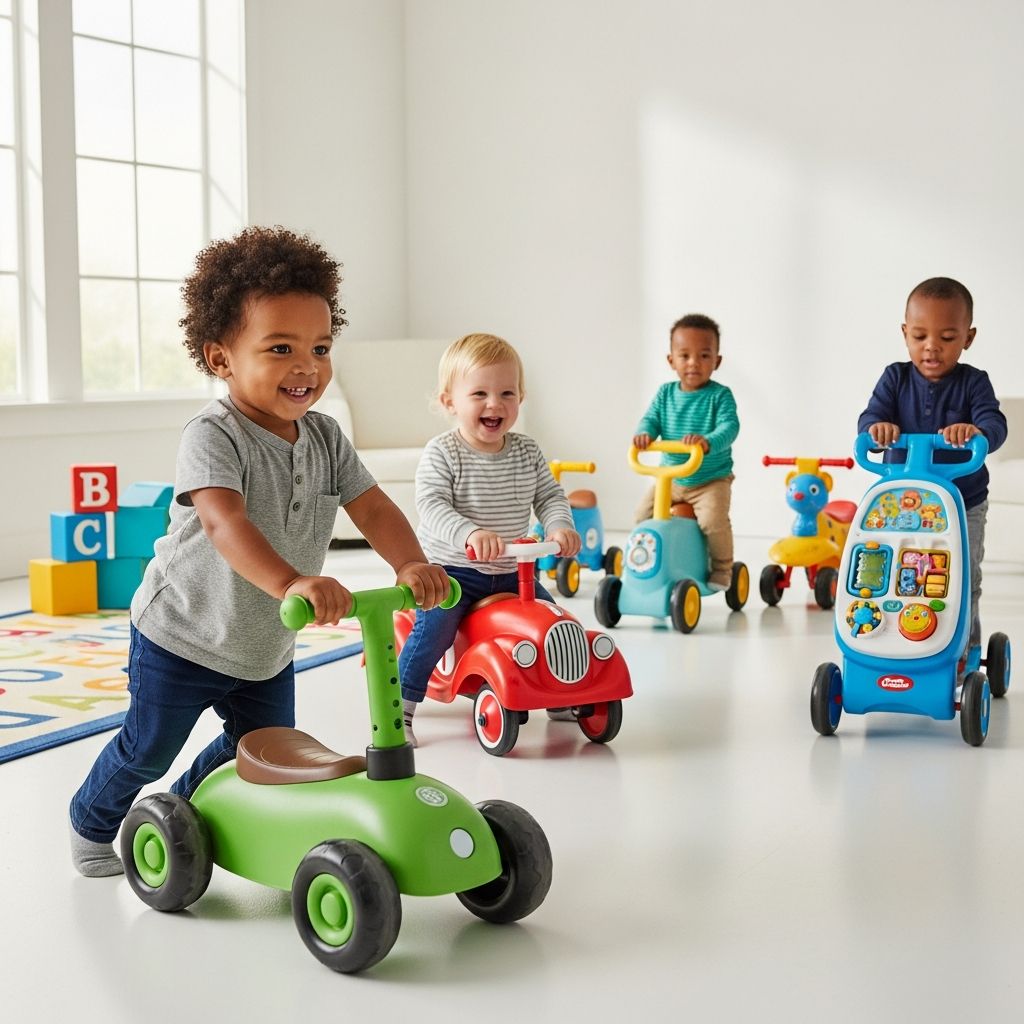
Ride-on toys are often a toddler’s first taste of independence on wheels, but they are also powerful tools for building balance, strength, and confidence. For wobbly new walkers and busy toddlers, the right ride-on can turn everyday playtime into a mini workout that supports healthy development.
This guide walks through how ride-on toys benefit young children, what to look for in a safe design, the main types available, and practical tips for choosing and using them at home.
Why Ride-On Toys Matter for Little Bodies and Big Brains
At first glance, a ride-on toy just looks like fun transportation across the living room. Beneath the surface, though, important developmental work is happening every time a child scoots, pushes, or climbs on and off.
- Gross motor skills: Scooting with both feet, steering with arms, and shifting weight all help strengthen core muscles, legs, and shoulders.
- Balance and coordination: Even low, stable ride-ons require kids to keep their bodies upright while changing direction or speed.
- Spatial awareness: Navigating furniture, thresholds, and corners teaches children to judge distance and space.
- Confidence and independence: Moving themselves from point A to point B feels empowering and often becomes a favorite way to explore.
For early walkers and “wobblers” who are just getting comfortable on their feet, the right ride-on can be a bridge between cruising along furniture and full-on running around the house.
Matching Ride-On Toys to Your Child’s Stage
Not all ride-ons are designed for the same age or ability level. Thinking about where your child is right now (and what is coming next) helps you choose a toy that is challenging but not frustrating.
For pre-walkers and wobbly first steps
Children who are pulling up, cruising along furniture, or taking a few shaky steps benefit most from very stable, low-to-the-ground ride-ons that can be used in multiple ways.
- Look for a wide wheelbase and a low seat height so that tipping is less likely.
- Consider designs that can function as both a push toy and a ride-on, allowing your child to hold the handle and walk behind it.
- A simple, uncluttered design with no pedals or complex steering reduces the learning curve.
For confident toddlers on the move
Once your child walks steadily and can climb on and off low furniture, you can introduce ride-ons that invite faster movement and more active steering.
- Foot-to-floor cars and animals that are steered with handlebars or a steering wheel fit this stage well.
- Some kids are ready for low trikes or balance-bike-style ride-ons with no pedals, which challenge balance a bit more.
- Indoor-safe wheels with rubber or soft treads help protect floors and keep noise down.
Age and size guidelines at a glance
| Child’s Stage | Typical Age Range | Best Ride-On Features |
|---|---|---|
| Pre-walker / early wobblers | 9–15 months (approx.) | Push-and-ride combos, wide base, low seat, simple steering or no steering. |
| Confident toddler walker | 15–24 months (approx.) | Foot-to-floor cars or animals, easy turning, sturdy wheels, indoor/outdoor use. |
| Running and climbing toddler | 2–3 years (approx.) | Low trikes, balance-style ride-ons, more maneuverable designs, outdoor-friendly builds. |
Key Safety Features to Check Before You Buy
Safety should be the first filter when evaluating any ride-on toy. A cute design or favorite character is great, but it should never come at the expense of stability and secure construction.
- Low center of gravity: A lower seat with a wide base makes tipping less likely, especially important for new walkers.
- Smooth, rounded edges: Avoid sharp corners, protruding screws, or decorative elements that could scratch or poke.
- Stable wheels: Wheels should roll smoothly but not wobble or spin so freely that the toy shoots out from under your child.
- Secure handles and seats: Check that handlebars and seats are firmly attached, with no wiggle when you tug on them.
- Weight limit and age rating: Respect manufacturer guidelines so the toy can support your child safely.
At home, pair good design with smart supervision. Use helmets for older toddlers on faster or outdoor ride-ons, and set clear rules about where riding is allowed.
Types of Ride-On Toys: Pros and Considerations
Ride-on toys come in many styles, from simple animal scooters to mini cars that look like something from the driveway. Understanding the main categories can help narrow the choices.
1. Push-and-ride hybrids
These versatile toys let younger children push from behind like a walker and later sit and scoot. They are especially helpful in the transition from cruising to walking.
- Advantages: Long lifespan, supports multiple milestones, great for siblings who are at different stages.
- Considerations: Some models can roll too quickly on slick floors; look for options with some resistance in the wheels.
2. Foot-to-floor ride-on cars and animals
These classics have a seat, four wheels, and a steering component, such as handlebars or a steering wheel, and are powered by the child’s feet pushing along the floor.
- Advantages: Easy to understand, great for indoor play, encourages coordination between legs and arms.
- Considerations: Make sure the seat height allows both feet to be flat on the floor with knees bent.
3. Wiggle, swivel, and twist cars
These ride-ons move when children wiggle the steering column or shift their weight, providing a novel way to glide forward without pushing with the feet.
- Advantages: Excellent for older toddlers who like a challenge and have ample space to ride in gentle curves.
- Considerations: Best on smooth, flat surfaces; they are not ideal for brand-new walkers or very young toddlers.
4. Low trikes and balance-style ride-ons
Some ride-ons borrow features from tricycles and balance bikes but keep everything small and low to the ground for toddlers.
- Advantages: Gently introduces balancing on two or three wheels; prepares children for future pedaled bikes.
- Considerations: Children need decent core strength and coordination; supervision is important on slopes and outdoor paths.
5. Rockers and bouncers with ride-on elements
Rocking horses and similar toys do not move across the floor, but they are often grouped with ride-ons because children climb and sit astride them.
- Advantages: Great for balance, rhythm, and pretend play without the risk of collisions.
- Considerations: Always place rockers on flat surfaces away from furniture and walls to avoid pinched fingers.
Comparing Common Ride-On Styles
The table below summarizes how major ride-on types differ in focus, space needs, and ideal users.
| Ride-On Style | Ideal Age/Stage | Main Benefit | Best Environment |
|---|---|---|---|
| Push-and-ride hybrid | Pre-walkers to confident walkers | Supports walking and early scooting | Indoor, smooth floors |
| Foot-to-floor car/animal | Steady walkers | Builds coordination and leg strength | Indoor or patio/driveway |
| Wiggle/swivel car | Older toddlers | Improves balance and steering skills | Large, smooth surfaces |
| Low trike/balance style | 2–3 years+ | Prepares for bikes and scooters | Outdoor paths or large rooms |
| Rocker/bouncer | Sitters to toddlers | Balance and imaginative play | Small indoor area |
Practical Tips for Choosing the Right Ride-On
Once you understand the main types, zoom in on how a toy will work in your particular home and routine. A well-matched ride-on should fit your child, your space, and your lifestyle.
- Measure your space: If you live in a small apartment, consider compact designs that turn easily in narrow hallways.
- Check floor compatibility: Large, hard wheels can be loud on tile or wood; rubberized or softer wheels roll more quietly.
- Think about storage: Some ride-ons double as toy storage with compartments under the seat, while others are slim enough to slide under a table.
- Plan for sharing: If you have more than one child, sturdy materials and a higher weight limit will handle constant use better.
Beyond the basics, consider whether you prefer simple, quiet designs or toys with lights and sounds. Many parents of very young toddlers find that fewer distractions make it easier for children to focus on the movement itself.
Indoor vs. Outdoor Ride-On Play
Some ride-on toys work equally well indoors and outdoors, while others are clearly designed for one or the other. Matching the toy to its main environment keeps play safer and more enjoyable.
Indoor-friendly features
- Non-marking wheels that won’t scuff floors.
- Compact turning radius to navigate furniture.
- Lightweight but stable construction so adults can easily move it.
Outdoor-ready designs
- Larger, more rugged wheels that tolerate small bumps or cracks.
- UV-resistant or weather-resistant plastic if you plan to store it in a garage or shed.
- Bright colors and reflective elements that are easy to spot in the yard or driveway.
If you choose a toy that can go outside, get into the habit of wiping wheels before bringing it back indoors to keep floors clean and slip-free.
Encouraging Safe, Confidence-Building Play
Introducing a ride-on toy involves more than unboxing it and letting your child go. A few simple habits can make early experiences positive rather than scary or overwhelming.
- Start slow: Let your child explore the toy while it is held steady, then practice getting on and off with your help.
- Stay close at first: For early walkers, walk alongside them until they learn how the toy responds when they push or turn.
- Set boundaries: Decide in advance where ride-ons are allowed (for example, not near stairs or on raised decks without railings).
- Use safety gear when needed: For faster outdoor toys or rides on sloped driveways, a properly fitted helmet is a smart addition.
As your child gains confidence, you can step back and let them experiment more, while still keeping an eye on the environment and any new challenges they might try.
Fun Add-Ons That Support Learning
Many ride-on toys now include extra features that encourage play beyond just moving from place to place. While these are optional, they can add variety and keep a well-loved toy interesting for longer.
- Hidden storage: Under-seat compartments turn ride-ons into delivery trucks for stuffed animals and blocks, encouraging pretend play.
- Shape sorters or activity panels: Some designs build in basic puzzles or buttons for fine motor practice during breaks from riding.
- Removable push handles: A parent handle can help adults guide younger riders, then detach once the child is more independent.
When considering these extras, prioritize sturdy construction over flashy electronics so the toy stays functional long after the batteries run out.
Frequently Asked Questions About Ride-On Toys
What age is appropriate for a first ride-on toy?
Many children are ready for simple push-and-ride toys around 9–12 months, especially if they are already pulling up and cruising along furniture. Always check the manufacturer’s age and weight guidelines, and remember that every child develops at a different pace.
Do ride-on toys help children learn to walk?
Ride-ons do not replace normal developmental milestones, but they can support the muscles and coordination needed for walking. Pushing a stable ride-on from behind and practicing climbing on and off both help strengthen legs, core, and balance.
How can I tell if a ride-on is too big or too small?
When your child sits on the seat, both feet should rest flat on the floor with knees comfortably bent. If their feet dangle or barely touch, the toy is too tall; if their knees are very sharply bent or they cannot move without dragging their feet, it may be too small.
Are electronic ride-ons (battery-powered) suitable for toddlers?
Battery-powered vehicles are usually designed for older toddlers and preschoolers who can understand basic steering and stopping. For early walkers and young toddlers, manual foot-to-floor designs and push-and-ride hybrids are typically safer and easier to control.
How many ride-on toys does a toddler really need?
Most families find that one or two well-chosen ride-ons are plenty, especially if they serve different purposes (for example, one indoor push-and-ride and one more rugged outdoor toy). Quality, safety, and fit for your space matter far more than having a large collection.
Final Thoughts
A thoughtfully chosen ride-on toy is much more than a cute photo opportunity. It can be a steady partner as your toddler moves from wobbly first steps to confident, coordinated motion, offering daily chances to practice balance, strength, and independence through play.
By matching the design to your child’s stage, prioritizing safety features, and creating a safe environment to explore, you turn simple wheels into a powerful tool for growth, exploration, and joyful everyday adventures.