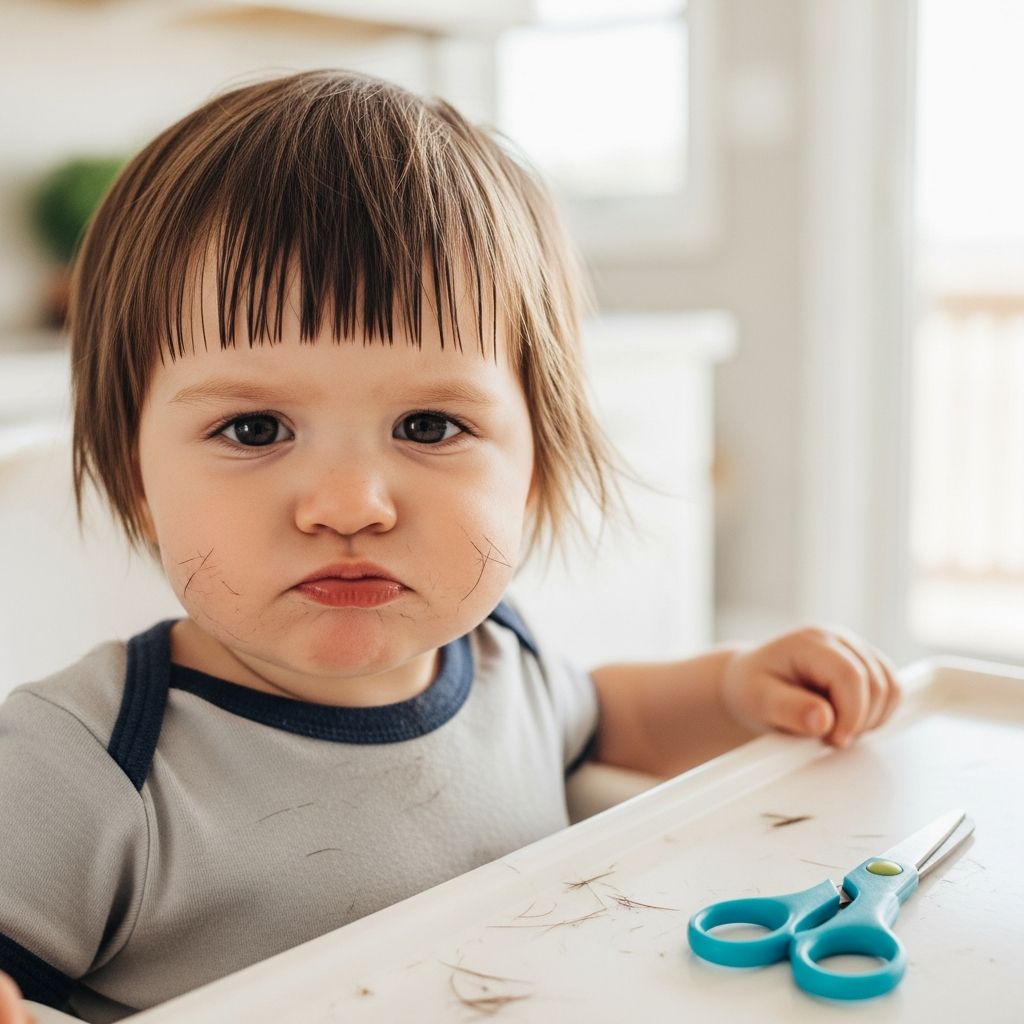
Many parents eventually face the same tempting thought: “How hard can it be to trim my toddler’s bangs at home?” A viral story of a mom who tried to cut her 3-year-old’s bangs and ended up with a hilariously uneven result shows just how quickly a simple bang trim can go sideways—and why preparation, technique, and realistic expectations matter.
The Viral Toddler Bangs Fail Story
In the original story, a mom decides to save time and money by trimming her 3-year-old’s bangs herself instead of going to a salon. Everything seems easy enough at first, but within minutes the bangs are much shorter than planned, noticeably crooked, and impossible to hide. The clip becomes instantly relatable online because so many parents recognize the same mix of confidence, panic, and laughter that comes from trying to play amateur stylist on a moving toddler.
The toddler’s expression—part confusion, part acceptance, and part proud new look—only makes the situation funnier. What begins as a beauty experiment quickly turns into a classic parenting memory: a haircut fail that will show up in photos and family stories for years.
Why Parents Attempt DIY Toddler Haircuts
Parents do not usually intend to create funny haircut disasters; most start out with good reasons and the best of intentions. Common motivations include saving time by avoiding appointments, saving money on frequent trims, and believing that trimming a straight line of bangs cannot be that complicated. Add a wiggly toddler and a lack of professional tools, though, and the risk of a lopsided cut rises quickly.
There is also an emotional side: at-home haircuts can feel like a sweet, hands-on way to care for a child. The viral bang-trim story resonates because it shows both sides of that impulse—the loving intention and the very human mistake—wrapped in one funny moment.
Common Mistakes When Cutting Toddler Bangs
The mom in the story accidentally makes several classic at-home haircut mistakes that many parents repeat. Recognizing them can help others avoid a similar outcome. The biggest errors usually involve cutting too much hair at once, cutting bangs wet instead of dry, and forgetting how much hair shrinks when it dries and lifts.
- Cutting straight across in one big snip instead of taking small, gradual cuts.
- Pulling bangs tight while cutting, which causes them to spring up much shorter.
- Letting a squirmy toddler move around without stabilizing their head.
- Using dull kitchen or craft scissors instead of sharp hair scissors.
- Starting the bangs section too far back on the head, making the fringe look overly thick.
Each of these missteps can turn what looks like a minor correction into a dramatic (and very visible) change. Together, they explain how a simple trim can become a full-blown haircut fail in just a few seconds.
Dry vs. Wet: How to Prepare the Hair
One key lesson highlighted in the original article is that bangs are usually easier to cut when the hair is dry. Wet hair looks longer and straighter, so it can be very misleading. Once it dries, it naturally shrinks up and may curve or lift, making the finished length much shorter than expected.
For toddlers in particular, working with dry hair has two main advantages. First, it allows parents to see exactly where the bangs will fall across the forehead. Second, it avoids hair sticking to the child’s face and neck, which can make them more fussy and less cooperative during the process.
Step-by-Step: Safer Toddler Bang Trim
While no at-home haircut is foolproof, following a more careful process can greatly reduce the chance of a major mishap. Parents who decide to trim bangs themselves can think of the task as a slow, controlled series of micro-cuts instead of a single bold chop.
- Gather the right tools: small, sharp hair scissors; a fine-tooth comb; hair clips; and a towel or cape to catch hair.
- Start with clean, dry hair: gently comb the bangs down over the forehead, removing any tangles.
- Create a small triangle section: separate only the front portion that truly belongs to the bangs and clip the rest of the hair back.
- Decide on a long target length: aim lower on the forehead at first so there is room to fix errors.
- Use point-cutting: instead of cutting straight across, make tiny vertical snips into the ends to create a softer line.
- Trim in layers: cut a little, let the hair fall naturally, reassess, and then make minor adjustments.
- Check in different positions: have the child look up, down, and straight ahead to see how the bangs sit.
Taking breaks and keeping expectations low can also help. A toddler’s first few home trims are rarely perfect, but they can still look neat enough for everyday life without becoming unintentionally comedic.
Keeping a Toddler Still and Happy
One part of the original story that parents immediately understand is just how hard it is to keep a 3-year-old still. The more a child squirms, the harder it becomes to maintain a straight line or consistent length. For this reason, planning around the child’s mood and energy level is almost as important as any technical step.
- Offer a favorite show, song, or tablet game as a distraction.
- Provide a small snack that is easy to eat without much movement.
- Ask another adult to gently steady the child’s shoulders or hold their hands.
- Practice “freeze” moments: brief, fun challenges where the child stays still for just a few seconds at a time.
Turning the haircut into a playful activity instead of a tense chore often leads to better cooperation—and fewer accidental micro-bangs.
What To Do When the Bangs Are Too Short
In the viral scenario, there is no hiding the final result; the bangs are clearly shorter than planned. The good news is that even the most dramatic toddler haircut fail is temporary. Children’s hair grows surprisingly fast, and there are plenty of styling tricks to soften the look while waiting for length to return.
- Use soft headbands or fabric wraps to pull very short bangs slightly back.
- Try small clips or barrettes to pin uneven sections to the side.
- Add a tiny bit of styling cream or water to smooth any spiky areas.
- Embrace hats when going out, if the child enjoys wearing them.
More importantly, treating the mishap with humor shows kids that mistakes are survivable and that appearance is not the most important part of who they are. The mom in the story laughs at herself, and that response becomes a powerful model of resilience.
When to See a Professional Stylist
The original article underscores that there is no shame in leaving certain haircuts to professionals. If a child has very thick, curly, or textured hair, or if the parent feels nervous about managing fringe around the eyes, booking an appointment may be the safest and least stressful option.
Stylists who work with children often know tricks for cutting moving targets, calming anxious toddlers, and creating shapes that will grow out nicely. After a memorable bang disaster, some parents choose to have a professional reshape the fringe so that future growth looks smoother and more intentional.
Parenting Lessons Hidden in a Haircut Fail
Beyond the laughs, the bang-trim story carries several gentle parenting lessons. It shows that even simple tasks can go wrong, that good intentions do not always produce perfect outcomes, and that children watch carefully how adults react to mistakes. When the mom chooses to share the mishap instead of hiding it, the experience becomes a shared joke rather than a secret embarrassment.
The story also reminds parents to extend grace to themselves. Growing children, busy schedules, and tight budgets all push families toward quick fixes and improvisation. Sometimes those experiments work beautifully; other times they produce oddly short bangs—and that is still okay.
Simple Do’s and Don’ts for Toddler Bangs
| Do | Don’t |
|---|---|
| Cut bangs while they are dry so you can see the true length. | Rely on wet hair length, which will shrink as it dries. |
| Take tiny snips and reassess often. | Make one large, bold cut straight across. |
| Use proper hair scissors and a fine-tooth comb. | Grab kitchen or craft scissors from a drawer. |
| Keep the bangs section small and clearly defined. | Pull hair from too far back, creating very heavy bangs. |
| Turn the experience into a positive, playful moment. | Panic or criticize yourself in front of your child. |
Using a simple reference list like this before picking up the scissors can help parents feel more prepared. It also serves as a quick reminder that the goal is not perfection, but a safe and reasonably tidy result.
Frequently Asked Questions About Toddler Haircut Fails
How long will it take for my toddler’s bangs to grow back?
On average, children’s hair grows roughly half an inch per month, though the exact rate varies by child and genetics. That means even very short bangs typically start to look more natural within a few weeks and can reach eyebrow length again in a couple of months.
Can a stylist fix bangs that are already too short?
A stylist cannot magically add length, but can reshape the surrounding hair to blend the bangs more smoothly. Sometimes this involves creating softer, side-swept pieces or framing layers that make short sections less noticeable while they grow.
Should I avoid cutting my child’s hair at home altogether?
Not necessarily. Many parents successfully maintain simple trims at home, especially for straight cuts and very basic styles. The key is knowing personal limits; if the idea of fixing a mistake feels overwhelming, a professional visit may bring more peace of mind.
What if my child is upset about their new bangs?
Validate their feelings, reassure them that hair grows back, and emphasize that they are loved and valued exactly as they are. Offering fun accessories, such as colorful clips or headbands, can also help children feel more in control of their appearance.
How can I avoid repeating the same haircut mistake?
Reflect on what went wrong—rushing, cutting too much at once, or working with wet hair—and plan differently next time. If you decide to try again at home, start with a much longer length, work slowly, and stop as soon as the bangs look acceptable, even if they are not perfectly even.
Turning a Haircut Disaster Into a Family Memory
The charm of the original toddler bang-trim article lies in how the family chooses to respond. Instead of hiding the outcome, they lean into the humor and share the moment, turning an awkward mistake into a story that brings other parents comfort and laughter. In doing so, they quietly affirm that imperfect parenting is normal, and that the best memories are often born from the funniest failures.
Years from now, the photos of those ultra-short bangs will likely spark smiles, not regret. For parents everywhere, that is the real takeaway: a haircut grows out, but the shared laughter and perspective can last much longer.