Potty training marks a major milestone in a child’s development, often filled with excitement, frustration, and plenty of trial and error. Parents frequently seek creative strategies to make this process smoother, and music emerges as one of the most effective tools. Songs designed for potty training leverage rhythm, repetition, and familiar characters to help toddlers grasp bodily cues, build confidence, and establish routines. Research highlights how music activates multiple brain areas, aiding memory and habit formation in young children.
Why Music Works Wonders for Potty Training
The rhythmic structure of songs helps children internalize complex instructions that might otherwise overwhelm them. Unlike plain verbal reminders, tunes create lasting associations between the urge to go and the action of using the toilet. Developmental experts note that toddlers “think with their bodies” before mastering language, making songs paired with actions ideal for this stage. Repetitive lyrics reinforce steps like pulling down pants, sitting, wiping, and flushing, turning potential resistance into enthusiastic participation.
Moreover, these songs address emotional hurdles. Many toddlers fear missing out on playtime or dislike interruptions. Melodies that celebrate quick bathroom breaks reassure kids that fun resumes right after, fostering a positive mindset. Parent testimonials reveal real-world wins: one shared how a simple song signaled routine time, reducing struggles even if not foolproof.
Top Potty Training Songs to Try Today
Here’s a curated selection of standout tracks from trusted children’s entertainment sources. Each offers unique benefits, from sign language integration to step-by-step guidance.
- CoComelon’s ‘I Can Do It On My Own!’: Featuring JJ and friends, this confidence-boosting anthem tackles independence in potty use, dressing, and more. Its creators emphasize it as a cheer for all ‘I did it!’ moments, extending beyond bathrooms.
- Daniel Tiger’s ‘Stop and Go Potty’: Perfect for play-obsessed kids, this tune reminds them that potty breaks are brief pauses—’stop your play, go potty right away, then come back and play!’ It normalizes the process without ending fun.
- Little Baby Bum Potty Compilation: These nursery rhymes build resilience through trial-and-error encouragement. Graphic yet gentle details cover the full poop process, helping kids understand without shame.
- Pinkfong Baby Shark’s Potty Song: A fresh twist on the viral hit, with cutesy lyrics like ‘poopy poopy poopy doop’ that demystify elimination using beloved sea characters.
- Two Little Hands ‘Potty Time’: Upbeat with sign language for ‘potty time,’ this infectious track teaches non-verbal cues alongside singing. Its enthusiasm is contagious for shy learners.
- Elmo’s Potty Song from Sesame Street: Elmo’s friendly guidance outlines toilet steps, leveraging a favorite character’s appeal to excite reluctant trainees.
- The Potty Chair Song (Bear in the Big Blue House): Celebrates feeling like a ‘big kid’ on the potty chair, ideal for transitioning from diapers.
- Ginneh’s Potty Song: Crafted by a mom for her child, it focuses on communication—teaching kids to voice their needs effectively.
- Ms Rachel’s Potty Training Special: A research-backed video with joyful songs and strategies, blending education and entertainment seamlessly.
How to Incorporate Songs into Your Routine
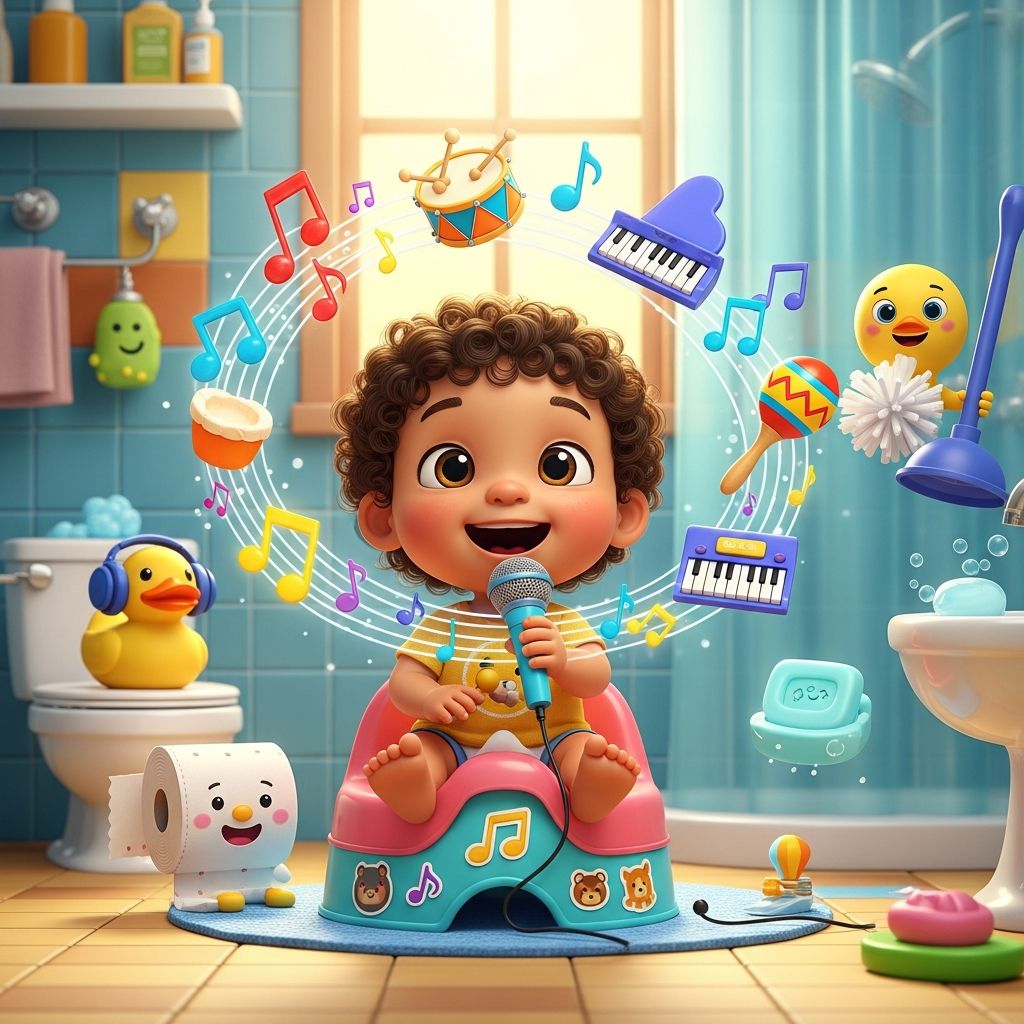
Consistency is key. Play the same song during set potty times: mornings, pre-naps, and bedtime. Sing along to model behavior, and use portable devices for outings. Combine with visual aids like potty chairs with built-in tunes for multi-sensory reinforcement. Reviews praise this combo: ‘The song gives incentive to try,’ notes one parent.
| Song | Key Benefit | Best For | Length (Approx.) |
|---|---|---|---|
| CoComelon ‘I Can Do It’ | Builds overall independence | Confident beginners | 2-3 min |
| Daniel Tiger ‘Stop and Go’ | Handles play interruptions | Active toddlers | 1-2 min |
| Two Little Hands | Sign language integration | Non-verbal communicators | 2 min |
| Elmo Potty Song | Step-by-step instructions | First-timers | 2 min |
| Pinkfong Potty | Fun, familiar characters | Earworm lovers | 1.5 min |
Science and Strategies Backing Musical Methods
Educational psychology supports music’s role in early learning. Songs engage auditory, visual, and kinesthetic pathways, enhancing retention over rote repetition. Northern Illinois University research underscores how young children learn via movement and melody before words dominate. For potty specifics, tunes cue bodily awareness, vital since toddlers often ignore signals amid play.
Common pitfalls like resistance or accidents lessen with positivity. Songs normalize mishaps—’accidents happen, try again!’—preventing discouragement. Experts recommend pairing music with rewards charts or stickers for compounded success.
Overcoming Potty Training Challenges with Melodies
Toddlers resist for reasons: fear of falling, cold seats, privacy issues, or FOMO. Target these with songs that demonstrate mastery. For constipation woes (common in training), upbeat tracks distract and relax. One study-linked approach shows musical cues speed habit formation by creating automatic responses.
- Fear of Missing Out: Daniel Tiger excels here, promising play resumption.
- Accident Anxiety: Little Baby Bum promotes resilience.
- Bodily Cue Ignorance: Repetitive songs like Kandoo’s ‘It’s Potty Time’ heighten awareness.
Parent Success Stories and Pro Tips
Real parents report transformations. ‘Potty time was a struggle until the song routine clicked,’ says one via CoComelon feedback. Another: ‘Elmo made pooping exciting!’ Tips: Start with naked-from-waist-down weekends for urgency practice; rotate songs to avoid boredom; track progress in a fun journal.
For older toddlers (3+), advance to songs emphasizing wiping hygiene and flushing. Always supervise to ensure safety.
Frequently Asked Questions (FAQs)
At what age should I start using potty songs?
Typically 18-24 months, when kids show readiness signs like interest in bathrooms or staying dry for hours. Songs accelerate awareness.
Do potty songs work for every child?
Not universally, but most benefit from the fun factor. Combine with patience and consistency; if issues persist, consult a pediatrician.
Are free YouTube versions safe and effective?
Yes, channels like CoComelon and Ms Rachel offer ad-light, kid-safe content proven by parent reviews.
Can songs help with nighttime training?
Partially—use for pre-bed routines, but full night dryness often comes later due to physiology.
How long until we see results?
Varies; 3-7 days for cues, weeks for full independence. Celebrate small wins!
Expanding Beyond Songs: A Holistic Approach
While tunes shine, integrate books, dolls that ‘potty,’ and big-kid underwear. The Wiggles inspire active routines with movement songs, indirectly supporting physical readiness. Track via apps or charts. Patience reigns—average training spans 3-6 months.
Long-term, these methods instill lifelong hygiene habits and self-efficacy. Music not only conquers poo-phobia but sparks joy in learning.
References
- CoComelon’s Musical Approach to Potty Training Success — Mom the Mag. 2023. https://momthemag.com/cocomelons-musical-approach-to-potty-training-success-how-songs-build-toddler-confidence/
- Potty Training Songs that your kids will love — Kandoo Kids. 2023. https://kandookids.com/potty-training-songs/
- Our absolute favorite potty training songs for toddlers — Sawyer Blog. 2023. https://www.hisawyer.com/blog/our-absolute-favorite-potty-training-songs-for-toddlers
- 12 Potty Training Songs to Help Your Toddler — PureWow. 2023. https://www.purewow.com/family/potty-training-songs
- Potty Training with Ms Rachel – Toddler Learning Video — YouTube (Ms Rachel). 2023. https://www.youtube.com/watch?v=qXKsou9UmfY
- Here to Help – Physical Activity for Children — The Wiggles. 2023. https://thewiggles.com/blogs/here-to-help