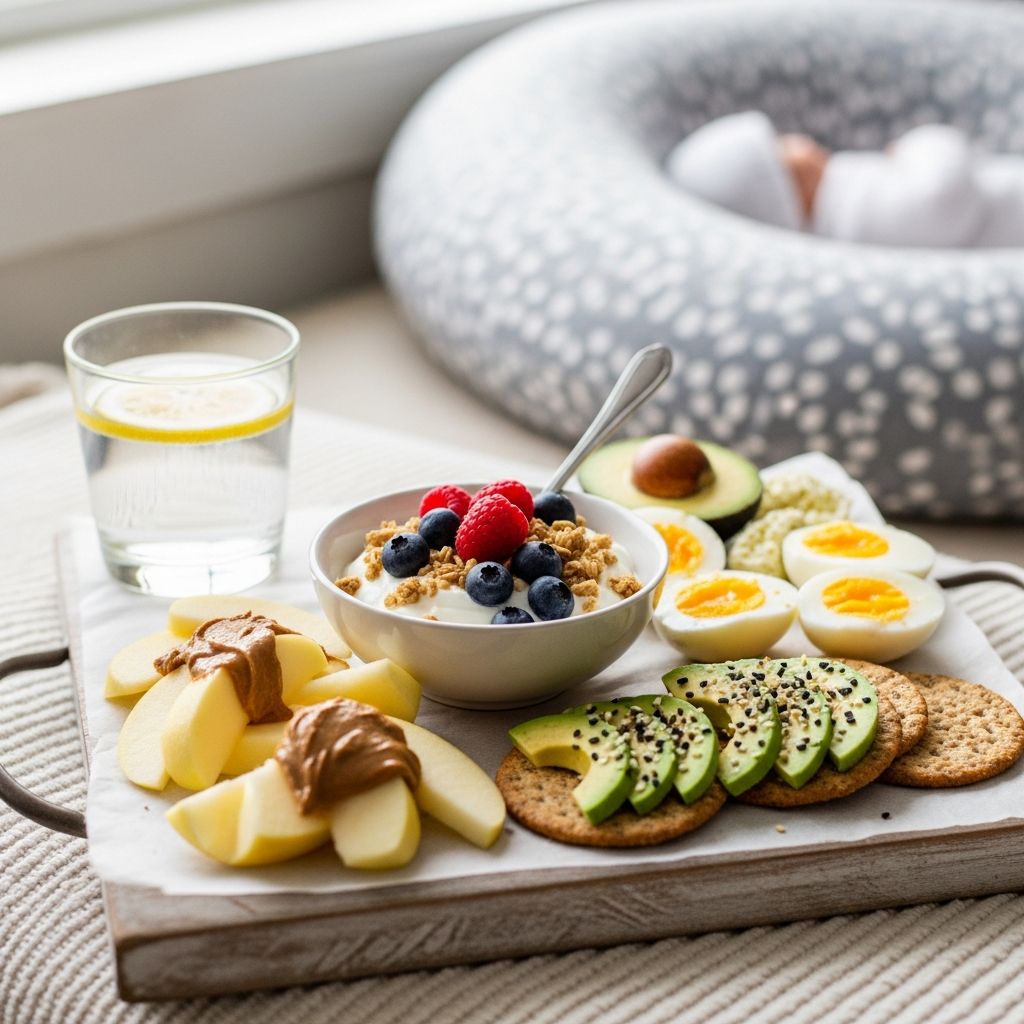
The early weeks after birth are intense, beautiful, and often exhausting. Thoughtfully chosen snacks can make a big difference to your energy, mood, and recovery during this fourth trimester.
Why Postpartum Snacks Matter More Than You Think
In the first months after birth, many new parents discover that regular meals are hard to sit down for, but quick bites are not. This is where postpartum snacks step in as mini-meals that quietly support healing and daily energy.
Good snacks help stabilize blood sugar, support milk production for breastfeeding parents, and reduce the crash that comes from relying on sugary foods alone. They also make it easier to meet higher nutrient needs without having to prepare full plates three times a day.
What Makes a Snack “Postpartum-Friendly”?
Postpartum-friendly snacks are not about perfection; they are about practicality plus nutrition. Think foods that you can eat with one hand, that store well, and that offer more than just empty calories.
- Steady energy: Include both carbohydrates and protein so energy lasts longer than a quick sugar rush.
- Healthy fats: Add nuts, seeds, avocado, or yogurt to help keep you full and support hormone balance.
- Hydration and fiber: Support digestion and recovery with fruits, vegetables, and fluids.
- Low effort: Choose things that are grab-and-go, pre-portioned, or easy to eat while feeding or soothing your baby.
Build-Your-Own Postpartum Snack Blueprint
Instead of memorizing recipes, use a simple formula to throw together balanced snacks from what you have on hand. Pick one item from each column and you have an instant, satisfying option.
Snack Formula Table
| Category | Examples | Why It Helps |
|---|---|---|
| Protein | Greek yogurt, cottage cheese, boiled eggs, hummus, cheese sticks, edamame | Supports tissue repair, helps keep you full, and is especially helpful if you are breastfeeding. |
| Smart Carbs | Oats, whole-grain crackers, quinoa cups, brown rice cakes, fruit, roasted sweet potato wedges | Provides steady energy to offset sleep loss and constant feeding demands. |
| Healthy Fats | Nut butters, avocado, nuts, seeds, olive oil drizzle, tahini | Helps you stay satisfied longer and supports hormone and brain health. |
| Fiber & Color | Carrot sticks, cucumber slices, cherry tomatoes, berries, apples, pears, dried fruit in moderation | Supports digestion, especially if you are dealing with constipation after birth. |
| Hydration Boost | Water, herbal tea, watered-down juice, coconut water, broth | Helps with milk production and reduces fatigue related to dehydration. |
When in doubt, aim for a combination like protein + carb + fat in a form that is easy to grab and eat. For example, a small bowl of yogurt topped with granola and nut butter checks all three boxes.
Easy Snack Ideas for the First Few Weeks
The earliest weeks after birth often feel like a blur of feeding, changing, and trying to sleep. This is the time to rely heavily on the simplest, least-messy snacks you can manage.
One-Handed, No-Utensil Snacks
- Whole-grain crackers with individually wrapped cheese portions.
- Bananas, apples, or pears that you can eat straight from the fruit bowl.
- Homemade or store-bought energy bites made from oats, nut butter, and seeds.
- Small packs of trail mix with nuts, seeds, and a few dark chocolate chips.
- Rice cakes topped with peanut butter or sunflower seed butter.
Soft & Gentle Snacks for Sensitive Digestion
After birth, especially if you had a cesarean or stitches, your appetite and digestion may be delicate. Soft, simple foods can feel more comfortable and less intimidating.
- Plain or lightly flavored yogurt with mashed fruit.
- Oatmeal cups or overnight oats with a drizzle of honey and chia seeds.
- Mashed avocado on toast or a small baked potato with a bit of olive oil.
- Broth-based soups in a mug, sipped slowly between feeds.
- Steamed or roasted vegetables cut into bite-sized pieces.
High-Protein Bites to Support Healing and Milk Supply
Protein plays a key role in tissue repair, muscle recovery, and maintaining lean body mass. It is especially important for breastfeeding parents, whose nutrient needs are higher than usual.
- Egg-based options: Boiled eggs, mini frittata muffins, or scrambled-egg wraps prepared in advance.
- Dairy and dairy alternatives: Greek yogurt cups, cottage cheese with fruit, or soy yogurt with granola for a higher-protein twist.
- Legume snacks: Hummus with pita, roasted chickpeas, or black bean dip with vegetable sticks.
- Ready-to-eat proteins: Pre-cooked chicken strips, tofu cubes, or tempeh slices that can be quickly added to crackers or salads.
If you struggle to eat full meals, think of these protein-rich snacks as building blocks you can scatter throughout the day.
Energy-Boosting Snacks for Sleep-Deprived Days
Lack of sleep can make your body crave sugar and caffeine, but relying only on those quick fixes can lead to energy crashes. Gentle, balanced snacks can help smooth out those peaks and dips.
- Oat bars made with oats, nuts, and a modest amount of sweetness.
- Fruit paired with a protein, such as an apple with nut butter or berries with yogurt.
- Whole-grain toast topped with tahini and a drizzle of honey.
- Small smoothies made with milk or a milk alternative, fruit, and a spoonful of nut butter or protein powder.
- Leftover grain bowls repurposed as snacks: a scoop of quinoa, beans, and veggies in a small bowl with a little dressing.
Try keeping portion sizes modest so that you do not feel overly full or sluggish when your baby needs you again fifteen minutes later.
Hydration: The “Invisible Snack” You Cannot Skip
It is easy to overlook water when you are focused on a newborn, but mild dehydration can quickly contribute to headaches, low energy, and constipation. For breastfeeding parents, steady fluid intake is also important for milk production.
- Keep a large water bottle at each feeding spot and aim to sip every time the baby feeds.
- Alternate plain water with herbal teas, infused water with fruit slices, or lightly salted broths.
- Include water-rich foods such as oranges, melon, cucumbers, and soups as part of your daily snacks.
Listening to thirst is helpful, but building small hydration habits into your routine can prevent falling behind.
Creating a Postpartum Snack Station
One of the easiest ways to care for your future self is to set up simple snack zones in the places you spend the most time with your baby. These stations reduce the mental load of constantly deciding what to eat.
Where to Place Snack Stations
- Next to the main feeding chair or couch.
- By your bed or bassinet for nighttime feeds.
- In the kitchen within easy reach, not hidden on high shelves.
- Near the changing area, especially in multi-level homes.
What to Stock in Each Station
Every snack station can include a mix of shelf-stable items and a reminder list of what is in the fridge.
- Pre-portioned nuts, trail mix, or whole-grain crackers.
- Fruit that does not require peeling or cutting, like apples or clementines.
- Single-serve nut butter packs, shelf-stable milk boxes, or protein drinks.
- A full water bottle and perhaps herbal tea bags or instant drink mixes.
- A sticky note that says, “In the fridge: yogurt cups, cut veggies, cheese sticks, boiled eggs.”
Make-Ahead Snacks for the Last Weeks of Pregnancy
If you are still pregnant and preparing, the weeks before birth are a great time to stock the freezer and pantry. Focus on items that thaw well and can be eaten straight from the fridge or quickly warmed.
Freezer-Friendly Ideas
- Oat-based bars or bites that can be frozen flat and thaw quickly.
- Mini muffins made with grated vegetables, cheese, or oats for more staying power.
- Individually portioned smoothies in freezer-safe jars to blend with a little liquid when needed.
- Small containers of soup or chili that double as hearty snacks or light meals.
Pantry and Fridge Staples to Stock
- Whole-grain crackers, oats, and granola.
- Nut butters, seeds, and canned beans.
- Long-lasting fruits and vegetables like apples, carrots, and cabbage.
- Yogurt, cheese, eggs, and pre-washed greens.
Label items clearly with reheating instructions so that partners, friends, and family can help prepare snacks without needing to ask you for directions.
Snack Ideas for Special Considerations
Every postpartum body is unique, and some new parents juggle food allergies, intolerances, or specific preferences. The good news is that most snack concepts can be adapted to fit your needs.
Dairy-Free Snack Swaps
- Use fortified plant-based yogurt instead of dairy yogurt.
- Choose hummus, nut butters, and roasted chickpeas for protein.
- Try avocado toast or guacamole with whole-grain chips rather than cheese-focused snacks.
Gluten-Free Options
- Gluten-free crackers, rice cakes, or corn tortillas with nut butter or hummus.
- Plain potatoes, sweet potatoes, and quinoa-based salads.
- Fruit, nuts, seeds, and dairy or dairy alternatives as naturally gluten-free choices.
Vegetarian or Vegan-Friendly Ideas
- Roasted chickpeas, lentil salads, or bean dips with veggies.
- Tofu cubes, tempeh bites, or plant-based deli slices.
- Oat bars and smoothies made with plant milks and nut or seed butters.
Sample Half-Day Postpartum Snack Plan
This sample plan illustrates how snacks can slide into your day around baby care, rather than being rigidly scheduled. Adjust portions and timing based on your appetite and any medical advice you have received.
| Time | Snack Idea | Key Benefits |
|---|---|---|
| Early morning feed | Water bottle plus a banana and a handful of nuts | Hydration and quick energy with some protein and fat to steady blood sugar. |
| Mid-morning | Greek or plant-based yogurt with granola and berries | Protein, probiotics, and fiber to support fullness and digestion. |
| Afternoon slump | Whole-grain toast with avocado and tomato slices | Healthy fats and complex carbs for a gentle energy lift. |
| Evening | Mug of soup with a small side of crackers | Warmth, hydration, and comfort, especially on tiring days. |
| Night feed | Trail mix portion and herbal tea | Light but satisfying option that will not require cooking in the dark. |
Frequently Asked Questions About Postpartum Snacking
Do I really need to eat more if I am breastfeeding?
Most breastfeeding parents do need extra calories and nutrients compared to their pre-pregnancy needs. Snacks are a simple way to add those calories in a gentle, manageable way without forcing large meals when you are not hungry.
Is it okay to include sweets in my postpartum snacks?
Yes, gentle flexibility is important. It is fine to enjoy sweets in moderation, especially when they are paired with protein or fiber, such as a cookie eaten alongside a glass of milk or a handful of nuts.
How can I snack well if I have zero time to cook?
Lean heavily on ready-to-eat items like yogurt cups, cheese sticks, washed fruit, nuts, and whole-grain crackers. Ask partners, friends, or family to add simple snack items to your grocery list, and keep them in visible, easy-to-reach places.
What if I do not feel hungry after birth?
Appetite can be low at first due to hormones, fatigue, or pain. Try smaller, frequent snacks and focus on soft, easy-to-digest foods while staying in communication with your healthcare provider about any concerns.
Do I need special “postpartum” products, or will regular foods do?
Specially marketed postpartum bars and drinks are optional, not required. Everyday foods like eggs, yogurt, nuts, fruits, vegetables, and whole grains can meet your needs just as well when chosen thoughtfully.
Final Thoughts: Nourishment as an Act of Care
Postpartum life is full of demands, and feeding yourself can easily slide down the priority list. Simple, nourishing snacks are a small but powerful way to care for your healing body while you care for your baby.
Consider every snack as a quiet reminder that your needs matter too. With a bit of planning and a lot of self-compassion, your snack routine can become one of the most supportive rituals of your fourth trimester.