Plant-based diets offer abundant sources of iron, essential for energy production, oxygen transport, and overall vitality. While non-heme iron from plants is less absorbable than heme iron from animal products, strategic food choices and pairings can meet daily needs effectively.
Why Iron Matters in Plant-Based Nutrition
Iron plays a critical role in forming hemoglobin, which carries oxygen in the blood, and myoglobin, which stores oxygen in muscles. Deficiency symptoms include fatigue, weakness, pale skin, and shortness of breath, particularly risky for vegans due to lower bioavailability of non-heme iron.[10]
Women aged 19-50 require 18 mg daily, men 8 mg, and pregnant individuals up to 27 mg. Plant eaters may need 1.8 times more iron to compensate for absorption rates of 5-12% versus 15-35% for heme iron.
Top Categories of Plant-Based Iron Powerhouses
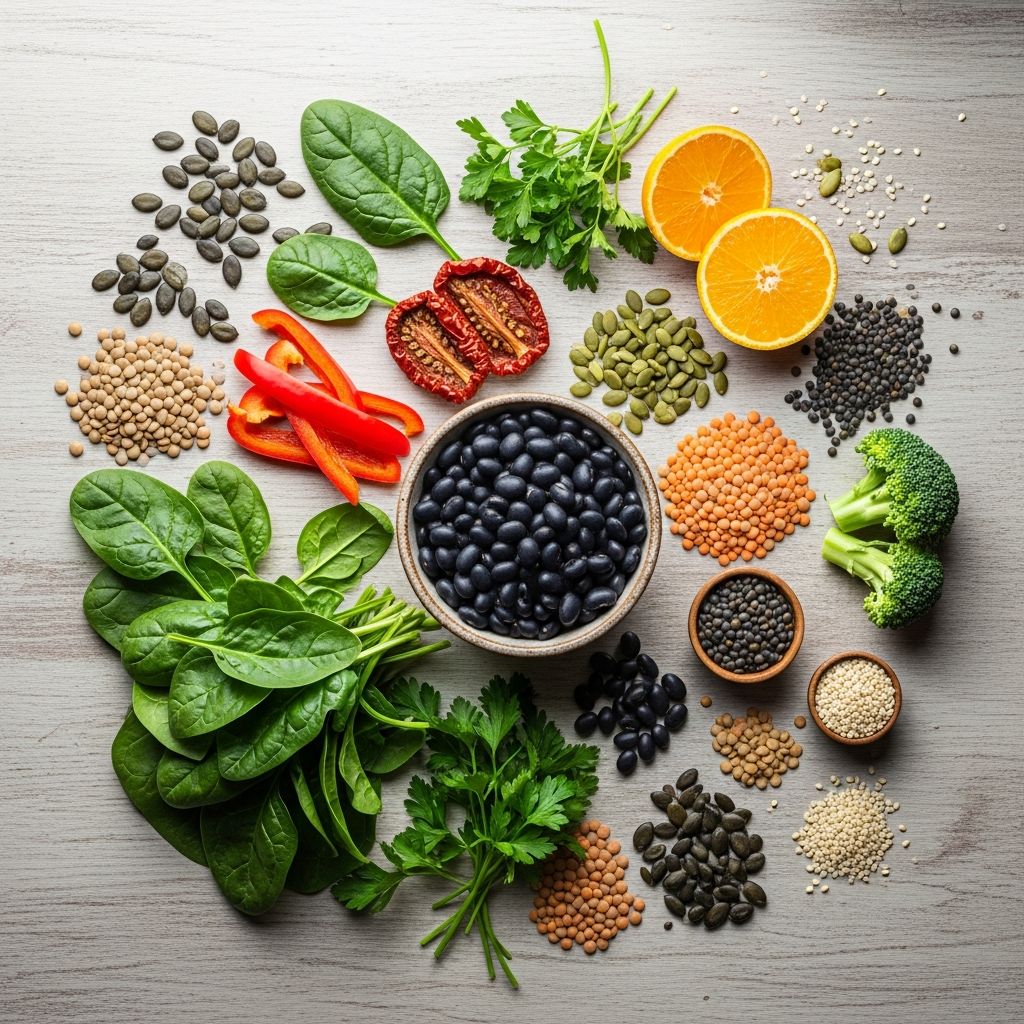
Diverse plant foods provide non-heme iron. Focus on legumes, seeds, greens, grains, and fortified options for a balanced intake.
Legumes: Protein-Packed Iron Sources
Legumes like lentils, beans, and soy products top the list for iron density and versatility. A cup of cooked lentils delivers 6.6 mg, white beans 6.6 mg, and chickpeas 4.7 mg.
- Lentils: 6.6 mg per cup cooked – ideal for soups and salads.
- White beans: 6.6 mg per cup – great in stews.
- Kidney beans: 5.2 mg per cup – perfect for chili.
- Chickpeas: 4.7 mg per cup – use in hummus or curries.
- Soybeans: 9.1 mg per cup raw, natto 15.1 mg cooked.
Seeds and Nuts: Compact Nutrient Bombs
Seeds offer high iron in small portions. Pumpkin seeds provide 11.4 mg per cup, sesame seeds 21 mg, and flaxseeds 9.6 mg.
| Food | Iron (mg per cup) | % Daily Value (women 18mg) |
|---|---|---|
| Pumpkin seeds (dried) | 11.4 | 63% |
| Sesame seeds (dried) | 21 | 117% |
| Flaxseeds (whole) | 9.6 | 53% |
| Chia seeds | 7.7 mg/100g (2.3 mg/30g serving) | 13% |
| Almonds (whole) | 5.3 | 29% |
Leafy Greens and Vegetables: Everyday Essentials
Dark leafy greens like spinach (6.4 mg per cooked cup) and swiss chard contribute steadily. Other veggies include potatoes, broccoli, and beet greens.
- Spinach (cooked): 6.4 mg per cup.
- Swiss chard: Similar density to spinach.
- Broccoli: 1 mg per cup, plus vitamin C.
- Sweet potatoes: Iron plus beta-carotene.
Grains, Pseudo-Grains, and Fortified Foods
Quinoa, fortified cereals, and whole grains boost intake. Tofu (13.3 mg per cup) and tempeh (4.5 mg) are soy standouts.
Dried fruits like apricots and goji berries (6.8 mg/100g) add convenience.
Unexpected Iron Boosters
Blackstrap molasses (7.2 mg per 2 tbsp), dried seaweed (11.6-19.6 mg/100g), and herbs like thyme (123.6 mg/100g, used sparingly) provide unique sources.
Maximizing Iron Absorption from Plants
Non-heme iron absorption improves with vitamin C-rich foods and avoids inhibitors like calcium, phytates, and polyphenols.
- Pair with Vitamin C: Combine spinach with bell peppers or citrus. Broccoli and strawberries enhance uptake.
- Avoid Inhibitors: Don’t mix iron foods with dairy, tea, or coffee at meals. Soak or sprout legumes to reduce phytates.
- Cooking Tips: Cook in cast-iron pans to add iron. Ferment soy into tempeh or natto for better bioavailability.
Vitamin C can double or triple absorption rates.
Sample Daily Meal Plan for 18mg Iron
Achieve needs through varied meals:
| Meal | Foods | Iron (mg) |
|---|---|---|
| Breakfast | Fortified oatmeal with strawberries and pumpkin seeds | ~5 |
| Lunch | Lentil soup with spinach and lemon | ~7 |
| Snack | Handful almonds + orange | ~3 |
| Dinner | Tofu stir-fry with broccoli and quinoa | ~6 |
Total: ~21 mg, exceeding needs with absorption enhancers.
Recognizing and Preventing Deficiency
Monitor for signs like tiredness or brittle nails. Vegans have higher deficiency risk but can thrive with planning. Blood tests measure ferritin levels.[10]
Supplements may help if diet falls short, but consult professionals first.
Recipe Ideas to Incorporate Iron-Rich Plants
Iron-Packed Lentil Curry
Sauté onions, add 1 cup lentils, spinach, tomatoes, and curry spices. Serve with quinoa and lime wedge. Yields ~8 mg iron per serving.
Seed Energy Balls
Mix pumpkin seeds, sesame, dates, and tahini. Roll into balls for snacks providing 4-5 mg iron each.
Green Smoothie Boost
Blend spinach, kiwi, tofu, and fortified plant milk for breakfast iron hit.
Frequently Asked Questions
Can vegans get enough iron without supplements?
Yes, by prioritizing diverse iron-rich plants and absorption enhancers like vitamin C.
Which seed has the most iron?
Sesame seeds top the list at 21 mg per cup dried.
Does cooking affect plant iron levels?
Cooking leafy greens increases bioavailability; soaking legumes reduces inhibitors.
Are dried fruits good iron sources?
Yes, goji berries and apricots provide concentrated iron.
How much vitamin C boosts iron absorption?
25-100 mg per meal can significantly enhance non-heme iron uptake.
Monitoring Your Iron Status
Regular check-ups ensure adequacy. Combine diet tracking apps with lab tests for personalized insights.
References
- Vegetarian Foods That Are Loaded with Iron — Healthline. 2023. https://www.healthline.com/nutrition/iron-rich-plant-foods
- 7 Vegan Sources High in Iron — Plant-Based RDS. 2024. https://plantbasedrds.com/blog/vegan-iron-sources/
- Iron-rich vegan foods to prevent iron deficiency — Health Loft. 2023. https://healthloftco.com/blog/foods-high-iron-vegan-diet/
- Plants as vegan iron sources — Quadram Institute. 2022. https://quadram.ac.uk/blogs/plants-as-vegan-iron-sources/
- Importance of Iron in Our Body | 10 Plant-based Iron Rich Foods — Plant Based Workshop. 2023. https://plantbasedworkshop.com/blogs/plant-based-lifestyle/importance-of-iron-and-plantbased-foods
- Foods high in iron — healthdirect (Australian Government). 2025. https://www.healthdirect.gov.au/foods-high-in-iron
- Top Foods High in Iron for Vegans — WebMD. 2024. https://www.webmd.com/diet/foods-high-iron-vegans