Night lights can turn a dark, intimidating room into a calm and comforting space for children. Used thoughtfully, they help with overnight feeds, bathroom trips, and fears of the dark without disrupting healthy sleep. But the options are overwhelming: plug-ins, silicone animal lamps, smart lights, projectors, and more. This guide walks you through what actually matters for babies, toddlers, and big kids, and how to choose a night light that is both safe and truly useful.
Why Night Lights Can Help Children (and Parents)
Many parents reach for a night light when:
- Their baby still needs overnight feeds or diaper changes.
- A toddler is afraid of the dark or new sleep routines.
- Kids are getting up to use the toilet independently.
- Parents want to quickly check on a sleeping child without turning on overhead lights.
Research on light and sleep shows that bright light at night can suppress melatonin, the hormone that helps us fall asleep and stay asleep. The key is using very low-level, warm-colored light that lets you see just enough to move safely without waking everyone up.
Core Features That Matter Most
Instead of getting distracted by cute designs, start with these fundamentals when evaluating night lights for kids.
1. Brightness and Dimming
Too-bright night lights are one of the most common mistakes in children’s rooms. Studies in adults show that even moderate room light at night can reduce melatonin and impact sleep quality. For children, it is safer to assume that less is more.
- Look for: low-lumen or dimmable lights; brightness levels clearly labeled or adjustable.
- Ideal use: just bright enough to see the floor, crib, or potty, but dim enough that the room still looks mostly dark.
- Avoid: using a night light as a primary light source; any light that makes you squint when you look toward it.
2. Light Color and Sleep
Blue-rich light is especially effective at suppressing melatonin and shifting circadian rhythms. Warm tones have a gentler impact.
- Best choices: warm white, soft amber, or dim red light.
- Use cautiously: green can be acceptable at very low levels, but avoid bright green.
- Avoid for all-night use: bright white or blue-toned light, especially LEDs that appear cool or icy.
If you pick a color-changing night light, set it to a single warm color at night rather than rotating through bright, stimulating hues.
3. Safety and Build Quality
Because night lights are often within reach of curious little hands, electrical and burn safety is essential. Consumer safety guidance recommends using night lights in dry, well-ventilated areas, never plugging them into extension cords, and stopping use if they become hot or damaged.
- Cool to the touch: choose LED-based lights, which stay much cooler than traditional incandescent bulbs.
- Stable design: wide base or secure wall outlet fitting that cannot be easily knocked loose.
- Safe materials: non-breakable housings (like silicone or sturdy plastic) and no small detachable parts.
- Certified: look for safety marks relevant in your country (e.g., UL, ETL, CE) on electrical products.
4. Power Source and Convenience
How the night light is powered affects where you can place it and how often you have to think about it.
- Plug-in: great for hallways and fixed spots; no charging required, but less portable.
- Rechargeable: ideal for toddlers who like to carry a night light or for travel; charge via USB and avoid button batteries.
- Battery-operated: only practical if they use safe, secure battery compartments and you do not mind replacing batteries regularly.
For younger kids, many parents appreciate a plug-in night light with an automatic dusk-to-dawn sensor, which turns on and off by itself.
Types of Night Lights and When to Use Them
Different designs serve different ages and needs. Here is a quick comparison.
| Type of Night Light | Best For | Main Advantages | Watch Out For |
|---|---|---|---|
| Simple plug-in LED | Hallways, bathrooms, nursery corners | Always ready, very energy-efficient, usually inexpensive | Placement limited to outlets; check that it stays cool and fits tightly |
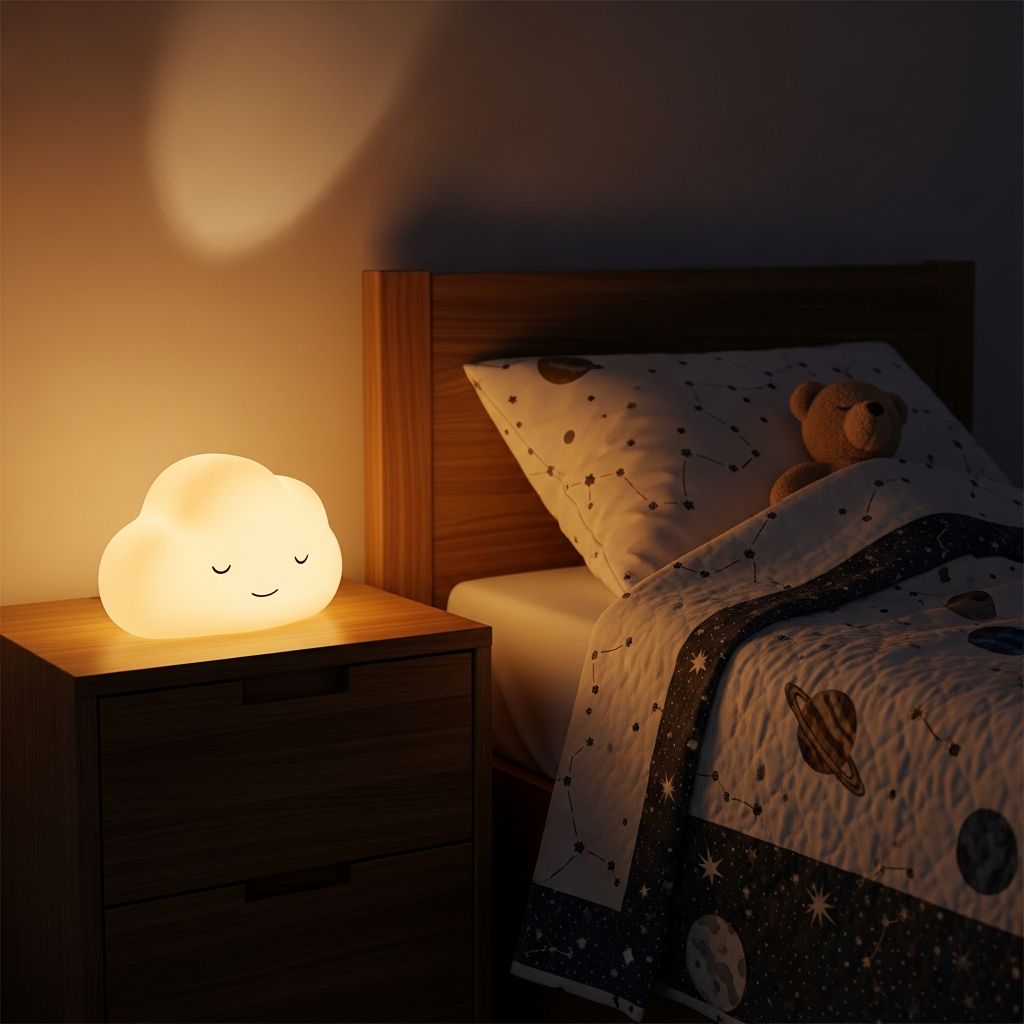
| Silicone or soft-touch portable lamp | Toddlers and preschoolers who want comfort objects | Soft, squeezable, often rechargeable, can be carried to the bathroom | Avoid overly bright color modes; keep cords out of reach when charging |
| Projector or starry-sky light | Short pre-bed routines with older toddlers and kids | Creates a magical atmosphere, can be part of a calming ritual | Use timers; do not leave bright projections running all night |
| Smart night light (app-controlled) | Parents who like automations and precise control | Custom schedules, color and brightness tuning, remote control | Setup complexity; avoid bright blue or white presets at night |
| Outlet-cover or wall-integrated light | Safety-focused families, high-traffic areas | Low profile, can free outlets, some include child-safe outlet covers | Requires compatible outlets; brightness may not be adjustable |
Age-by-Age Guide: Night Lights from Baby to Big Kid
The right night light for a newborn is not necessarily the right one for a six-year-old. Consider how children’s sleep and independence change over time.
For Newborns and Young Babies
In the first months, night lights are mainly for adults. Babies do not need a glow to feel safe; they need dark, quiet, and consistent routines.
- Use a very dim, warm light for feeds and diaper changes.
- Place the light away from the crib, ideally across the room or at floor level.
- Turn it on only when needed and off again when you are done.
A small, dimmable plug-in or a portable lamp you can set on a dresser works well. The goal is to complete care tasks while keeping your baby as sleepy as possible.
For Crawlers and Toddlers
Once babies become mobile, safety becomes a much higher priority. Toddlers may pull on cords, grab anything glowing, and explore outlets.
- Choose cool-running LEDs with robust housings that will not shatter if dropped.
- Secure cords out of reach or opt for plug-in lights that fit flush to the wall.
- If your toddler is anxious about the dark, consider a soft, portable silicone lamp that can double as a comfort object.
- Keep any projectors or bright features on timers so the room returns to darkness after your child falls asleep.
For Preschoolers and School-Age Kids
Older children might use night lights for independent bathroom trips or to feel more in control of bedtime. Some may even adjust their own light if given simple controls.
- Let them choose a design they like (animal, spaceship, moon, etc.) within your safety and brightness rules.
- Explain that the light should stay on its stand or plug and is not a toy to take apart.
- If they wake at night and turn it brighter, model how to set it back to a very low, warm setting before sleep.
By this age, a night light can become part of a calming bedtime ritual: turn it on, read a book, say goodnight, and then switch any bright features off while leaving a dim glow.
Practical Tips for Safe Setup and Use
Even the best night light can cause problems if it is used unsafely. Basic electrical safety helps prevent shocks, burns, and fire risks.
- Use proper outlets: plug night lights directly into wall outlets, not extension cords or power strips.
- Keep dry: avoid damp locations and ensure kids’ hands are dry when they touch nearby furniture or walls.
- Check heat: touch the housing periodically; discontinue use if it feels hot, buzzes, or crackles.
- Inspect regularly: look for scorch marks, cracks, or loose parts; replace damaged products immediately.
- Secure batteries: if a device uses button batteries, the compartment should be screw-fastened and child-resistant due to ingestion risks.
Balancing Comfort and Healthy Sleep
Parents often worry that any light in the room will ruin sleep, while children may insist they cannot sleep without a glow. There is a reasonable middle ground.
- Prioritize darkness for the bulk of the night; use the lowest amount of light that still lets you move safely.
- For truly light-sensitive kids, consider having the night light on a timer that turns off after they are deeply asleep.
- Reserve bright or colorful light shows for pre-bed wind-down, then switch to a dim, steady warm light or complete darkness.
- Combine the night light with other comfort cues: predictable routines, a favorite stuffed animal, or gentle white noise.
Healthy sleep is about the entire environment—light, noise, temperature, and emotional security—not just what is plugged into the wall.
Checklist: What to Look For Before You Buy
Use this quick checklist when comparing products online or in-store.
- LED-based and labeled as cool to the touch.
- Warm color options (amber, warm white, or red) suitable for nighttime use.
- Dimmable or clearly designed as a very low-level light.
- Sturdy, non-breakable housing with no loose small parts.
- Child-resistant battery compartment if batteries are used.
- Visible safety certification from a recognized testing lab.
- Power source (plug-in, rechargeable) that matches where and how you plan to use it.
- Design your child finds reassuring, but not so stimulating that it becomes a toy at bedtime.
Frequently Asked Questions (FAQs)
Is it okay for babies to sleep with a night light on all night?
For newborns and young babies, darkness is usually best for sleep. A very dim, warm light across the room for feeds and diaper changes is unlikely to cause problems, but avoid bright or blue-toned night lights left on all night.
What color night light is best for children’s sleep?
Warm colors such as amber, soft red, or warm white at low brightness are generally recommended, because blue-rich light is more likely to suppress melatonin and alter sleep patterns.
Are projector or starry-sky night lights bad for sleep?
They are not inherently harmful if used briefly as part of a calming routine, then turned off or set to a short timer. Leaving a bright moving projection on all night, however, can overstimulate some children and add unnecessary light.
How can I make sure a night light is electrically safe?
Use night lights only in dry, well-ventilated areas; plug them directly into wall outlets (not extension cords); check regularly for heat, buzzing, or scorch marks; and replace any product that appears damaged. Choosing devices that carry safety certifications from recognized testing labs adds another layer of reassurance.
My child insists on a bright light. What can I do?
Start with the brighter setting they find reassuring, then gradually dim the light over days or weeks, pairing changes with a consistent, comforting bedtime routine. You can also move the light farther from the bed or use a timer so that the room becomes darker once your child is asleep.
References
- Nightlights and Safety — U.S. Consumer Product Safety Commission. 1995-03-01. https://www.cpsc.gov/s3fs-public/5005.pdf
- Evening Use of Light-Emitting EReaders Negatively Affects Sleep, Circadian Timing, and Next-Morning Alertness — Chang et al., Proceedings of the National Academy of Sciences. 2015-01-27. https://www.pnas.org/doi/10.1073/pnas.1418490112
- Light at Night, Chronodisruption, and Cancer Risk — Stevens et al., Cancer Causes & Control. 2013-10-01. https://link.springer.com/article/10.1007/s10552-013-0279-9
- Button Battery Safety — American Academy of Pediatrics. 2022-05-01. https://www.healthychildren.org/English/safety-prevention/at-home/Pages/Button-Battery-Safety.aspx