The Moomin stories by Finnish author and illustrator Tove Jansson are some of the most beloved children’s books in the world, blending adventure, gentle humor, and moments of surprisingly deep reflection. Parents often discover that these books speak as powerfully to adults as they do to kids, which makes choosing a smart reading order especially rewarding.
This guide explains what the Moomins are, outlines the main novels, and offers a practical, family-friendly reading order that starts with warm, inviting adventures and moves gradually into the series’ more introspective books.
Who Are the Moomins and Why Do They Matter?
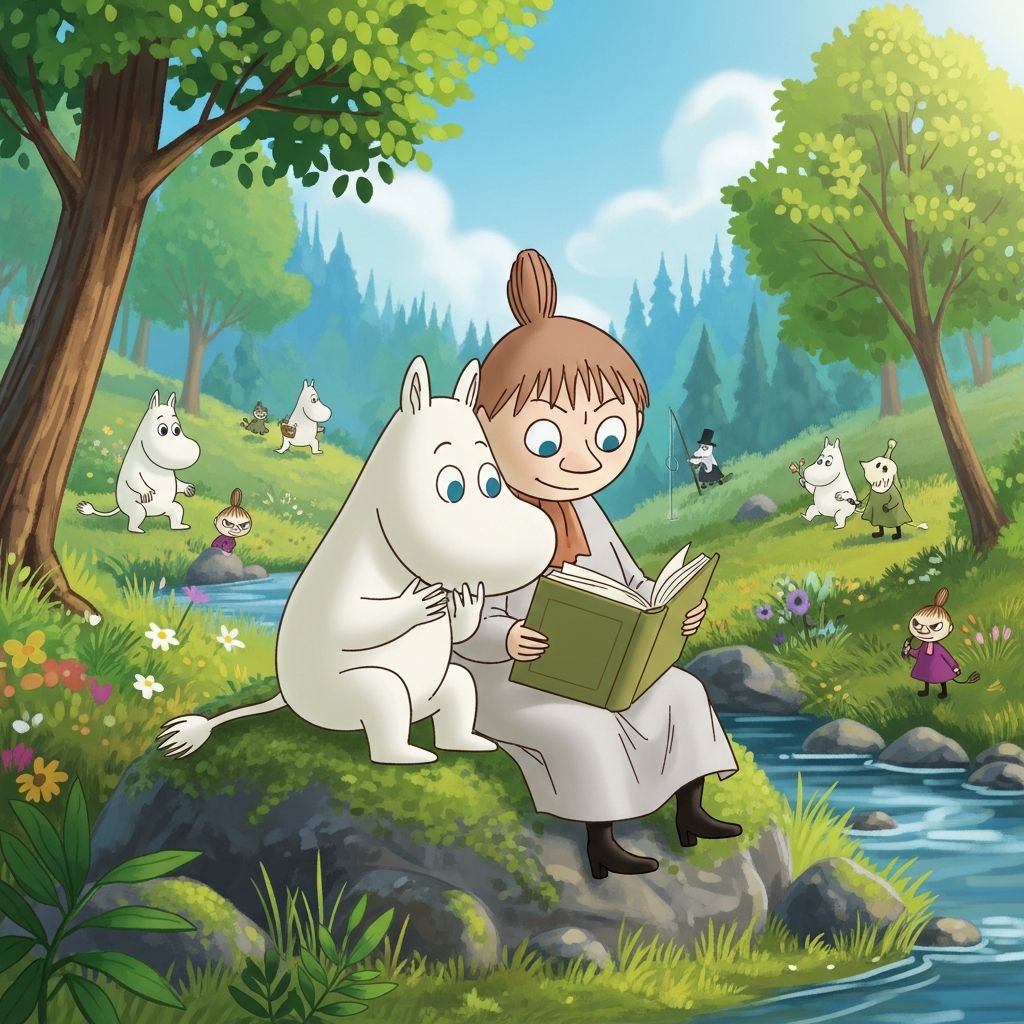
The Moomins are a family of white, round creatures with hippo-like snouts who are, in fact, trolls. They live in a blue house in a place called Moominvalley, surrounded by friends, wanderers, and odd guests. The core family is:
- Moomintroll – the curious, big-hearted child of the family
- Moominmamma – endlessly calm, practical, and nurturing
- Moominpappa – philosophical, slightly dramatic, and fond of telling stories
A colorful cast orbits around them, including Snufkin, Little My, the Snork Maiden, Sniff, and many others. Across the novels, readers see shifting seasons, parties and floods, comets and quiet midnights, and a range of feelings from carefree joy to grief and change.
How Many Moomin Novels Are There?
Between 1945 and 1970, Tove Jansson wrote nine main Moomin novels, alongside picture books and a comic strip. The novels, in original publication order, are:
- The Moomins and the Great Flood (1945)
- Comet in Moominland (1946)
- Finn Family Moomintroll (1948)
- The Exploits / Memoirs of Moominpappa (1950)
- Moominsummer Madness (1954)
- Moominland Midwinter (1957)
- Tales from Moominvalley (1962)
- Moominpappa at Sea (1965)
- Moominvalley in November (1970)
In many English-speaking households, the Moomin books arrive almost by accident: someone gifts a volume, or a parent remembers them from childhood. That means families rarely start at Book 1 and march forward. Fortunately, you do not have to read them in strict publication order for them to make sense.
Publication Order vs. Family-Friendly Reading Order
The earliest Moomin novels are more experimental, and the final ones are noticeably more somber and introspective. For younger kids, it often works better to start with the warmest, most inviting adventures and to save the heavier books until your child is older—or until you are ready to sit with big feelings together.
| Novel | Publication Order | Suggested Family Reading Position | Overall Mood |
|---|---|---|---|
| Finn Family Moomintroll | 3rd | 1st or 2nd | Sunny, magical, welcoming |
| Moominsummer Madness | 5th | 1st or 2nd | Playful, theatrical, silly |
| Comet in Moominland | 2nd | Early (after kids know the family) | Adventure with mild peril |
| Tales from Moominvalley | 7th | Middle of your journey | Short stories, emotional range |
| Moominland Midwinter | 6th | Middle to later | Quiet, reflective, wintry |
| Moominvalley in November | 9th | Near the end | Melancholic, about absence |
The Recommended Reading Path for Families
Below is a suggested reading path designed around how children typically respond to tone and complexity, rather than strict chronology. You can, of course, reshuffle—these books are flexible and welcoming to rereads.
1. Start with a Warm Welcome: “Finn Family Moomintroll”
Why start here? This novel was the first Moomin book to gain international recognition, and it gives a clear sense of how the family functions, what Moominvalley feels like, and how magic brushes against everyday life.
- Good for: roughly ages 6–10 as a read-aloud, or independent readers age 8+
- Highlights: a mysterious top hat, shifting transformations, parties and picnics
- Family themes: hospitality, curiosity, dealing with surprises
This book’s mix of cozy domestic scenes and fantastical events shows children that adventure does not cancel safety—the family remains a steady center even when magic complicates things.
2. Follow the River: “Moominsummer Madness”
Moominsummer Madness sends the family off on one of their most exuberant adventures when a flood sweeps them into new surroundings, including a drifting theatre. The tone stays light even when the setting is chaotic.
- Good for: similar ages as Finn Family Moomintroll; particularly fun for dramatic kids
- Highlights: theatre life, costumes, a floating stage, creative problem-solving
- Family themes: improvisation, play, and making a home wherever you land
At this point, kids usually have a good sense of who the characters are, so they can enjoy the comic misunderstandings and theatrical jokes more fully.
3. Turn Up the Stakes: “Comet in Moominland”
Once your readers are comfortable in Moominvalley, it is time for higher stakes. Comet in Moominland follows Moomintroll and his friends as they travel to a distant observatory to learn about a comet heading toward Earth.
- Good for: kids ready for mild peril and big what-if questions
- Highlights: a long journey, strange landscapes, scientific curiosity
- Family themes: courage, trust, asking grownups questions about danger
The comet plot gives you a natural opening to talk about anxiety, uncertainty, and how families and communities respond when something frightening might happen, echoing how children process real-world worries.
4. Dip into Shorter Stories: “Tales from Moominvalley”
After three full-length adventures, Tales from Moominvalley is an ideal way to experiment with mood without committing to a single long narrative. This book collects nine short stories, each focusing on a character or situation.
- Good for: bedtime reading, younger siblings, or kids with shorter attention spans
- Highlights: friendship, being misjudged, telling the truth, finding one’s name
- Family themes: empathy, identity, loneliness, and belonging
The stories vary from funny to poignant, giving you many opportunities to pause and talk about how characters feel and why they make certain choices.
5. Explore the Snow: “Moominland Midwinter”
In Moominland Midwinter, Moomintroll wakes up from hibernation while the rest of his family is still asleep and steps out into a world of snow, silence, and new winter creatures.
- Good for: wintertime reading, children who like quieter stories
- Highlights: meeting Too-ticky, learning new winter customs, beautiful night scenes
- Family themes: independence, feeling different, the strangeness of growing up
This book feels more reflective than the earlier adventures. It works especially well for slightly older kids who can appreciate solitude and mood. The winter setting also makes it an excellent read during dark, cold months.
6. Step into Backstory: “The Memoirs of Moominpappa”
The Memoirs of Moominpappa (also known as The Exploits of Moominpappa) rewinds to Moominpappa’s youth, when he ran away from an orphanage and joined a band of friends for wild adventures.
- Good for: kids interested in origin stories and parents who like tall tales
- Highlights: a lighthouse, seafaring, eccentric friends, exaggerated storytelling
- Family themes: how parents were once children, memory vs. reality
The humor often comes from the gap between how Moominpappa sees his own importance and how readers perceive him. It can spark conversations about how family stories are told and retold—and how every grownup was once as unsure as their children are now.
7. Confront Restlessness: “Moominpappa at Sea”
Moominpappa at Sea takes the family away from the safety of the valley to a remote lighthouse island where the sea, the wind, and even the rocks feel like characters in their own right.
- Good for: older children and early teens; rich as a parent-child co-reading
- Highlights: a mysterious island, the Groke, shifting moods among family members
- Family themes: burnout, change, parents feeling lost, children finding autonomy
The novel is frequently described as one of the most psychologically complex of the series, mirroring adult experiences of dissatisfaction and the search for meaning. It makes sense to save this book until your family has lived with the Moomins for a while and can feel how different it is from the earliest adventures.
8. Sit with Absence: “Moominvalley in November”
The final novel, Moominvalley in November, is unusual in that the Moomin family themselves never appear. Instead, a group of their friends and acquaintances all travel to the Moomins’ empty house, expecting to find them—and have to adjust when they are gone.
- Good for: thoughtful older kids, or as a parent read that you share selectively
- Highlights: a house full of memories, characters learning to live without the Moomins
- Family themes: grief, change, the end of childhood, found family
Jansson wrote this book after the death of her mother, and it is often read as a meditation on loss and moving on. For many families, it works best as one of the last Moomin books they tackle, after they understand just how comforting that blue house once felt.
9. Loop Back to the Beginning: “The Moomins and the Great Flood”
The Moomins and the Great Flood is the first Moomin book Jansson published, but it is short, experimental, and features earlier, thinner versions of the characters. Many readers enjoy it most after they know who the Moomins will become.
- Good for: completists, kids fascinated by origins, or curious adults
- Highlights: searching for Moominpappa, first arrival in Moominvalley
- Family themes: migration, finding home, the beginning of a family story
Think of this book as a prequel or epilogue to your reading journey—a way to peek behind the curtain after you have already fallen in love with the valley.
Tips for Reading Moomin Books with Children
The richness of the Moomin novels comes partly from how they invite readers to talk about feelings, seasons, and change. A few strategies can help you make the most of them as a family:
- Use illustrations as conversation starters. Jansson’s drawings are an integral part of the experience, and many editions preserve them. Talk about what your child notices in the pictures.
- Match the book to the season. Summer adventures feel different when you read them in July; winter tales like Moominland Midwinter can become a yearly cold-weather ritual.
- Expect layered meaning. The same story can read as a simple adventure to a six-year-old and as a meditation on freedom or anxiety to a parent. Let those layers coexist.
- Pause for big feelings. When stories touch on fear, loneliness, or change, invite your child to describe similar feelings they have had.
- Allow re-reading out of sequence. Once your family knows a few favorites, dipping back into them between new titles keeps Moominvalley feeling like a familiar place.
Suggested Age Ranges and Themes
Every child is different, but the table below offers a rough guide to when certain Moomin novels may resonate most strongly.
| Novel | Approximate Sweet-Spot Age | Primary Themes |
|---|---|---|
| Finn Family Moomintroll | 6–10 | Curiosity, hospitality, playful magic |
| Moominsummer Madness | 7–11 | Chaos, creativity, making the best of upheaval |
| Comet in Moominland | 8–12 | Courage, facing danger, environmental awe |
| Tales from Moominvalley | 7–12 | Friendship, honesty, loneliness, self-acceptance |
| Moominland Midwinter | 9–13 | Change, independence, dealing with unfamiliar worlds |
| Moominpappa at Sea | 10+ | Restlessness, family tension, identity |
| Moominvalley in November | 10+ | Loss, memory, growing beyond home |
Frequently Asked Questions (FAQs)
Do the Moomin novels need to be read in chronological order?
No. The continuity between books is gentle rather than strict. Characters do grow and relationships deepen over time, but most stories stand independently. Many families start with Finn Family Moomintroll or Moominsummer Madness because they offer a welcoming introduction before tackling the darker later novels.
Are the Moomin books only for young children?
The Moomin novels are often shelved as children’s literature, but they draw on themes—such as existential anxiety, freedom, and the passage of time—that older readers and adults recognize immediately. Many parents find that re-reading the series in adulthood reveals emotional depths they missed as children.
Are there differences between the novels, picture books, and comics?
Yes. The nine novels provide the most sustained, layered narratives. Jansson also created picture books for younger readers and a long-running Moomin comic strip that appeared in newspapers and was later collected in volumes. The tone in the comics can be sharper and more satirical, while the picture books are visually driven and simpler in plot.
Which Moomin book should I buy first if I only want to try one?
For a single test volume with broad family appeal, Finn Family Moomintroll is often the best starting point because it introduces the valley, key characters, and the blend of cozy and uncanny that defines the series. If your child prefers short pieces, Tales from Moominvalley is an excellent alternative.
Are the English translations faithful to the original Finnish?
The Moomin books have been translated into more than fifty languages, and the English translations, originally by Elizabeth Portch, Thomas Warburton and others, are widely regarded as capturing both Jansson’s humor and her more serious undercurrents. Some newer editions update language in subtle ways but keep the overall tone and structure intact.
References
- Moomins — Wikipedia (summary citing multiple primary sources on Tove Jansson’s work). Last updated 2024. https://en.wikipedia.org/wiki/Moomins
- A brief guide to Finland’s Moomin books — thisisFINLAND, Ministry for Foreign Affairs of Finland. 2020-05-19. https://finland.fi/arts-culture/the-world-was-very-large-in-those-days-a-brief-guide-to-finlands-moomin-books/
- Tove Jansson: Life and Work — Moomin Characters Oy Ltd (official site). 2023. https://www.moomin.com/en/tove-jansson/