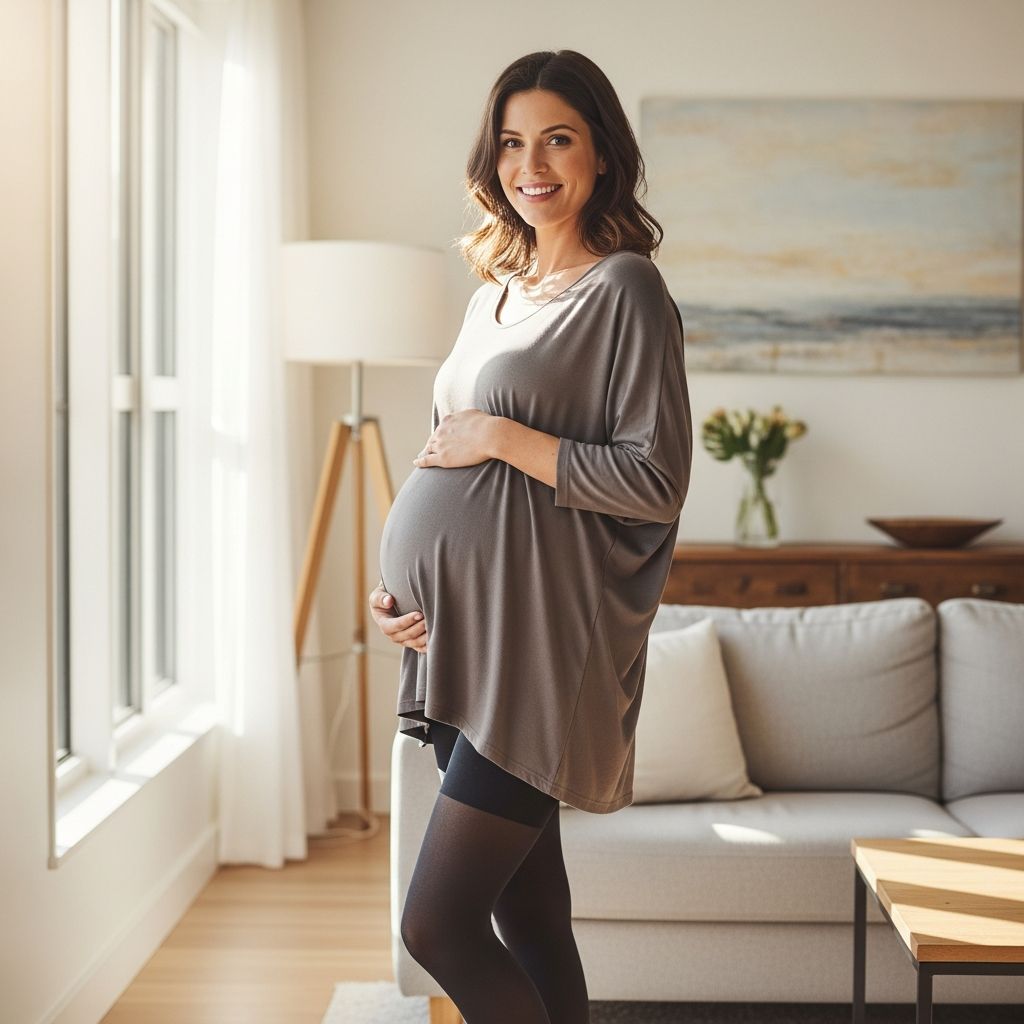
Maternity tights have evolved from basic, slightly stretchy pantyhose into highly engineered pieces of pregnancy support wear. Designed to move with your changing body, the right pair can ease leg fatigue, gently support your bump, and help you feel more put-together on days when nothing else in your wardrobe seems to fit. This guide walks through what to look for, how to choose the best style for your lifestyle and trimester, and how to make maternity tights work hard for you from early pregnancy through postpartum.
Why Maternity Tights Are Worth Considering
Unlike regular tights sized up one or two notches, maternity tights are cut and constructed around a pregnant body. That usually means more room and engineered stretch over the belly, better placement of seams, and often targeted support in areas that tend to ache or swell. For many expecting parents, they quickly become a wardrobe staple for work, dressy occasions, and even casual days at home.
- They adapt to your changing shape instead of fighting against it.
- They can offer gentle compression to help with leg heaviness and swelling.
- They give you more ways to keep wearing dresses, skirts, and even some pre-pregnancy pieces.
Key Benefits of Maternity Tights
Good maternity tights should do more than just cover your legs. When designed well, they contribute to your overall comfort and can even have subtle health-related benefits during pregnancy. While they are not medical devices unless specifically marketed as such, many incorporate features influenced by compression-wear technology.
Comfort and All-Day Wearability
The most immediate benefit is comfort. A soft, stretchy waistband that rises over or under the bump without digging in can make a big difference during long workdays or social events. Breathable yarns, flat seams, and a gusset designed for pregnancy help prevent chafing and irritation.
- Over-bump panels distribute pressure across a wide area instead of one tight band.
- Four-way stretch fabrics move with your body as you sit, stand, and bend.
- Moisture-wicking fibers can help keep you cooler if you run warm in pregnancy.
Support for Legs and Lower Back
Many maternity tights include zoned support around the calves, thighs, and under-belly area. This can create a subtle “held” feeling that some pregnant wearers find stabilizing. Gentle compression may help reduce the sense of heaviness or throbbing in the legs that often shows up later in pregnancy.
- Graduated compression tends to be firmer around the ankles and lighter toward the thighs.
- Support panels under the bump can reduce pressure on the lower back by lifting the abdomen slightly.
- Some designs prioritize pelvic and hip stability to help with the shifting center of gravity.
Coverage, Warmth, and Confidence
Beyond comfort, maternity tights help many people feel more polished and secure in their clothing choices. They smooth lines under fitted dresses, add warmth in colder months, and provide modest coverage if hems creep up as the bump grows.
- Opaque styles are ideal for work outfits and cooler seasons.
- Sheer or semi-opaque pairs can still feel dressy while offering light support.
- Shaping through the hips and thighs can help clothes drape more smoothly.
Types of Maternity Tights and When to Wear Them
Not all maternity tights are designed for the same purpose. Understanding the main categories helps you build a small collection that covers multiple outfit needs and weather conditions without overbuying.
Everyday Opaque Maternity Tights
These are your standard, go-with-everything pairs that mimic classic black work tights but with a maternity-specific cut. They usually range from 40 to 100 denier, giving substantial coverage and warmth.
- Great for office outfits, formal events, and winter pregnancies.
- Pair easily with knit dresses, skirts, and long tunics.
- Often include a supportive belly panel for all-day wear.
Lightweight Sheer and Semi-Opaque Styles
Sheer or semi-opaque tights suit warmer climates, transitional weather, or dressier outfits where heavy opaque coverage would look out of place. They typically offer lighter support but still out-perform standard tights in the waist and belly area.
- Ideal for spring and early fall pregnancies or indoor events.
- Work well with softer dresses and skirts where you want a more bare-leg look.
- Some styles incorporate mild compression while keeping a delicate appearance.
Compression and Support-Focused Tights
Support or compression maternity tights take the idea of “regular” tights further by including targeted, sometimes medically rated compression. They are popular among those dealing with significant leg swelling, visible veins, or prolonged standing or sitting.
- Designed to gently support circulation in the legs.
- Often recommended for long flights or desk-bound jobs, with healthcare guidance.
- May have firmer fabric and a more technical feel than everyday styles.
Footless Maternity Tights and Leggings
Footless maternity tights blur the line between hosiery and leggings. They provide coverage and support to the hips, thighs, and bump, while leaving the feet free for socks, slippers, or bare toes.
- Good for casual outfits and at-home comfort.
- Layer well under tunics, long sweaters, or shirt dresses.
- Offer flexibility if your feet change size or you prefer specific socks.
How to Choose the Right Maternity Tights
Finding a truly comfortable pair means paying attention to fabric content, construction details, and size charts—especially as your body changes over several months. A little upfront research can save you from constant tugging, rolling waistbands, or sagging fabric.
Understanding Fabric and Denier
Maternity tights are usually made from blends of nylon or polyamide with elastane (spandex). The percentage of elastane has a big impact on stretch and recovery, while the denier number describes how thick or sheer the leg portion is.
| Denier Range | Coverage | Best For |
|---|---|---|
| 10–20 denier | Very sheer, almost bare-leg effect | Dressy events, warm climates, light support |
| 30–40 denier | Semi-opaque | Office wear, transitional seasons |
| 60–100+ denier | Opaque to very opaque | Cold weather, maximum coverage, casual or work outfits |
Look for soft-touch or microfiber descriptions if you have sensitive skin, and consider moisture-wicking features if you are prone to overheating. Natural fiber blends that include cotton in the gusset area can add breathability where it matters most.
Waistband and Belly Panel Styles
The waistband and belly panel determine how your tights will feel after several hours, not just when you first pull them on. There are two main approaches: under-bump and over-bump.
- Over-bump designs rise high over the belly with a soft, wide panel. Many people find this more secure and smoothing, especially in the second and third trimester.
- Under-bump styles sit low beneath the belly with a wide, stretchy band. These can work well early in pregnancy or for those who dislike fabric over their stomach.
Some tights combine both ideas by using adjustable panels or knit-in zones that can be folded under or pulled over the bump depending on preference and trimester.
Choosing the Right Size
Resist the urge to size up automatically. Most maternity brands design their size charts around your pre-pregnancy measurements, factoring in expected weight gain and body changes. Sizing too large can cause sliding, sagging, or twisting throughout the day.
- Use your pre-pregnancy clothing size or weight/height range as a baseline.
- Read reviews to see whether a brand runs long, short, small, or roomy.
- If you are between sizes and prefer more support, consider the smaller option; for pure comfort with minimal compression, the larger may be better.
Maternity Tights by Trimester
Your priorities can shift as pregnancy progresses. What feels perfect in month three might not be your favorite in month eight. Planning a few key pairs by trimester can help you stay comfortable without overstocking.
First Trimester: Gentle Transition
In the first trimester, your regular tights might still technically fit, but waistbands can quickly become irritating. Light support maternity tights with flexible waistbands are a good way to ease into pregnancy clothing without committing to heavy-duty compression.
- Look for styles that can be worn under or over a small bump.
- Light denier options keep things breathable if nausea makes you heat-sensitive.
- Footless styles can transition easily to lounging or light exercise.
Second Trimester: Growing Bump, Growing Wardrobe
The second trimester is when many people truly feel the need for dedicated maternity tights. The bump is more pronounced, and regular waistbands are more likely to roll, dig, or cut across the stomach.
- Over-bump panels often feel most secure and flattering as the belly lifts.
- Semi-opaque to opaque options can anchor work outfits built around dresses and tunics.
- Moderate compression can help with early leg heaviness, especially if you stand a lot.
Third Trimester: Maximum Comfort and Support
By the third trimester, comfort usually wins over everything else. Look for designs that clearly list features like “no-dig waistband,” “extra-stretch belly panel,” and “graduated leg support.” Many people also prioritize ease of pulling tights on and off as mobility changes.
- Higher denier, opaque tights add warmth for winter due dates.
- Stronger support panels may feel reassuring under heavier bumps.
- If swelling is significant, consider tights with medical-style compression after discussing with a healthcare provider.
Outfit Ideas with Maternity Tights
Maternity tights are not just a functional layer; they can expand your outfit options and stretch the life of non-maternity pieces. A few strategic combinations can get you through many occasions with minimal shopping.
Workwear and Office Looks
For professional settings, opaque or semi-opaque tights are usually the most versatile choice. They pair seamlessly with blazers, structured dresses, and smart flats or low heels.
- Combine a knee-length jersey dress, black maternity tights, and loafers for comfort that still reads polished.
- Layer a long-line blazer over a bump-hugging dress to balance proportions.
- Neutral tights (black, navy, charcoal) are easiest to coordinate with existing work pieces.
Casual Weekends and Errands
On weekends, tights or footless maternity styles can double as the foundation of laid-back outfits. Choose softer fabrics and slightly lower compression if the plan involves lounging or light walks.
- Pair opaque tights with an oversized sweater dress and sneakers for a cozy, bump-friendly look.
- Use footless tights under long T-shirts or hoodies for an athleisure vibe.
- Swap in fun colors or subtle patterns if you want variety beyond basic black.
Special Occasions and Events
Pregnancy doesn’t mean skipping events, and it doesn’t have to mean sacrificing style. Sheer or semi-opaque maternity tights can keep you comfortable while complementing dressier outfits, especially if you anticipate standing or dancing.
- Choose nude-for-you sheer tights with light support to smooth legs under cocktail dresses.
- Consider low-sheen finishes to avoid a too-shiny look in photos.
- Match the tone of your tights to your shoes to visually lengthen the legs.
Caring for Your Maternity Tights
Because maternity tights are under more stress than regular hosiery—stretching over a growing bump and possibly providing compression—thoughtful care helps them last longer. Hand-washing is gentlest, but smart machine-wash habits can also work.
- Use a mesh laundry bag and a cold, gentle cycle if machine washing.
- Avoid fabric softeners, which can degrade elasticity over time.
- Lay flat or hang to air dry; avoid dryers and direct radiators.
Rotating between two or three pairs allows each one to recover its shape between wears. This is especially important for styles with higher compression, which rely on resilient elastane fibers.
Safety and Comfort Considerations
Maternity tights are generally considered safe when they are not painfully tight and when used as intended. The main comfort risks come from overly snug waistbands, poorly placed seams, or inappropriate compression levels. Listening to your body is crucial—if a pair feels restrictive or causes new discomfort, it is worth switching styles or sizes.
- Avoid any tights that leave deep marks or cause tingling or numbness.
- If you have circulatory issues, clotting history, or significant swelling, consult a healthcare provider before using firm compression styles.
- Prioritize breathable fabrics if you are prone to skin irritation or infections.
Frequently Asked Questions About Maternity Tights
Do maternity tights really fit all the way through pregnancy?
Most quality maternity tights are designed to span several months, often from early or mid-pregnancy to your due date. However, fit can depend on individual body changes, how quickly your bump grows, and how carefully you follow the size chart. For some, one size and style works the whole time; others prefer lighter support early on and more structured options later.
Can I wear maternity tights after the baby arrives?
Yes, many people keep wearing their maternity tights during the postpartum period. The soft belly panel can feel reassuring as your abdomen recovers and your regular clothes may still feel tight. Some even find that support-style tights offer gentle, comforting pressure during the weeks after birth, as long as they do not feel restrictive and your healthcare provider has no concerns.
Are maternity tights and maternity leggings the same thing?
While the terms are sometimes used interchangeably, there are differences. Tights are usually thinner, often with a denier rating, and are designed to be worn under dresses or skirts; they cover the foot unless specified as footless. Leggings tend to be thicker, opaque, more like pants, and meant to show as part of the main outfit rather than only a base layer. Both can feature maternity waistbands and bump panels.
How many pairs of maternity tights do I really need?
The right number depends on your lifestyle. People who wear dresses or skirts to work most days might rely on two to four pairs in rotation—perhaps a couple of opaque everyday options plus a sheer style for events. If you mostly live in leggings or jeans, one or two well-chosen pairs may be enough for special occasions and work commitments.
Is it safe for maternity tights to feel snug?
A close, supportive fit is expected, especially with compression-style designs, but they should not feel painful or restrict your ability to take deep breaths. Gentle pressure that you forget about after a few minutes is different from tightness that you notice all day. If you have any medical conditions affecting circulation or pregnancy complications, always seek personalized advice before using higher-compression hosiery.
Can I just size up in regular tights instead of buying maternity-specific ones?
It might work briefly, but standard tights are not cut for a growing bump. Sizing up often means the legs and seat are baggy while the waistband still hits in an uncomfortable spot across the abdomen. Maternity tights concentrate extra stretch and room where your body actually changes, so they tend to stay in place better and feel more comfortable over time.
Final Thoughts on Choosing Maternity Tights
The best maternity tights are the ones you forget you are wearing—no rolling waistband, no constant tugging, and no digging as your day goes on. Focus on thoughtful details like belly panel style, fabric content, denier, and compression level rather than just grabbing the first pair labeled “maternity.” A small, well-chosen selection can see you through months of pregnancy and beyond, keeping you comfortable, supported, and confident in whatever you choose to wear.