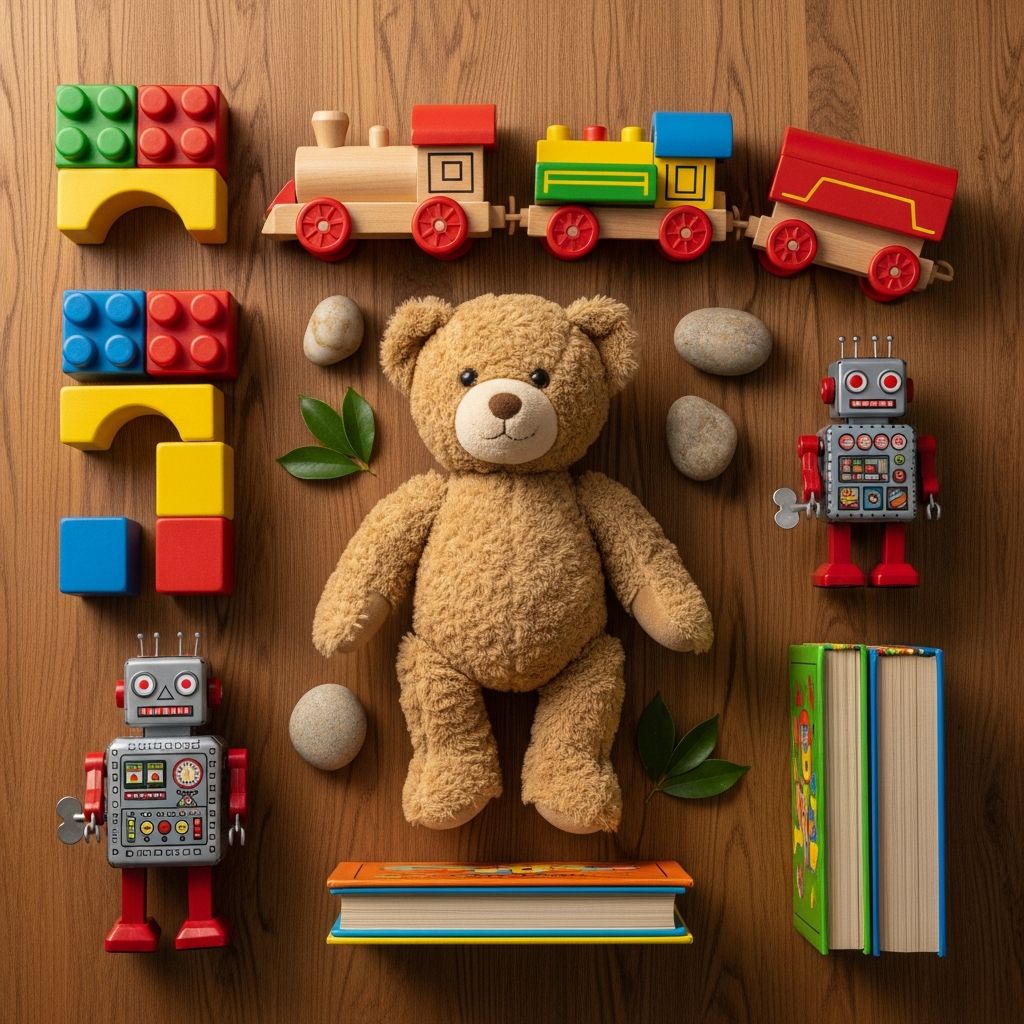
Every year brings a new wave of must-have toys, but only a few become the ones kids treasure, repair, and pass down. This guide explains how to spot those rare toys with real staying power and build a collection that supports creativity, learning, and joy for years, not days.
Why Some Toys Fade Fast (And Others Don’t)
Most short-lived toys have one thing in common: they do everything for the child. Lights flash, sounds blare, and the only task left is pushing a button. Once the novelty wears off, there is nothing new to explore. Long-lasting toys, by contrast, ask children to supply the story, the problem-solving, and the imagination.
When a toy invites open-ended play—different ways to use it, different games to invent—it automatically has a longer life span. The same set of blocks can become a zoo one day and a rocket base the next. That flexibility is what keeps a toy from becoming just another object on the shelf.
Core Qualities of Long-Lasting Toys
Before getting into specific toy categories, it helps to understand the features that make any toy more likely to stand the test of time. Think of these as your checklist when you are deciding whether something is worth bringing home.
- Open-ended potential: The toy can be used in many ways, not just one. There is no single \”right\” outcome.
- Room to grow: The toy remains interesting as your child’s skills and imagination expand.
- Durable construction: It withstands being dropped, stepped on, and played with by multiple children.
- Simple mechanics: Fewer batteries and complex parts mean fewer things to break and more room for child-driven action.
- Cross-age appeal: Siblings of different ages can play with it together in different ways.
- Story-friendly: The toy naturally fits into pretend scenarios, adventures, and role-play.
The more boxes a toy checks on this list, the greater its chances of surviving decluttering sessions and still being beloved years later.
Building Toys: Structures That Evolve With Your Child
Construction toys are some of the strongest contenders for long-term favorites because they are endlessly reconfigurable. A pile of pieces becomes whatever the child needs for the game they want to play that day.
What Makes Construction Sets So Enduring
- They support both free building and following directions, so they work for creative moods and focused, puzzle-like play.
- They quietly teach planning, balance, and problem-solving as kids test and adjust their designs.
- They bridge ages: toddlers stack chunky blocks, school-age kids build detailed structures, and older children engineer working models.
Look for sets that are compatible with future expansions so your investment grows over time instead of becoming a closed system. Starter sets with basic shapes are more versatile than highly specialized kits that only build one scene or character.
| Feature | Why It Matters | What to Look For |
|---|---|---|
| Compatibility | Allows mixing sets and extending play over years. | Standardized connection systems, add-on sets sold separately. |
| Range of pieces | More shapes mean more creative possibilities. | Combination of basic blocks, connectors, and specialty parts. |
| Sturdy materials | Frequent assembly and disassembly demand resilience. | Solid plastic or wood that does not crack or warp easily. |
| Storage options | Easy clean-up encourages regular use, not clutter. | Boxes, bins, or cases that come with the set or can be added. |
Pretend Play: Costumes, Figures, and Mini Worlds
Imaginative play is at the heart of childhood, and toys that support it often remain beloved long after the original trend has passed. Pretend-play items act as props that children use to process their experiences and experiment with new roles.
Dress-Up and Role-Play Gear
Instead of single-use costumes tied to one character, consider a dress-up collection that can become anything: a firefighter’s jacket can also be a scientist’s lab coat, and a superhero cape can turn into a magician’s cloak. Versatile pieces give more stories per square foot of closet space.
- Choose comfortable fabrics that children can put on and take off independently.
- Favor accessories that combine with everyday clothing instead of delicate outfits that only work for one look.
- Include simple props—clipboards, play tools, soft helmets—that can represent many professions.
Figures, Animals, and Playsets
Small figures and animal sets become the cast of your child’s ongoing stories. A single figure can play the hero one day and the villain the next. The key is avoiding sets so tied to a specific plot that they leave little room for new adventures.
- Look for sturdy, non-pose-locked figures that stand easily and handle rough play.
- Mix realistic animals and people with fantasy creatures to widen storytelling options.
- Choose buildings or vehicles that can represent multiple locations and functions.
Art, Craft, and Maker Supplies: Toys That Get Used Up (In a Good Way)
Art supplies and maker kits may not last physically, but they create lasting skills and memories. These are the toys that produce piles of drawings, models, and inventions rather than collecting dust.
Stocking a Creative Corner
A small, well-supplied art area can draw children in day after day. The goal is to make it easy for them to start a project without adult setup.
- Keep basics always available: paper, crayons, markers, washable paints, tape, and child-safe scissors.
- Add rotating “inspiration items” such as cardboard tubes, fabric scraps, stickers, or recycled containers.
- Store everything in clear bins or labeled drawers so kids can see what they have.
Choosing Kits That Teach Skills
Some craft and building kits are one-and-done, but others build skills that transfer to future projects. When evaluating a kit, ask what your child will be able to do afterward that they could not do before.
- Prefer kits that explain the process clearly and invite variations instead of forcing a single finished look.
- Look for reusable tools—like molds, looms, or specialty pens—that can be used with fresh materials later.
- Avoid kits overloaded with branded characters if they add cost without adding creative value.
Movement and Outdoor Toys: Built for Energy and Years of Use
Active toys channel endless kid energy into movement, coordination, and confidence. Unlike a fad collectible, a good outdoor toy often becomes part of daily routines: the scooter for school runs, the ball for backyard games, the chalk for driveway art.
Scalable Wheels and Sports Gear
When buying scooters, ride-on toys, or sports equipment, think about adjustability. Items that grow with your child are more likely to stay in use instead of being outgrown in a season.
- Seek adjustable handlebars, seats, or difficulty settings.
- Consider protective gear (helmets, pads) as part of the toy’s “set” to make play safer and more frequent.
- Choose classic items—balls, jump ropes, simple nets—that work for many games, not single-purpose gear.
Outdoor Open-Ended Staples
A few inexpensive outdoor items can anchor countless activities and work across age groups.
- Sidewalk chalk for drawing, hopscotch, obstacle courses, and made‐up board games.
- Buckets, shovels, and strainers that function equally well at the beach, in the garden, or in a sandbox.
- Bubbles, kites, and flying discs that encourage running, coordination, and shared play.
Games and Puzzles: Fun That Grows With Strategy
Board games and puzzles can become family rituals and rainy-day staples. The trick is selecting games that stay interesting once your child understands the rules and puzzles that challenge without frustrating.
Choosing Games That Age Well
Many novelty games are fun for a handful of plays and then lose their appeal. Games with simple rules but deep strategy tend to last longer because they change with the players’ skill levels.
- Look for games where both children and adults can genuinely enjoy playing.
- Favor games that allow for house rules or variations to keep things fresh.
- Check playing time; 15–30 minute games are more likely to be pulled out often.
Smart Puzzle Choices
Puzzles develop patience, spatial reasoning, and perseverance, but too many nearly identical puzzles just create clutter. A handful of well-chosen ones can offer more value than a overflowing stack.
- Select varying piece counts so your child can choose a quick win or a longer challenge.
- Look for appealing, detailed images that invite careful looking, not just large blocks of color.
- Consider multi-step logic puzzles and brainteasers that can be replayed in different configurations.
Books as Toys: Stories That Power Play
Books might not fit the typical definition of toys, but they fuel pretend games and curiosity in powerful ways. A single story can inspire weeks of reenactments, drawings, and questions.
- Pair favorite books with related props or figures to encourage story-based play.
- Rotate a small selection of titles to keep them feeling fresh, even if your home library is larger.
- Include nonfiction books about topics your child loves—dinosaurs, space, cooking—to spark new game ideas.
Thinking of books as part of the play ecosystem helps justify investing in high-quality stories that will be read and reread as your child grows.
Practical Tips for Smarter Toy Shopping
Knowing the theory is helpful, but decisions still happen in crowded aisles, on flash-sale pages, and under holiday pressure. A few simple rules can keep your focus on staying power instead of hype.
The One-Week Test
Before buying, picture your child using the toy a week after they first get it. If the only play pattern you can imagine is pushing a button and watching a pre-set action, the novelty may wear off quickly. If you can imagine several different games or creations, the toy is more likely to earn its keep.
- Ask: \”What could my child do with this on a quiet afternoon at home?\”
- Ask: \”Could this toy be used in at least three different ways?\”
- Ask: \”Will this still work if the lights, sounds, or app connection fail?\”
Balancing Trends and Classics
There is nothing wrong with an occasional trendy toy, especially if it connects your child with friends who are excited about the same thing. The key is not letting fads dominate your whole collection.
- Consider a rough ratio: for every highly themed or trend-driven purchase, choose several classic, open-ended items.
- When relatives ask what to buy, suggest categories—blocks, art supplies, games—instead of specific characters.
- Revisit older toys periodically; sometimes a previously ignored toy becomes a new favorite after a growth spurt.
Managing Toy Clutter While Keeping the Best
A playroom overflowing with toys can paradoxically make children play less, because it is hard to see what is available. Curating a smaller, meaningful collection helps the best toys shine.
Toy Rotation in Simple Steps
Toy rotation means keeping some items out of sight and swapping them back in later. Familiar toys feel new again after a short break, which extends their usefulness.
- Sort toys into groups by type: building, pretend, art, games, outdoor.
- Leave one or two types accessible in each play area and store the rest in labeled bins.
- Every few weeks, swap a stored bin with one currently out. Invite your child to help pick what comes back.
How to Decide What Stays
When it is time to pare down, focus on actual use, not guilt about money spent. Toys that rarely leave the shelf—even if they were expensive—are taking space from things your child genuinely enjoys.
- Notice which toys your child returns to across seasons, not just one intense week.
- Keep items that combine well with others and release those that only work alone.
- Involve your child in choosing toys to donate; this helps them learn to value quality over quantity.
FAQs About Toys With Staying Power
How many toys does a child really need?
There is no universal number, but most children benefit from fewer, better toys rather than an overflowing collection. If it is hard for your child to clean up or choose what to play with, that is a sign you may have more than they can truly use.
Are electronic toys always a bad idea?
Not necessarily. Some electronic toys genuinely teach coding, problem-solving, or creativity. The key question is whether the child is actively doing something meaningful or mostly watching the toy perform.
What about collectible toys and surprise packs?
Collectibles can be fun in moderation, but they tend to encourage constant acquisition rather than deep play. If your child loves them, consider setting clear limits and pairing them with more open-ended items that expand how the collectibles are used.
How can I involve my child in choosing longer-lasting toys?
Talk openly about what makes a toy fun over time and ask your child to notice which toys they still love from past birthdays. When shopping, invite them to explain how they would use a toy in more than one game before making a decision.
Is it worth paying more for high-quality toys?
In many cases, yes—especially for items that will be used daily or shared among siblings. A single well-made toy that lasts for years can cost less per hour of play than multiple cheaper items that break or are quickly forgotten.
Creating a Toy Collection That Grows With Your Family
The ultimate goal is not to own every “best toy” on the market but to assemble a toolkit for childhood—objects that help your children build worlds, test ideas, and understand themselves. When you prioritize open-ended play, durability, and room to grow, you naturally move toward toys with real staying power.
Over time, certain toys will become woven into family stories: the construction set that built a new city every weekend, the dress-up bin that supplied endless performances, the board game that came out on every snow day. Those are the toys worth seeking out and keeping.