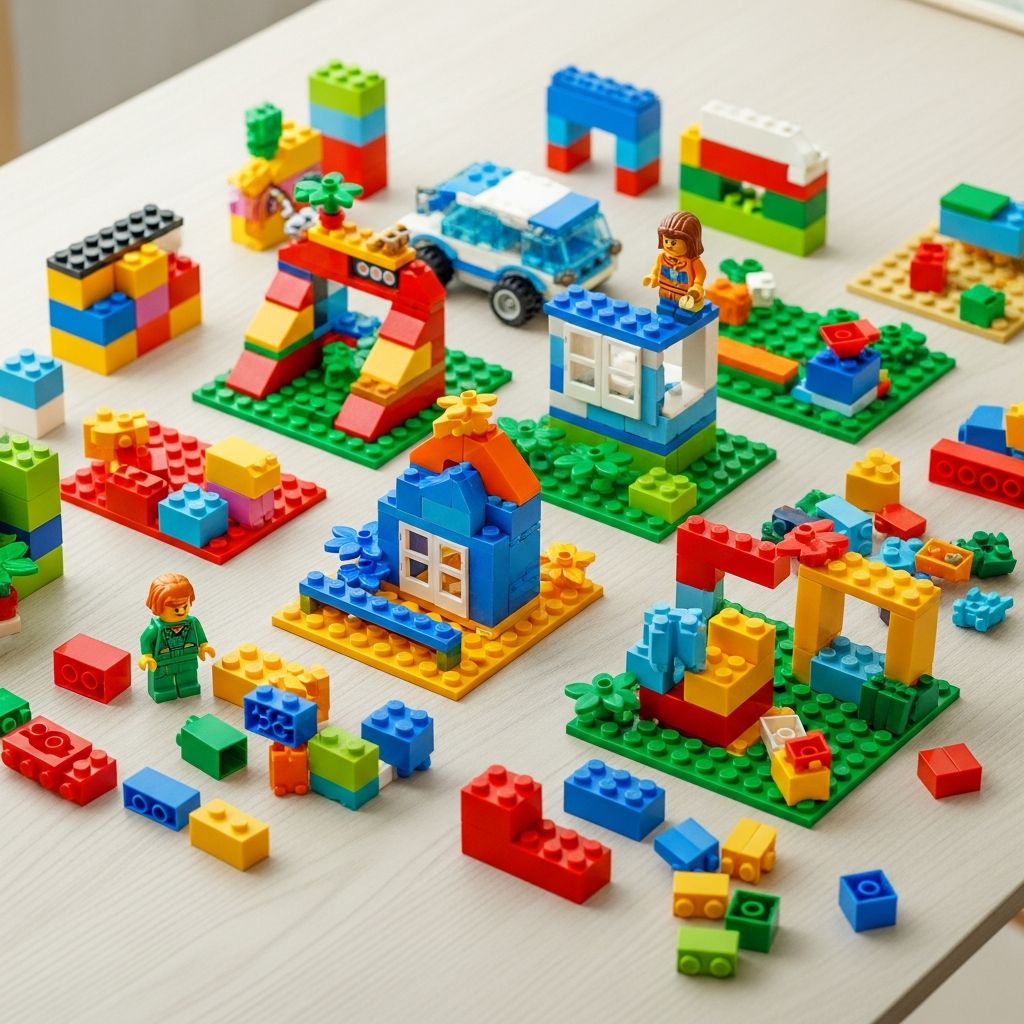
Construction toys are one of the best investments parents can make in their children’s creativity, problem-solving, and fine motor skills. LEGO is the best-known brand, but it is also one of the most expensive, so many families look for cheaper alternatives that still deliver quality and fun. This guide explores different kinds of LEGO alternatives, what to look for in off-brand building sets, and how to choose the right option for your child.
Why Parents Look for LEGO Alternatives
LEGO sets are often priced around a specific theme or license, which means you pay a premium for branding as well as bricks. For families with multiple children or kids who build large creations, the cost of original LEGO can add up quickly. Well-chosen alternatives can give children a big box of bricks or themed sets at a fraction of the cost, keeping the focus on open-ended play rather than on collecting expensive kits.
- Many parents want large quantities of bricks for free building rather than small themed sets.
- Cheaper alternatives can be a good way to test a child’s interest in building toys before committing to pricier products.
- Some alternatives focus on STEM skills, magnets, or unique shapes that LEGO does not emphasize.
Key Features to Look For in LEGO Alternatives
Not every budget building set is worth the savings. Before buying, it helps to know what separates a good alternative from a frustrating one. Paying attention to material quality, clutch power, and safety standards can prevent disappointment and wasted money.
- Clutch power: Bricks should click together firmly but not so tightly that children struggle to take them apart.
- Material and safety: Look for non-toxic, BPA-free plastics that meet safety standards in your region. For toddlers, larger bricks reduce choking risks.
- Compatibility: Some brands are designed to be compatible with LEGO system bricks or with DUPLO-sized blocks, allowing mixed use.
- Piece variety: Sets with plates, specialty pieces, and wheels offer more building possibilities than boxes of basic bricks alone.
- Clear instructions: For themed or model-based sets, illustrated instructions help kids build independently.
Types of LEGO Alternatives
LEGO alternatives fall into several categories, from classic studs-and-tubes bricks to magnetic tiles and STEM-focused kits. Understanding the main types can help you match the toy to your child’s age, interests, and the kind of play your family values.
- LEGO-compatible bricks: These look and feel similar to standard LEGO pieces and often mix well with existing collections.
- DUPLO-style big blocks: Designed for toddlers and preschoolers, these large bricks are easy to grip and safer for small children.
- Magnetic building sets: Tiles or rods and balls connect with magnets, encouraging geometric thinking.
- STEM and engineering kits: Gears, pulleys, tracks, and simple electronics help older kids explore mechanics and physics.
- Foam or cardboard blocks: Oversized, lightweight blocks are ideal for very young children or indoor fort building.
Pros and Cons of Cheaper Brick Brands
Choosing off-brand building sets is a balance between saving money and managing expectations. While some alternatives perform surprisingly well, others fall short in durability or design. Understanding the trade-offs can help you invest wisely instead of buying the absolute cheapest option.
| Aspect | Advantages | Potential Drawbacks |
|---|---|---|
| Price | Often much cheaper per piece, enabling bigger builds on the same budget. | Ultra-low prices can signal poor quality or safety oversight. |
| Compatibility | Many bricks work with existing LEGO or DUPLO collections for added versatility. | Some sets only partially fit or have different dimensions, making mixing frustrating. |
| Design | Offer new themes, colors, or specialty elements not found in official sets. | Instructions and design quality can be inconsistent; some models are less stable. |
| Durability | Good brands use solid plastics that handle regular play well. | Cheaper plastics may crack, discolor, or lose clutch power over time. |
| Educational value | Many sets still support creativity, spatial reasoning, and fine motor skills. | Licensing and collectability may be weaker, which matters to some older kids. |
Choosing Alternatives by Age Group
What counts as a good LEGO alternative depends heavily on your child’s age and developmental stage. Toddlers need large, forgiving pieces that they can safely mouth and stack, whereas older children may crave technical challenges, moving mechanisms, and more detailed builds.
Toddlers and Preschoolers (Ages 1–4)
For the very youngest builders, safety and size are the top priorities. Big-block systems that resemble DUPLO give kids the satisfaction of building while reducing choking hazards. Bright colors and simple shapes help early learners explore sorting, stacking, and basic patterns.
- Choose chunky bricks that are easy for small hands to grip and pull apart.
- Look for sets with basic figures, animals, or vehicles to encourage imaginative play.
- Blocks made from foam or soft plastic can protect walls and furniture during energetic play.
Early Elementary (Ages 5–7)
By this age, many children can follow simple instructions and appreciate themed sets, but they still benefit from open-ended building. LEGO-compatible brick sets, small vehicle kits, or beginner STEM systems work well. Colorful assortments with a variety of bricks, plates, and wheels allow children to build houses, cars, and simple machines.
- Prioritize sets with clear picture-based instructions to build confidence.
- Consider starter STEM kits with snap-together gears, tracks, or basic electronics.
- Opt for mixed-piece boxes instead of one small model, so kids can rebuild in many ways.
Older Kids and Preteens (Ages 8+)
Older children often seek more complex builds that feel like real engineering or architecture. For this age group, advanced building systems with motors, remote control functions, or detailed models are excellent LEGO alternatives. Many off-brand kits include moving parts, ball runs, or programmable elements at lower prices than branded equivalents.
- Look for kits that introduce concepts like gearing, suspension, or structural stability.
- Magnetic rods and balls or intricate marble runs can challenge spatial reasoning.
- Check whether the set can be rebuilt into multiple models for long-term value.
Construction Toys Beyond Classic Bricks
While traditional studded bricks are the closest match to LEGO, alternative construction toys broaden the range of experiences available to children. These toys can complement a brick collection, offering different kinds of challenges and sensory feedback.
- Magnetic tiles: Flat tiles that snap together on the edges help kids explore symmetry, 2D shapes, and 3D structures.
- Interlocking discs or flowers: Unusual shapes that connect in multiple directions, ideal for organic, abstract builds.
- Wooden construction sets: Pegs, screws, and planks introduce simple tool use and a more tactile experience.
- Cardboard or foam fort blocks: Life-sized pieces let kids build hideouts and obstacle courses, encouraging whole-body play.
How to Evaluate Quality Before You Buy
It can be hard to judge a brand you have never tried just from product photos. Taking a few moments to research and compare options reduces the risk of ending up with brittle bricks, sharp edges, or sets that do not stay together.
- Read detailed reviews: Look for comments about clutch power, missing pieces, and how well instructions are written.
- Check certifications: Verify that the set meets recognized safety standards and avoid products with strong chemical odors.
- Compare piece counts: Calculate approximate cost per piece to see the real value beyond the headline price.
- Start small: Try a modest-sized set from a new brand before investing in a huge bundle.
Balancing Branded LEGO and Alternatives
Parents do not have to choose between only LEGO or only off-brand bricks. Many families use a mix: a few special official sets for birthdays and holidays, combined with larger, cheaper assortments of generic bricks for everyday building. This strategy can satisfy children who care about specific themes while still supplying abundant pieces for creative play.
- Combine bulk off-brand bricks with a handful of official minifigures or favorite licensed characters.
- Use cheaper bricks for experiments, outdoor builds, or school projects where loss or damage is more likely.
- Teach kids to sort and store all brands together by size or color rather than logo, reinforcing that creativity matters more than labels.
Practical Storage and Organization Tips
Regardless of which brand you choose, bricks underfoot are painful and scattered pieces can frustrate both parents and kids. Simple storage systems make it easier for children to find the parts they need and clean up when they are finished.
- Use clear bins so kids can see what is inside without dumping everything out.
- Sort by color for younger children and by type (bricks, plates, wheels, specialty parts) for older builders.
- Keep a shallow tray or building table where kids can leave works-in-progress without taking over the entire floor.
Frequently Asked Questions About LEGO Alternatives
Are cheaper bricks safe for kids?
Many off-brand building sets are safe, but not all are created equal. To protect your child, look for toys that clearly state compliance with safety standards, avoid sets with strong chemical smells or rough seams, and choose large blocks for toddlers to reduce choking risks.
Will LEGO alternatives work with my existing LEGO collection?
Some brands are intentionally designed to be compatible in size and connection style with LEGO system bricks or DUPLO-sized blocks. However, tolerances are not always perfect, so a few pieces may feel looser or tighter than official ones. Checking reviews and product descriptions before purchase can help you find brands known for good compatibility.
Do off-brand sets last as long as real LEGO?
High-quality alternatives can last for years of normal play, but there is more variation than with official LEGO. Bricks made from sturdy, well-molded plastic with consistent colors tend to hold up better than ultra-cheap clones that may crack, warp, or fade.
Are LEGO alternatives as educational as real LEGO?
The educational value of a construction toy comes mainly from how children use it, not from the logo on the studs. Any well-made building set that encourages kids to design, problem-solve, and persist through trial and error can support learning in similar ways to LEGO.
Should I tell my child that a set is not real LEGO?
Every family handles this differently. Some children care mainly about what they can build, while others notice brand names. Framing alternatives as “building bricks” or “construction sets” and focusing on what they can do—big castles, cool vehicles, creative worlds—often matters more than whether the bricks are officially branded.
Final Thoughts on Budget-Friendly Building Toys
LEGO alternatives give parents more flexibility to support their children’s creativity without overspending. By paying attention to quality, safety, and age-appropriateness, families can assemble a collection of bricks and other construction toys that inspire years of imaginative play. Whether you mix brands or rely mostly on off-brand sets, the key is to provide enough pieces and freedom for kids to experiment, build, and rebuild their ideas again and again.