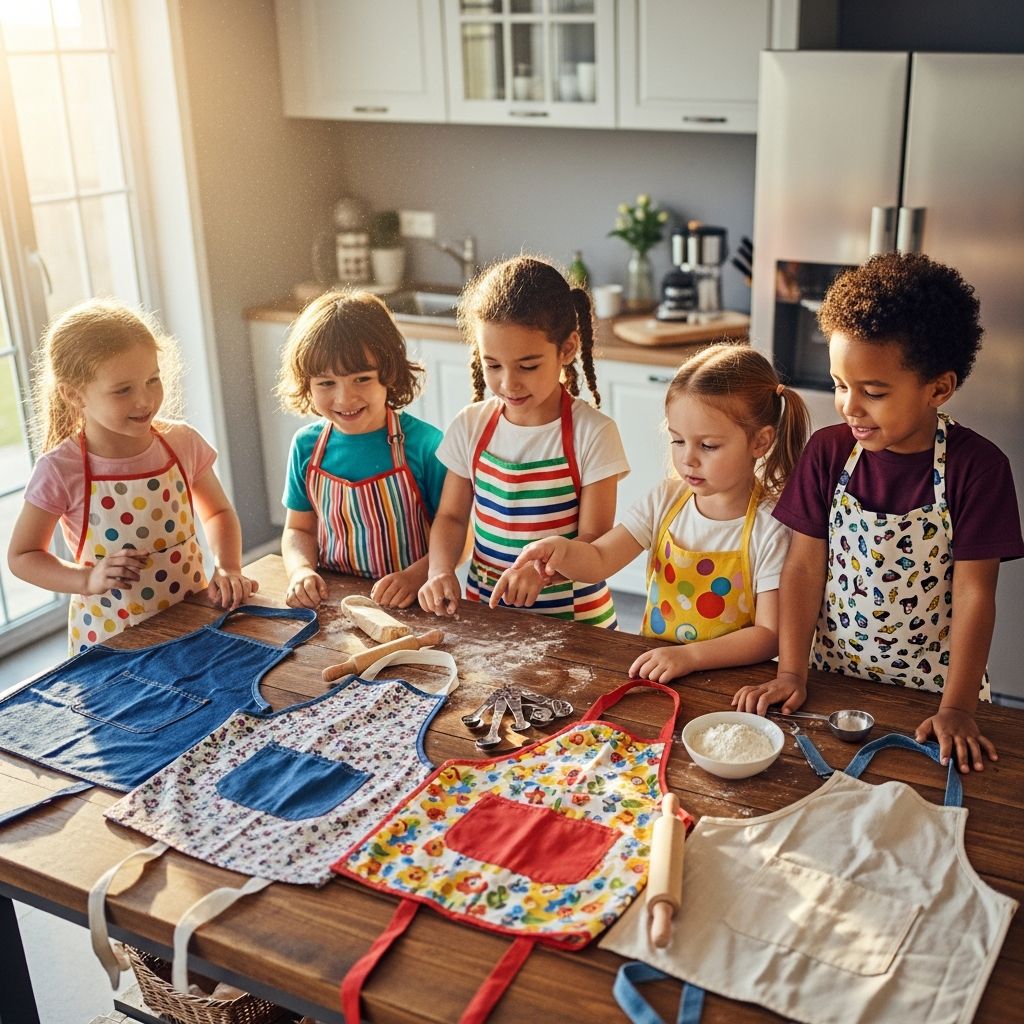
When children join in the kitchen, at the craft table, or in the garden, the right apron turns potential chaos into happy, manageable mess. A thoughtfully chosen kids’ apron protects clothes, boosts confidence, and sends a clear signal that it is time to create.
This guide walks through everything a parent or caregiver needs to know: which fabrics hold up to spills, how to get the right fit for different ages, what safety features matter, and how to pick styles that kids actually want to wear. You will also find practical care tips, a comparison table of apron styles, and FAQs to help you decide what works best for your family.
Why Kids Need Their Own Aprons
Children do not just make messes—they explore with all their senses. An apron gives them freedom to pour, stir, paint, and knead without adults worrying about stained school clothes or ruined outfits. That freedom makes kids more willing to participate and try new tasks.
Aprons also help kids step into a role. When a child puts on a chef’s apron or a colorful art smock, it signals that they are now part of the team. That sense of ownership can make them more attentive to instructions and more invested in finishing a project.
Popular Uses for Kids Aprons
A good kids’ apron rarely stays in the kitchen. The same design can work across many different activities and ages if you choose wisely. Thinking about where your child will wear the apron will help you decide on the right style and features.
- Cooking and baking: Mixing batter, cracking eggs, and dusting flour all become more approachable when clean-up is as simple as tossing an apron in the wash.
- Arts and crafts: Paint, glue, clay, and markers are less stressful when shirts and pants are fully covered.
- Gardening and outdoor play: Pockets give kids a place to stash seeds, small tools, or treasures found in the yard.
- Parties and playdates: Matching aprons can turn a birthday baking party or holiday cookie session into a memorable event.
Key Factors to Consider Before You Buy
Kids’ aprons come in many shapes and sizes, from tiny toddler smocks to scaled-down professional-style chef aprons. Instead of focusing only on cute prints, start with the basics: fit, coverage, fabric, and closure style.
- Age and size of the child: A one-size apron often overwhelms toddlers but may be too short on older kids.
- Primary use: Wet, splashy activities benefit from waterproof fabrics, while everyday kitchen help feels comfortable in soft cotton.
- Independence level: Younger kids need simple closures they can manage themselves, while older kids can handle ties and buckles.
- Frequency of use: If your child bakes or paints several times a week, durability and easy washing matter more than novelty designs.
Understanding Fabric Options for Kids Aprons
The material of an apron affects not only how it looks, but also how it feels, washes, and wears over time. Each fabric has trade-offs between comfort, protection, and durability, so it helps to match fabric to activity.
Below is a quick guide to common fabrics and when they work best for kids.
| Fabric Type | Best For | Pros | Cons |
|---|---|---|---|
| Cotton | Everyday baking and light cooking | Soft, breathable, comfortable in warm kitchens | Soaks up liquids easily; may stain more quickly |
| Cotton blend | Frequent kitchen use and crafts | More durable than pure cotton; easier to wash and dry | Less breathable than pure cotton; feel can be slightly stiffer |
| Polyester or laminated fabric | Painting, water play, very messy projects | Resists water and stains; wipes clean quickly | Can feel warmer and less flexible than natural fabrics |
| Denim or canvas | Older kids, heavier kitchen or garden work | Very durable; offers robust protection from spills and dirt | Heavier weight; may feel bulky on small children |
Getting the Right Fit and Coverage
An apron that constantly slips off or drags on the floor will end up in the back of a closet. Aim for a fit that allows your child to move easily, bend, and reach without tripping or fighting with straps.
- Length: For most kids, an apron that ends just above the knee offers good coverage without restricting movement.
- Width: The apron should wrap across the torso but not so far around that it bunches or twists at the sides.
- Full coverage vs. waist-only: Younger kids and very messy tasks benefit from full bib aprons or smocks that cover the chest, while older kids might prefer waist aprons for simple jobs.
Neck Straps, Ties, and Closures
The way an apron fastens can make the difference between a child happily dressing themselves and needing constant adult help. Simple, secure closures also reduce the risk of accidents or tangled straps.
- Hook-and-loop (Velcro-style) closures: Ideal for toddlers and preschoolers who are still mastering fine motor skills.
- Adjustable neck straps: Sliding buckles or snaps give growing room and keep the top of the apron at a safe height.
- Waist ties: Work best for school-age kids who can tie a bow or at least wrap ties around to the front for an adult to secure.
- Cross-back designs: Spread the weight of the apron more evenly and remove the need for a neck strap, which some kids find uncomfortable.
Essential Safety Features for Children’s Aprons
While an apron may seem like a simple accessory, it still touches fire, heat, and busy spaces. Safety-conscious details help protect kids as they learn their way around a kitchen, workshop, or studio.
- Breakaway neck closures: Some aprons are designed so the neck strap will release if it gets caught, reducing the risk of entanglement.
- Flame-aware choices: No fabric is perfectly flameproof, but avoiding long, dangling ties or extremely loose fabric around open flames is wise.
- Smooth, secure fastenings: Strong stitching, covered snaps, and sturdy seams help prevent small parts from coming loose.
- Non-slip length: Check that the apron does not extend so far down that kids step on the hem when walking or climbing steps.
Features That Make Kids Actually Want to Wear an Apron
Even the safest, most practical apron will not get used if your child does not like how it looks or feels. Involving them in the choice increases the chances they will happily put it on whenever it is time to cook or create.
- Colors and patterns: Bright solids, favorite shades, or playful designs turn the apron into a fun costume rather than a chore.
- Themed prints: Animals, vehicles, outer space, fruits, or baking tools can reflect your child’s interests.
- Character designs: Some kids love aprons that reference beloved stories or movies, while others prefer timeless, neutral looks.
- Comfort details: Soft linings, lightweight fabrics, and smooth seams keep sensory-sensitive children more comfortable.
Do You Need Pockets, Hats, or Matching Sets?
Extra accessories are not essential, but they can make the experience more engaging. Pockets give kids a place to stash tools, and matching sets add a sense of occasion, especially for special events or photo-worthy moments.
- Front pockets: Handy for holding measuring spoons, spatulas, small brushes, or craft supplies.
- Chef hats and mitts: Completing the outfit can make shy kids more excited to participate, especially during celebrations.
- Parent–child matching sets: Coordinated aprons can reinforce the idea that everyone is working together as a team.
Easy-Care Tips for Busy Families
An apron is meant to take the brunt of spills and splatters, which means it will need frequent cleaning. Choosing a design that fits smoothly into your laundry routine will help it stay in regular rotation rather than gathering dust.
- Machine-washable fabrics: Look for aprons that can go straight into the washer and dryer without special handling.
- Quick-dry materials: Lightweight synthetics and blends dry faster between uses, which is helpful if you bake several days a week.
- Stain treatment: Darker prints, busy patterns, or stain-resistant coatings tend to hide or repel splatters better than pale solids.
- Labeling: Adding your child’s name can help aprons return home from school cooking clubs, camps, or shared spaces.
Making Aprons Part of Family Routines
One of the easiest ways to build kids’ skills and independence is to treat the apron as part of the process, not an occasional accessory. Over time, children can take responsibility for getting ready, cleaning up, and storing their own gear.
- Keep aprons on low hooks or in a basket where kids can reach them without help.
- Make “apron on” the first step before touching ingredients, tools, or paints.
- End each session with kids hanging their aprons up or placing them in a designated laundry bin.
- Use aprons as a cue for safety reminders about hand washing, hot surfaces, and sharp tools.
Choosing the Right Apron by Age Group
Different stages of childhood come with changing attention spans, motor skills, and preferences. Adapting apron choices by age can make participation smoother and more enjoyable for everyone.
- Toddlers (1–3 years): Look for soft, lightweight smocks with full coverage, simple closures, and fabrics that wipe clean after painting or snack prep.
- Preschoolers (3–5 years): Adjustable neck straps and Velcro-style closures help kids practice dressing themselves while still getting plenty of coverage.
- Early school-age (5–8 years): Smaller versions of adult-style aprons, with pockets and real ties, make children feel capable and grown-up.
- Older kids and preteens: More tailored, minimalist designs in neutral colors or subtle patterns often appeal to their developing sense of style.
Simple Activities to Try Once You Have an Apron
Once your child has an apron they love, you can build regular rituals around it. Starting with low-stress, age-appropriate activities helps them gain confidence and keeps clean-up manageable.
- For young children: Washing fruits, tearing lettuce, sprinkling cheese, stamping with sponges, or finger painting at the table.
- For older kids: Measuring dry ingredients, shaping cookie dough, chopping soft foods with child-safe tools, or following simple recipe cards.
- Family projects: Weekend pancake breakfasts, pizza nights, holiday cookie marathons, or seasonal art projects where everyone wears an apron.
Frequently Asked Questions About Kids Aprons
How many aprons does one child really need?
Most families can manage with a single versatile apron per child, especially if it is easy to wash and dry. However, children who do very different activities—like messy painting and occasional baking—might benefit from one wipe-clean smock and one softer kitchen apron.
What size apron should I get if I want it to last?
Choosing an apron with adjustable straps usually offers more growing room than buying a larger fixed size that hangs awkwardly. Aim for a length that fits now but can be worn a bit shorter in the future as your child grows taller.
Is a waterproof apron necessary for cooking?
Waterproof aprons are particularly helpful for painting, water play, and dishwashing, but a sturdy cotton or cotton-blend apron is usually enough for standard home cooking. Many families find that one everyday apron can handle both kitchen tasks and light crafts, as long as they wash it regularly.
Can kids share aprons between siblings?
Sharing is possible if children are close in size and the apron has a generous range of adjustment in the neck and waist. That said, many kids feel more special and more responsible when they have an apron that is clearly their own, even if siblings occasionally borrow it.
What is the easiest way to store kids aprons?
Hanging aprons on low hooks near the kitchen or craft area keeps them visible and easy to grab. Some families also keep a spare apron folded in a drawer or tote bag for grandparents’ houses, playdates, or classes outside the home.
Bringing It All Together
The best apron for a child is not necessarily the fanciest or the most expensive one. It is the apron they will gladly wear, that fits their body and their personality, and that is simple enough for busy adults to maintain.
By paying attention to fabric, fit, safety, and style—and by making aprons part of your regular routines—you invite kids into everyday tasks with confidence. Those small, apron-clad moments in the kitchen or at the craft table often become some of the most meaningful memories a family shares.