For many families, mornings are the most stressful part of the day. A well-chosen kids’ alarm clock can do more than just make noise at 7:00 a.m. – it can help children understand time, respect sleep schedules, and feel proud of getting up on their own. This guide walks you through how to pick the right clock for your child and how to use it to create calmer, more consistent mornings.
Why a Dedicated Kids’ Alarm Clock Matters
It may be tempting to hand over an old smartphone and call it a day, but a dedicated children’s alarm clock offers benefits that go far beyond a simple alarm.
- Supports healthy sleep habits: Consistent bedtimes and wake times help regulate a child’s internal body clock, improving mood, daytime behavior, and learning.
- Reduces morning conflicts: When “the clock says it’s time to get up,” children often argue less with parents because the device becomes the neutral messenger.
- Encourages independence: Waking up with their own alarm helps kids feel capable and responsible, which can boost confidence.
- Teaches time concepts: Many kids’ clocks use colors, icons, or simple analog displays, which can support learning to tell time and understand “sleep time vs. wake time.”
- Minimizes screens in the bedroom: Health organizations recommend keeping TVs and smartphones out of children’s bedrooms to protect sleep quality.
Core Types of Alarm Clocks for Kids
Not all clocks work the same way. Understanding the main categories will help you choose what fits your child’s age and temperament.
| Type | Best For | Key Features |
|---|---|---|
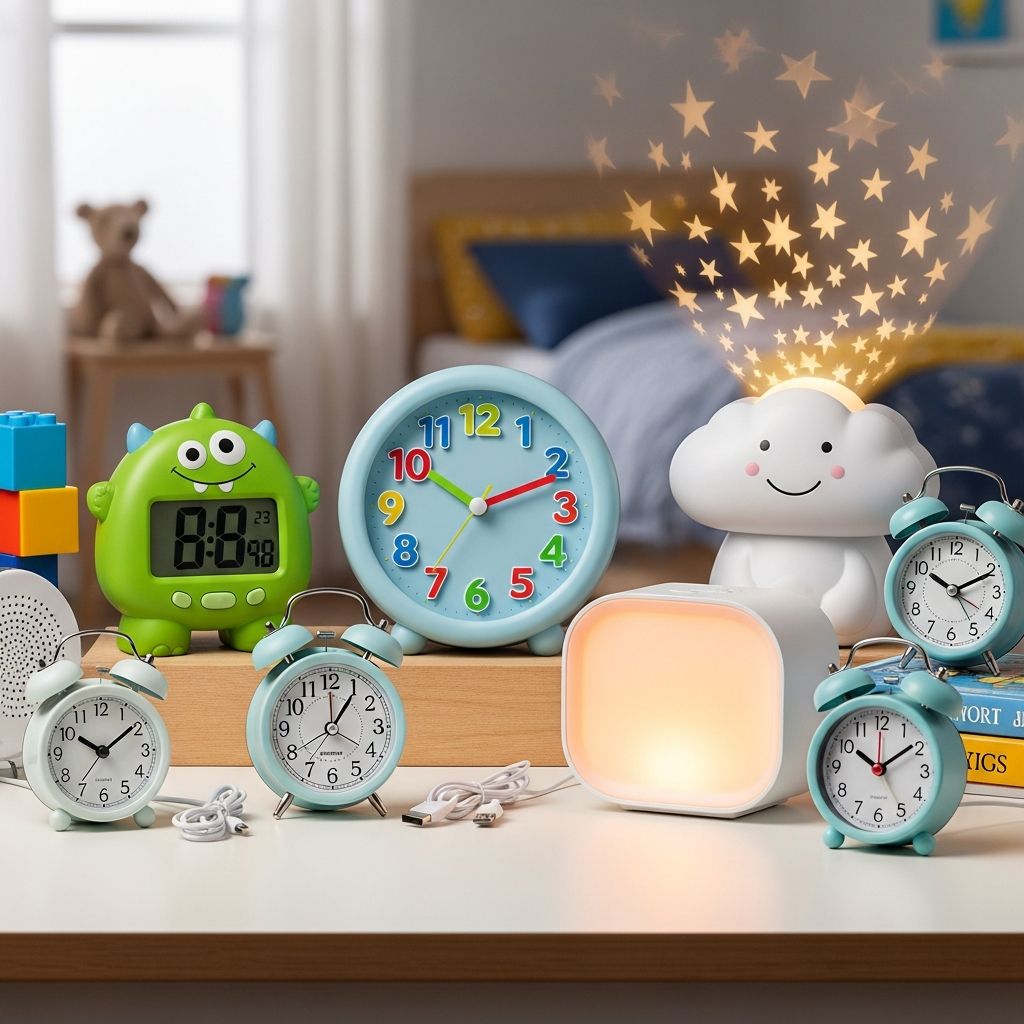
| Sleep-training clocks | Toddlers & preschoolers | Colors or icons show when it’s OK to get up; simple visuals; nap and night settings |
| Wake-up light clocks | School-age kids & sensitive sleepers | Gradual light before alarm; adjustable brightness; nature sounds or soft tones |
| Classic digital or analog clocks | Older kids & preteens | Clear display; one or two alarms; simple buttons; sometimes radio or USB charging |
| Novelty & character clocks | Reluctant risers & younger kids | Fun shapes or characters; playful sounds; often includes night light |
| Smart & app-connected clocks | Tech-comfortable families | App control, multiple alarms, routines, integration with smart speakers |
Key Features to Consider Before You Buy
Before picking a specific model, think through how your child sleeps, what mornings look like in your home, and which features will actually help rather than distract.
1. Age-Appropriate Design
A clock that works brilliantly for a 3-year-old can be frustrating for an 8-year-old, and vice versa.
- Toddlers and preschoolers (2–5 years): Look for visual cues like a sun/moon, open/closed eyes, or red/green lights to indicate sleep vs. wake time. Simple icons are easier than numbers.
- Early elementary (5–8 years): A large, easy-to-read digital display helps kids start matching numbers to times. Some may enjoy basic customization like choosing alarm sounds.
- Older kids and tweens: Prioritize function over cuteness. Multiple alarms (for school days vs. weekends), radio or Bluetooth audio, and dimmable displays are useful at this age.
2. Alarm Sound and Volume
The right sound can mean the difference between a gentle wake-up and a family-wide shock.
- Adjustable volume: Make sure you can start low and increase only if your child truly sleeps through softer alarms.
- Sound type: Avoid jarring sirens for most kids; research shows that sudden loud noise can trigger strong startle responses and distress.
- Nature sounds or soft tones: Many wake-up light clocks use birdsong, gentle music, or chimes for a calmer rise.
- Noisy but playful options: For kids who repeatedly sleep through alarms, a louder or more active clock (like a rolling alarm) may be helpful, but introduce it carefully to avoid anxiety.
3. Display Brightness and Night Light Function
Light is a powerful signal for the body clock. Too much light at night can make it harder to fall asleep or return to sleep after waking.
- Dimmable or fully off: Choose a clock where you can dim the display significantly or turn it off completely at night.
- Warm-colored night lights: If your child needs a night light, pick a warm amber or red tone rather than bright white or blue, which can be more disruptive to melatonin production.
- Separate controls: Ideally, the night light can be used independently of the alarm, so you can customize based on your child’s needs.
4. Ease of Use for Both Parent and Child
Overly complicated menus lead to alarms going off at the wrong time—or not at all.
- Clearly labeled buttons: Look for simple, separated buttons for setting time and alarm, and an obvious way to silence the alarm.
- Child-friendly controls: Older kids should be able to adjust basic settings themselves; this supports independence and responsibility.
- Manual backup: If the clock is app-based, make sure it still works if your phone isn’t nearby or the app updates.
5. Safety and Durability
Because this device will live in a child’s room, safety should be non-negotiable.
- Cord management: For young children, keep cords out of reach or choose a battery-powered clock to reduce tripping or strangulation risk.
- Sturdy build: Kids will drop, knock, and sometimes throw their clock. A solid casing and stable base help it survive daily life.
- Safe materials: Prefer clocks from reputable manufacturers that meet standard electrical and child-safety guidelines.
6. Extra Features: Nice-to-Haves vs. Distractions
Modern alarm clocks can do nearly everything—from playing music to projecting stars on the ceiling. Decide which extras support sleep and which might overstimulate.
- Useful extras:
- Gradual sunrise-style light
- White noise or soft soundscapes for falling asleep
- Weekend vs. weekday alarms
- Battery backup in case of power cuts
- Potential distractions:
- Bright, changing light shows
- Unrestricted music streaming or video
- Notifications or messaging features
Matching Clock Styles to Common Sleep Challenges
Different children struggle with different parts of the sleep process. Here are typical scenarios and clock styles that can help.
1. The Early Riser Who Pops Up Before Dawn
If your child bounces out of bed at 5:00 a.m., a sleep-training clock can set clear expectations.
- Choose a model with simple color cues (e.g., red for stay in bed, green for OK to get up).
- Start with a realistic wake time (e.g., 6:00 a.m.) and slowly shift it later by 10–15 minutes every few days.
- Praise your child for waiting until the “get up” color or icon appears.
2. The Child Who Struggles to Wake Up
For deep sleepers or older kids who ignore multiple alarms:
- Pick a clock with progressive volume or multiple alarm settings.
- Consider a wake-up light to cue the body that morning is coming before the sound begins.
- Place the clock out of arm’s reach so your child has to stand up to turn it off.
3. The Anxious Sleeper Afraid of the Dark
A gentle night light alarm clock can be reassuring without ruining sleep.
- Use a soft, warm glow that is just bright enough for comfort.
- Try a timer so the night light dims or turns off after your child is asleep.
- Pair the clock with a simple bedtime ritual (e.g., when we turn the clock light to night mode, it’s time to read together).
4. The Screen-Loving Kid
If your child is glued to devices, a basic physical alarm clock can help you keep screens out of the bedroom, which is widely recommended to protect sleep quality.
- Choose a non-connected, straightforward clock with just enough features to be interesting.
- Charge tablets and phones overnight in another room if possible.
Ideas for Kids-Friendly Alarm Clock Setups
Here are a few ways to use different styles of clocks, inspired by how many parents combine features to work for real families.
- Minimalist setup: A small, battery-powered analog clock with a quiet tick and simple alarm for a child who dislikes bright screens.
- Routine helper: A digital clock with two alarms—one soft tone for “time to get dressed” and another for “time to leave for school.”
- Sibling solution: Sleep-training clocks in each room that turn green at the same time, so siblings learn to stay quiet until everyone’s light changes.
- Travel-friendly: A compact, battery-run clock or watch that your child recognizes, making hotel or grandparent stays feel more predictable.
How to Introduce a New Alarm Clock to Your Child
The way you introduce the clock can determine whether it becomes a beloved tool or an ignored object.
- Involve your child in choosing the clock: Narrow options to a few parent-approved models, then let your child pick their favorite color or style. This increases buy-in.
- Practice when it’s not bedtime: During the day, show your child how the colors, icons, or sounds work. Run a “practice alarm” so it isn’t surprising at 6:30 a.m.
- Set simple, clear rules: For example: “When the clock is blue, we stay in bed quietly. When it turns yellow, you may read. When it’s green, you can come out.”
- Start with generous expectations: If you want your child to sleep until 7:00 a.m., begin with 6:30 and gradually move later so they can succeed early.
- Use positive reinforcement: Stickers, small privileges, or simple verbal praise (“You waited until the sun came up on your clock—great job!”) reinforce the habit.
Good Sleep Habits to Pair with an Alarm Clock
No alarm clock can fix poor sleep hygiene on its own. For best results, combine the device with healthy routines recommended by pediatric sleep experts.
- Regular schedule: Keep bedtimes and wake times consistent, even on weekends, to stabilize your child’s internal clock.
- Wind-down routine: Use 20–30 minutes of calm activities (reading, drawing, talking quietly) before lights out.
- Cool, dark, and quiet bedroom: Most children sleep best in slightly cool, dark rooms with low noise.
- Limit screens before bed: Aim to turn off TVs, tablets, and phones at least one hour before bedtime to reduce stimulating content and blue light exposure.
- Plenty of daytime activity: Physical play and natural daylight help kids fall asleep more easily and sleep more soundly at night.
Frequently Asked Questions (FAQs)
At what age can a child start using an alarm clock?
Many families introduce simple sleep-training clocks with visual cues around age 2–3, when toddlers can understand basic rules like “wait for the green light before leaving your room.” Traditional sound alarms are often more appropriate closer to school age, when a child can reliably respond to the sound and follow a morning routine.
Are loud alarm clocks safe for kids?
Occasional loud alarms are unlikely to cause harm, but consistently very high volumes close to a child’s ears are not ideal. Experts recommend keeping children’s regular noise exposure—including alarms—at safe levels to protect hearing and reduce stress responses. Whenever possible, use the lowest volume that still reliably wakes your child.
How do I stop my child from hitting snooze over and over?
Place the clock across the room so your child has to stand up to turn it off, and pair the alarm with a clear next-step routine (go to the bathroom, open curtains, get dressed). Some clocks limit or remove a snooze function, which can be helpful for chronic snoozers.
Should my child use a phone as an alarm instead of a kids’ clock?
While phones can work as alarms, many pediatric and sleep organizations advise keeping smartphones out of children’s bedrooms due to late-night use, blue light, and notifications that can disrupt sleep. A dedicated kids’ clock provides the wake-up function without the distractions.
My child is afraid of the alarm sound. What can I do?
Switch to a gentler sound, such as soft music or nature noises, and demonstrate the alarm during the day so it feels predictable. Some children respond better to a wake-up light that brightens gradually before a quiet tone starts, making waking feel less abrupt.
References
- Healthy Sleep Habits: How Many Hours Does Your Child Need? — American Academy of Pediatrics. 2023-05-01. https://www.healthychildren.org/English/healthy-living/sleep/Pages/healthy-sleep-habits-how-many-hours-does-your-child-need.aspx
- Screen Time and Children — American Academy of Pediatrics. 2020-11-01. https://www.healthychildren.org/English/family-life/Media/Pages/Children-And-Media-Tips-For-Parents.aspx
- Sleep in Children: Why It’s Important and How to Help Them Get Enough — Centers for Disease Control and Prevention. 2022-09-13. https://www.cdc.gov/sleep/about_sleep/children.html
- Protecting Kids’ Hearing — American Speech-Language-Hearing Association. 2021-06-01. https://www.asha.org/public/hearing/Protect-Your-Childs-Hearing/