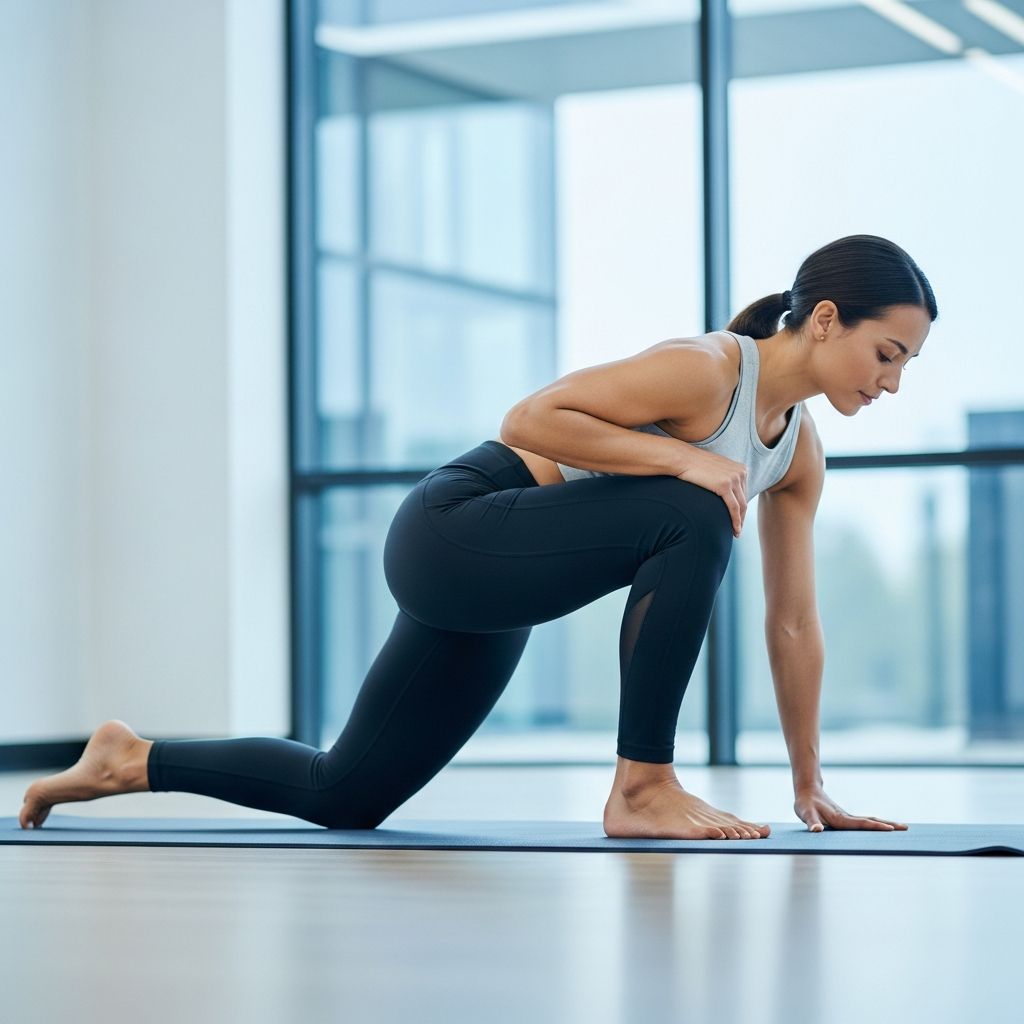
Tight hip flexors contribute significantly to lower back discomfort by pulling the pelvis forward and increasing lumbar curve pressure. Regular stretching restores balance, reduces strain, and promotes better posture.
Why Hip Flexors Matter for Your Back Health
Hip flexors, including the psoas and iliacus, connect the lower spine to the femur, playing a key role in hip flexion and core stability. Prolonged sitting shortens these muscles, leading to anterior pelvic tilt—a condition where the front of the pelvis drops and the back arches excessively. This misalignment compresses lumbar discs and overworks back extensors, often resulting in chronic pain.
Research from physical therapy experts emphasizes that hip flexor tightness correlates with lower back issues, particularly in sedentary populations. Addressing this through targeted stretches not only eases immediate tension but also prevents future injuries by improving overall pelvic alignment and movement efficiency.
- Sedentary lifestyles: Hours at a desk shorten hip flexors, exacerbating back strain.
- Exercise imbalances: Activities like cycling or running without flexibility work tighten these muscles.
- Aging factors: Natural muscle shortening with age amplifies discomfort if unaddressed.
Understanding the Hip Flexor-Back Connection
When hip flexors tighten, they tug on the lumbar spine, forcing an exaggerated lordosis (inward curve). This posture shifts weight unevenly, straining erector spinae muscles and facet joints. Over time, this leads to inflammation, reduced mobility, and pain that radiates to the glutes or thighs.
Effective intervention involves posterior pelvic tilting during stretches to maximize lengthening. This technique biases the stretch toward the primary hip flexors like the iliopsoas, minimizing compensatory low back arching.
Essential Preparation Before Stretching
Before diving into stretches, warm up with light movement to increase blood flow and reduce injury risk. Perform 5-10 minutes of walking or dynamic leg swings. Focus on breathing: inhale deeply to relax, exhale to deepen the stretch. Consistency is key—aim for daily sessions of 10-15 minutes.
| Preparation Step | Purpose | Duration |
|---|---|---|
| Warm-up walk | Boost circulation | 5 minutes |
| Deep breathing | Promote relaxation | 1-2 minutes |
| Pelvic tilts | Activate core awareness | 10 reps |
Top Hip Flexor Stretches for Immediate Relief
1. Half-Kneeling Lunge Stretch
This foundational stretch targets the front hip of the rear leg. Kneel on one knee with the other foot forward, forming 90-degree angles at both knees. Tuck your pelvis under by engaging your core, then gently shift weight forward until you feel tension in the front hip. Hold for 30-60 seconds per side, repeating 2-3 times.
- Keep the front knee over the ankle to protect joints.
- Avoid low back arching—focus on posterior tilt.
- For intensity, raise the arm on the stretched side overhead.
2. Prone Hip Extension Stretch
Lie face down on a bed or bench edge. Let one leg hang off, allowing gravity to pull the hip into extension. Keep the opposite leg bent on the surface. Relax into the position for 2-3 minutes per side, breathing steadily. This passive approach is ideal for deeper release without active effort.
3. Dynamic Hip Flow Sequence
Begin in a high plank. Transition to downward dog by lifting hips high, pedaling feet to stretch hamstrings. Step one foot outside the hand into a low lunge, then drive arms overhead while squeezing glutes. Rotate torso toward the front leg for added mobility. Flow through 3-5 reps per side.
- Plank position with tight core.
- Downward dog for hamstring prep.
- Lunge with perpendicular shin.
- Overhead reach and torso twist.
Advanced Variations for Deeper Mobility
Couch Stretch Adaptation
Back against a couch or wall, one foot anchored behind with knee down. Step the other foot forward into a lunge. Push hips forward while maintaining upright posture. This intensifies the stretch for rectus femoris and psoas. Hold 45 seconds, switch sides.
Seated Figure-Four Stretch
Sit on the floor, cross one ankle over the opposite knee. Gently press the raised knee down while hinging forward from the hips. This targets hip external rotators alongside flexors, aiding comprehensive hip opening.
Bridge with Hip Flexor Engagement
Lie on your back, feet flat. Lift hips into a bridge, then extend one leg straight while squeezing the glute of the grounded leg. This strengthens while stretching the elevated hip flexor. Perform 10 reps per side.
Building a Daily Routine for Lasting Results
Incorporate these stretches into your schedule: morning for activation, midday desk breaks, evening wind-down. Track progress by noting pain levels and range of motion weekly. Combine with strengthening like glute bridges or planks for balanced musculature.
- Morning (5 min): Half-kneeling lunge x2 sides.
- Work breaks (3 min): Prone stretch or dynamic flow.
- Evening (10 min): Full sequence with variations.
Over 4-6 weeks, expect improved posture, reduced pain, and greater ease in daily tasks like bending or lifting. Physical therapy guidelines recommend progression from static to dynamic stretches as flexibility improves.
Common Mistakes and How to Avoid Them
Many over-arch the low back during stretches, reducing effectiveness and risking strain. Counter this by practicing pelvic tilts: lie on your back, flatten the spine against the floor by tilting tailbone up. Integrate this awareness into every stretch.
| Mistake | Consequence | Fix |
|---|---|---|
| Low back arching | Increased pain | Posterior pelvic tilt |
| Bouncing motions | Muscle guarding | Smooth, held stretches |
| Ignoring pain signals | Injury | Stretch to mild tension only |
Complementary Exercises for Full Recovery
Stretching alone isn’t enough; strengthen antagonists like glutes and hamstrings. Add bird-dog holds for core stability and dead bugs for lumbar control. These build resilience against tightness recurrence.
Frequently Asked Questions
How often should I do hip flexor stretches for back pain?
Daily sessions of 10-15 minutes yield best results, with noticeable improvements in 2-4 weeks when consistent.
Can these stretches help with sciatica-like symptoms?
Yes, by reducing pelvic tilt and nerve compression, though consult a professional for persistent issues.
Is it safe to stretch tight hips if I have existing back injuries?
Start gently and under guidance; avoid if acute pain is present. Modify with professional input.
Why do my hips feel tighter after sitting all day?
Sitting keeps hip flexors in a shortened position, leading to adaptive tightness that affects spinal alignment.
How long to hold each stretch?
30-60 seconds for static holds, building to 2 minutes for passive ones like prone variation.
Long-Term Benefits and Prevention Strategies
Consistent practice enhances athletic performance, posture, and injury resistance. Prevent tightness by alternating sitting with standing desks, taking hourly movement breaks, and balancing workouts with mobility work. Active parents benefit from pain-free playtime and sustained energy.
Studies affirm that hip-focused interventions reduce low back pain incidence by up to 30% in at-risk groups, underscoring the value of proactive mobility.
References
- This Mobility Flow Will Unlock Your Tight Hip Flexors — Men’s Health. 2018-06-12. https://www.menshealth.com/fitness/a19529275/hip-flexor-stretch/
- How To Master The Hip Flexor Stretch — The Prehab Guys. 2023-05-15. https://theprehabguys.com/hip-flexor-stretch-basics/
- How To Stretch Tight Hips – 7-Minute Hip Opener Routine — YouTube (Tone and Tighten). 2022-11-10. https://www.youtube.com/watch?v=GIuiGVYr7ho
- The Best Hip Flexor Stretches | 3 Couch Variations — K Squared Fitness. 2024-01-20. https://ksquaredfitness.com/hip-flexor-stretches/
- Target Your Hips, Groin and Glutes With These Hip-Opening Stretches — Cleveland Clinic. 2023-08-05. https://health.clevelandclinic.org/hip-opening-stretches