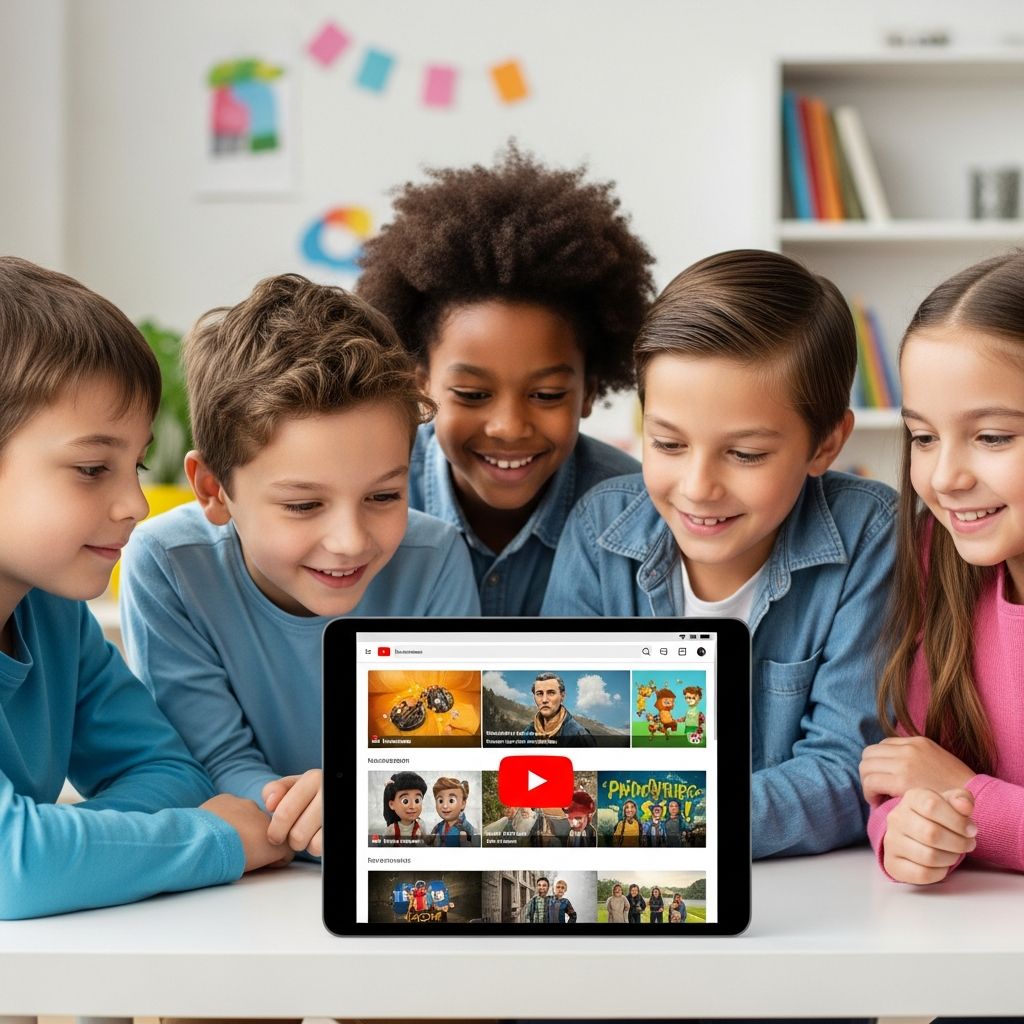
In today’s digital landscape, YouTube serves as a powerful tool for children’s education when used thoughtfully. Parents and caregivers often seek content that balances entertainment with skill-building, covering areas like literacy, numeracy, science, and social-emotional growth. This guide highlights standout channels across age groups, drawing from trusted recommendations to help you select high-quality, ad-free or minimally intrusive videos that promote active learning. These platforms feature animations, songs, real-world explorations, and expert-led lessons designed to captivate young minds while fostering cognitive development.
Why Choose Educational YouTube for Children?
Educational YouTube channels offer flexible, on-demand access to structured learning that aligns with early childhood milestones. Research from child development experts emphasizes the value of repetitive, interactive content in building foundational skills—such as language acquisition through rhymes and vocabulary expansion via storytelling. Unlike passive TV viewing, many channels encourage participation through sing-alongs, questions, and activities that boost retention. For busy families, these resources provide screen time that reinforces preschool and elementary curricula, often at no cost. Key benefits include exposure to diverse topics, promotion of curiosity, and support for homeschooling or supplemental learning.
Selecting channels involves considering age-appropriateness, production quality, and educational depth. Channels with clear learning objectives, positive role models, and minimal commercial interruptions stand out. Public broadcasters like PBS and non-profits often lead in credibility, backed by pedagogical standards.
Best Channels for Toddlers and Preschoolers (Ages 1-4)
At this stage, children thrive on music, colors, and simple concepts. These channels use nursery rhymes and animations to introduce basics without overwhelming young viewers.
- Cocomelon: This channel dominates with 3D-animated nursery rhymes teaching numbers, shapes, colors, and daily routines. Its repetitive songs aid memory, while family-themed stories model good behavior. Videos average 3-5 minutes, ideal for short attention spans.
- Sesame Street: A timeless resource with Elmo, Big Bird, and friends delivering skits on letters, emotions, and cooperation. Episodes blend humor, music, and celebrity guests, supporting social skills and early literacy for over 50 years.
- Little Baby Bum: Featuring characters like Mia and Twinkle, it offers classic rhymes with vibrant visuals to spark imagination and rhythm sense. Content builds vocabulary through familiar tunes adapted for modern toddlers.
- Super Simple Songs: Focuses on ultra-basic tunes for counting, ABCs, and greetings. Slow-paced animations and gestures make it accessible for beginners, encouraging physical mimicry.
- Dave and Ava: Animated adventures teach ABCs, shapes, and numbers via playful songs. Designed for independent play, it helps with focus and foundational math.
Interactive Learning for Early Elementary (Ages 4-7)
As kids enter kindergarten, channels shift toward phonics, basic math, and exploration. Live-action elements add excitement, bridging screen to real life.
- Blippi: Energetic host Stevin John explores museums, farms, and vehicles, explaining colors, numbers, and science. Field trips make abstract ideas tangible, promoting inquiry-based learning.
- Ms. Rachel: A speech therapist crafts videos with rhymes and movements for language milestones. Interactive prompts target pronunciation and motor skills, recommended by experts.
- Mother Goose Club: Revives nursery rhymes with dances and puppets to enhance phonemic awareness and coordination. Group sing-alongs foster community feel.
- Numberblocks: Block characters personify math concepts like addition and patterns. Bite-sized episodes align with Common Core standards, making numbers fun and relational.
- Alphablocks: Sister channel to Numberblocks, where letters form words through stories. It demystifies phonics, aiding reading readiness with progressive challenges.
STEM-Focused Channels for Curious Minds (Ages 5-10)
Science, technology, engineering, and math come alive through experiments and facts, igniting passion for discovery.
| Channel | Key Topics | Age Range | Standout Feature |
|---|---|---|---|
| PBS Kids | Literacy, science, emotions | 2-8 | Characters like Curious George; games integrated |
| SciShow Kids | Biology, physics, earth science | 4-10 | Weekly questions answered with demos |
| NASA | Space, rockets, astronomy | 6-12 | Real mission footage and astronaut Q&A |
| National Geographic Kids | Wildlife, geography, cultures | 5-12 | High-def animal adventures |
| AsapSCIENCE | Everyday science myths | 8-12 | Animated explanations of experiments |
Literacy and Language Channels for Reading Enthusiasts
Building strong readers requires exposure to stories, grammar, and multilingual content.
- Storytime with Ryan & Craig: Expressive read-alouds of picture books model fluency and expression. Great for bedtime or group sessions.
- ABCmouse Early Learning Academy: Songs and animations cover phonics, sight words, and stories. Interactive style suits early readers.
- KidsTV123: Educational songs on alphabet and vocabulary with colorful visuals for retention.
- Rock ‘N Learn: Phonics rap and math songs extend to Spanish, supporting bilingual growth.
History, Arts, and General Knowledge Boosters
Broaden horizons with creative and factual content.
- Art for Kids Hub: Step-by-step drawing tutorials build fine motor skills and confidence. Family-friendly with positive messaging.
- Kids Learning Tube (KLT): Catchy songs on states, planets, and biology. Memorable lyrics aid memorization.
- Learn Bright: Teacher-led videos on history, science, and literature with quizzes.
- TED-Ed: Animated riddles and lessons on diverse topics, encouraging critical thinking.
Tips for Safe and Effective YouTube Use
To maximize benefits, set limits (under 1 hour daily for under-5s per AAP guidelines), co-view for discussion, and use YouTube Kids app for filters. Encourage post-video activities like drawing what they learned or counting household objects. Monitor for engagement over passive watching.
Frequently Asked Questions (FAQs)
Are these channels free from ads?
Many like PBS Kids and Sesame Street offer ad-free episodes; others may have YouTube ads, mitigated via Premium or Kids mode.
How much screen time is okay for educational content?
American Academy of Pediatrics suggests quality over quantity: up to 1 hour for ages 2-5, with interaction.
Can these replace formal schooling?
No, but they supplement excellently, especially for homeschoolers or skill gaps.
What if my child prefers one channel?
Rotate to diversify skills; variety prevents over-reliance on single styles.
Are there channels for specific needs like ESL?
Yes, Alphablocks/Numberblocks have multilingual versions; Rock ‘N Learn offers languages.
References
- 10 Best Educational YouTube Channels For Toddlers — Wake Forest Pediatrics. 2023-05-15. https://wakeforestpediatrics.com/educational-youtube-channels-for-toddlers/
- Top 52 Educational YouTube Channels for Microschools — KaiPod Learning. 2024-02-20. https://www.kaipodlearning.com/top-52-educational-youtube-channels-for-microschools/
- 10+ Top Educational Youtube Channels for Kids — YouTube Video. 2023-11-10. https://www.youtube.com/watch?v=FlhRYN2EB0s
- YouTube Channels we Love for Preschool at Home — Learning Here There. 2023-08-01. https://www.learningherenthere.com/prek/youtube-channels-love-preschool-home
- The best educational YouTube channels for kids — Fordham Institute. 2022-07-12. https://fordhaminstitute.org/national/commentary/best-educational-youtube-channels-kids