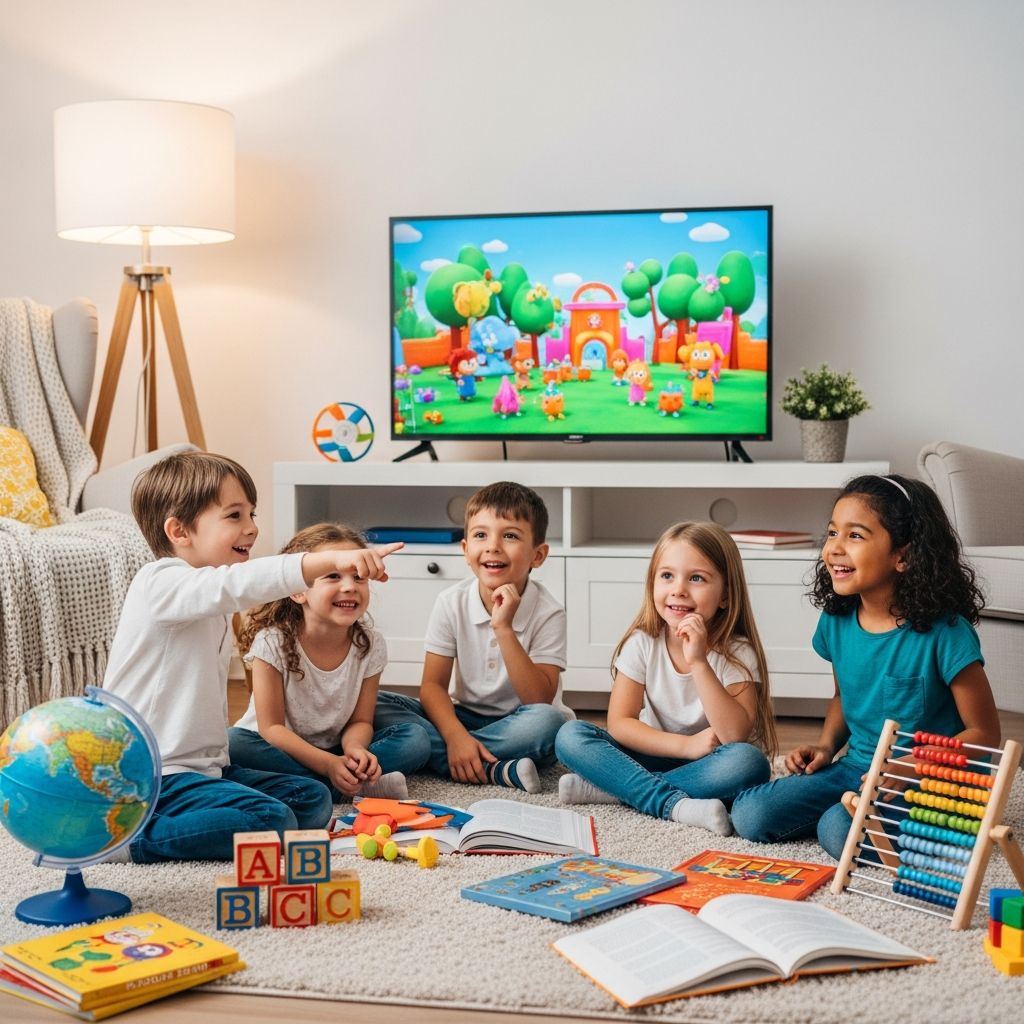
Educational television offers a powerful way to combine entertainment with learning, helping children develop essential skills like problem-solving, empathy, and scientific curiosity. These programs turn passive viewing into active discovery, covering topics from basic counting to global cultures. Parents can select shows based on age groups to ensure content matches developmental stages, making screen time a valuable tool for growth.
Building Foundations: Shows for Toddlers and Preschoolers (Ages 2-5)
For the youngest viewers, programs emphasize simple concepts through songs, colors, and repetition. These series introduce numbers, letters, and social norms in bite-sized episodes that hold short attention spans.
- Numberblocks: Colorful block characters come alive to explore counting, addition, and patterns. Kids master numbers up to 100 via catchy tunes and visuals, reinforcing math basics without feeling like lessons.
- Sesame Street: Iconic puppets teach reading, math, and kindness. Episodes blend humor with real-world skills, ideal for building empathy and early literacy. Recommended on HBO Max and PBS Kids.
- Paprika: Animated adventures use music to teach counting and daily routines. Interactive elements encourage kids to join in, boosting engagement and retention.
These shows prioritize repetition and positivity, aligning with early childhood education principles that stress play-based learning.
Sparking Curiosity: Programs for Early Elementary (Ages 4-7)
As children grow, they crave stories with adventure. Shows in this category dive into science, reading, and exploration, fostering questioning minds.
- Super Why!: Superheroes enter books to solve problems by changing stories. It hones reading, spelling, and critical thinking through fairy tale twists. Available on PBS Kids and Amazon Prime.
- Curious George: The mischievous monkey’s mishaps teach math, science, and perseverance. Each episode models curiosity as a tool for discovery. Stream on Peacock and Hulu.
- Earth to Luna: Siblings investigate natural phenomena, from stars to shadows. It promotes scientific inquiry and learning from errors.
- The Cat in the Hat Knows a Lot About That!: Dr. Seuss’s feline guides explorations in nature and social scenarios, blending fun with facts. On Netflix and PBS Kids.
| Show | Key Skills | Platforms |
|---|---|---|
| Super Why! | Reading, Problem-Solving | PBS Kids, Prime |
| Curious George | Math, Science | Peacock, Hulu |
| Earth to Luna | Scientific Method | Various |
Such content mirrors preschool curricula, encouraging questions like ‘Why does this happen?’ to build lifelong learners.
Diving Deeper: Ocean and Animal Adventures (Ages 5-8)
Nature-themed series captivate with real-world wonders, teaching biology and environmental awareness through heroic tales.
- Octonauts: Underwater explorers rescue sea creatures, introducing marine life and habitats. It sparks interest in ocean conservation. Netflix exclusive.
- Wild Kratts: Brothers animate animal powers to highlight survival skills. Blends live-action with cartoons for immersive wildlife education. PBS Kids and Prime Video.
- Robocar Poli: Rescue vehicles tackle emergencies, emphasizing safety, teamwork, and quick thinking.
These programs use animation to simplify complex ecosystems, helping kids connect classroom lessons to the planet’s diversity.
Questioning the World: Inquiry-Based Learning (Ages 5-9)
Shows that answer ‘big questions’ demystify everyday mysteries, nurturing inquisitive spirits.
- Ask the StoryBots: Adorable bots explain phenomena like rainbows or dinosaurs with songs and facts. Perfect for satisfying ‘why’ queries. On Amazon Prime.
- Mouk: A monkey-diplomat travels globally, showcasing cultures and empathy.
- Louie: Wordless episodes teach drawing and creativity by animating doodles into stories.
By addressing child-led questions, these series validate curiosity, a core element of cognitive development.
Science Spectacles: Experiments and Exploration (Ages 6-10)
For budding scientists, these emphasize experimentation and wonder.
- The Magic School Bus: Ms. Frizzle’s class shrinks or space-travels to explore physics and biology. Instills awe for the natural world. Netflix.
- Milang: Bunny and chick promote kindness and self-acceptance in a pastel realm.
Episodes often end with real experiments kids can replicate at home, bridging TV to hands-on play.
Global and Critical Thinkers: Older Kids (Ages 8+)
Tweens benefit from sophisticated narratives tackling geography, history, and logic.
- Carmen Sandiego (2019): Spy adventures teach world geography and cultures. Disney+.
- MythBusters: Hosts test urban legends with science, promoting skepticism and evidence.
- Super Geek Heroes: Heroes embody learning domains like math and arts.
These encourage analytical skills vital for school and beyond.
Why Educational TV Works: Benefits Backed by Research
Studies from the American Academy of Pediatrics highlight quality programming’s role in vocabulary growth and prosocial behavior when limited to 1-2 hours daily. Programs like these align with frameworks from the Early Years Foundation Stage, covering holistic development. Parents report improved retention of facts, as seen in Wild Kratts aiding animal studies.
Choosing the Right Show: Age and Platform Guide
Match content to maturity: vivid animation for young ones, nuanced plots for older. Platforms vary—PBS Kids offers free access, Netflix bundles families.
| Age Group | Focus Areas | Top Picks |
|---|---|---|
| 2-5 | Basics, Songs | Numberblocks, Sesame Street |
| 4-7 | Science, Reading | Super Why, Octonauts |
| 8+ | Geography, Myths | Carmen Sandiego, MythBusters |
Frequently Asked Questions
What makes a TV show educational for kids?
Educational shows integrate deliberate teaching moments, like math puzzles or social lessons, with engaging stories to promote active learning over mere entertainment.
Are these shows available on free platforms?
Many, like PBS Kids content, stream free; others require subscriptions such as Netflix or Prime.
How much screen time is okay with educational TV?
Guidelines suggest 1 hour daily for ages 2-5, focusing on interactive, high-quality content to maximize benefits.
Can these shows replace books or play?
No, they complement; pair viewing with discussions or activities to reinforce lessons.
Which show for reluctant learners?
Wild Kratts or Magic School Bus—adventure hooks them into science naturally.
Integrate these shows thoughtfully to enrich family routines, sparking dialogues that extend learning.
References
- The Top 15 Educational TV Shows for Kids of All Ages — Autism Vision Co. 2023. https://www.autismvisionco.org/post/the-top-15-educational-tv-shows-for-kids-of-all-ages
- 26 Best Learning TV Shows For Kids To Watch (0 to 8 years old) — Kids Bee TV. 2023. https://kidsbeetv.com/blog/tops-picks/learning-tv-shows-for-kids/
- 20 Educational Shows that Your Kids Will Love! — The Lead Learner Mom. 2023. https://theleadlearnermom.com/educational-shows-that-your-kids-will-love/