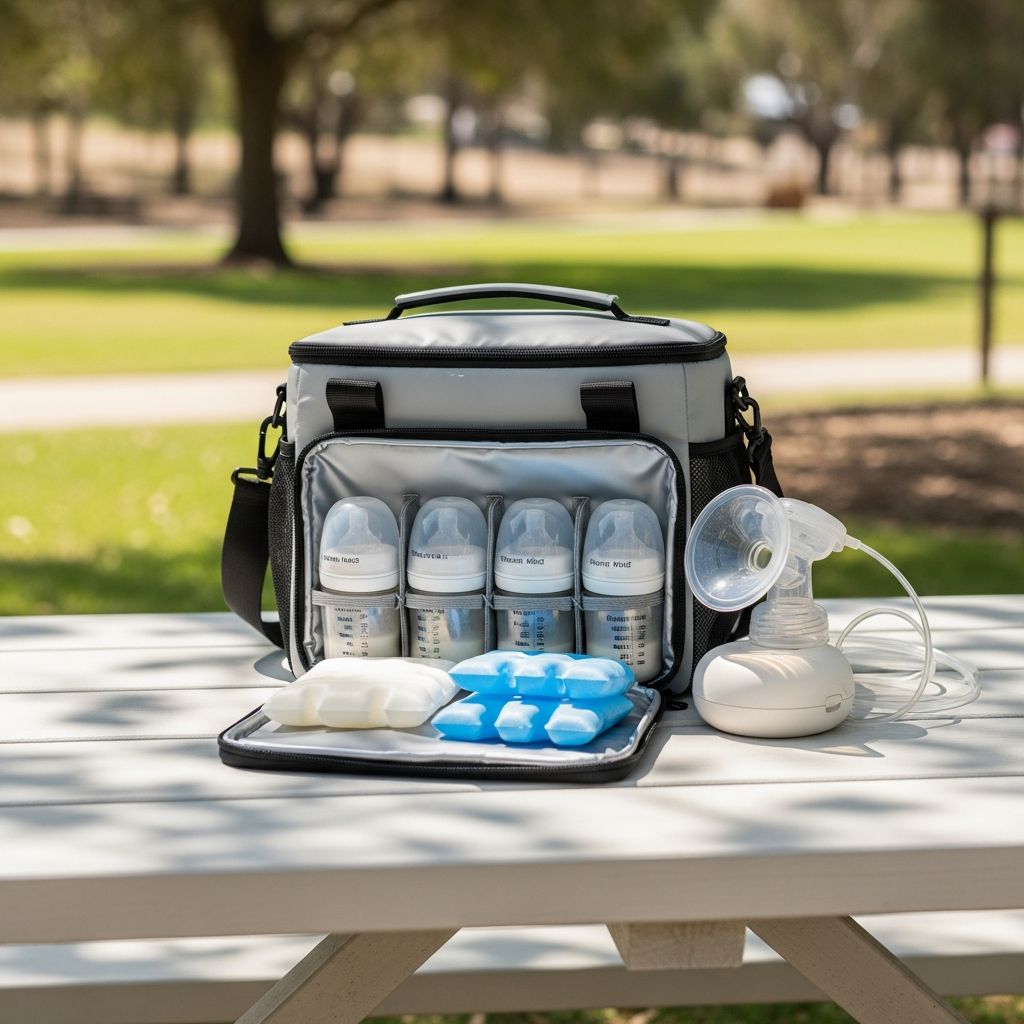
For many breastfeeding parents, pumping away from home is a daily reality. Whether you are heading back to work, traveling, or simply out for the day, a reliable breast milk cooler can be the difference between safely stored milk and a spoiled stash. This guide explains how coolers work, how to choose one that fits your lifestyle, and how to use it safely based on evidence-based breast milk storage guidelines.
Why Breast Milk Coolers Matter
Freshly expressed breast milk is a valuable resource, providing antibodies, hormones, and nutrients tailored to your baby’s needs. Protecting that milk during transport is essential for both safety and convenience.
- Temperature control: Breast milk needs to stay within safe temperature ranges to slow bacterial growth and preserve nutrients.
- Mobility: A cooler lets you pump at work, during travel, or on day trips without relying on a refrigerator.
- Organization: Dedicated space for milk, ice packs, and bottles reduces spills and stress.
- Privacy: Discreet coolers can help you transport milk without drawing extra attention in public or at the office.
Health organizations such as the Centers for Disease Control and Prevention (CDC) and the American Academy of Pediatrics (AAP) emphasize the importance of keeping expressed milk chilled when it will not be used immediately, to minimize bacterial growth and food-borne illness risk.
How Long Can Breast Milk Stay Cold in a Cooler?
The exact time depends on several factors: insulation quality, amount and type of ice, how often the cooler is opened, and the ambient temperature. However, safety guidance is grounded in breast milk storage research.
- The CDC notes that freshly expressed milk can be stored in an insulated cooler with frozen ice packs for about 24 hours at or below refrigerator-like temperatures.
- After removing milk from the cooler, it should be used, refrigerated, or frozen promptly, not left sitting at room temperature for extended periods.
- If you are unsure how cold the cooler has stayed (for example, after long travel in heat), use a food thermometer; milk should be kept at or below about 4 °C / 39 °F, similar to refrigerator recommendations.
These timelines assume the cooler is properly packed and not opened frequently. When in doubt, follow the rule: when safety is uncertain, discard the milk.
Types of Breast Milk Coolers
Modern products fall into several broad categories. Each has different strengths depending on how you pump and travel.
1. Traditional Insulated Cooler Bags
These look like small lunch bags with foam or reflective insulation and typically use separate ice packs.
- Capacity: Often fits 3–6 small bottles or several storage bags.
- Pros: Affordable, easy to find, simple to use with standard ice packs.
- Cons: Bulkier than bottle-style chillers; performance depends heavily on the quality and number of ice packs.
2. Built-In Freezable Coolers
These are soft or semi-rigid bags whose walls contain freezable gel. The entire bag goes into the freezer before use.
- Pros: No separate ice packs to track; usually keeps bottles snug and upright.
- Cons: Must be fully refrozen between uses; outer surfaces can become very cold to the touch; fixed capacity.
3. Bottle-Style Milk Chillers
Milk chillers are insulated containers (often stainless steel) designed to keep expressed milk cold for long periods. Many use a two-chamber system, where ice or a frozen core chills milk stored in the outer chamber.
- Pros: Compact and discreet; excellent temperature control; can sometimes function as both storage container and feeding bottle.
- Cons: Typically hold fewer separate feedings (more like one large batch); may be more expensive than basic cooler bags.
4. Multi-Purpose Travel Systems
Some designs combine pumping, storage, and feeding functionality in one system. For example, certain stainless-steel chillers can be pumped into directly using compatible pump flanges, then later used as a baby bottle or as a regular insulated water bottle beyond the breastfeeding period.
- Pros: Reduces the number of containers and transfers; useful long after weaning.
- Cons: Higher initial cost; learning curve to use all features correctly.
Key Features to Consider When Choosing a Cooler
When comparing options, think through your daily routine, pumping frequency, and where you will be storing or carrying milk.
| Feature | Why It Matters | Questions to Ask |
|---|---|---|
| Storage capacity | Must hold enough milk for your longest day away. | How many ounces or bottles do I pump per outing? |
| Bottle vs bag fit | Different shapes and heights may or may not fit upright. | Does it fit my preferred bottle brand or storage bags? |
| Insulation quality | Better insulation keeps milk at safe temperatures longer. | Is it double-walled or thickly insulated? Are there lab tests or user data? |
| Ice system | Affects convenience, reusability, and cooling duration. | Does it use loose ice, gel packs, or a freezable core? How long does it stay cold? |
| Leak protection | Prevents spills in your bag or car. | Does it close securely? Are seams and zippers well made? |
| Portability & design | Comfort and discretion during daily commuting or travel. | Is there a handle or strap? Does it fit inside my work bag or diaper bag? |
| Cleaning & materials | Food-safe materials and easy cleaning help prevent contamination. | Are interiors wipeable or washable? Are plastics BPA-free? |
How to Pack a Breast Milk Cooler Safely
Even the best cooler cannot compensate for poor packing practices. These steps help maximize performance and safety.
Step-by-Step Packing Tips
- Pre-chill your supplies
- Whenever possible, refrigerate expressed milk before placing it in the cooler.
- Pre-chill the cooler and ice packs (or freezable walls) so they start at the lowest possible temperature.
- Use enough ice or frozen elements
- Fill designated ice chambers fully or use the manufacturer’s recommended number of ice packs.
- A higher ratio of frozen elements to milk volume generally keeps temperatures stable for longer.
- Keep bottles upright and sealed
- Ensure all lids are tightly closed to prevent leaks and contamination.
- If your cooler lacks internal dividers, consider adding a small towel or cloth to brace bottles upright.
- Minimize opening the cooler
- Each time you open the bag, warm air enters and cooling efficiency drops.
- Group pumping sessions, if possible, to limit how often you access the cooler.
- Monitor duration and temperature
- Note the time you pack the cooler so you know when you’re approaching the 24-hour guideline.
- Consider using a small fridge thermometer to confirm that internal temperatures remain in the safe range.
Breast Milk Storage Guidelines You Should Know
Coolers are only one part of safe milk handling. Major health authorities provide evidence-based timelines for storing expressed milk.
| Location | Approximate Temperature | Recommended Time Limit* |
|---|---|---|
| Room temperature (clean conditions) | Up to about 25 °C / 77 °F | About 4 hours (some sources allow slightly longer in very clean conditions) |
| Insulated cooler with ice packs | Cold, near refrigerator temps | Up to about 24 hours |
| Refrigerator | 4 °C / 39 °F or colder | Up to 4 days |
| Freezer compartment inside fridge | Varies | About 2 weeks |
| Separate freezer attached to fridge | −18 °C / 0 °F | Up to 6 months (12 months acceptable, but quality may decline) |
*Adapted from guidance by the CDC and Academy of Breastfeeding Medicine; always consult your child’s health care provider for individual recommendations.
Practical Scenarios: Matching Coolers to Your Lifestyle
Working Outside the Home
If you are pumping at work and commuting back home, think through a full day from your first pump session to when the milk reaches the fridge or freezer.
- Best fit: A mid-sized insulated cooler bag or bottle-style chiller that fits in your work tote.
- Tips:
- Store milk in the workplace refrigerator during your shift when possible; transfer to the cooler only for your commute.
- Label bottles with the date and time of expression to help rotate your stash.
Traveling by Car, Train, or Bus
- Best fit: Higher-capacity coolers or chillers that can handle longer hours and temperature fluctuations.
- Tips:
- Pre-freeze extra ice packs and keep them in a secondary cooler so you can swap them in during long trips.
- If staying in a hotel, confirm in advance that a refrigerator with a freezer compartment is available.
Air Travel and Airport Days
In many countries, security agencies allow breast milk to be carried in cabin baggage even if volumes exceed typical liquid limits, particularly when traveling with an infant. However, requirements can vary, so always check current regulations from the relevant aviation authority and airline before flying.
- Best fit: Compact cooler bags or bottle-style chillers that fit in a carry-on and are easy to open for security screening.
- Tips:
- Keep milk in clearly labeled containers and be prepared to declare it at security.
- Consider using gel packs that comply with current aviation rules, or rely mainly on insulated containers for shorter flights.
Short Errands and Day Trips
- Best fit: Smaller lunchbox-style coolers or narrow milk chillers that tuck into a diaper bag.
- Tips:
- For very short outings, you may be able to rely on fresh milk at room temperature within safe time limits.
- For longer outings in hot weather, always pack an ice source.
Hygiene, Cleaning, and Safety Tips
Good hygiene helps protect your baby from infections and supports the nutritional quality of milk. The World Health Organization and national health bodies stress meticulous hand hygiene and careful cleaning of milk-contact surfaces.
- Wash hands thoroughly with soap and water before pumping, handling bottles, or packing milk.
- Clean pump parts and storage containers according to manufacturer instructions, ideally after each use.
- Wipe the cooler interior regularly with hot, soapy water or a food-safe disinfectant; allow it to dry fully to prevent mold.
- Check for odors or residue inside the cooler and replace worn or cracked liners that are hard to clean.
- Never refreeze thawed milk; once milk is fully thawed, most guidelines recommend using it within 24 hours if kept in the refrigerator.
Frequently Asked Questions (FAQs)
Do I need a special breast milk cooler, or can I use a regular lunch box?
You can use any well-insulated food-safe cooler that maintains safe temperatures with ice packs. However, coolers designed specifically for breast milk often have features like shaped ice packs, bottle dividers, and sizes tailored to common milk bottle heights, which can make daily use easier and more secure.
How can I tell if the cooler kept the milk cold enough?
The most reliable method is to use a small refrigerator thermometer placed inside the cooler. Aim for temperatures at or below about 4 °C / 39 °F, similar to a household refrigerator, as recommended in breast milk storage guidelines. If the milk feels warm or you suspect it was above this range for several hours, it is safer to discard it.
Can I store milk from multiple pumping sessions together in one container?
Yes, but cool the freshly pumped milk first before combining it with already chilled or frozen milk. Combining warm milk with cold can raise the overall temperature and shorten safe storage time. Let new milk cool in the fridge, then add it to the existing batch.
How often should I replace my cooler or ice packs?
Replace them if you notice cracks, leaks, damaged seals, persistent odors that do not wash out, or if the cooler no longer keeps contents cold for the expected time. Over time, insulation can compress and gel packs can lose effectiveness, especially with heavy daily use.
Is stainless steel better than soft-sided fabric coolers?
Neither material is automatically better. Stainless steel bottle-style chillers often offer excellent insulation and durability, while soft-sided coolers may be lighter and hold multiple bottles. The best choice depends on whether you prioritize capacity, compactness, or multi-function use.
References
- Proper Storage and Preparation of Breast Milk — Centers for Disease Control and Prevention. 2024-02-12. https://www.cdc.gov/breastfeeding/recommendations/handling_breastmilk.htm
- Breastfeeding and Breast Milk: What Parents Need to Know — American Academy of Pediatrics. 2022-07-01. https://www.healthychildren.org/English/ages-stages/baby/breastfeeding/Pages/Storage-and-Preparation-of-Breast-Milk.aspx
- ABM Clinical Protocol #8: Human Milk Storage Information for Home Use for Full-Term Infants — Academy of Breastfeeding Medicine. 2017-03-01. https://www.bfmed.org/assets/DOCUMENTS/PROTOCOLS/8-human-milk-storage-protocol-english.pdf
- Milk Chillers: Ceres Chill vs Boon Frosh — Karing for Postpartum. 2023-08-10. https://www.karingforpostpartum.com/blog/milk-chillers-ceres-chill-vs-boon-frosh
- Infant and Young Child Feeding: Guiding Principles — World Health Organization. 2021-05-01. https://www.who.int/publications/i/item/9789240007794