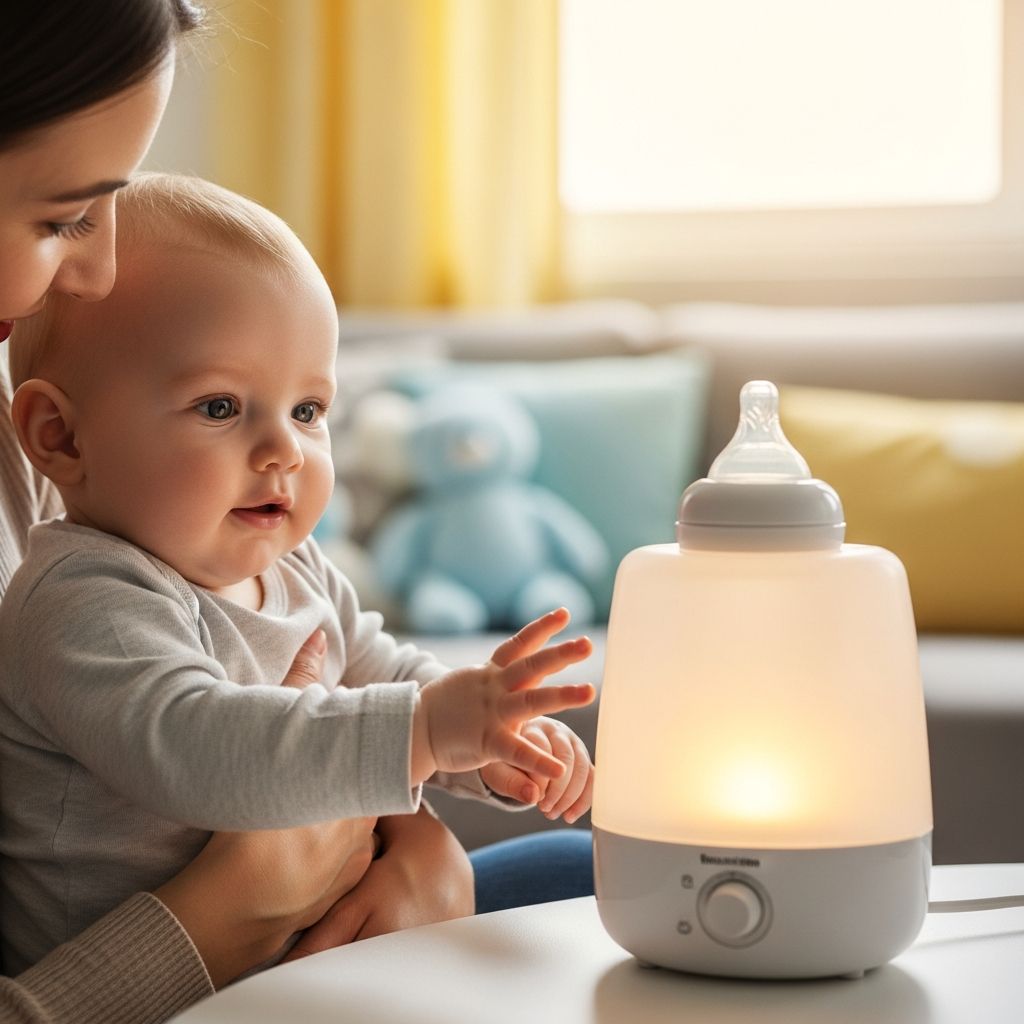
When a hungry baby is crying, a bottle warmer can turn a frantic few minutes into a calm, predictable routine. The right device heats milk evenly, keeps nutrients intact, and saves you from juggling hot water, timers, and guesswork in the middle of the night.
This guide explains how bottle warmers work, the different types available, and what features genuinely matter. By the end, you will know exactly what to look for based on your baby’s age, feeding style, and your family’s daily routine.
Why Use a Bottle Warmer at All?
Some babies will happily drink cold milk, but many prefer feeds that are close to body temperature. A bottle warmer offers several advantages over running bottles under the tap or heating a mug of water in the microwave.
- Consistency: Designed to bring milk to a predictable temperature, reducing the risk of hot spots.
- Convenience: Frees your hands for burping, diaper changes, or comforting your baby while the milk warms.
- Speed: Many models warm a bottle in just a few minutes, much faster than a bowl of warm water.
- Support for breast milk: Gentle warming options help preserve more nutrients compared with very high heat.
Understanding the Main Types of Bottle Warmers
Not all warmers heat in the same way. The method a warmer uses can affect how fast it works, how evenly it heats, and whether it is a good match for breast milk, formula, or both.
Water Bath (Hot Water) Warmers
Water bath warmers gently heat the bottle by surrounding it with warm or hot water in a small chamber. The bottle sits in the water, and the milk temperature rises gradually.
- Generally very gentle, making them a good fit for breast milk.
- Less likely to overheat if left on for a short time after the cycle ends.
- Often slightly slower than steam models but more forgiving.
Steam Warmers
Steam warmers heat a small amount of water to produce steam that rapidly warms the bottle. They are usually among the fastest options, but they require closer attention.
- Heat bottles quickly, which can be helpful for night feeds or fussy babies.
- May be more prone to overheating if the bottle is left in too long.
- Better suited to formula or baby food when using high-heat cycles.
Hybrid and Multi-Mode Warmers
Some devices let you choose between a rapid steam option and a gentler water bath mode, or even add extra features such as sterilizing or defrosting.
- Flexible: one device for fast warming, gentle warming, and sometimes sterilizing.
- Useful if you switch between breast milk and formula or share bottles between caregivers.
- Controls can be more complex, so there may be a learning curve.
Portable and Travel Warmers
Portable warmers are designed for life outside the kitchen. They may be battery powered, USB-charged, or based on an insulated flask filled with hot water.
- Helpful for daycare drop-offs, car trips, and travel days when access to a kitchen is limited.
- Often work with a smaller range of bottle shapes or require an adapter ring.
- Some are slower than plug-in models but trade speed for portability.
Countertop All-in-One Units
These larger devices sit on the counter and often combine several functions: warming, sterilizing, defrosting, or even maintaining bottles at a set temperature for a period of time.
- Ideal for families who bottle-feed frequently throughout the day.
- May handle more than one bottle or a bottle plus a food jar at once.
- Take up more counter space and may cost more up front.
Key Features That Actually Matter
Specifications and marketing language can be overwhelming. Focus on a few core features that genuinely impact daily use and your baby’s safety.
Precision Temperature Control
The ideal bottle temperature is close to body temperature, often around the mid-30s Celsius or mid-90s Fahrenheit. Look for warmers that emphasize accuracy over raw speed.
- A clear temperature indicator or digital display can reduce guesswork.
- Automatic shut-off when the cycle is done helps prevent overheating.
- “Keep warm” modes should hold a safe, stable temperature rather than continuing to rise.
Compatibility with Bottles and Bags
Not every warmer fits every bottle shape, especially wide-neck, angled, or glass designs. If you use breast milk storage bags, check whether the warmer can handle them safely.
- Confirm that your preferred bottle brand and size physically fits the basket or chamber.
- Consider height and width: tall glass bottles and short, squat bottles may sit differently.
- If you rely heavily on breast milk bags, look for a basket or insert that supports them upright.
Ease of Use in the Dark
Night feeds are when bottle warmers earn their place. Simple controls can make a bigger difference than a long list of advanced settings.
- Large, clearly labeled buttons are easier to use when you are half-asleep.
- Audible beeps or subtle lights signal when the milk is ready without constant checking.
- Preset programs (for example, “room temperature 4 oz” or “refrigerated 6 oz”) can shorten setup time.
Cleaning and Maintenance
A warmer that is hard to clean will quickly become a source of frustration. Mineral buildup, spilled milk, and standing water can all affect performance and hygiene.
- Removable baskets or inserts are easier to rinse and dry between uses.
- A smooth water chamber without tiny crevices helps prevent residue buildup.
- Check whether the manufacturer recommends regular descaling, especially in areas with hard water.
Choosing Based on Your Feeding Style
The “best” bottle warmer for one family may not be right for another. Think first about how often you bottle-feed, what you feed, and who will be using the warmer.
| Feeding Situation | What Matters Most | Good Warmer Types |
|---|---|---|
| Mainly breast milk from fridge or freezer | Gentle, even heating; temperature precision | Water bath or hybrid warmers with gentle mode |
| Frequent formula bottles, day and night | Speed, easy controls, repeatable settings | Steam or multi-mode warmers with presets |
| Occasional bottles; baby often drinks room-temp | Simplicity, small footprint, budget-friendly | Basic plug-in or flask-style travel warmer |
| On-the-go feeding (cars, travel, daycare) | Portability, battery/USB power, spill resistance | Portable or USB-powered warmers; insulated flasks |
| Twins or multiple daily bottle users | Capacity, reliability, multi-bottle support | Countertop multi-function warmers |
Safety Tips for Warming Milk
Safe feeding depends as much on how you use the warmer as on the design itself. Take a few simple precautions to avoid burns, overheating, or nutrient loss in breast milk.
- Always swirl, never shake hard: Gentle swirling helps distribute heat evenly and mix any cream that has separated without introducing too many bubbles.
- Test before feeding: Drip a few drops on the inside of your wrist; it should feel warm, not hot.
- Avoid repeated reheating: Once milk has been warmed and offered to the baby, do not repeatedly cool and re-warm the same bottle.
- Follow maximum times: For breast milk in particular, avoid leaving it on “keep warm” for extended periods.
- Use the right water level: Too much or too little water can cause unpredictable temperatures.
Common Mistakes to Avoid
Many frustrations with bottle warmers come from small, easily avoidable missteps. Knowing them ahead of time can save both time and tears.
- Guessing instead of timing: Running a warmer “until it feels right” increases the risk of overheating.
- Ignoring bottle volume: A 2-ounce bottle and an 8-ounce bottle cannot use the same settings.
- Not accounting for starting temperature: Frozen milk needs more time and often a different program than refrigerated or room-temperature milk.
- Letting residue build up: Skipping regular cleaning can lead to inconsistent heating and unpleasant odors.
Budget, Space, and Lifestyle Considerations
Once you know what type of warmer suits your feeding style, narrow down your options further by thinking through cost, kitchen space, and your daily rhythm.
- Budget: Simple warmers are often very affordable, while multifunction units cost more but may replace separate gadgets like sterilizers.
- Counter space: Measure your space, especially under cabinets, to ensure tall or lidded models fit comfortably.
- Who uses it: Grandparents, babysitters, and older siblings may prefer devices with minimal buttons and clear instructions.
- Future-proofing: If planning more children, investing in a sturdy multi-mode warmer can pay off over several years.
Step-by-Step: Using a Bottle Warmer Effectively
Every model is different, so always check the manual. However, most plug-in warmers follow a similar basic process.
- Fill the chamber with the recommended amount of clean water.
- Place the assembled bottle or approved milk bag in the basket or holder.
- Select the program or time based on bottle size and starting temperature (frozen, refrigerated, or room temperature).
- Start the cycle and wait for the signal that warming is complete.
- Carefully remove the bottle, swirl gently, and test a few drops on your wrist.
- Feed your baby promptly; avoid leaving warmed milk sitting for long periods.
Frequently Asked Questions About Bottle Warmers
Do I really need a bottle warmer?
Not every family needs one, especially if a baby accepts cold or room-temperature feeds. However, if your baby prefers warm milk, or you are often preparing bottles at night, a warmer can dramatically simplify and speed up the process, making feeds calmer for everyone.
Are bottle warmers safe for breast milk?
Yes, as long as you use them correctly and avoid very high temperatures. Choose settings that gently warm the milk and avoid prolonged heating or boiling. Many parents prefer water bath or gentle modes specifically designed to protect the delicate components in breast milk.
Can I use tap water in the warmer?
Most manufacturers allow tap water, but mineral deposits can build up faster in hard-water areas. Using filtered or distilled water can reduce scale and make cleaning easier, especially if your tap water leaves white residue in kettles or coffee makers.
How long does it take to warm a bottle?
The time depends on several factors: bottle size, starting temperature of the milk, warmer type, and chosen program. Small room-temperature bottles might be ready in a couple of minutes, while larger frozen portions of breast milk can take significantly longer.
Can I warm baby food jars in a bottle warmer?
Some models are specifically designed to handle baby food jars or pouches in addition to bottles. Always verify that your warmer’s basket or tray supports jars safely and that the manufacturer approves this use before trying it.
Do warmers work with glass bottles?
Many do, but always confirm with both the bottle and warmer manufacturers. Glass can be heavier and taller than plastic, so the fit and heating time may differ. Avoid sudden temperature shocks, such as moving a very cold glass bottle directly into extremely hot water.
Is a travel warmer enough on its own?
For families who are rarely home or who travel frequently, a portable warmer may be the main solution. However, travel models can be slower or more limited in capacity. Many parents keep a plug-in warmer in the kitchen and a lightweight option in the diaper bag or car.
Final Thoughts: Matching the Warmer to Your World
The best bottle warmer is the one that fits smoothly into your actual life: your kitchen layout, your feeding schedule, and your baby’s preferences. Once you know whether gentle warming, speed, portability, or multitasking is your priority, the right choice becomes much clearer.
Think of a bottle warmer as part of your overall feeding system, alongside your pump, bottles, and storage bags. When those pieces work well together, feeds become predictable, calm, and much less stressful—leaving more room for the moments that really matter, like eye contact, cuddles, and sleepy snuggles after the last bottle of the day.