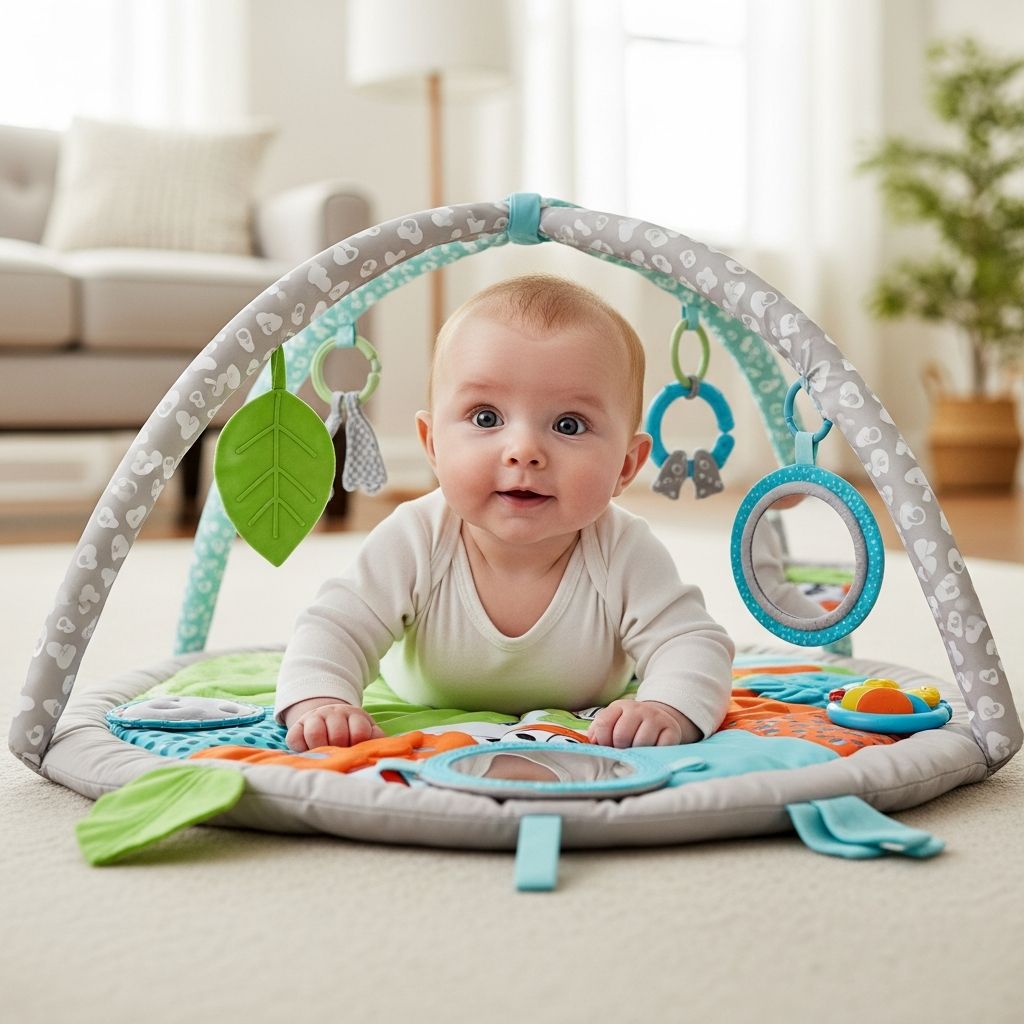
Tummy time mats do more than decorate your living room; they create a safe, comfortable space that encourages your baby to lift their head, build strength, and explore the world from a brand-new angle. When chosen thoughtfully, the right mat can turn tummy time from a struggle into a daily ritual your baby actually enjoys.
This guide walks through why tummy time matters, what to look for in a mat, how to match features to your lifestyle, and practical tips for getting the most out of your purchase.
Why Tummy Time Matters So Much
Before diving into specific mat features, it helps to understand what tummy time does for your baby’s body and brain. Tummy time simply means placing your baby on their stomach while awake and supervised, usually on the floor.
- Strength building: Pushing up from the floor helps develop neck, shoulder, arm, and core muscles that your baby needs for rolling, sitting, crawling, and eventually walking.
- Head shape support: Time off the back of the head reduces constant pressure on one spot, which can help lower the risk of developing flat areas on the back of the skull.
- Motor skill practice: Reaching for toys, shifting weight, and turning side to side all start on the tummy and lay the groundwork for later gross motor milestones.
- Sensory and visual development: On their belly, babies see the room differently, track objects at eye level, and feel new textures under their hands and body.
Because tummy time is recommended from the newborn stage onward, a dedicated mat quickly becomes one of the hardest-working pieces of baby gear in your home.
Key Features to Look for in a Tummy Time Mat
Not all mats are created equal. Some are basic padded squares, while others are full activity centers. Focusing on a few core features will help you choose something that’s safe, comfortable, and realistic for daily use.
1. Safety and Materials
Babies spend a lot of time with their faces, hands, and even mouths pressed against their play surface, so material quality matters. Whenever possible, choose mats made from materials that are free from questionable chemicals and dyes.
- Non-toxic construction: Look for mats that advertise being free from PVC, BPA, phthalates, and heavy metals. Certifications or third-party testing are a bonus.
- Secure stitching and seams: Avoid loose threads, exposed foam, or peeling edges that could become choking hazards over time.
- Non-slip backing: A grippy underside helps prevent the mat from sliding on hardwood or tile when your baby pushes and kicks.
- Breathability: For fabric or foam mats, breathable layers help prevent overheating during longer play sessions.
2. Firmness and Cushioning
It is tempting to pick the plushest mat you can find, but very soft surfaces can actually make it harder for babies to push up and stabilize themselves. Aim for a supportive balance.
- Firm enough for pushing up: Your baby’s hands should not sink deeply into the mat when they bear weight.
- Soft enough for comfort: There should still be enough padding to protect from bumps and to make the floor feel inviting.
- Consistent thickness: Mats that are even all the way across give your baby predictable feedback when moving and rolling.
3. Size and Shape
Size influences not only how long the mat will last but also where you can set it up. A tiny mat looks adorable, but your baby may grow out of it in a matter of months.
- Room to grow: Choose a mat wide enough for rolling to both sides and long enough for your baby’s full body plus some extra space.
- Fits your home: Measure your preferred play area, especially if it shares space with a living room rug or coffee table.
- Shape considerations: Rectangles fit easily into corners, while round mats can soften the look of a room and invite play from multiple angles.
4. Ease of Cleaning
Spit-up, drool, diaper leaks, and snack crumbs are all part of the baby stage. A mat that is difficult to wash will either stay dirty or start to feel like a burden.
- Machine-washable covers: Removable covers you can toss in the wash save time and hassle.
- Wipe-clean surfaces: For foam or waterproof mats, check that the surface is smooth and can be cleaned quickly with a cloth.
- Drying time: Thick mats that take days to dry after washing can leave you without a play space just when you need it most.
5. Sensory and Developmental Features
Engaging features can transform tummy time from something your baby tolerates into an activity they actively enjoy. The key is to balance stimulation with calm, especially for younger infants.
- High-contrast patterns: Bold black-and-white or strong color contrasts are easier for newborns to see and can capture early interest.
- Textures and crinkles: Different fabrics, soft ridges, and gentle crinkle sounds encourage exploration with hands and fingers.
- Mirrors and removable toys: A safe baby mirror or a few simple toys placed just out of reach can motivate lifting the head and reaching forward.
- Modular layout: Features you can move or remove let you adapt the mat as your baby grows more active and easily overstimulated.
Common Types of Tummy Time Mats
Tummy time mats come in several broad categories, each with its own strengths. Understanding the main types will help you match a mat to your baby’s age and your living situation.
| Type of Mat | Best For | Main Advantages | Possible Drawbacks |
|---|---|---|---|
| Simple padded fabric mat | Newborns and small spaces | Lightweight, portable, often machine-washable, gentle on skin | May be outgrown quickly, fewer built-in activities |
| Foam tile or foldable mat | Families using a shared family room or playroom | Covers a large area, cushioned for older babies, often reversible | Can be bulky, some styles harder to deep clean |
| Activity gym with arches | Parents who want toys for back-lying and tummy time | Includes hanging toys, mirrors, and textures in one set | More visually busy, can overwhelm some babies, takes up more space |
| Water-filled tummy mat | Short, supervised sessions with babies who dislike regular mats | Unique squishy feel, moving shapes inside keep baby interested | Risk of leaks if punctured, usually smaller play area |
| Organic or natural fiber mat | Families prioritizing eco-friendly or low-chemical products | Natural materials, often breathable and aesthetically simple | May be pricier and require gentler cleaning methods |
Matching a Tummy Time Mat to Your Lifestyle
The “best” mat is the one that fits your daily routine, not just the one with the most features. Thinking through how and where you plan to use the mat can narrow down your choices quickly.
For Apartment Dwellers and Small Spaces
- Choose a mat that folds, rolls, or stacks easily in a closet or under a couch.
- Look for double-duty designs that transition from newborn tummy time area to toddler play rug.
- Consider a neutral pattern that blends with your decor if the mat will live in your main living area.
For Families on the Go
- Lightweight mats with handles or storage bags make it easier to bring tummy time to grandparents’ houses or parks.
- Opt for quick-dry and wipe-clean materials if you plan to use the mat outdoors.
- Look for mats that do not require complex assembly or inflating every time you set them up.
For Homes with Pets or Older Siblings
- Pick a mat that can withstand more frequent washing or disinfecting.
- Consider thicker cushioning to protect against small bumps from energetic siblings.
- Choose designs with limited detachable pieces if your household has curious pets.
Age-by-Age Tips for Using a Tummy Time Mat
The way your baby uses the mat will change over the first year, so it helps to know what to expect at different stages. Every baby develops at their own pace, but these guidelines can help you set up the mat in a developmentally friendly way.
Newborn to About 3 Months
- Start with very short sessions, even a minute or two, several times a day.
- Place a rolled towel or small, firm pillow under the chest (when your pediatrician approves) to make early tummy time more comfortable.
- Keep toys simple: a high-contrast card, a soft rattle, or a baby-safe mirror placed close to baby’s face is usually enough.
About 3 to 6 Months
- Gradually increase tummy time length as your baby tolerates it, aiming for multiple short sessions that add up over the day.
- Introduce toys just out of reach to encourage reaching, pivoting, and mini-push-ups.
- Use the edges of the mat as a target for rolling practice, making sure there is still a soft surface beyond the boundaries.
About 6 Months and Beyond
- As your baby learns to sit, the mat doubles as a cushioned landing zone for inevitable topples.
- Scatter a few small toys around the mat to invite crawling or scooting toward them.
- Consider reconfiguring any arches or hanging toys so they can be used from a seated position.
Safety Guidelines for Tummy Time Mats
Safety comes first, especially when your baby is face-down and working hard. Good safety habits help you relax and allow your baby to explore more freely.
- Always supervise: Tummy time should only happen while an alert adult is present and paying attention.
- Use a firm floor surface: Place the mat on carpet, a rug, or a firm floor rather than on a bed or sofa where your baby may sink or roll into soft surfaces.
- Keep the area clear: Avoid pillows, loose blankets, and stuffed animals that could obstruct breathing.
- Check for wear and tear: Inspect the mat regularly for rips, exposed foam, or leaking seams, especially if it is water-filled.
- Follow age recommendations: Some mats, especially those with small parts, are designed for older babies only.
Getting a Reluctant Baby to Enjoy Tummy Time
Many babies protest when first introduced to tummy time, and that can make parents hesitant to use the mat. Small adjustments can turn those protests into curiosity.
- Stay at eye level: Lie down facing your baby, talk softly, or sing to provide comfort and a familiar face.
- Use your chest as a “transition mat”: Place your baby tummy-down on your chest while you lean back slightly to build strength in a cozy position before moving to the floor.
- Change the scenery: Rotate the mat to different rooms or near a window so your baby has new things to look at.
- Keep sessions short but frequent: Multiple brief attempts usually go better than one long session that ends in tears.
Simple Maintenance Routine for Your Tummy Time Mat
A clean, fresh mat is more inviting for you and your baby. Building a basic care routine will help the mat last longer and stay hygienic.
- Daily spot check: Wipe up small spills and drool spots with a damp cloth or baby-safe wipe.
- Regular deep clean: Follow the manufacturer’s instructions for washing. For fabric mats, this often means a gentle machine wash and air dry; for foam mats, a mild soap solution works well.
- Rotate sides if reversible: Alternating sides can reduce visible wear and give your baby a slightly new visual experience.
- Dry thoroughly: Make sure every layer is completely dry before storing to prevent mold and odors.
Frequently Asked Questions About Tummy Time Mats
1. Do I really need a dedicated tummy time mat?
You can technically place your baby on a clean blanket or rug, but a dedicated mat usually offers better cushioning, more traction, and materials specifically chosen for infant use. It also creates a clear, defined space that signals “playtime” for both you and your baby, which can help with consistency.
2. When should I start using a tummy time mat?
Many pediatric providers encourage starting tummy time within the first days or weeks after birth, for very short periods, as long as your baby is healthy and awake. Beginning with just a minute or two at a time on a well-padded mat helps your baby adjust gradually instead of being overwhelmed.
3. How long should tummy time sessions last?
There is no single rule that works for every baby. A common approach is to aim for several short sessions scattered through the day, gradually building up as your baby becomes stronger and more tolerant. Watch your baby’s cues: fussiness, face-planting without trying to lift, or clear signs of fatigue mean it is time for a break.
4. Can my baby nap on the tummy time mat?
Tummy time mats are designed for supervised play while your baby is awake, not for sleep. If your baby falls asleep on the mat, gently move them to a firm, flat sleep surface on their back and follow current safe sleep recommendations for naps and overnight sleep.
5. What if my baby hates tummy time, even with a nice mat?
Dislike of tummy time is very common, especially in the early weeks. Try varying positions, shortening sessions, and using your own body as part of the setup, such as lying on your back with your baby on your chest. If tummy time remains very difficult or your baby seems unusually uncomfortable, discuss it with your pediatric provider for personalized guidance.
6. How long will we use a tummy time mat?
Most families use a tummy time mat heavily during the first six to nine months, but many mats continue to be useful for older babies and toddlers as cushioned play areas. Choosing a mat with a generous size and neutral design can help it remain part of your home for several years.
Bringing It All Together
A well-chosen tummy time mat supports your baby’s physical development, keeps them comfortable, and makes it easier for you to stick with daily floor play. By prioritizing safe materials, appropriate cushioning, a practical size, easy cleaning, and just the right amount of sensory stimulation, you can create a space that grows with your baby and fits seamlessly into your home and routine.
Most importantly, remember that the mat is only one piece of the experience. Your presence, encouragement, and willingness to get down on the floor alongside your baby are what truly transform tummy time into a meaningful, bonding part of each day.