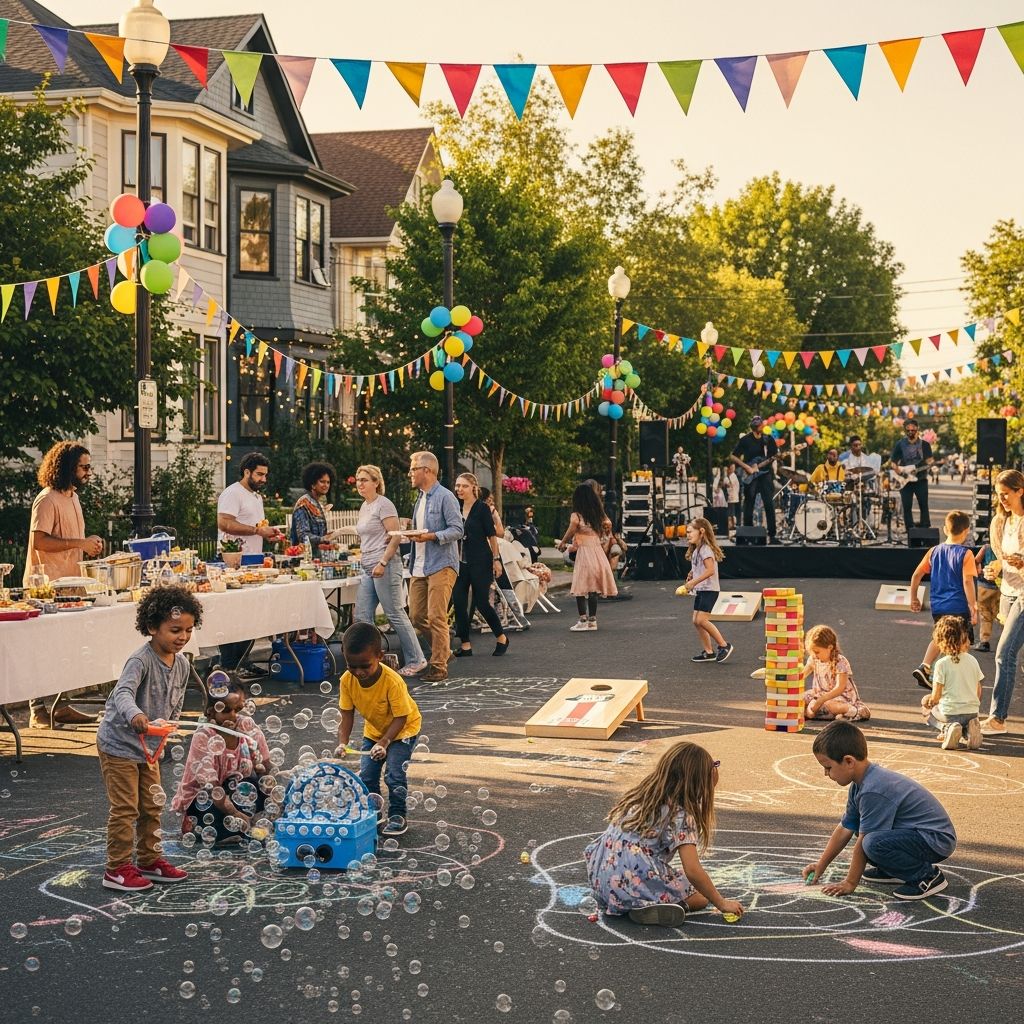
Block parties are about more than food and folding chairs; they are one of the easiest ways to turn neighbors into friends. With the right mix of activities, you can transform an ordinary street into a shared backyard where kids play, adults relax and everyone leaves feeling more connected.
Why Activities Matter More Than Decorations
You do not need elaborate decor or expensive rentals to host a memorable neighborhood gathering. What people remember most is how they felt and who they met, and that comes from doing things together, not just standing around making small talk. Well-chosen activities give shy neighbors an easy way to join in, help kids burn energy and create natural conversation starters for adults.
Thoughtful planning also makes the event feel welcoming to different ages and abilities. By mixing high-energy games with slower, conversation-friendly options, you give everyone permission to participate at their own comfort level while still sharing the same experience.
Planning Your Activity Mix
Before diving into specific ideas, spend a few minutes mapping out the flow of your party. Consider how many families might attend, the age range on your street and how much physical space you actually have. A cul-de-sac, a long straight street and a shared courtyard all lend themselves to different kinds of games and layouts.
As a rule of thumb, aim for a blend of structured and unstructured fun. Plan a few timed “anchor” activities that people can look forward to—like a kids’ parade or a simple tournament—and fill the gaps with ongoing stations where people can drop in and out whenever they like.
Sample Activity Timeline
| Time | Main Focus | Suggested Activities |
|---|---|---|
| Start + 0–30 minutes | Arrivals & mingling | Welcome table, name tags, simple icebreaker bingo |
| 30–90 minutes | Family play window | Yard games, sidewalk chalk zone, craft station |
| 90–150 minutes | Spotlight activities | Parade, relay races, quick talent showcase |
| 150–210 minutes | Chill & chat | Music, trivia, board game corner, dessert potluck |
Low-Prep Games Kids Can Run Themselves
Some of the most successful block party activities are the ones adults only need to set up once and then step away from. Simple, low-prep games keep children engaged, free parents to socialize and require very little equipment beyond what people already own.
Think of these as your background games: they are always available during the party, do not require strict turn-taking and can handle kids wandering in and out without drama.
Sidewalk Challenge Zone
Turn part of the pavement into an ever-changing obstacle course and art space using nothing more than chalk and a few household items.
- Draw balance beams, hopscotch patterns, zig-zag lines and “lava” zones kids must jump over.
- Add quick challenge prompts like “Do 5 star jumps,” “Roar like a dinosaur” or “Walk backwards to the blue star.”
- Mark a separate chalk art gallery where children can create pictures or write positive messages for neighbors to admire as they stroll by.
Backyard Carnival Mini-Games
Instead of renting big attractions, set up a few simple stations that kids can rotate through with minimal supervision. Use recycled materials where possible to keep costs low.
- Bucket toss: Use plastic buckets or storage bins, and provide soft balls or rolled-up socks as “tickets” to throw.
- Sponge bullseye: Place a large target on the driveway and let kids throw wet sponges, perfect for hot days.
- Ring the bottle: Save clean bottles and use glow sticks or plastic bracelets as rings.
Give volunteers a simple scorecard or stamp sheet for kids who enjoy collecting points. At the end, swap points for small, inexpensive prizes or simply celebrate everyone who participated.
Activities That Get Neighbors Talking
Not everyone enjoys racing or loud games, but almost everyone appreciates a chance to feel known. Activities that spark conversation help new residents feel included and long-time neighbors discover what they have in common.
Design these with low social pressure in mind: people should feel welcome to join for five minutes or stay for an hour, without ever being the center of attention if they do not want to.
Neighborhood Story Wall
Set up a long sheet of paper on a fence or tape printer paper onto cardboard to create a pop-up “story wall.” Provide pens and markers and invite people to answer simple prompts.
- Prompt ideas: “My favorite memory on this street…”, “The best thing about our neighborhood…”, “A hidden talent I have…”.
- Encourage kids to draw pictures of their homes, pets or dream parks for the area.
- As the evening goes on, neighbors naturally gather to read and comment, which often leads to deeper conversations.
Interest Swap Corner
Use one table as a casual hub for people to share what they love and what they can offer. This can be as simple or as coordinated as your group prefers.
- Provide index cards where people can write skills or interests: “knows about vegetable gardening,” “can help with basic bike repairs,” “looking for a walking buddy.”
- Let neighbors pin their cards to a board or drop them in labeled jars (e.g., Hobbies, Help Offered, Help Needed).
- During the party, people browse the cards, discover shared interests and often set up future meet-ups.
Big Moments: Parades, Showcases And Friendly Contests
Anchoring your event with one or two bigger moments helps generate excitement and gives families something to plan around. These do not need to be elaborate; the key is to keep them short, high-energy and inclusive so a wide range of people can participate comfortably.
Think of these as your main stage events. Announce them in advance on flyers or messages so children can prepare costumes or props, and remind everyone 10–15 minutes before start time.
Decorated Wheels Parade
Instead of a traditional parade, focus on anything with wheels: bikes, scooters, wagons, strollers and even wheelchairs. This naturally includes a wide range of ages and abilities.
- Provide a decorating station with streamers, ribbons, paper flags and tape so children who arrive unprepared can still join.
- Mark a short loop along the street for participants to ride slowly while neighbors cheer and take photos.
- Offer playful, non-competitive awards like “Most Colorful,” “Coolest Lights” or “Strongest Theme,” making sure everyone gets recognized for something.
Five-Minute Talent Moments
Instead of a long talent show, try several quick “talent moments” scattered throughout the event. This approach prevents boredom and reduces the pressure on performers.
- Use a simple sign-up sheet at the welcome table for people who want to sing, juggle, tell a joke, play an instrument or demonstrate a skill.
- Between larger activities, pause the music and invite one or two people to share for just a couple of minutes.
- Keep the tone light and affirming, cheering for every participant and avoiding strict judging or scoring.
Gentle Neighborhood Challenges
Friendly contests can be fun if they are framed as playful rather than intense. Focus on creativity and participation instead of pure competition.
- Cookie or salsa sampler: instead of a full-scale contest, invite a handful of residents to bring a favorite recipe. Provide tasting cups and let guests drop a token in a jar for their favorite.
- Garden or balcony showcase: ask neighbors to bring a single flower, herb pot or photo of their garden to display. Offer whimsical titles like “Most Unexpected Plant” or “Best Tiny Space Idea.”
- Pet promenade: create a short window where people can stroll with their pets. Focus on safety and comfort, with options for non-judged participation such as “softest ears” or “most relaxed companion.”
Quiet Corners And Inclusive Options
A truly successful block party makes room for residents who prefer calm, predictable activities. Not everyone enjoys crowds or noise, and some neighbors may appreciate having a place to retreat without leaving the event entirely.
Designating a few quieter spots sends a powerful message that everyone belongs, including seniors, neurodivergent neighbors and parents with babies who need a break from the chaos.
Board Game And Puzzle Table
A simple table with chairs, a few card decks and small board games can become a surprisingly popular hangout. Place it slightly away from speakers or loud games.
- Choose games that are easy to learn and quick to play so people feel comfortable dropping in: card games, dominoes and simple dice games work well.
- Consider a community puzzle where people add a few pieces whenever they walk by throughout the evening.
- Offer large-print instructions if possible, making it easier for all ages to join in without strain.
Creative Relaxation Station
Combine crafts and calm in a shaded corner. This works especially well in warm weather when people appreciate a slower pace.
- Lay out coloring pages, blank cards, stickers and colored pencils in baskets so materials stay relatively tidy.
- Invite kids to create “thank you” cards for neighbors who helped organize the event or to design imaginative flags for the street.
- Provide a few comfortable chairs or picnic blankets where people can sit and chat while kids work on their projects.
Food As An Interactive Activity
Food is usually the center of a block party, but it can also be part of the entertainment. Treat some food elements as hands-on experiences rather than just a buffet that people pass through quickly.
This approach reduces the pressure on any one household to provide everything and turns mealtime into another way for neighbors to connect and collaborate.
Build-Your-Own Bars
Instead of several full dishes, coordinate around simple, customizable stations. These work especially well if you want to accommodate different dietary needs.
- Taco or baked potato bar: one or two households provide the base, and others bring toppings labeled clearly with ingredients.
- DIY lemonade or flavored water stand: offer plain water, sliced fruit and herbs so kids can create their own combinations.
- Make-your-own dessert cups: set out plain cookies or simple cake pieces plus fruit, yogurt or whipped topping for guests to assemble.
Recipe Share Without The Pressure
For neighbors who love to cook, sharing recipes can be its own kind of activity. Make it low-stress and optional rather than a formal exchange.
- Place a small basket on the food table with blank recipe cards and pens so people can jot down favorites at their own pace.
- Create a simple sign inviting guests to take a picture of any recipe card they like instead of collecting physical copies.
- After the event, one volunteer can gather photos and type them into a shared digital document for the block.
End-Of-Night Traditions To Keep People Coming Back
How your block party ends is as important as how it starts. A gentle closing ritual helps families transition home, keeps cleanup manageable and leaves everyone looking forward to the next gathering.
Try to avoid a chaotic collapse where people drift away and a few volunteers are left to handle trash and equipment alone. Instead, build a sense of shared responsibility and celebration into your final activities.
Gratitude Circle Or Shout-Outs
A brief moment of thanks near the end of the night can make a big difference. Keep it light and under ten minutes.
- Invite a host to thank volunteers, new neighbors and anyone who contributed something special.
- Open the floor for very short shout-outs: “Thank you to the person who brought the bubbles,” “I loved the bike decorations,” and so on.
- Use this moment to float one simple question: “Should we do this again next year?” and gauge enthusiasm for future planning.
Community Clean-Up Dash
Turn cleanup into a quick, collaborative game instead of a chore. Most guests are willing to help if there is a clear plan and a clear end point.
- Announce a five- or ten-minute “clean-up dash,” hand out trash bags and assign each side of the street a small zone.
- Play upbeat music while everyone gathers chairs, takes down signs and picks up litter.
- Finish with one last group cheer or wave for a simple but satisfying sense of closure.
Quick Reference: Activity Ideas By Goal
Different activities meet different needs. Use the table below as a quick planning guide when you are short on time but still want a balanced event.
| Goal | Recommended Activities |
|---|---|
| Break the ice | Neighborhood story wall, interest swap corner, welcome bingo cards |
| Entertain kids | Sidewalk challenge zone, mini-carnival games, decorated wheels parade |
| Include quieter guests | Board game table, creative relaxation station, garden showcase |
| Create big shared memories | Parade, talent moments, pet promenade, community clean-up dash |
| Spotlight local strengths | Recipe sharing, skill cards at interest swap, neighbor-led mini-workshops |
FAQs About Block Party Activities
How many activities do we really need?
You do not need a packed schedule to have a successful event. Two or three larger moments—such as a parade, one contest and a clean-up dash—plus several ongoing stations are usually plenty for an afternoon or evening gathering.
What if our street has a very small budget?
Focus on ideas that use items people already own: chalk, balls, card games, bicycles and folding tables. Many of the activities in this guide require more creativity than money, especially when neighbors contribute materials or time instead of cash.
How do we keep things safe when kids are playing in the street?
Work with your local authorities if you plan to block traffic, and use visible barriers and signs if permitted. Even in a closed street, designate adult spotters at the ends of the block and keep fast-moving games away from parked cars and driveways.
How can we make sure new neighbors feel welcome?
Assign a few volunteers as welcome hosts whose job is to greet new faces, offer name tags and invite them into low-pressure activities like the story wall or lemonade stand. Publicly acknowledging new residents during shout-outs near the end of the night also helps them feel quickly woven into the community.
What if people do not seem interested in organized games?
Not every group loves formal activities, and that is fine. In those cases, treat your games and stations as optional background entertainment, and put extra energy into music, food and conversation spaces so people can naturally connect at their own pace.