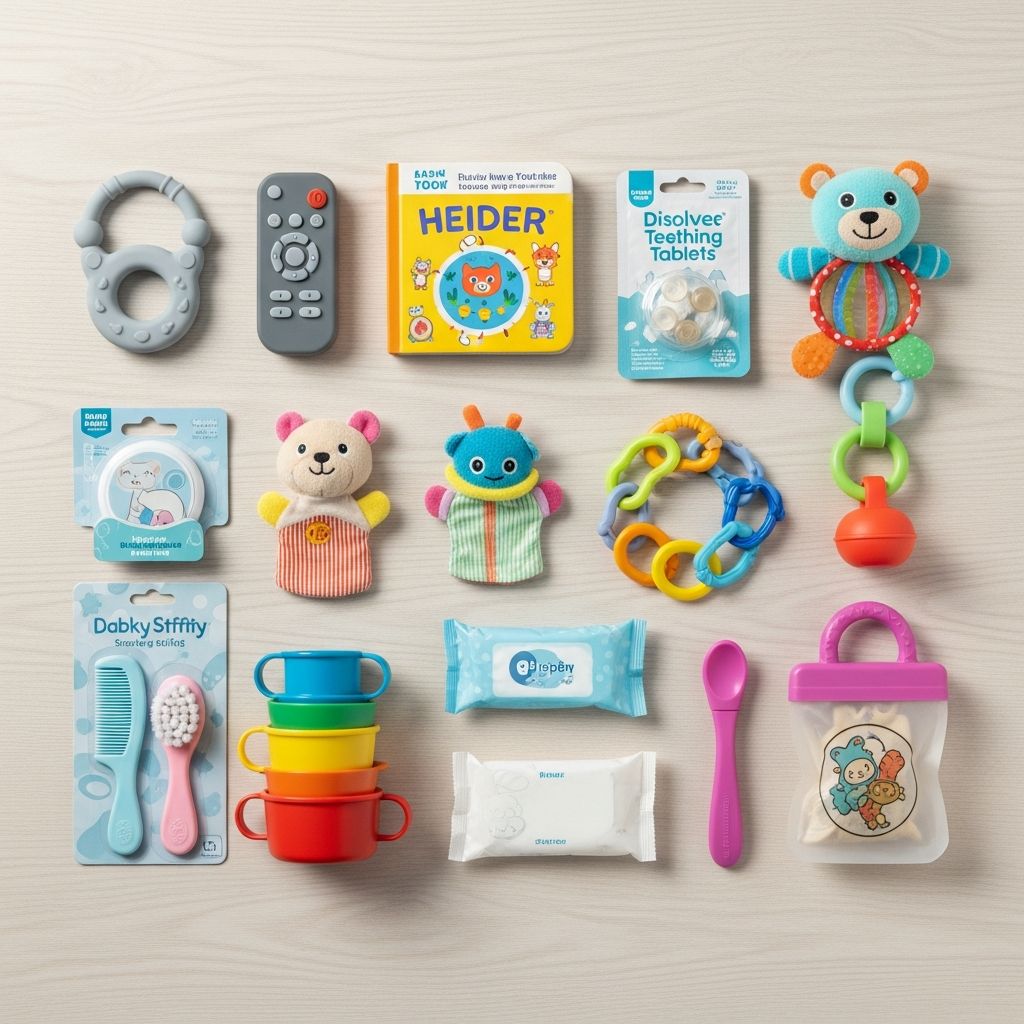
Stuffing a holiday stocking for a baby is more about fun and sentiment than about big gifts. Tiny, thoughtful items can support development, make daily care easier, and give families sweet memories without overflowing the toy bin.
This guide gathers practical and playful ideas for baby stocking stuffers, grounded in what we know about early development and infant safety, so the items you choose feel good for both baby and parents.
What Makes a Great Baby Stocking Stuffer?
Before picking specific items, it helps to think about what actually works well for babies under about 18 months.
- Safe for mouthing – Babies explore with their mouths, so anything you choose should be too large to swallow and free of small detachable parts. Safety agencies recommend avoiding objects small enough to pass through a standard small-parts test cylinder, which mimics a child’s throat diameter.
- Supports sensory exploration – Simple toys that crinkle, rattle, or offer different textures help babies learn through touch, sight, and sound, which are key in the first year.
- Useful in everyday routines – Items that help with feeding, diapering, or soothing will be appreciated long after the holidays.
- Right for baby’s stage – A three-month-old needs different toys than a walking one-year-old. Choose items that match your baby’s current skills and the next small step forward.
- Compact and lightweight – Stockings have limited space, so think small, soft, and easy to tuck around larger packages.
Age-Appropriate Ideas at a Glance
The table below gives a quick overview of common stocking stuffer categories that tend to work well for different ages. Every baby is unique, so treat this as a flexible guide rather than a strict rule.
| Baby’s Age | Great Stocking Stuffer Types | Examples of Skills Supported |
|---|---|---|
| 0–3 months | Soft rattles, high-contrast cards, mittens, pacifiers | Tracking faces/objects, early grasping, calming |
| 4–6 months | Teethers, crinkle cloths, soft mirrors, simple bath toys | Hand-to-mouth play, reaching, body awareness |
| 7–12 months | Stacking cups, simple balls, board books, snack containers | Sitting, banging, transferring objects, early problem-solving |
| 12–18 months | Simple puzzles, push cars, chunky crayons, sippy cups | Walking, fine motor control, scribbling, pretend play |
Tiny Toys That Encourage Big Development
Play is how babies learn. Offering a few small toys in a stocking can support physical, social, and cognitive growth without overwhelming them with clutter.
Soft Rattles and Grasping Toys
Rattles and light grasping toys are classic for a reason. They encourage babies to grab, shake, and bring objects to their mouths, building hand-eye coordination and upper-body strength.
- Choose soft or flexible materials that won’t hurt if baby bangs themselves.
- Look for easy-grip handles or open designs that small fingers can wrap around.
- Check stitching or attachments regularly so nothing loosens over time.
First Balls and Rolling Toys
Small, lightweight balls encourage reaching, rolling, and early crawling attempts as babies try to follow an object that moves away.
- Opt for textured or rubbery surfaces that don’t slip easily from little hands.
- Soft fabric balls with gentle sounds inside can be less startling for young infants.
- For older babies, simple push cars or rolling animals invite chasing, which builds coordination.
Simple Cause-and-Effect Toys
By the second half of the first year, babies are fascinated by cause and effect—press a button and something pops up, pound a surface and it makes noise. Toys that respond to baby’s actions reinforce this learning.
- Think about toys that click, squeak, or spin when pushed or twisted.
- Keep electronics minimal; babies don’t need complex lights and sounds to learn cause and effect.
- Rotate these toys so novelty stays high; babies learn from repetition with small variations.
Teething & Oral-Sensory Stocking Stuffers
Many babies spend part of their first year teething. Offering appropriate items to chew can provide comfort and keep them from mouthing less safe materials.
Safe Teethers
Guidance from pediatric and safety organizations recommends avoiding teething products with small parts, liquid filling that can leak, or cords that could pose strangulation risks.
- Choose solid teethers made from food-grade silicone or natural rubber, sized too large to swallow.
- Look for multiple textures (ridges, bumps, smooth areas) to massage sore gums.
- Offer only briefly chilled teethers from the refrigerator, not frozen, to protect gums.
Paciners and Clips
For babies who use pacifiers, a new design or color can feel like a treat for parents more than for baby, but it will get plenty of use.
- Check sizing and shape appropriate to baby’s age.
- Use short, breakaway clips rather than long cords for safety.
- Inspect regularly and replace at the first sign of wear.
Silicone Jewelry for Caregivers
Silicone teething necklaces and bracelets worn by caregivers give babies something safe to grab and chew on while being held, and they tuck easily into a stocking.
- Choose designs labeled specifically for teething, not standard costume jewelry.
- Ensure a breakaway clasp that opens under pressure.
Bath-Time Treats That Double as Toys
Bath time can be a soothing daily ritual. Small bath toys tucked into a stocking make this routine more playful and help babies get comfortable with water.
Pouring and Scooping Tools
Simple containers and scoops introduce concepts like volume and cause and effect long before babies understand those words.
- Stacking cups with holes let babies watch water “rain” through.
- Small ladles or spoons encourage hand-to-hand transfers and splashing.
- Containers used only in the bath can be dried thoroughly to limit mold growth.
Floating and Squeezable Toys
Small floating animals or boats invite imaginative play as babies grow into toddlers.
- Favor toys that can be fully opened or dried so water doesn’t get trapped inside.
- If you use squeeze toys, regularly inspect for mold or discoloration and replace when needed.
Reading & Music: Tiny Tools for Big Brains
Shared reading and singing support language and early literacy from birth. Even if a baby seems more interested in chewing the book, they’re learning the rhythm of speech and sound.
Board Books and Cloth Books
Board books and washable cloth books are ideal stocking stuffers: small, lightweight, and durable.
- Look for simple, high-contrast images for younger babies, and photos of real faces or familiar objects for older infants.
- Sturdy pages help babies practice turning and pointing with less frustration.
- Water-safe books can go in the tub or diaper bag without worry.
First Musical Instruments
Research suggests that rhythm and music activities can support auditory processing and attention in young children. Stocking stuffers are a good way to introduce simple musical play.
- Consider egg shakers, small maracas, or a soft wrist rattle.
- Keep volume gentle; avoid toys that produce sudden, loud electronic sounds close to baby’s ears.
- Use instruments together with songs or nursery rhymes rather than as background noise.
Practical Everyday Helpers That Still Feel Special
Not every stocking item needs to be a toy. Practical objects with fun colors or designs still delight babies and make life easier for caregivers.
Feeding Gear for Emerging Eaters
As babies begin complementary foods—often around six months in many high-income countries—families introduce spoons, cups, and other feeding tools. These make excellent stocking stuffers since they’re small and genuinely useful.
- Soft-tip spoons that are gentle on gums.
- Small open cups or training cups that encourage sipping rather than prolonged bottle use.
- Silicone bibs that wipe clean quickly.
- Snack containers with flexible lids for on-the-go use for older babies.
Clothing & Comfort Items
Functional clothing items are easy to tuck into a stocking and get constant use.
- Soft socks or booties with non-slip grips for babies starting to stand.
- Mittens and hats sized for the current season and climate.
- A small lovey blanket or comfort cloth (used safely, outside of sleep spaces for young infants).
Health & Care Essentials
Small hygiene and care items help build gentle routines and can reduce stress during sick days.
- A soft-bristle baby hairbrush or comb.
- Fragrance-free baby lotion for dry winter skin.
- Nasal saline drops or a gentle nasal aspirator tip (practical, if not glamorous).
Sentimental and Keepsake-Style Fillers
Stockings can also hold small items that capture memories instead of daily-use gear.
- Personalized ornaments with baby’s name or the year of their first holiday.
- A tiny photo keychain for caregivers with baby’s picture.
- A small journal or notepad for caregivers to jot down milestones and funny moments.
Budget-Friendly and “Free” Ideas from Around the Home
Babies are often as excited by everyday items as by store-bought toys. As long as you pay attention to size and safety, some household objects can make excellent low- or no-cost stocking stuffers.
- Colorful fabric squares (without loose threads) to tug, wave, and peekaboo.
- Empty, clean plastic containers with secure lids for shaking (avoid anything that could crack or break).
- Soft kitchen tools like a silicone spatula, reserved just for play and supervised closely.
Always supervise babies with non-toy items and inspect them carefully. If something can fit entirely into a cardboard toilet-paper tube, it is generally too small for safe unsupervised play.
Simple Safety Checklist Before You Stuff
Because infants are especially vulnerable to choking and other hazards, it’s wise to do a final safety check of each stocking item.
- Is it larger than a choke-tube size (about the diameter of a toilet-paper roll)?
- Are there no loose parts, such as eyes, buttons, or beads that could detach?
- Are any batteries fully enclosed with a screw-secured cover, if the item is electronic?
- Does the toy seem sturdy enough to handle chewing and dropping?
- Is the item labeled for the appropriate age range and free of warning labels for choking hazards?
Frequently Asked Questions (FAQs)
How many stocking stuffers does a baby really need?
Babies do not need many items; a few carefully chosen toys, a practical item or two, and perhaps one keepsake are more than enough. Limiting quantity helps avoid overstimulation and clutter while still making the stocking feel special.
Are edible treats a good idea for baby stockings?
For infants under 12 months, it is usually best to skip candy and sweet treats. Some babies who are already on solid foods may enjoy unsweetened snack puffs or baby-friendly crackers, but always choose age-appropriate foods and supervise closely.
What should I avoid putting in a baby’s stocking?
Avoid anything with small parts, long strings or cords, magnets, button batteries, or products labeled for older age groups. Small objects can pose choking hazards, and cords longer than about 30 cm (12 inches) can increase strangulation risk.
Can I include hand-me-down toys in a stocking?
Yes, as long as the toy is in good condition, meets current safety standards, and is age-appropriate. Inspect used toys carefully for cracks, peeling paint, or loose parts before gifting.
How do I keep stocking choices eco-friendly?
Choose a small number of durable items that will be used often, favor materials like wood or silicone when possible, and consider second-hand books or toys in excellent condition. Practical items that replace disposables, such as reusable snack containers, can also reduce waste over time.
References
- Choking Hazards — U.S. Consumer Product Safety Commission. 2017-04-24. https://www.cpsc.gov/Safety-Education/Safety-Education-Centers/Choking-Hazards
- Toy Safety Guidelines — American Academy of Pediatrics. 2023-11-01. https://www.healthychildren.org/English/safety-prevention/at-home/Pages/Toy-Safety.aspx
- Play and Children’s Learning — National Association for the Education of Young Children. 2019-05-01. https://www.naeyc.org/resources/pubs/yc/may2019/play-young-childrens-learning
- Music and Early Childhood Development — Harvard Graduate School of Education. 2016-11-14. https://www.gse.harvard.edu/news/uk/16/11/music-and-early-childhood-development
- Complementary Feeding — World Health Organization. 2023-02-15. https://www.who.int/health-topics/infant-feeding#tab=tab_2