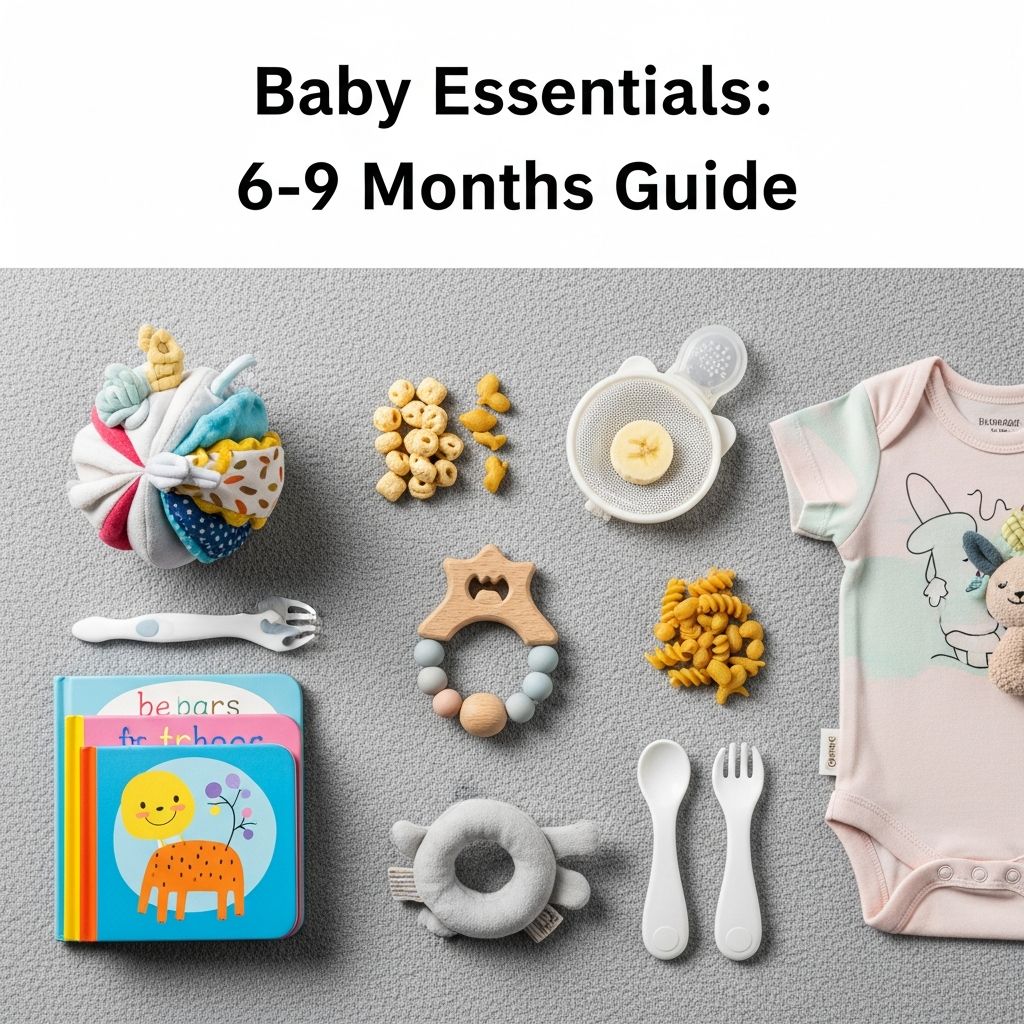
Your baby between 6 and 9 months enters an exciting phase of rapid growth, marked by increased mobility, curiosity, and social interaction. At this stage, they often master sitting unsupported, begin crawling or scooting, and start pulling up to stand, as noted by experts at Children’s Hospital of Philadelphia. Feeding transitions include introducing solids, while play becomes more interactive with grasping and banging toys. This guide outlines key categories of gear to support these milestones, ensuring safety, nutrition, and fun.
Understanding Developmental Leaps at 6-9 Months
During months 6 through 9, infants achieve significant motor, cognitive, and social advancements. Most babies roll over in both directions, sit without support, and reach for objects, according to Mayo Clinic guidelines. By 9 months, many pull to stand, respond to their name, and engage in games like peek-a-boo. Cognitive skills emerge as they explore toys by mouthing, shaking, and transferring them hand-to-hand. These changes demand gear that accommodates newfound independence while prioritizing safety.
- Motor Milestones: Rolling, sitting, scooting, pulling up.
- Cognitive Growth: Object exploration, cause-effect understanding via banging toys.
- Social Skills: Mimicking sounds, recognizing faces, enjoying interactive play.
Selecting age-appropriate items fosters these skills. For instance, soft mats encourage tummy time transitions to crawling.
Feeding Gear for Solid Food Adventures
As babies start solids around 6 months, feeding tools evolve from purees to finger foods. They may hold crackers independently and close lips to signal fullness. High chairs with harnesses provide secure seating, while silicone plates and spoons prevent slips.
| Item | Key Features | Why Essential |
|---|---|---|
| High Chair | Adjustable height, 5-point harness, easy-clean tray | Supports upright posture for safe swallowing; grows with child |
| Suction Bowls & Spoons | BPA-free silicone, colorful grips | Sticks to trays, encourages self-feeding without mess |
| Bib with Pocket | Waterproof, crumb-catching pouch | Manages drool and food spills during teething and meals |
| Reusable Pouches | Squeezable, fillable with purees | Portable for on-the-go nutrition; reduces waste |
Teething often begins here, with lower front teeth emerging first. Offer chilled rings or mesh feeders with soft fruits for relief. Naps consolidate to 2-3 times daily, so mealtime routines aid sleep training.
Mobility and Support Items for Explorers
Mobility surges as babies rock, scoot, or crawl. Floor seats aid sitting practice, while activity centers promote leg strength without full walking aids, which experts advise against to avoid delaying natural steps.
- Floor Seat or Bumbo: Portable, supports upright posture for play.
- Activity Saucer/Jumper: Bounces encourage leg muscles; includes toys for stimulation.
- Push Walker (9+ months): Sturdy frame for cruising along furniture.
- Soft Play Mat: Padded for tummy time and crawling safety.
By 9 months, babies stand holding furniture, making non-slip socks vital for grip. Encourage reaching by placing toys just out of grasp to build coordination.
Play and Sensory Toys to Spark Curiosity
Interactive toys match emerging skills like grasping with thumb-finger pinch (pincer grasp) by 8-9 months. Babies bang objects, pass them hand-to-hand, and enjoy peek-a-boo.
| Toy Type | Skills Developed | Safety Tips |
|---|---|---|
| Stacking Cups/Rings | Fine motor, size sorting | Choose large, non-chokable pieces |
| Activity Cube | Problem-solving, hand-eye coordination | Lightweight, no small parts |
| Soft Books/Cloth Books | Sensory exploration, early literacy | Washable, crinkle pages for sounds |
| Rattles & Teethers | Cause-effect, oral motor | BPA-free, chilled for gums |
Hide-and-seek games teach object permanence. Limit screen time; prioritize hands-on play for brain development.
Sleep Solutions for Restful Nights
Sleep patterns shift with mobility; babies may wake more due to teething or practice crawling. Aim for 12-14 hours total, including 2 naps.
- Sleep Sack: Wearable blanket prevents rolling hazards.
- Blackout Curtains: Regulates cycles for better rest.
- White Noise Machine: Mimics womb sounds to soothe.
- Breathable Crib Mattress: Firm for safe sleep per AAP guidelines.
Consistent bedtime routines with dim lights and cuddles promote security.
Baby-Proofing Your Home for Safety
Increased exploration heightens risks. Babies pull up, reach cords, and mouth everything.
- Cabinet Locks & Outlet Covers: Block access to dangers.
- Furniture Anchors: Secure dressers against tip-overs.
- Stair Gates: Pressure-mounted for easy install.
- Corner Guards: Pad sharp table edges.
Supervise constantly; create safe play zones. Check CPSC for recalls.
Bath Time and Hygiene Must-Haves
Babies sit independently for baths, enjoying splashes. Support head no longer needed.
| Item | Benefits |
|---|---|
| Non-Slip Bath Seat | Secure sitting, easy rinse |
| Soft Hooded Towels | Warmth post-bath, cute designs |
| Gentle Washcloths | Organic cotton for sensitive skin |
| Nail Clippers | Baby-sized for quick trims |
Use tear-free products; bathe 2-3 times weekly to preserve skin oils.
Health and Grooming Essentials
Regular check-ups monitor growth. Teething brings drool rash; use bibs and balms.
- Nasal Aspirator: Clears congestion safely.
- Rectal Thermometer: Accurate for fevers.
- Grooming Kit: Brushes, files for hair/nails.
- Vitamin D Drops: If breastfeeding exclusively.
Watch for milestones; consult pediatricians if delays noted.
Clothing and Diapering for Active Babies
Size jumps to 6-9M; prioritize footies for crawling, snap-crotch for changes.
- Soft cotton onesies (10-12 pack).
- Sleepers with zippers.
- Non-slip socks.
- Cloth or disposable diapers with size 3-4.
Waterproof pads protect surfaces during potty interest hints.
Frequently Asked Questions (FAQs)
What are the top motor milestones at 6-9 months?
Babies typically roll both ways, sit unsupported, scoot/crawl, and pull to stand by 9 months.
When should I introduce solid foods?
Around 6 months, when baby shows interest like reaching for food and good head control.
How can I encourage crawling?
Place toys ahead during tummy time, cheer movements, and ensure safe floors.
Is a baby walker safe?
No; they can delay walking and pose injury risks. Use activity centers instead.
What sleep duration is normal?
12-14 hours daily, with 2-3 naps; routines help.
This curated selection empowers parents to nurture 6-9 month olds through dynamic growth phases. Prioritize quality, safety-certified items matching your baby’s pace.
References
- Developmental Milestones — Children’s Hospital of Philadelphia. Accessed 2026. https://www.chop.edu/primary-care/developmental-milestones
- Infant development: Milestones from 7 to 9 months — Mayo Clinic. Accessed 2026. https://www.mayoclinic.org/healthy-lifestyle/infant-and-toddler-health/in-depth/infant-development/art-20047086
- 6-9 Month Milestones — First Connections. Accessed 2026. https://www.firstconnectionsar.org/6-9-months
- 6-9 Months: Your Baby’s Development — ZERO TO THREE. Accessed 2026. https://www.zerotothree.org/resource/6-9-months-your-babys-development/
- Milestones by 6 Months — CDC. Accessed 2026. https://www.cdc.gov/act-early/milestones/6-months.html
- Developmental Milestones: 6 to 12 Months — Nationwide Children’s Hospital. Accessed 2026. https://www.nationwidechildrens.org/family-resources-education/health-wellness-and-safety-resources/helping-hands/developmental-milestones-6-to-12-months
- 7-9 Month Old Baby Development & Milestones — CHOC. Accessed 2026. https://choc.org/ages-stages/7-to-9-months/