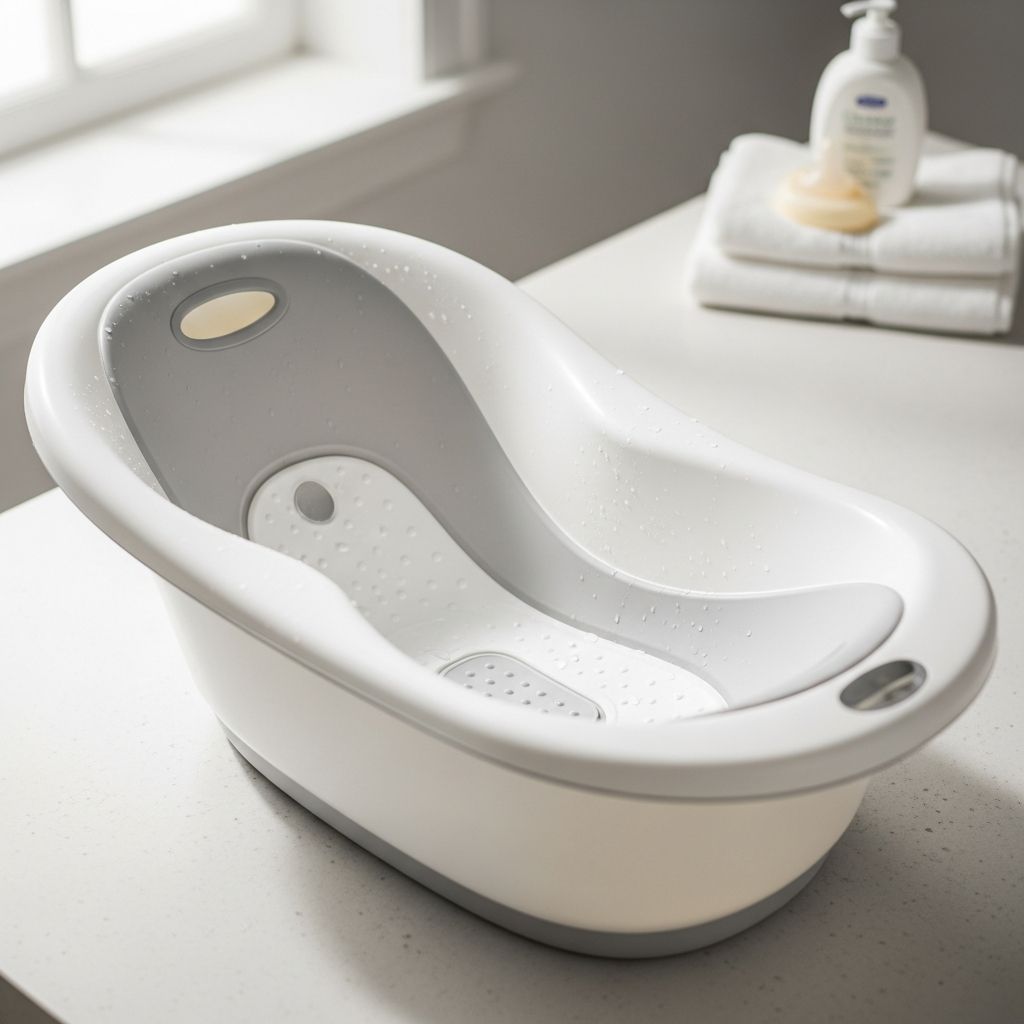
Bath time with a new baby can feel both magical and intimidating. Warm water, sweet baby rolls, and giggles are wonderful — but only if you feel confident that your little one is safe and supported. A well-chosen baby bathtub can remove much of the stress, giving you a secure space to wash and bond with your baby.
This guide walks through everything you need to know before buying a baby bathtub: the main types, the essential safety features, how to set up and use the tub, and how to keep it clean. You will also find a comparison table, practical tips, and answers to the most common questions new parents ask.
Why a Baby Bathtub Matters
Technically, you can bathe a baby in a regular bathtub or even the kitchen sink, but those setups can be slippery, awkward, and physically demanding on your back and knees. A baby bathtub is designed to support a small body, keep water levels low, and make it easier for you to hold your baby securely.
Instead of wrestling with a wiggly newborn in a large, hard tub, you get a smaller, shaped space that reduces the risk of slips and helps you focus on gentle washing and connection. For many caregivers, this turns bath time from a nerve-wracking task into a soothing daily routine.
Main Types of Baby Bathtubs
Before choosing a specific product, it helps to understand the main styles of baby bathtubs you will see. Each has pros and cons depending on your bathroom setup, storage space, and baby’s age.
1. Sink inserts
Sink inserts are soft, often foam- or fabric-covered supports that fit inside a kitchen or bathroom sink. They cradle the baby while you use the sink as the water basin.
- Best for newborns and young infants who need full support.
- Ideal for small homes or apartments with limited storage.
- Place baby at counter height, which is easier on your back.
However, sink sizes vary, so it is important to measure your sink before buying. Some inserts may not dry quickly, so you will need to hang them properly to prevent mildew.
2. Traditional infant tubs
Traditional infant tubs are hard plastic or molded tubs that sit in your regular tub, on a counter, or on a stable surface. Many have a gently sloped side for newborns and a more open side for older babies.
- Often include built-in reclined support for young babies.
- Can be used for longer, from newborn through early toddler.
- Usually feature a drain plug for easy emptying.
They do take up more storage space than a soft insert, and you will need to make sure the base is non-slip and the tub fits securely wherever you plan to place it.
3. Convertible “grow-with-baby” tubs
Convertible tubs are designed to change as your child grows. They often include a newborn sling or insert that can later be removed, plus multiple seating positions.
- Good value since one tub can span newborn to toddler years.
- Frequently include multiple recline levels or bumpers for stability.
- Helpful for families who do not want to buy multiple tubs.
Because they try to do everything, they can be bulkier and involve more pieces to adjust, wash, and store.
4. Collapsible and foldable tubs
Foldable tubs collapse flat or nearly flat for storage, making them appealing for small spaces or frequent travel.
- Space-saving design that fits under beds or behind doors.
- Some models are lightweight and easy to take on trips.
- Can work for both babies and toddlers, depending on size.
When choosing a foldable tub, pay close attention to the locking mechanism; it must feel stable and solid when opened so it does not shift during use.
5. Bucket-style tubs
Bucket tubs are deep, rounded tubs that position the baby in a semi-upright, curled-up posture. Some caregivers like that the position can feel womb-like and soothing.
- Use less water because of the smaller footprint.
- May calm some babies who dislike lying flat.
- Compact and often easy to store.
These tubs can have a steeper learning curve. You need to be comfortable supporting the head and neck while lowering baby into a relatively narrow opening.
Key Safety Features to Look For
Safety should guide every decision you make about baby baths. No matter which style you prefer, use this checklist when evaluating tubs in the store or online.
1. Non-slip surfaces
A good baby bathtub has both a non-slip base on the outside and a textured or grippy surface inside where baby sits. This helps keep the tub from sliding on your bathtub floor and reduces the chance of your baby slipping down inside the tub.
- Look for rubber feet, suction cups, or textured plastic on the bottom.
- Inside, check for soft foam pads or molded texture where baby’s back and bottom rest.
2. Gentle support for head and neck
Newborns have little muscle control and need support from the shoulders up. Many tubs offer a sling, a contoured back, or raised “bump” that stops baby from sliding.
- Newborn inserts or slings should feel snug but not restrictive.
- Reclined designs should keep the head well above water level.
3. Stable shape and base
A wide, stable base keeps the tub from tipping. Avoid very tall, narrow tubs that could be knocked over easily or feel wobbly when baby kicks and splashes.
- Test stability by pressing on the rim from different directions.
- Ensure the tub does not rock when placed where you intend to use it.
4. Safe water depth and drainage
Baby baths require only a small amount of water — usually just enough to cover baby’s legs and lower torso. A tub with a well-placed drain makes it easier to empty without lifting a heavy basin of water.
- Drain plugs should be simple to open yet secure during use.
- Some tubs feature two-stage drainage for continuous warm water refresh.
5. Smooth, rounded edges
Examine the rim, drain opening, and any molded supports. Everything your baby could touch should be smooth, without sharp corners, rough seams, or exposed hardware.
- Run your hand along all edges to check for rough spots.
- Avoid tubs with small detachable pieces that could become choking hazards.
Comparing Baby Bathtub Styles at a Glance
The table below summarizes how the main types of baby tubs typically differ. Use it as a quick reference while you shop.
| Type | Best Age Range | Space Needs | Ease of Use | Typical Pros | Potential Drawbacks |
|---|---|---|---|---|---|
| Sink insert | Newborn to about 6 months | Very compact; stores flat or hangs | Easy if your sink fits the insert well | Gentle, soft support; counter height | Outgrown quickly; may not fit all sinks |
| Traditional infant tub | Newborn to 9–12 months (varies) | Moderate; takes up tub or shelf space | Straightforward once you find a stable spot | Common and affordable; simple design | Bulkier to store; may be heavy with water |
| Convertible tub | Newborn to toddler | Moderate to large, depending on model | Requires adjusting inserts as baby grows | Longer use; good value over time | More parts to clean and manage |
| Foldable tub | Infant to toddler (varies) | Very small when folded | Convenient once you trust the locking system | Great for small spaces and travel | Some models feel less rigid when in use |
| Bucket-style tub | Newborn to sitting age | Small footprint; easy to tuck away | Takes practice to position baby comfortably | Can feel cozy and soothing for some babies | Narrow opening; less room to maneuver |
Practical Factors to Consider Before You Buy
Beyond safety and basic style, think about how, where, and how often you plan to bathe your baby. A tub that works well in theory might not suit your specific home or routine.
- Bathroom layout: Do you have a full-size tub, a shower stall only, or primarily a kitchen sink?
- Storage space: Can you leave the tub out, or does it need to fold or hang?
- Travel needs: Will you be visiting grandparents, going on trips, or moving between homes?
- Physical comfort: Are you recovering from a cesarean or dealing with back issues that make bending difficult?
- Budget: Would you prefer an inexpensive starter tub or a more flexible model that lasts longer?
How to Set Up a Safe Baby Bath
Once you have chosen a tub, a consistent setup routine helps keep each bath relaxed and predictable. Use the steps below as a reference and adapt them to your space.
1. Choose a stable location
Place the baby bathtub inside a regular tub, in a sink (for inserts), or on a sturdy surface such as a counter or dedicated stand that can handle the tub’s weight when full of water. The surface should be level, dry, and free of clutter.
2. Gather everything you need
Before filling the tub, set out all supplies within arm’s reach so you never have to step away from your baby:
- Mild, fragrance-free baby wash or bar soap (optional; newborns often just need warm water).
- Soft washcloths and a gentle sponge if you prefer.
- A rinsing cup or handheld sprayer, if available.
- A hooded towel and clean diaper.
- Clean clothes or pajamas.
3. Fill with just enough water
Fill the tub with a small amount of warm water. The general rule for infants is a shallow pool, often only a few centimeters deep, just enough to keep baby warm from the waist down while you pour water gently over their body.
- Always test water temperature on the inside of your wrist or with a bath thermometer.
- Water should feel warm, never hot; if unsure, err on the cooler side.
4. Support baby at all times
When lowering baby into the tub, keep one arm under their head and neck, with your hand grasping the far shoulder. Use your other hand to support their bottom as you gently slide them into the water feet first.
- Maintain at least one hand on your baby throughout the bath.
- Never leave your baby alone in the tub, not even for a moment.
Cleaning and Maintenance Tips
Baby tubs live in warm, wet environments, so regular cleaning is essential to prevent mold, mildew, and soap buildup. Fortunately, most tubs are easy to maintain with basic supplies.
- Rinse the tub thoroughly after every use to remove soap residue.
- Wipe down surfaces with a clean cloth, then let the tub air-dry completely.
- For fabric slings or padded inserts, follow the manufacturer’s washing instructions and allow them to dry fully between baths.
- Check regularly for cracks, peeling foam, or rust on any metal parts; replace the tub if you notice damage.
Signs It Is Time to Transition Out of a Baby Tub
Eventually, your little one will outgrow the infant bathtub and be ready for the big tub or shower. The exact timing depends on your child’s size, development, and the tub’s weight limit.
- Baby can sit steadily without support and seems cramped in the infant tub.
- Your child frequently attempts to stand or climb out, making the small tub less safe.
- You have reached the product’s listed maximum weight or height.
When you move to the regular bathtub, continue using non-slip mats, keep water shallow, and always stay within arm’s reach.
Frequently Asked Questions
How often should a baby be bathed?
Newborns generally do not need daily baths; two to three times a week is usually enough in the early weeks, as long as you keep the diaper area clean. As babies grow and become more active, some families enjoy adding baths more often as part of a bedtime routine, but frequent washing with soap is not necessary for hygiene.
When can I give a first tub bath?
Most caregivers wait until the umbilical cord stump has fallen off and the area is healed before fully submerging a newborn in water. Before that, sponge baths on a flat, padded surface are recommended. Once the stump is gone and your pediatric provider says it looks healthy, you can begin gentle tub baths in a shallow baby bathtub.
Do I really need a baby bathtub, or is a sink enough?
Many families manage with a well-padded, carefully prepared sink, especially in the newborn stage. However, a dedicated baby tub offers shape, grip, and depth control that make it easier to hold a slippery baby securely. If budget allows, most caregivers find that a simple infant tub is worthwhile for the added stability and comfort.
What temperature should the bath water be?
Baby bath water should feel comfortably warm, not hot. A bath thermometer can give a specific reading, but your own wrist or inner forearm is a good gauge — the water should feel pleasantly warm there, never hot or tingly. Always adjust the household water heater to a safe maximum temperature to lower the risk of accidental scalds.
Can I reuse an older sibling’s baby tub?
Reusing a tub is often fine as long as it is in good condition. Inspect for cracks, mold in seams, unstable legs or bases, and worn foam or fabric. If any structural parts look weak or damaged, or if you cannot clean stubborn mildew thoroughly, replacing the tub is safer than trying to repair it.
Are built-in temperature indicators necessary?
Some tubs now include color-changing plugs or built-in thermometers that give a quick sense of water temperature. These features can be convenient, but they are not essential. Even if your tub has them, still double-check with your wrist or a separate thermometer, since built-in indicators can occasionally be off.
Final Thoughts: Focus on Safety and Comfort
The “best” baby bathtub is the one that fits your space, supports your baby’s stage of development, and helps you feel relaxed during bath time. Whether you choose a soft sink insert, a solid convertible tub, or a space-saving foldable design, prioritize non-slip surfaces, stable support, and shallow, warm water.
With a thoughtful choice and a simple routine, bath time quickly becomes less about logistics and more about connection — warm water, soft towels, and a few quiet minutes each day to enjoy your growing baby.