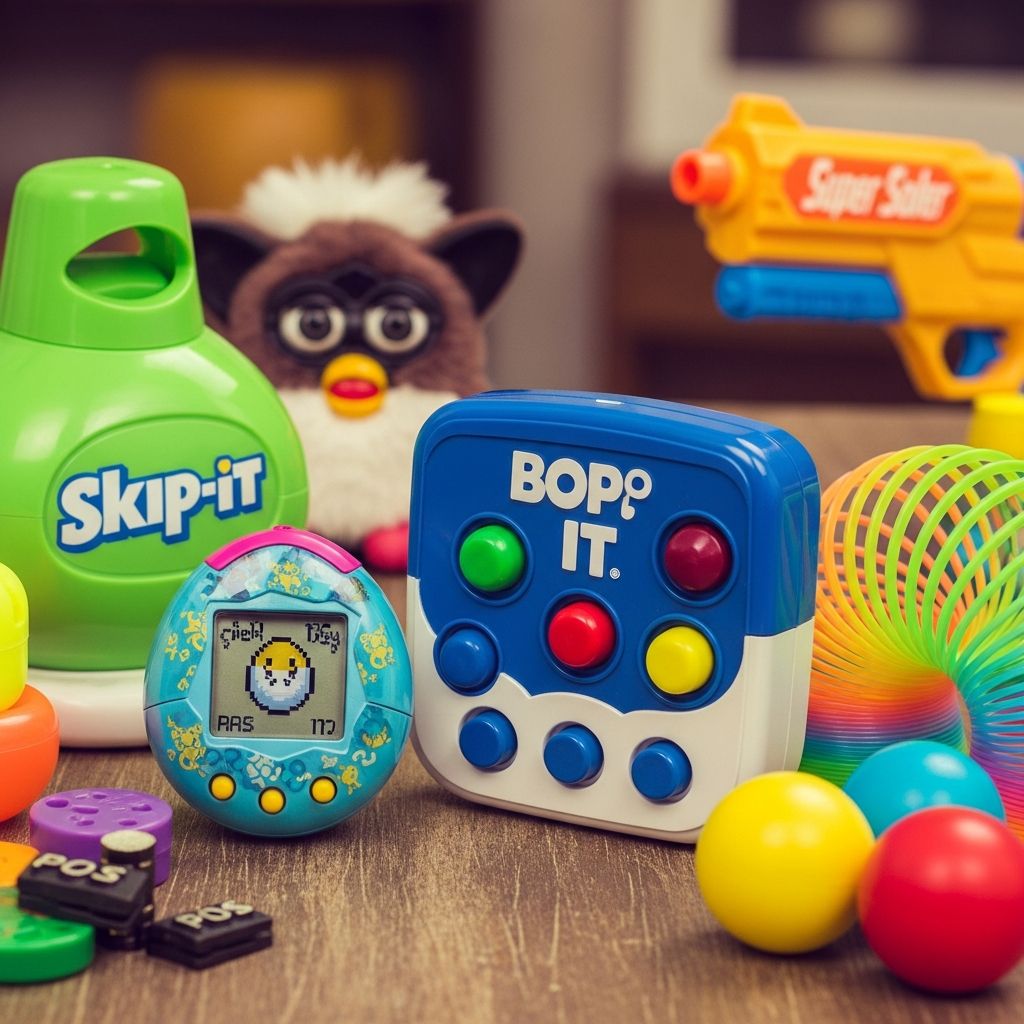
The toys of the 1990s were more than plastic and pixels; they were tiny cultural events that lived in our backpacks, on our bedroom floors, and in playground conversations. Today, those same toys are resurfacing in online marketplaces, big-box stores, and family living rooms, giving parents a rare chance to connect their own childhood memories with their kids’ playtime.
This guide explores some of the most beloved ’90s toys, why they still matter, what to know before buying them today, and how to use them to create meaningful family moments rather than just another pile of clutter.
Nostalgia Meets Play: Why ’90s Toys Are Back
The renewed interest in ’90s toys is not just about collecting; it is about revisiting a slower, more tactile style of play in an era dominated by touchscreens. Adults who grew up in the 1990s now have the money and motivation to track down the toys that defined their youth, and brands are responding with re-releases, special editions, and modern remakes.
For kids, these toys feel fresh and different from app-based games. For parents, they unlock memories: begging for a particular playset, trading at recess, and frantically checking on a digital pet between homework assignments.
- They offer simple, screen-light entertainment compared to modern devices.
- They create an easy way for parents to tell stories about their childhood.
- They often come in updated versions that keep the charm but improve durability or accessibility.
Mini Worlds in Your Pocket: Compact Playsets
One of the clearest visual icons of ’90s toy culture was the tiny, portable playset—often shaped like a shell, heart, or compact—that unfolded to reveal a detailed miniature world. Inside were tiny figures, staircases, beds, and even faux food, inviting children to invent elaborate stories on the go.
Modern versions of these pocket playsets tend to be slightly larger, more robust, and sometimes themed around current franchises, but the core idea remains: a world you can open, close, and carry anywhere.
What Makes Compact Playsets Appealing Today
- Portable imagination: Kids can bring them to restaurants, car trips, and grandparents’ houses without hauling a bin of toys.
- Open-ended storytelling: The small scale encourages kids to invent characters, relationships, and mini-dramas.
- Collectible charm: Different sets interconnect in spirit, making collecting part of the fun for both kids and adults.
Tips for Parents Buying Pocket-Style Playsets
- Look for modern reissues if your child is under eight; they are usually safer and sturdier than vintage originals.
- Check for small loose parts if younger siblings are in the house, and store the tiniest figures in a labeled container.
- Turn collecting into a shared ritual: choose one new set for birthdays or vacations instead of impulse purchases.
Digital Pets: The Tiny Devices That Taught Responsibility
Few toys captured the late-’90s spirit as perfectly as digital pets. Packed into egg-shaped keychains and pixelated screens, they demanded food, playtime, and cleaning—often at the least convenient moments. Kids learned a strange form of responsibility by trying not to let their virtual companions “disappear.”
Today, digital pets have returned in classic and updated forms. Some models stay close to the original low-resolution look, while others feature color screens and app integration. Either way, they still challenge kids to think about routines, cause and effect, and digital care.
Benefits of Digital Pets for Modern Kids
- Encourage kids to think about schedules and consequences in a low-stakes way.
- Provide short, bite-sized play sessions instead of endless scrolling.
- Offer a shared talking point for parents who remember sneaking peeks at their own devices during class.
How to Use Digital Pets Without Driving Everyone Crazy
- Set “quiet hours” when the sound must be off and check-ins are limited (such as during school and family meals).
- Use the toy as an entry point to talk about caring for real pets and balancing screen time.
- If multiple kids are sharing, create a simple schedule so each child gets a turn being the primary “caretaker.”
Interactive Plush and Talking Toys: The Original Smart Companions
Before smart speakers and AI chatbots, many ’90s kids experienced interactivity through quirky plush toys that blinked, spoke, or responded to touch. These toys often combined cute designs with slightly unpredictable behavior, leading to equal parts fascination and mild creepiness in the dark.
New releases inspired by these interactive plush companions often feature improved sensors, better power management, and more responsive programming, while deliberately preserving the expressive eyes and distinctive voices that made them stand out.
Pros and Cons of Modern Interactive Plush
| Aspect | What Parents Like | What to Watch For |
|---|---|---|
| Engagement | Encourages imaginative conversations and role-play. | Some kids may become overly attached or overstimulated. |
| Noise Levels | Many models now include volume control or mute switches. | Sounds can still become repetitive or disruptive without limits. |
| Durability | Better stitching and battery compartments than many originals. | Battery replacements and electronic failures can shorten toy lifespan. |
Tips for Choosing the Right Interactive Toy
- Read about battery access and volume settings before buying; both can be make-or-break features.
- Introduce the toy during daytime play first, so kids do not get spooked if it talks unexpectedly at night.
- Pair the plush with quieter, analogue toys (blocks, art supplies) to balance sensory input.
Party Games and Reflex Toys: The Soundtrack of Sleepovers
The late 1990s also introduced a new style of toy that blended memory, music, and quick reactions. Electronic party games shouted commands, played snippets of tunes, and demanded fast responses from a circle of kids, making them central fixtures at sleepovers and birthday parties.
Modern versions of these reflex games often include multiple difficulty modes, solo options, and co-op challenges, which makes them unexpectedly timeless. They double as ice-breakers for mixed-age groups and even work as quick energy breaks during family game nights.
Why These Games Still Work
- They get kids moving instead of sitting still with a controller.
- They encourage laughter and social interaction, even among kids who do not know each other well.
- They scale easily from two players to a whole roomful of cousins and friends.
Using Reflex Toys in Family Routines
- Pull them out as a short movement break between homework and screen time.
- Rotate who gets to choose the game mode to keep siblings engaged and reduce arguments.
- Use house rules to lower the intensity for younger kids—longer reaction times, cooperative scoring, or team play.
Retro Collecting vs. Kid-Proof Play: Finding the Right Balance
Not every ’90s toy that resurfaces online is meant for the hands of a five-year-old. Vintage items can be fragile, expensive, or full of small parts, so parents need a clear dividing line between display pieces and playroom workhorses.
A smart approach is to treat original ’90s toys as nostalgic artifacts and modern reissues as the kid-friendly version. That way, your shelves and your sanity both stay intact.
How to Decide: Display or Play?
| Question | If You Answer “Yes” | Suggested Category |
|---|---|---|
| Is it expensive or difficult to replace? | You may regret damage or loss. | Display or limited supervised play. |
| Does it have many tiny, irreplaceable pieces? | Pieces may vanish within days in a busy household. | Display or older-kid play only. |
| Is there a modern version readily available? | You can buy a current model designed for rougher use. | Display the original, play with the remake. |
Simple Storage Strategies
- Use clear, labeled bins for small sets and digital devices so pieces do not vanish into couch cushions.
- Keep high-value or delicate items on a separate shelf and frame them as “special story toys” rather than everyday playthings.
- Rotate which ’90s-inspired toys are accessible to kids each month to keep interest high and clutter low.
Sharing Your Childhood Without Overshadowing Theirs
Bringing back ’90s toys is tempting, but there is a qualitative difference between inviting your kids into your memories and insisting that your childhood was better than theirs. The goal is connection, not competition between decades.
Handled thoughtfully, these toys can become tools for storytelling, emotional bonding, and teaching values such as caring for belongings, handling frustration, and appreciating non-digital fun.
Healthy Ways to Introduce ’90s Toys
- Tell a short personal story each time you bring out a toy—how you got it, who you played with, or a memorable mishap.
- Ask kids what they would change about the toy if they could redesign it, and listen seriously to their ideas.
- Blend ’90s toys with modern favorites during playtime instead of replacing your child’s current interests.
Red Flags to Avoid
- Avoid phrases like “toys were better when…” that dismiss your child’s own era and experiences.
- Do not force kids to keep playing with a toy just because it is nostalgic for you.
- Resist buying every retro item you see; focus on a few that genuinely invite interaction.
Practical Buying Guide for ’90s-Inspired Toys
Whether you are browsing online marketplaces or walking down a toy aisle, knowing what to look for can save you money, disappointment, and last-minute battery runs. Many brands have reissued classic toys with new colorways or added features, while third-party sellers may offer both revived models and original stock.
Thinking through safety, longevity, and play value before hitting “buy” helps ensure that your nostalgic impulse leads to meaningful play rather than a short-lived novelty.
Key Factors to Consider
- Age appropriateness: Check official age recommendations and think honestly about your child’s habits with small pieces and electronics.
- Battery needs: Many retro-style toys remain battery powered; consider rechargeable options or toys with auto-sleep modes.
- Replacement parts: For sets with tiny figures or accessories, look for brands that sell extras or compatible add-ons.
- Reviews: Scan for comments about durability, loudness, and ease of use rather than just nostalgia.
FAQs About ’90s Toys for Today’s Families
Are original ’90s toys safe for young children?
Vintage toys may not meet current safety standards, especially regarding small parts, paint, and battery compartments. For toddlers and preschoolers, modern reissues are usually a safer choice, while originals work best as supervised or display-only items.
Is it worth paying extra for authentic vintage versions?
Authentic vintage toys can carry emotional and collectible value, but they are not automatically better for kids’ everyday play. If your main goal is to share the experience of the toy rather than preserve a piece of history, a current version often delivers more durability and less stress.
How many nostalgic toys should a family realistically keep?
There is no single number, but a practical rule is to limit collections to what can be stored neatly and enjoyed regularly. If shelves are overflowing or toys are constantly underfoot, consider rotating items or passing some along to friends, cousins, or charities.
Can ’90s-style toys help limit screen time?
They can support healthier habits when offered as fun alternatives rather than punishments. Pairing a digital pet, pocket playset, or reflex game with a clear screen-time plan can make unplugged time feel like a reward instead of a restriction.
How do I keep noise levels under control?
Before buying, check whether the toy has volume settings, mute options, or headphone compatibility. At home, set “quiet toy hours,” store the noisiest devices in a specific bin, and let kids help choose which sound-emitting toys stay out each day.
Bringing ’90s Magic Into a Modern Home
Revisiting the toys of the 1990s is ultimately less about reliving your own childhood and more about creating shared stories. A pixelated pet, a talking plush, a compact playset, or a chaotic party game can quickly become a bridge between generations.
By choosing thoughtfully, setting gentle limits, and centering connection over collecting, families can enjoy the best parts of ’90s toy culture—creativity, humor, and tactile fun—without letting nostalgia take over the toy box.