Bringing Children into the Kitchen: More Than Just Making Meals
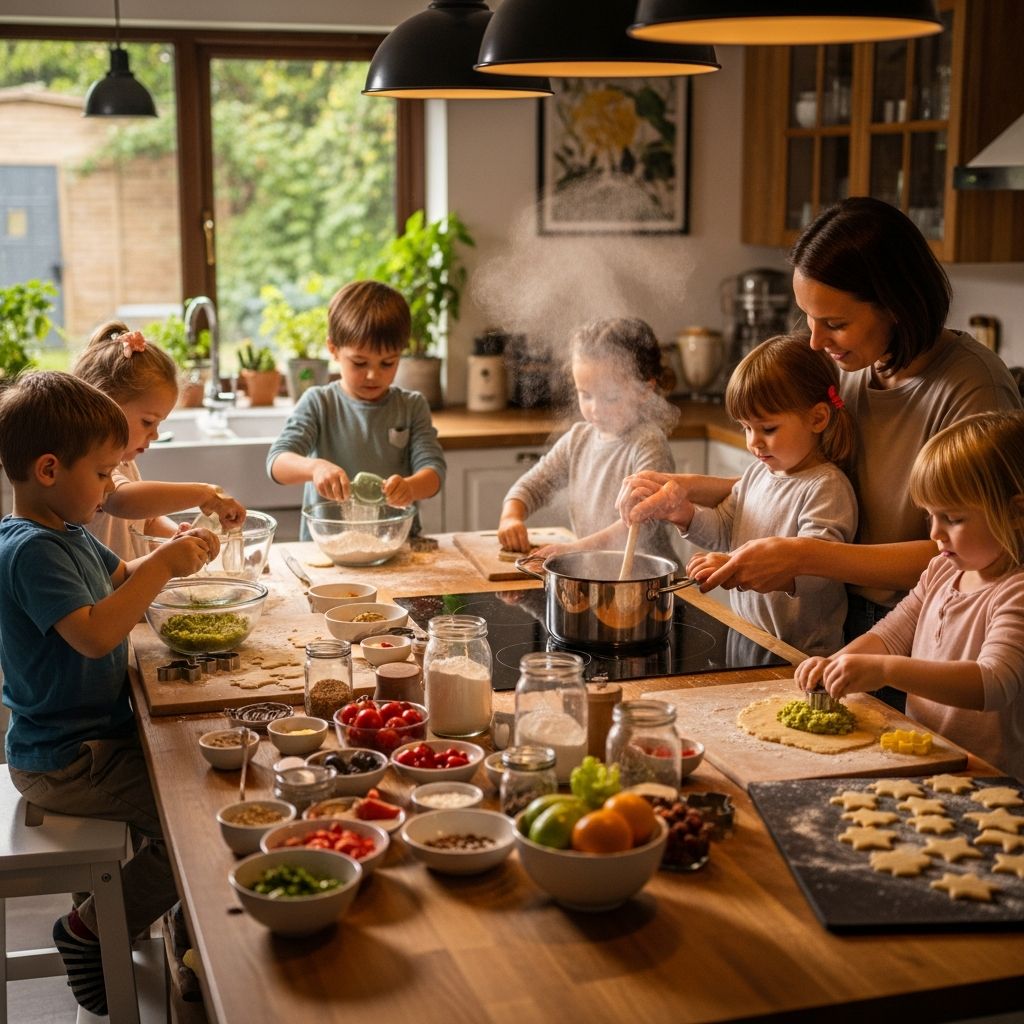
The kitchen offers far more than a place to prepare sustenance—it represents one of the most dynamic learning environments available within a home. When parents invite young children to participate in cooking activities, they open doors to multifaceted development that extends well beyond culinary skills. From the moment a child stirs a mixing bowl or measures ingredients, they engage in complex cognitive, physical, and emotional learning that shapes their confidence and capabilities for years to come.
While integrating toddlers and young children into meal preparation may seem daunting, the rewards far outweigh the initial challenges. The kitchen becomes a classroom without walls, where real-world skills are practiced, mistakes become learning opportunities, and success builds lasting self-assurance.
Physical Development Through Hands-On Kitchen Tasks
Kitchen activities provide exceptional opportunities for developing physical coordination and fine motor control. Young children naturally benefit from the repetitive motions required in cooking, which strengthen the small muscles in their hands and fingers—essential building blocks for future writing and self-care skills.
Consider the diverse physical movements cooking demands:
- Stirring and mixing requires sustained grip strength and controlled circular motions
- Measuring and pouring develops hand-eye coordination and spatial awareness
- Spreading and kneading builds hand and finger strength through varied pressure applications
- Cracking eggs or tearing lettuce teaches how to modulate force appropriately
- Washing vegetables combines water play with purposeful task engagement
These seemingly simple activities represent sophisticated motor development work. Each repetition strengthens neural pathways and builds muscle memory that supports academic skills like writing and self-care abilities like buttoning or cutting. The multi-sensory nature of cooking—touching different textures, feeling temperature variations, gripping various tools—provides comprehensive proprioceptive and tactile feedback essential for young children’s physical development.
Nurturing Self-Reliance and Personal Agency
Perhaps the most transformative aspect of involving children in cooking is the profound sense of independence it cultivates. Young children crave opportunities to contribute meaningfully, and the kitchen provides authentic, age-appropriate contexts where their efforts directly impact tangible outcomes.
Independence develops progressively through cooking experiences:
- Beginner stage: Children observe and perform simple, supervised tasks like pouring pre-measured ingredients or washing produce with guidance
- Intermediate stage: They take on more responsibility, such as mixing ingredients or arranging components on a plate, with periodic adult check-ins
- Advanced stage: Young children prepare entire simple snacks independently—making sandwiches, pouring drinks, or assembling simple dishes
This progression is critical because independence built gradually is independence sustained. When a child successfully prepares their own breakfast or assembles their snack, they internalize an essential message: “I am capable.” This realization transforms self-perception and willingness to attempt new challenges both inside and outside the kitchen.
The confidence generated through cooking competence transfers to other areas of development. A child who has successfully completed a recipe—or even contributed meaningfully to one—develops resilience to face other learning tasks. They understand that following steps produces results, that mistakes can be corrected, and that effort yields accomplishment.
Developing Critical Thinking and Problem-Solving Abilities
Cooking inherently involves sequential thinking, planning, and adaptation—cognitive skills that develop through consistent practice. Following a recipe requires children to understand that steps must occur in particular orders, that ingredients matter, and that attention to detail produces better outcomes.
Within cooking activities, problem-solving opportunities naturally emerge:
- What happens when an ingredient runs out? How can we substitute or adapt?
- The mixture is too thick—what could we add to adjust consistency?
- The recipe calls for an ingredient we don’t have—what alternatives exist?
- Timing didn’t work as expected—how do we adjust our approach next time?
These real-world challenges teach children that problems have solutions, that flexibility matters, and that setbacks provide valuable information rather than representing failure. Young minds learn to think divergently, generate options, and evaluate consequences—all essential components of executive function development.
Building Collaborative Skills and Teamwork Capacity
Cooking rarely occurs in isolation. When multiple family members participate, the kitchen transforms into a collaborative workspace where teamwork becomes both necessary and natural. Young children learn invaluable social skills through shared meal preparation that structured team activities cannot replicate.
Teamwork in the kitchen context includes:
- Turn-taking: Waiting for your opportunity to stir, mix, or add ingredients teaches patience and delayed gratification
- Respecting others’ work: Understanding that siblings or parents are completing important tasks builds mutual respect
- Coordinating efforts: One person pours while another holds the container requires communication and synchronization
- Celebrating collective achievement: Enjoying the finished meal together reinforces that shared effort produces shared success
- Managing frustration: When plans change or mistakes occur, children practice emotional regulation within a supportive environment
Family cooking creates a low-stakes environment for practicing these essential social competencies. Unlike competitive team sports or formal group settings, the kitchen emphasizes cooperation toward a universally valued goal—creating food the entire family will enjoy. This intrinsic motivation strengthens the learning and makes lessons more memorable.
Fostering Communication and Language Development
Cooking provides natural contexts for rich, purposeful communication. When preparing food together, adults and children discuss ingredients, describe textures and flavors, give and receive instructions, and narrate their actions—all language-rich activities that support linguistic development.
Communication opportunities in the kitchen include:
- Descriptive language: Discussing how ingredients look, feel, smell, and taste builds vocabulary
- Following and giving directions: Both children and adults practice clear communication and careful listening
- Asking clarifying questions: Children learn that asking for help or clarification is productive, not shameful
- Expressing preferences: Discussing ingredient choices or cooking methods helps children develop opinion articulation skills
- Narrating actions: Adults who describe what they’re doing provide language models and help children connect words to actions
The conversational nature of cooking creates what researchers call “scaffolded learning”—adults provide language models and support that children gradually internalize. Young children hearing their caregiver narrate cooking steps absorb not only vocabulary but also complex sentence structures and explanatory language patterns they’ll use independently later.
Transforming Eating Attitudes and Nutritional Awareness
One of cooking’s most practical benefits emerges in children’s willingness to eat healthy foods. A child who has participated in choosing, preparing, and cooking vegetables develops fundamentally different attitudes toward those foods compared to children who encounter them only on their plate.
Participation transforms eating because:
- Ownership effect: Children feel invested in food they’ve helped create and want to experience the fruits of their labor
- Familiarity breeds acceptance: Repeated exposure during preparation reduces food neophobia and builds comfort with various ingredients
- Sensory exploration: Hands-on engagement with ingredients—feeling, smelling, and sometimes tasting—builds positive associations
- Understanding sourcing: Children who wash vegetables or prepare fresh ingredients develop awareness about where food originates
- Control and agency: Children given choices about ingredients or preparation methods feel empowered, not dictated to
This shift in eating attitudes has lasting consequences. Children who develop positive relationships with cooking and healthy ingredients during early childhood establish patterns that can persist into adolescence and adulthood. The kitchen becomes associated with creativity, competence, and care rather than control or conflict.
Strengthening Family Bonds and Creating Shared Meaning
Beyond individual development, cooking together generates irreplaceable family connection and shared experiences. In an era of fragmented attention and screen-based entertainment, the kitchen offers one of the few contexts where families engage in undivided, purposeful interaction.
The relational benefits of shared cooking include:
- Focused attention time: Cooking requires engagement—you cannot simultaneously scroll through a phone and ensure a child safely cracks eggs
- Positive association building: When cooking occurs without pressure or criticism, it becomes a context for joy rather than stress
- Creating rituals: Regular cooking together establishes family traditions that children remember and eventually share with their own families
- Intergenerational knowledge transfer: Family recipes and cooking methods passed through hands-on demonstration carry cultural and relational significance
- Shared accomplishment: Enjoying a meal the family created together reinforces collective competence and mutual support
These bonding experiences create emotional safety and security. Children who have cooperated successfully with family members in the kitchen develop confidence in their ability to collaborate and belong within their family system.
Navigating the Challenges: Making Kitchen Participation Sustainable
Acknowledging that cooking with young children presents genuine challenges is important. It requires patience, flexibility, and often takes longer than cooking alone. Spills happen, attention spans limit task duration, and young children’s participation sometimes generates additional cleanup rather than assistance.
Successfully integrating young children into cooking involves:
- Selecting appropriate recipes: Choose simple preparations that genuinely allow for meaningful child participation rather than adult work with child observation
- Simplifying task demands: Break complex steps into manageable components tailored to the child’s current abilities
- Prioritizing safety: Establish clear boundaries around hot surfaces, sharp implements, and other hazards while maintaining engagement opportunities
- Managing expectations: Accept that the process matters more than the product; a lumpy sauce made with genuine child participation holds more value than a perfect sauce created by adults alone
- Building in flexibility: Allow children choices within parameters—which ingredient to add, which utensil to use, how to arrange components
- Celebrating effort over perfection: Praise children’s participation, problem-solving, and persistence rather than focusing exclusively on the finished product’s appearance or taste
When parents approach cooking with young children as a development opportunity rather than a means to an end, the experience transforms. The inevitable messiness and inefficiency become acceptable costs of meaningful learning and connection.
Practical Strategies for Different Ages and Stages
Young children’s capacities evolve rapidly, and cooking activities should reflect developmental appropriateness. Strategies that work for a two-year-old differ significantly from those suited to a four-year-old.
Toddlers (18-36 months): Focus on sensory exploration and simple cause-effect activities. Appropriate tasks include tearing soft ingredients, stirring with supervision, placing soft items into containers, and washing produce. Adult participation is essential; these children require constant attention and redirection.
Preschoolers (3-5 years): These children can follow two-step directions and handle simple tools with guidance. Suitable activities include measuring (with help), pouring pre-measured liquids into bowls, cracking eggs (accepting shells sometimes), pressing buttons on appliances under supervision, and arranging prepared components.
Early elementary (6-8 years): With developing fine motor control and sustained attention, these children can complete more complex tasks. They can pour liquids with reasonable accuracy, use child-safe knives to cut soft items, follow multi-step recipes with guidance, and increasingly work independently on simpler components.
Frequently Asked Questions (FAQs)
Q: At what age can children safely participate in cooking activities?
A: Even toddlers as young as 18 months can participate in simple, supervised cooking activities focused on sensory exploration and observation. The key is selecting age-appropriate tasks and maintaining constant adult supervision and involvement.
Q: How do I handle spills and messes that inevitably occur?
A: Establish cleanup expectations beforehand and make cleaning part of the cooking experience rather than a separate chore. Keep towels and cloths accessible, explain that spills are part of learning, and model matter-of-fact response to accidents. This transforms mess from catastrophe into learning opportunity.
Q: What if my child refuses to try the food they helped prepare?
A: Continue inviting participation without pressure regarding consumption. The developmental benefits of cooking occur during preparation; eating the result is secondary. Over time, repeated exposure and participation typically increase willingness to try prepared foods.
Q: How much time should I dedicate to cooking with my child?
A: Even brief, regular cooking experiences build skills and connection. Start with 15-20 minute sessions and expand as the child’s attention and capability grow. Consistency matters more than duration.
Q: Is it safer to cook without children present?
A: While cooking presents genuine safety considerations, supervised participation with appropriate boundaries and instruction is safer in the long term than excluding children entirely, which leaves them unprepared for kitchen independence. Clear safety rules, adult proximity, and age-appropriate task selection manage risks effectively.
Q: How can cooking accommodate children with different developmental needs or abilities?
A: Modify tasks to match each child’s capabilities—some might focus on sensory components while others handle more complex steps. The collaborative nature of cooking allows simultaneous participation at different skill levels within the same activity.
References
- Stirring Up Success: The Incredible Benefits of Cooking with Kids — I’m the Chef Too. https://www.imthecheftoo.com/blogs/cooking-with-kids/stirring-up-success-the-incredible-benefits-of-cooking-with-kids
- The Top 8 Benefits of Cooking with Your Child — Occupational Therapy Health Centre Australia. https://occupationaltherapy.com.au/the-benefits-of-cooking-with-your-child/
- Why is cooking important for child development? — Cookiddoo. https://cookiddoo.com/why-is-cooking-important-to-a-childs-development/
- The Joy and Benefits of Baking and Cooking with Your Children — My Duckling. https://myduckling.com.au/blogs/news/creating-lasting-memories-the-joy-and-benefits-of-baking-and-cooking-with-your-children
- The Benefits of Cooking in the Early Years — Little Lion Hearts. https://littlelionhearts.com/the-benefits-of-cooking-in-the-early-years/
- Cooking Together: Functional OT, Speech, and ABA Goals in the Kitchen — Axis Therapy Centers. 2025-05-18. https://axistherapycenters.com/2025/05/18/cooking-together-functional-ot-speech-and-aba-goals-in-the-kitchen/
- Benefits Of Cooking With Kids, Children — Culinary Classroom. https://culinaryclassroom.com/benefits-of-cooking-with-kids/