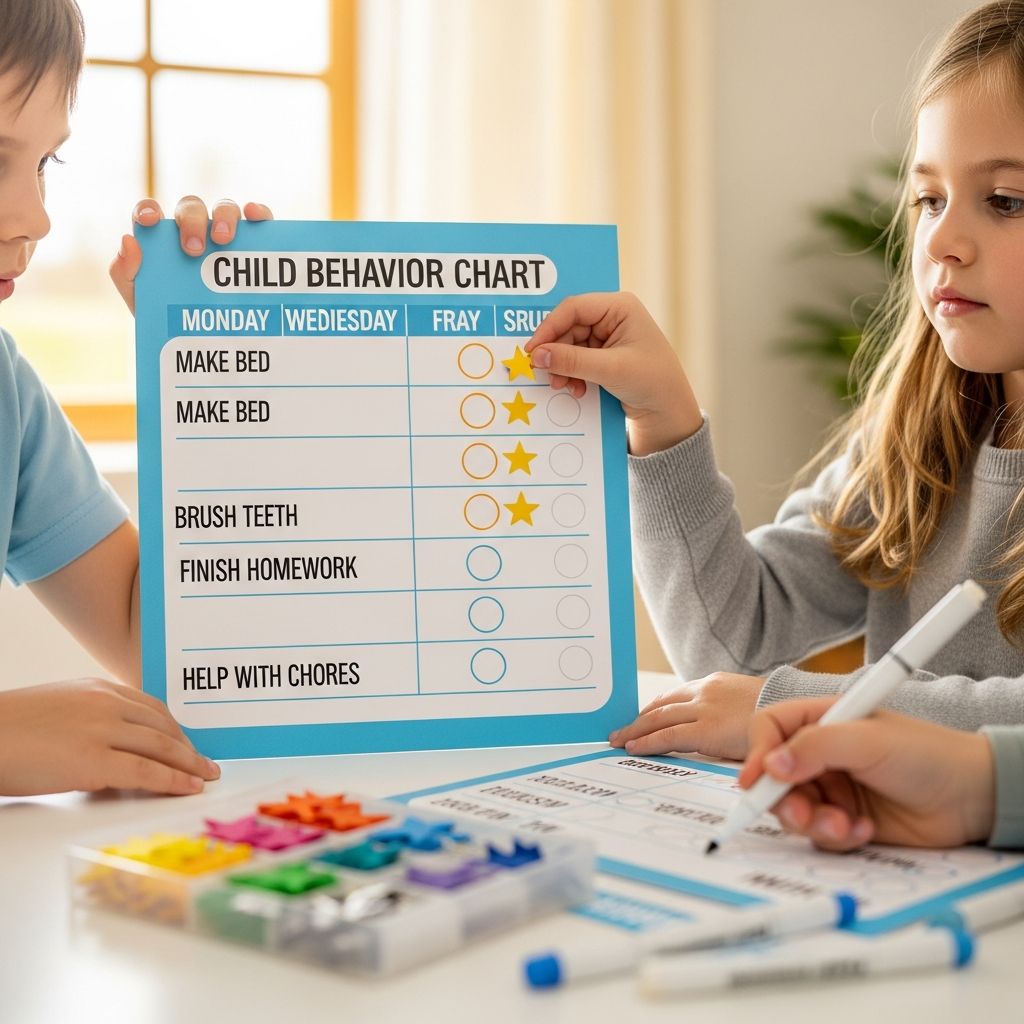
Behavior charts serve as visual aids that track a child’s positive actions, offering immediate recognition through stickers, checks, or clips to reinforce desired habits. These tools empower parents and educators to guide young children toward better self-control and responsibility when used thoughtfully.
Why Behavior Charts Capture Children’s Attention
Young minds respond powerfully to visual cues and tangible rewards, making behavior charts an engaging method for habit formation. By transforming abstract expectations into concrete progress markers, these charts tap into a child’s natural drive for achievement and approval.
- Visual Appeal: Bright colors and filling spaces create excitement as children watch their successes accumulate.
- Goal Clarity: Specific tasks listed upfront eliminate guesswork, helping kids focus on achievable steps.
- Quick Wins: Daily updates provide instant gratification, strengthening neural pathways for repetition.
Research from educational settings shows that such systems boost compliance by up to 75% in elementary environments, particularly when paired with consistent adult involvement.
Key Advantages of Introducing Behavior Systems at Home
Implementing these tracking tools yields multiple benefits, from streamlined routines to enhanced emotional growth. Parents often notice quicker bedtime adherence and fewer mealtime battles within weeks.
| Benefit | Description | Impact on Child |
|---|---|---|
| Clear Structure | Defines daily expectations visually | Reduces anxiety through predictability |
| Real-Time Feedback | Immediate stickers or marks post-task | Builds connection between action and result |
| Confidence Boost | Progress tracking fosters pride | Enhances self-esteem and motivation |
| Social Skill Building | Targets sharing or listening | Supports emotional development |
These elements align with developmental psychology principles, where positive reinforcement outperforms punishment in sustaining change.
Potential Pitfalls and How to Steer Clear
While effective, misuse can lead to reward dependency or embarrassment. About 55% of teachers worry about self-esteem dips from public tracking.
- Avoid public shaming by using private or group-focused designs.
- Limit duration to prevent extrinsic-only motivation.
- Tailor to age—simpler for toddlers, nuanced for school-age kids.
Balance by emphasizing effort over perfection, transitioning to verbal praise as habits solidify.
Step-by-Step Guide to Building Your Custom Tracker
Start with a blank canvas like poster board or printable templates. Customize based on your child’s needs, such as morning routines or homework completion.
- Select Focus Areas: Choose 3-5 behaviors, phrased positively (e.g., “Pack backpack” not “Don’t forget homework”).
- Design Layout: Use rows for days/weeks and columns for tasks. Add fun themes like stars or animals.
- Define Rewards: Small daily (extra storytime) to big weekly (park outing). Keep attainable.
- Print and Display: Place at eye level in a shared space.
- Launch with Enthusiasm: Explain rules together, celebrating first entries.
For digital options, apps offer reminders, but hands-on versions excel for tangibility.
Age-Appropriate Strategies for Maximum Impact
Toddlers (Ages 2-4): Simplicity Rules
Focus on one habit like potty use. Use oversized stickers and one-week cycles to match short attention spans. Pair with high-fives for multi-sensory reinforcement.
Preschoolers (Ages 4-6): Build Routines
Incorporate 4-6 daily tasks covering hygiene and chores. Visual thermometers showing “cool to hot” zones teach emotional regulation alongside tasks.
School-Age (Ages 7-10): Encourage Ownership
Let kids self-mark and select rewards, fostering independence. Introduce point systems for complex goals like reading logs.
Adjust for individual paces—some master skills in two weeks, others need months.
Integrating Charts into School and Family Life
Teachers report harmony in 65% of chart-using classrooms, with tools aiding transitions like recess return. At home, sync with school versions for consistency.
- Weekly family meetings to review progress.
- Group charts for siblings to promote teamwork.
- Seasonal refreshes to target new challenges like summer schedules.
Shifting from Charts to Internal Drive
Charts shine short-term; experts recommend phasing out after 4-8 weeks of mastery to nurture intrinsic rewards. Gradually reduce stickers, amplifying praise: “You chose to tidy up—I’m proud!”
Monitor for signs of dependency, like questioning “What’s my prize?” Then pivot to natural consequences and discussions.
Real Parent Stories: Wins and Lessons Learned
One mother shared how a chore chart ended her 5-year-old’s screen tantrums, earning park trips that built outdoor love. A teacher noted a shy student’s confidence surge from sharing stickers. Challenges arose when rewards lost novelty—solved by variety like choice privileges.
Enhancing Effectiveness with Proven Pairings
Combine with routines: Model behaviors first, then chart. Use alongside calm-down corners for holistic management. Track data weekly to refine targets.
Frequently Asked Questions
What age is best for starting behavior charts?
Ages 3+ work well, as younger kids grasp visuals but need heavy guidance. Tailor complexity upward.
How long should a single chart run?
2-8 weeks max per behavior to avoid dependency. Fade out as habits internalize.
What if my child ignores the chart?
Re-engage with involvement—let them decorate it. Ensure rewards excite and rules stay consistent.
Are digital charts as good?
They offer portability but lack tactile joy; hybrid approaches suit busy families.
Can charts help with aggression or defiance?
Yes for mild cases via positive focus, but consult pediatricians for persistent issues.
Quick-Start Templates and Customization Ideas
Design your own with columns for “Task, Mon-Sun, Reward Tracker.” Themes: Superhero climbs, animal safaris. Free printables abound online—adapt to fit.
References
- Are Behavior Charts Really Effective? — Heart of Connecting. 2023. https://www.heartofconnecting.com/parenting-articles/are-behavior-charts-really-effective
- The Power of Sticker Charts: Encouraging Good Behavior with Positive Reinforcement — CK Family Services. 2023. https://ckfamilyservices.org/blog/power-sticker-charts-encouraging-good-behavior-positive-reinforcement
- The Pros and Cons of Using Behavior Charts — Brightwheel. 2023. https://mybrightwheel.com/blog/behavior-chart
- Are Student Behavior Charts Beneficial? — TeachHUB. 2024-08. https://www.teachhub.com/classroom-management/2024/08/are-student-behavior-charts-beneficial/
- Behavior Charts in the Classroom: Balancing Benefits and Drawbacks — FSR Inc. 2023. https://fsrinc.com/education/collaborate-ed-tech-blog/437-behavior-charts-in-the-classroom-balancing-benefits-and-drawbacks-for-effective-management
- Are There Benefits of Behavior Charts for Children? — WebMD. 2023. https://www.webmd.com/parenting/are-there-benefits-of-behavior-charts-children