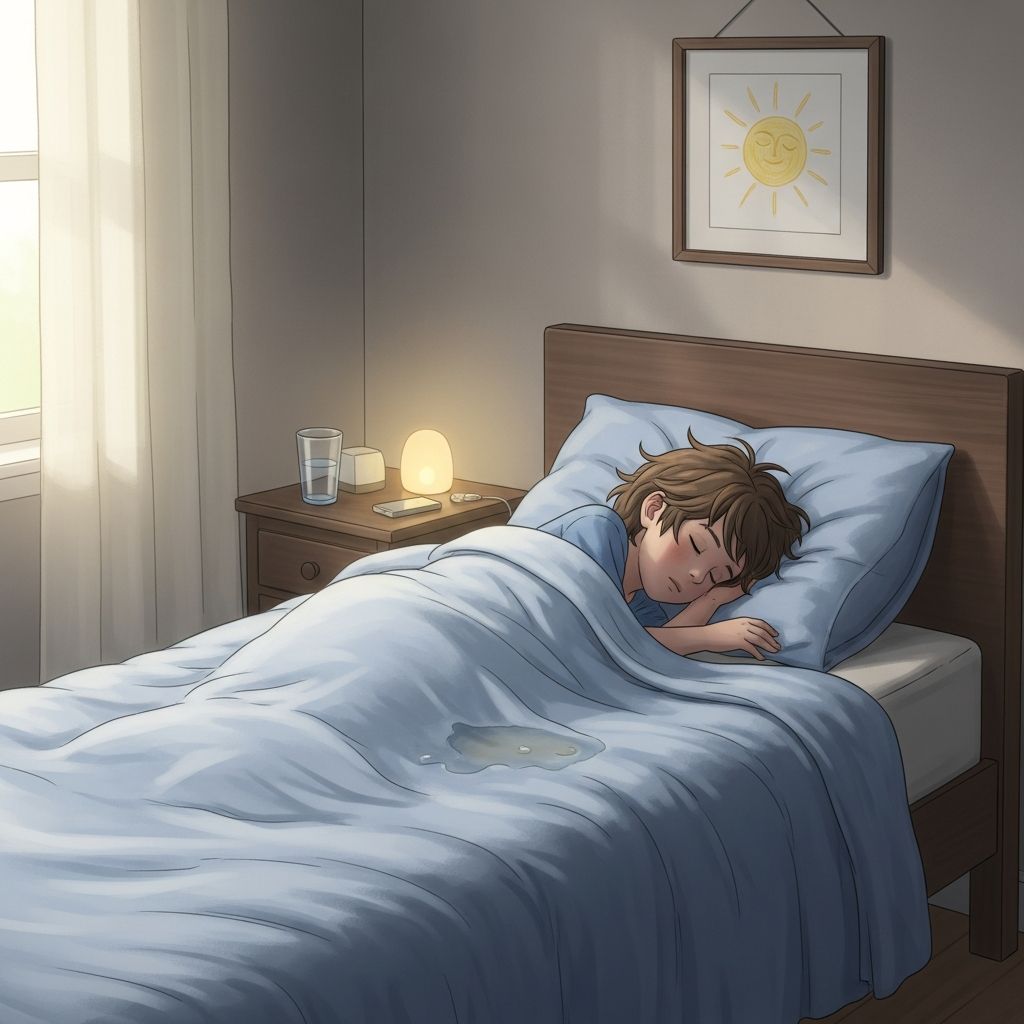
Bedwetting, medically termed nocturnal enuresis, affects millions of children worldwide, often causing frustration for both kids and parents. It involves involuntary urination during sleep, typically after the age of 5 when most children have achieved daytime bladder control. While it resolves naturally for most by adolescence, understanding its roots empowers families to support their child’s journey to dry nights.
Defining Normal Development Milestones
Bladder control develops gradually. Infants lack voluntary control, but by age 2-4, daytime dryness emerges as the nervous system matures and the bladder capacity grows. Nighttime control lags, with many children experiencing occasional accidents up to age 6 or 7. Providers generally consider it a concern only if it persists beyond these benchmarks or disrupts family life.
Key milestones include:
- Age 2-3: Awareness of full bladder and initial daytime training success.
- Age 4: Consistent daytime dryness for most.
- Age 5-7: Majority achieve nighttime dryness, though 15-20% may still wet occasionally.
Primary Causes of Nighttime Wetting
Bedwetting rarely stems from laziness or emotional defiance. Instead, it arises from developmental, physiological, or environmental factors. Often, multiple contributors overlap, such as a family history combined with deep sleep patterns.
Genetic and Developmental Factors
If parents or siblings experienced bedwetting, a child is significantly more likely to do so, with studies showing up to 75% heritability. This points to inherited traits like smaller bladder capacity or delayed maturation of the bladder-brain signaling pathway. Deep sleepers fail to wake when their bladder signals fullness, producing concentrated urine overnight without arousal.
Overproduction of Urine at Night
Some children produce excess urine during sleep due to low levels of antidiuretic hormone (ADH), which normally concentrates urine. This floods a developing bladder, leading to overflow. Conditions like diabetes can exacerbate this by elevating blood sugar and urine output.
Daytime Wetting: Signs and Overlaps
While the focus is often nighttime, daytime accidents signal potential issues warranting attention. Frequent urges, leaks, or infrequent voiding (fewer than 4 times daily) indicate bladder dysfunction, often worsened by urine holding habits. Children may squirm, cross legs, or squat to suppress leaks, behaviors parents recognize as distress signals.
| Symptom | Possible Implication |
|---|---|
| Urgent need with leaks | Overactive bladder |
| 8+ trips to bathroom daily | High frequency |
| Rare urination (2-3x/day) | Incomplete emptying |
| Squirming or leg crossing | Holding urine too long |
Medical Conditions Linked to Bedwetting
Though uncommon (affecting ~1% of cases), underlying health issues can trigger or prolong wetting. Parents should monitor for red flags like sudden onset after dryness, pain, or associated symptoms.
- Urinary Tract Infections (UTIs): Irritation causes urgency and frequency; more common in girls.
- Constipation: Impacted bowels press on the bladder, reducing capacity and control.
- Sleep-Disordered Breathing: Obstructive sleep apnea (OSA) from enlarged tonsils disrupts oxygen, prompting extra urine production. Signs: snoring, mouth breathing, daytime fatigue.
- Diabetes: New thirst, frequent urination, and wetting signal Type 1 onset.
- Neurological Issues: Rare spinal or nerve problems cause dribbling or leg weakness.
Neurodevelopmental Connections
Children with ADHD face triple the risk, linked to central nervous system delays affecting arousal and cue recognition. Autism spectrum disorder shows similar patterns, with sensory processing challenges hindering wakefulness. Low birth weight, C-sections, or family history amplify vulnerability in these groups.
Stress and Lifestyle Influences
Life upheavals—new siblings, school starts, moves—can regress dry children. Emotional stress alters brain chemistry, disrupting control. Poor daytime habits, like ignoring urges, compound nighttime issues by overtraining the bladder to hold excessively.
When to Consult a Pediatrician
Most outgrow it without intervention, but seek advice if:
- Child is over 7 and wets 2+ times weekly for 3+ months.
- Sudden return after 6 dry months.
- Daytime wetting, pain, fever, or swelling accompanies.
- Snoring, gasping, or excessive thirst noted.
A doctor may order urine tests, ultrasounds, or sleep studies to rule out issues.
Practical Management Strategies
Treatment emphasizes patience, as shaming worsens it. Start with non-invasive steps, escalating if needed.
Behavioral and Habit Changes
- Establish regular bathroom schedules: Every 2-3 hours daytime, double voiding before bed.
- Limit evening fluids, avoid caffeine.
- Promote high-fiber diets to prevent constipation.
- Use rewards for dry nights, not punishment.
Bedwetting Alarms
These devices sense moisture and buzz, training the brain to wake. Success rates reach 70% with consistency, often resolving within weeks. Ideal for motivated families.
Medications as a Bridge
Desmopressin mimics ADH to reduce urine; anticholinergics calm overactive bladders. Used short-term alongside alarms, as relapse occurs upon stopping.
Supporting Your Child Emotionally
Frame it as a developmental phase, not failure. Involve kids in cleanup without blame, protect self-esteem. Siblings should understand to avoid teasing. Track progress on charts for motivation.
Long-Term Outlook and Myths Debunked
By teens, 99% resolve spontaneously. Myths like ‘laziness’ or ‘manipulation’ ignore biology—children cannot control deep sleep wetting.
Frequently Asked Questions (FAQs)
Is bedwetting a sign of emotional problems?
No, it’s rarely psychological alone, though stress can contribute. Rule out medical causes first.
How effective are bedwetting alarms?
Highly, with 60-80% success; requires 3-4 months commitment.
Should I wake my child to pee at night?
Not routinely; it disrupts sleep without long-term gain.
Can diet affect bedwetting?
Yes, constipation from low fiber worsens it; ensure balanced intake.
Does ADHD increase bedwetting risk?
Yes, threefold due to arousal delays.
References
- Symptoms & Causes of Bladder Control Problems & Bedwetting in Children — National Institute of Diabetes and Digestive and Kidney Diseases (NIDDK). 2023-10-23. https://www.niddk.nih.gov/health-information/urologic-diseases/bladder-control-problems-bedwetting-children/symptoms-causes
- Bedwetting: 5 Common Reasons Why Children Wet the Bed — Nationwide Children’s Hospital. 2018-02-01. https://www.nationwidechildrens.org/family-resources-education/700childrens/2018/02/bedwetting-5-common-reasons-why-children-wet-the-bed
- Bedwetting (Nocturnal Enuresis): Overview, Causes, and Treatments — WebMD. 2024-05-15. https://www.webmd.com/sleep-disorders/bedwetting-causes
- Bedwetting in Children & Teens: Nocturnal Enuresis — National Kidney Foundation. 2023-11-01. https://www.kidney.org/kidney-topics/bedwetting-children-teens-nocturnal-enuresis
- Bedwetting (Nocturnal Enuresis) Causes & Treatment — Cleveland Clinic. 2024-02-10. https://my.clevelandclinic.org/health/diseases/15075-bedwetting
- Bedwetting — American Academy of Child and Adolescent Psychiatry (AACAP). 2022-07-15. https://www.aacap.org/AACAP/Families_and_Youth/Facts_for_Families/FFF-Guide/Bedwetting-018.aspx