Creating a secure bedroom environment is vital for restful sleep and preventing accidents, particularly for young children who explore their surroundings with boundless curiosity. This guide outlines key strategies to identify and mitigate common hazards in both kids’ and adults’ sleeping areas, drawing from established pediatric and safety recommendations.
Understanding Bedroom Risks
Bedrooms often harbor hidden dangers like unstable furniture, strangulation risks from cords, and fire hazards from improper electrical use. Infants and toddlers face heightened suffocation threats from soft bedding, while older children risk falls from windows or tipping dressers. Adults must address medication storage and slip-prone rugs. Regular assessments can dramatically lower injury rates.
Securing Sleep Surfaces for Infants
The foundation of infant safety begins with the crib or bassinet. Select models manufactured post-1978 to avoid lead paint exposure, ensuring slats are spaced no more than 2-3/8 inches apart to prevent head entrapment. Mattresses must fit tightly, leaving no more than two fingers’ width around the edges, to eliminate gaps where babies could suffocate.
- Use a firm, flat mattress covered only by a fitted sheet.
- Avoid pillows, quilts, comforters, sheepskins, or stuffed toys, as they pose suffocation risks.
- Position infants on their backs for all sleep periods to reduce Sudden Infant Death Syndrome (SIDS) risks.
Drop-side cribs are prohibited in modern standards due to entrapment injuries; opt for fixed-side designs. Lower the mattress as the child grows: before sitting unaided, then to the lowest setting before standing, transitioning to a toddler bed when the child reaches 35 inches or the rail height is less than three-quarters of their height.
Furniture Anchoring and Stability
Tipping furniture causes thousands of injuries yearly, especially when children climb drawers. Anchor all dressers, bookshelves, TVs, and changing tables to walls using anti-tip kits provided by manufacturers or available at hardware stores.
| Furniture Type | Safety Check | Action Required |
|---|---|---|
| Cribs/Bassinets | Secure hardware, no sharp edges | Tighten screws monthly; sand rough spots |
| Changing Tables | Safety straps present | Keep supplies within arm’s reach; never leave child unattended |
| Dressers/Chests | Anchored to wall | Close drawers after use |
| Bookcases | Empty top shelves of heavy items | Install braces if over 30 inches tall |
Changing tables require safety belts and non-slip surfaces; place a rug underneath for added cushioning. Toy chests need lid supports to prevent finger pinches and must remain unlocked to avoid entrapment.
Eliminating Strangulation and Choking Dangers
Cords from blinds, curtains, monitors, and mobiles are leading strangulation culprits. Keep all electrical and window cords at least three feet from sleep surfaces, using cord shorteners, clips, or clothespins to secure them high out of reach.
- Remove ribbons from mobiles and discard once baby reaches 5 months or can kneel.
- Opt for cordless window treatments where feasible.
- Avoid necklaces, pacifier cords, or drawstrings on clothing.
Inspect for small parts like crib hardware or toy pieces that could choke; store medications, coins, and sharp objects like scissors in locked cabinets, even in adult rooms.
Preventing Falls from Heights
Falls represent the top crib-related injury. Never position sleep areas near windows; install guards on upper-floor openings, ensuring quick-release mechanisms for emergencies. Screens alone won’t suffice.
Use approved gates at doorways and stairs, wall-mounted for stability. Keep beds, cribs, and chairs away from ledges. For high chairs or changing stations, employ crotch-post belts and trays that lock securely.
Fire Prevention and Electrical Safety
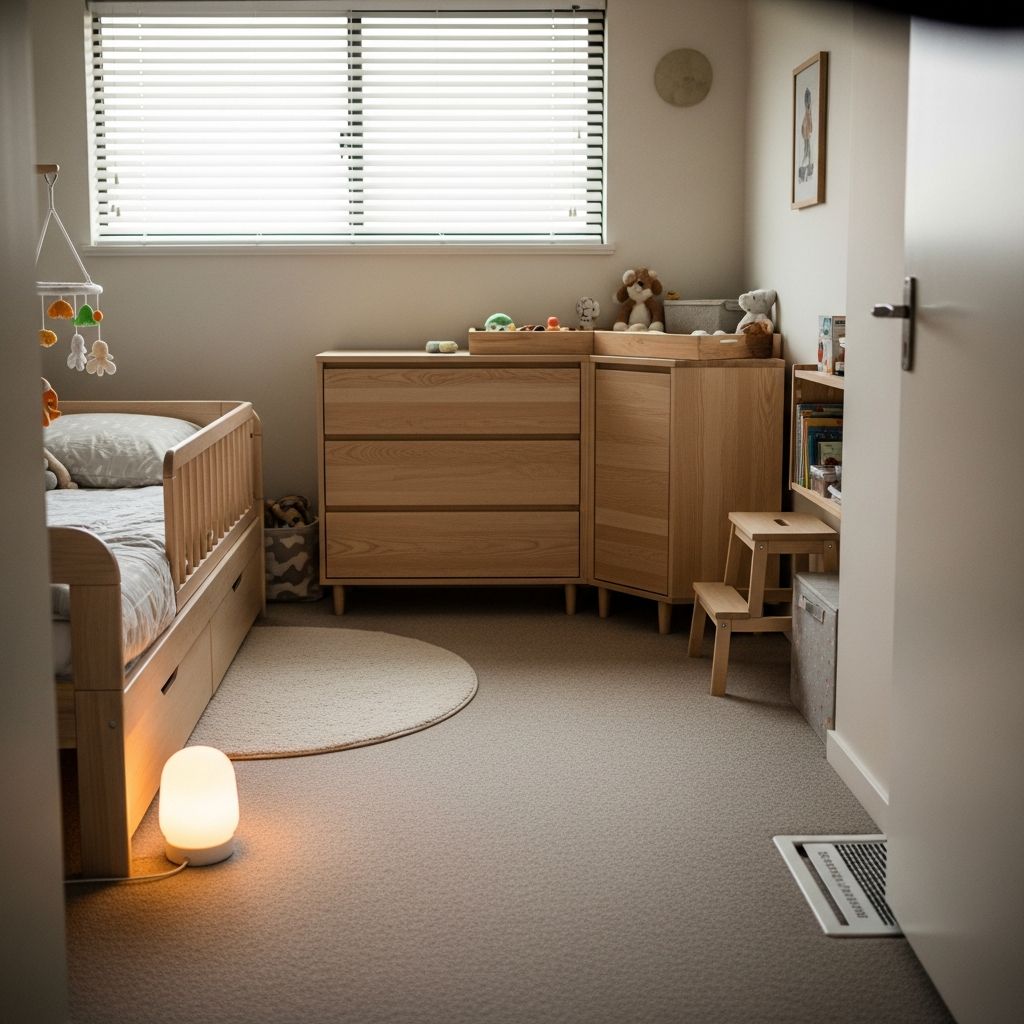
Smoke alarms outside every bedroom, tested monthly with long-life batteries, provide early warnings. Position nightlights away from fabrics, choosing cool-touch models to avert ignition.
- Opt for flame-retardant sleepwear without hoods or drawstrings.
- Store flammable items like aerosol cans away from heat sources.
- Create and practice a family escape plan with two exit routes per room.
Plug unused outlets with tamper-resistant covers; route extension cords along baseboards, avoiding under rugs.
Safe Storage Solutions
Baskets without lids prevent toy-related mishaps. In adult bedrooms, elevate small objects and secure rugs with non-slip backing to curb trips. Firearms, if present, demand locked storage separate from ammunition, inaccessible to children.
Tailored Safety for Older Children
As kids grow, introduce bed rails for transition beds, ensuring gaps are under 3 inches. Teach emergency exit drills and reinforce furniture anchors. Flame-resistant pajamas remain essential.
Adult Bedroom Considerations
While less toddler-focused, secure ladders or step stools, store vitamins securely, and eliminate throw rug slips. Nightstand lamps should have stable bases; pathway lighting aids nighttime navigation.
Regular Maintenance Routine
Conduct monthly walkthroughs: tighten hardware, test alarms, inspect cords. Update as children age—remove mobiles promptly, transition beds timely. Annual professional checks for wiring add layers of protection.
Frequently Asked Questions
When should I lower the crib mattress?
Lower before baby sits independently, then to lowest before standing; switch beds at 35 inches tall.
Are bumper pads safe?
No, they risk suffocation, strangulation, and climbing falls; avoid entirely.
How do I secure furniture without kits?
Use L-brackets, straps, or wall screws; furniture straps work on most pieces.
What’s the best sleepwear for babies?
Wearable blankets or sleep sacks over lightweight, footed pajamas; no loose blankets.
Do I need window guards on ground-floor windows?
Recommended if over 6 feet drop; prioritize upper stories.
How often test smoke alarms?
Monthly; replace batteries yearly or use lithium long-life.
This guide empowers families to foster accident-free bedrooms. Implement changes gradually, prioritizing high-risk items like anchors and alarms for immediate impact.
References
- Bedroom Safety Checklist: Ensuring a Safe Family! (2023 Updated) — FairyBaby. 2023. https://fairybaby.com/blogs/babysafe/bedroom-safety-checklist
- Make Baby’s Room Safe: Parent Checklist — American Academy of Pediatrics (HealthyChildren.org). Accessed 2026. https://www.healthychildren.org/English/safety-prevention/at-home/Pages/Make-Babys-Room-Safe.aspx
- Safety Checklist for Home — Seattle Children’s Hospital. Accessed 2026. https://www.seattlechildrens.org/health-safety/injury-prevention/home-checklist/
- Home Safety Checklist — Safe Kids Worldwide. Accessed 2026. https://www.safekids.org/sites/default/files/documents/home_safety_checklist.pdf
- Home Safety Checklist [PDF] — True North Sunshine Pediatrics. 2014-05. https://s28047.pcdn.co/wp-content/uploads/sites/163/2014/05/Home-Safety-Checklist.pdf