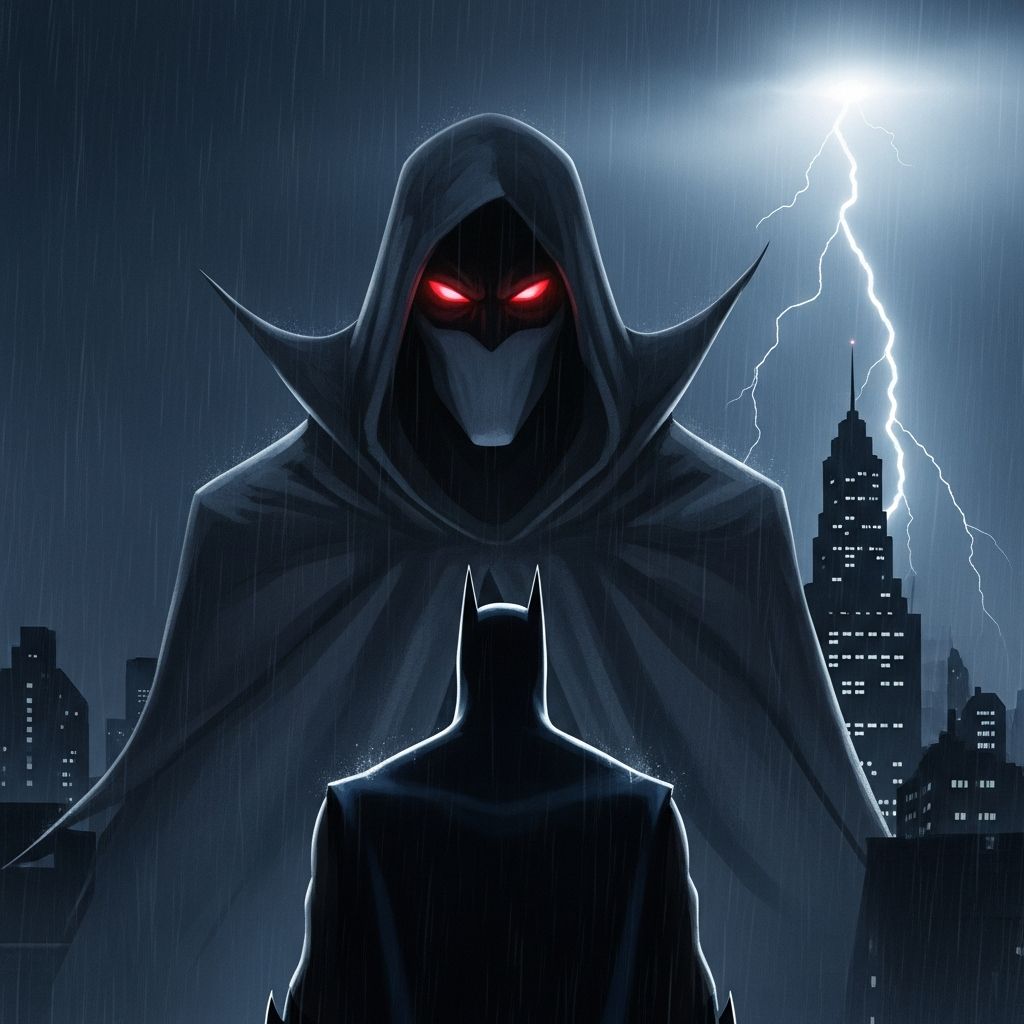
For many fans, Batman: Mask of the Phantasm is more than a stylish animated spin-off; it is the first movie that dared to ask what Bruce Wayne might have become if love had beaten vengeance. Rather than simply filling in gaps in Batman’s past, it rearranged how audiences understood his origin, his motivations, and even what counts as “canon” for the Dark Knight.
Why This Animated Film Still Matters
Released in the early 1990s as a theatrical companion to Batman: The Animated Series, Mask of the Phantasm did something bold: it treated animation as a vehicle for tragedy, noir, and complex emotional stakes instead of just kid-friendly spectacle. It positioned Bruce Wayne’s path to becoming Batman not as a straight line of grim determination, but as a forked road shaped by a genuine chance at happiness.
- It blends detective noir, tragedy, and romance in a way few superhero films had attempted at the time.
- It offers a new emotional lens for Batman’s origin, transforming familiar beats into something more intimate and haunting.
- It helped legitimize animated superhero storytelling as a serious medium rather than a disposable tie-in.
Reframing Bruce Wayne’s Origin Story
Before this film, most mainstream depictions of Batman treated his mission as an unbroken vow: a childhood trauma leading inevitably to a life in a cape and cowl. Mask of the Phantasm introduces a critical disruption to that inevitability — a relationship that nearly stops Bruce from becoming Batman at all.
Instead of leaping directly from grief to vigilantism, Bruce hesitates. He trains, experiments with early crime-fighting, and then meets someone who softens the edge of his purpose. That hesitation becomes one of the most powerful ideas in the movie: Batman’s existence is not just a promise to the dead, but also the shadow of a life that could have been.
- Bruce’s early efforts at crime-fighting are clumsy, suggesting a man still searching for the right form for his anger.
- His growing attachment to a romantic partner forces him to reconsider whether he has the right to let go of his parents’ memory.
- The film turns the origin from a single traumatic moment into an emotional tug-of-war between duty and desire.
Andrea Beaumont: The Love That Changed Everything
At the heart of this reimagining is Andrea Beaumont, a character original to the film and crucial to its power. She is not just a love interest; she is a mirror to Bruce. Both lost parents to crime, both wrestle with anger, and both must decide what kind of life they will build around that wound.
Andrea’s presence accomplishes what many comic stories struggled to do: it personalizes the cost of Bruce’s choice. He is no longer turning down an abstract idea of “normal life” — he is turning down a specific person, with shared history, memories, and a tangible future.
- Andrea understands Bruce’s grief instead of merely sympathizing with it, making their bond feel earned rather than convenient.
- Her eventual transformation into a masked figure ties her to Batman on both emotional and thematic levels.
- The film suggests that Bruce is not the only one who might respond to tragedy by crafting a new identity.
The Phantasm: A Dark Reflection of Batman
The mysterious Phantasm operates as a supernatural-feeling specter of vengeance, stalking Gotham’s old crime lords with lethal efficiency. Where Batman aims to stop crime without killing, the Phantasm cuts directly to execution, bypassing courts, second chances, and even Batman’s own fractured sense of justice.
By tying the Phantasm’s crusade to personal loss, the movie creates a nightmare version of the path Bruce could have taken. Instead of allowing grief to harden into a disciplined mission, it curdles into retribution and isolation.
| Aspect | Batman | The Phantasm |
|---|---|---|
| Core Motivation | Prevent future tragedies by fighting crime. | Punish specific criminals responsible for past pain. |
| Approach to Violence | Non-lethal, operates within a self-imposed moral code. | Lethal force embraced as the final answer. |
| View of Gotham | A broken city that can still be saved. | A graveyard of old sins that must be avenged. |
| Relationship to Identity | Batman is a role Bruce chooses every night. | The mask becomes an escape from any ordinary life. |
This contrast reframes Batman’s no-kill rule not as a simple genre convention, but as the thin line separating him from becoming an executioner like the Phantasm. The villain is not just an external threat; it is a warning about what happens when grief becomes the only compass.
How the Film Quietly Tweaks Batman Canon
Superhero canon is rarely static. It shifts through reinterpretations, retcons, and new media. Mask of the Phantasm does not loudly announce any “official” rewrite, but it subtly nudges several core assumptions about Batman’s history.
Rather than contradicting earlier versions, the film layers in an unseen chapter: a serious engagement that nearly pulled Bruce off the path to vigilantism. This addition reshapes how certain later choices can be read, from his emotional distance to his reluctance to fully commit to other partners.
- It adds a major romantic relationship to Bruce’s pre-Batman years, giving new context to his later inability to sustain long-term love.
- It implies that Batman’s persona is, in part, a response to the failure of that relationship, not just a boyhood vow.
- It folds into the larger animated continuity, influencing how Bruce is portrayed in subsequent series and films.
Joker’s Role in a More Personal Story
Unlike many Batman films where the Joker dominates the narrative, here he emerges as a wild card threaded into the shared past of the main characters. His presence connects Gotham’s underworld, Bruce’s early days, and Andrea’s tragedy into a single, knotty timeline.
This approach does not rely on Joker as a “final boss” so much as a chaotic anchor tying crime, corruption, and personal loss together. He is less an origin for Batman and more a recurring infection in Gotham’s history, surfacing wherever unresolved guilt and violence collide.
- The Joker serves as a living reminder that Gotham’s old sins never fully disappear.
- His involvement in the backstory raises the stakes of both Bruce and Andrea’s choices.
- The film avoids making Joker responsible for Batman’s origin, instead positioning him as part of a larger tapestry of crime.
Animation as Noir: Visual and Thematic Style
The film leans heavily into noir aesthetics: smoky skylines, art-deco towers, and heavy shadows that carve Gotham into layers of secrets. The visuals reinforce the idea that the city itself is complicit in the tragedy — a maze of alleys, boardrooms, and carnival ruins where the past refuses to stay buried.
In that setting, Bruce’s internal conflict is always mirrored by the world around him. Flashbacks appear brighter but still haunted; future landmarks sit unfinished, hinting at utopias that never arrived. The city becomes an externalization of Bruce and Andrea’s fractured dreams.
- Art-deco architecture bridges old-school pulp sensibilities with a timeless, stylized look.
- Lighting and shadow often frame Bruce and Andrea as silhouettes, emphasizing their dual lives and hidden pain.
- Abandoned spaces, like derelict fairs, stand in for promises that were never fulfilled.
Emotional Stakes Beyond Punches and Gadgets
What separates Mask of the Phantasm from many superhero films is not its action set pieces, but the emotional questions it refuses to sidestep. It asks whether Bruce’s vow is noble or self-destructive, whether love is a betrayal of the past, and whether revenge can ever truly heal.
The film ultimately suggests that there are no clean answers. Bruce’s choice to remain Batman saves lives but costs him personal happiness. Andrea’s path wins her momentary satisfaction but leaves her isolated and morally compromised. Gotham does not reward either of them for their sacrifices; it merely continues on.
- The story frames heroism and vengeance as neighboring territories, not opposites.
- It treats Bruce’s emotional life as central to his legend, rather than as a subplot.
- The ending leans into melancholy, letting consequences linger rather than wrapping everything in triumph.
Long-Term Influence on Batman Stories
Though it initially underperformed at the box office, the film’s reputation has only grown, especially among fans who see it as a spiritual cornerstone of modern Batman storytelling. Its willingness to complicate the origin has filtered into later adaptations that highlight Bruce’s vulnerability and capacity for love.
Elements reminiscent of the film appear in various Batman projects: tragic romances that shape Bruce’s worldview, villains who serve as twisted doubles of his mission, and storylines that link Gotham’s crime families to personal trauma. Even when not directly referenced, its DNA can be felt in the way creators approach Batman as a tragic, emotionally layered figure.
- Modern comics and films increasingly treat Batman’s love life as a genuine factor in his evolution, echoing the ideas explored here.
- Animated projects often follow its example by blending serialized continuity with cinematic storytelling.
- The film has become a frequent touchstone in discussions of “definitive” Batman portrayals.
Who Decides What’s Canon, Anyway?
The question of whether Mask of the Phantasm is “canon” highlights a broader truth about superhero media: canon is not just what is officially stamped by a publisher, but what fans and creators return to again and again. Even when stories sit outside main comic continuity, they can exert enormous influence on how characters are written and understood.
For many, the film’s version of Bruce — torn between devotion to his parents and the possibility of a future with Andrea — feels as authentic as any comic arc. In that sense, its impact on canon is less about continuity charts and more about emotional authority. It offers a version of Batman that rings so true that later works naturally orbit around it.
- Canon in superhero storytelling often operates on multiple levels: official timelines, fan consensus, and creative influence.
- Even if a film stands in its own universe, its ideas can migrate into mainstream interpretations.
- Mask of the Phantasm functions as a “secret chapter” many fans mentally insert into Batman’s life.
FAQs About Batman: Mask of the Phantasm
Is Batman: Mask of the Phantasm considered part of the main Batman canon?
Officially, the film belongs to the continuity of the DC Animated Universe rather than the primary comic book timeline. However, many fans and creators treat its events, especially Bruce’s relationship with Andrea, as an influential touchstone when thinking about his emotional history.
Why is the film so highly regarded by Batman fans?
Fans praise the movie for taking Batman seriously as a tragic, nuanced character without sacrificing superhero thrills. Its blend of mystery, romance, and noir atmosphere gives it a maturity that stands alongside live-action adaptations, despite its animated format.
Do I need to watch Batman: The Animated Series first?
No prior viewing is strictly necessary. The film is structured to work as a self-contained story that introduces Bruce’s past, his present as Batman, and the new threat of the Phantasm in a way newcomers can follow easily.
What makes Andrea Beaumont different from other Batman love interests?
Unlike many love interests who enter Bruce’s life after he becomes Batman, Andrea is woven directly into his origin period. Her connection to his formative years means that losing her reshapes not just his heart, but the very reasons he puts on the mask.
Is the movie suitable for children?
While the film is animated and was marketed to younger audiences, it tackles themes like grief, murder, and moral ambiguity with unusual seriousness. Older children and teens can appreciate it, but parents should be aware that its tone is much darker than typical Saturday morning cartoons.
Why This Story Still Resonates
Batman: Mask of the Phantasm endures because it understands that the most compelling question about Batman is not how he fights, but why he keeps choosing the cape over everything else. By giving him a plausible, painful alternative in Andrea and then taking it away, the film turns his mission into a choice renewed rather than a fate imposed.
In doing so, it quietly reshapes Batman’s mythology. The Dark Knight is no longer simply a boy frozen in trauma; he is a man who once stood on the edge of a different life and stepped back. That awareness lingers behind every rooftop silhouette and every lonely patrol — a reminder that behind the mask is not just a vow, but a heartbreak that never fully healed.